


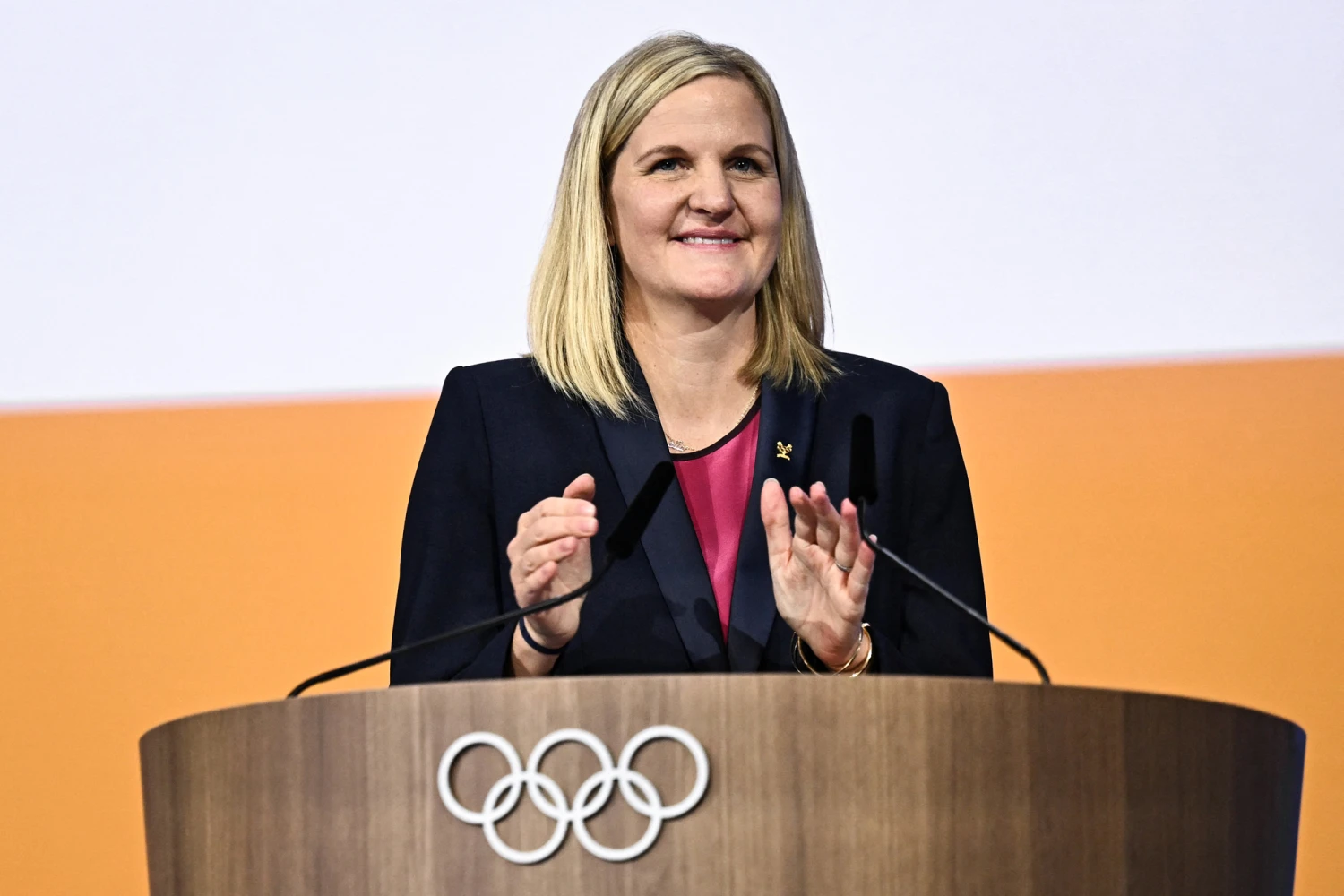
Kirsty Coventry knows what it costs to get to the Olympics. She swam in five of them, from Sydney 2000 to Rio 2016. She chaired the IOC’s Athletes’ Commission for three years. Last month the new International Olympic Committee president told a New Zealand interviewer she does not believe Olympians should be paid for competing, and the reaction from her former peers was fast and unforgiving.
“I don’t believe in paying athletes and I come from a small country,” Coventry told SportNationNZ commentator Alex Chapman on 22 May. “I came from a sport that doesn’t necessarily pay athletes very well and I still don’t believe we should be paying athletes at the Olympic Games.”
Six days later, on Instagram, she narrowed the point. The objection, she said, was to prize money for medalists, not to support for athletes more broadly. “I have always said that I don’t believe in paying athletes prize money at the Olympic Games, as this would benefit only a very small number of athletes,” she wrote on the IOC’s Athlete365 account. The IOC’s job, in her telling, is to back athletes on the way up, during the Games, and as they transition into life after sport.
The cleanup did not stop the bleeding. Cam McEvoy, the Australian swimmer, said athletes should be paid. South Africa’s Roland Schoeman said the same. Both wanted prize money included.
When Chapman pressed her on what athletes do receive, Coventry offered the line that lit up the rest of the conversation. “They get beautiful venues, they get beautiful villages, they get a beautiful experience and all of that comes from the money that we raise,” she said.

Where the money goes
The money the IOC raises is real, and the organization publishes annual financial statements that show where it ends up. Rich Perelman of The Sports Examiner took the eight years from 2017 through 2024, a stretch that covers two Summer Games and two Winter Games. The IOC pulled in $11.842 billion. Of that, $8.063 billion, around 68%, went to staging the Games themselves: organizing committees, the International Federations that govern each sport, the National Olympic Committees, and Olympic Solidarity, which funds athlete scholarships and coaching support.
Olympic Solidarity paid $17.6 million directly to athletes through scholarships in 2024. The rest of the IOC’s revenue covered Olympic Channel programming, grants, special projects, administration, and the savings account. Administration ran about 9% across those eight years. Reserves stood at $4.880 billion at the end of 2024.
Sports journalist Rich Perelman, writing in The Sports Examiner on 2 June, did the arithmetic on a flat athlete payment. There are roughly 10,500 athletes at a Summer Games and 3,000 at a Winter Games. A $10,000 honorarium for each would cost the IOC about $135 million per quadrennium. Cover the Games year and three more years after, and the bill grows to $540 million. Perelman argued the IOC can absorb that without strain. NBC has already committed $3 billion in broadcast fees for the 2034 Winter and 2036 Summer Games.
For scale, here is what the major American leagues took in last year: the NFL at $19.88 billion, Major League Baseball at $11.32 billion, the NBA at $10.61 billion, the NHL at $5.88 billion. Those leagues pay roughly half their revenue to the people on the field. The IOC pays a fraction of one percent of its revenue directly to the athletes whose names sell the broadcast.
Athletes are getting the short end of the stick
For marathoners and most of the rest of the endurance field, the gap between Olympic glory and a paycheck is the central financial fact of a career. A few stars sign sponsorships and major-marathon paydays. The rest sign rental leases and hope. They train for a decade, surface at the Games once every four years, and patch the math together with help from parents, partners, club stipends, part-time jobs, GoFundMes, and credit cards. Then they hear the IOC president, on camera, tell a reporter that the village they sleep in is payment enough.
That is not a principle. It is an excuse with good production values. The IOC has $4.88 billion in reserves, a number larger than the annual revenue of the NHL, and the people who built that brand by bleeding into pools, tracks, and marathon courses are told to be grateful for two weeks of free meals and a souvenir tracksuit.
The standard defenses do not survive scrutiny. $10,000 buys a different life in Nairobi than it does in Boulder, so pay people more, not nothing. Prize money would over-reward medalists, so write a flat honorarium for everyone who makes the team. The IOC is smaller than the NFL, fine, but it is bigger than nearly every national sports system on earth, and it has been growing on the backs of unpaid talent for decades.
The marketing version of the Olympics is athletes. The financial version is everyone but. Organizing committees get paid. Federations get paid. NOCs get paid. The reserves get padded. The competitors get a meal plan and a thank-you from a movement that took in $4.4 billion the year of their last Games. Call that what you want. Benevolence is not on the list.
Coventry has the platform, the data, and the firsthand experience of a Zimbabwean swimmer who knows what a tiny national federation looks like from the inside. She also has the rest of her term to decide whether that history shows up in her policy or only in her biography. The athletes have already told her, loudly, which one they are expecting.
RunClub
Get more running stories — join RunClub
Daily running news, a community of 300,000+ runners, free training plans for every distance, and a daily running game. Free to join — no card.
Already a member? Log in →





Start the conversation