


The 2026 Paris Marathon is set to make history. When the race returns on April 12, 2026, runners will no longer find plastic bottles or paper cups at aid stations. Instead, every participant will be required to carry their own hydration container.
It’s an ambitious environmental shift for one of the world’s largest road races, with more than 55,000 finishers in 2024, and one that could influence other major marathons worldwide.
This marks a major step forward in Amaury Sport Organisation’s (ASO) ongoing push toward sustainability. The French company behind the Paris Marathon has been phasing out disposable materials for several years.
Plastic bottles were eliminated in 2024 and replaced with paper cups, which runners quickly adopted. Starting in 2026, even those will disappear as the event moves to a fully reusable hydration model.
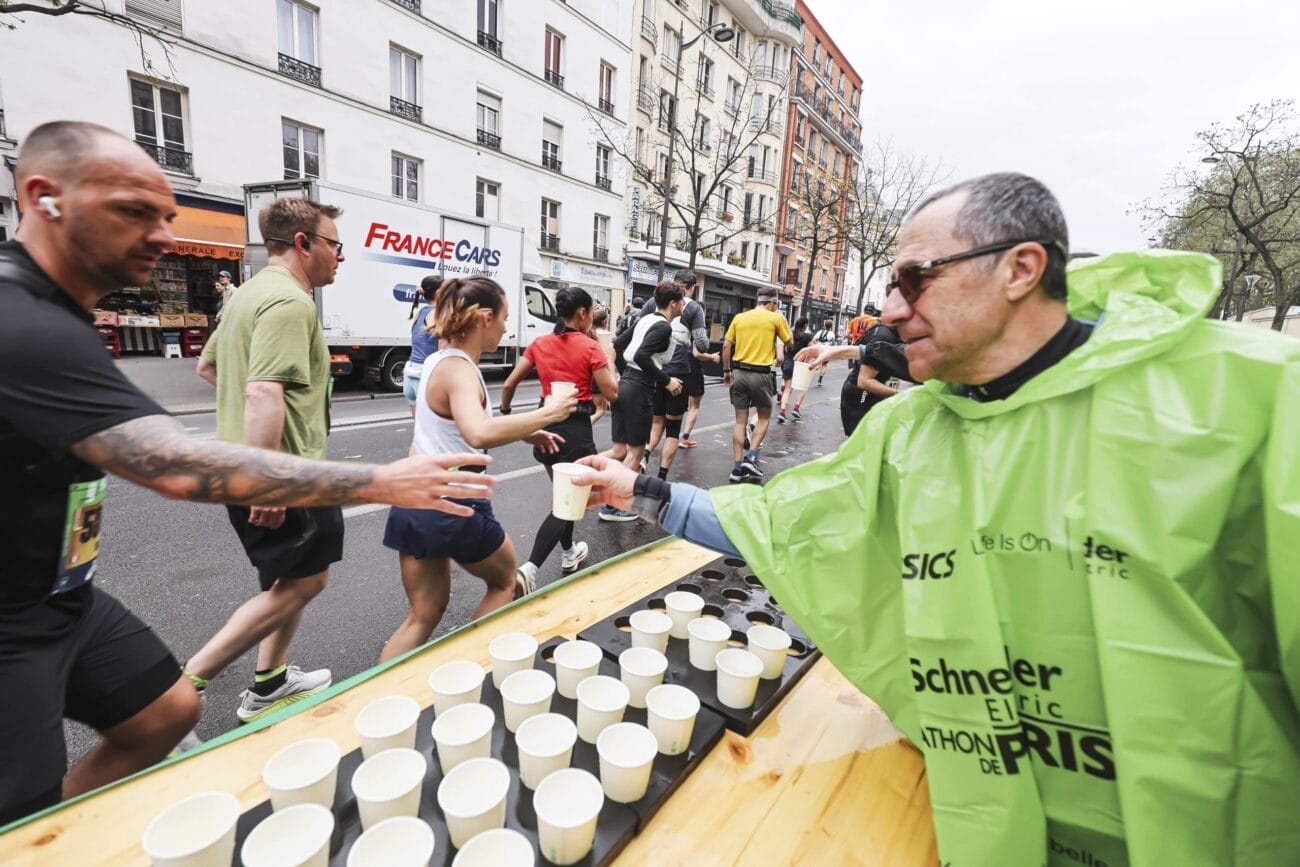
The change means the familiar post-aid-station scenes of thousands of discarded cups along the pavement will soon be a thing of the past. Every runner will now need to start the race equipped with a personal hydration system, whether that’s a soft flask, collapsible cup, or hydration pack.
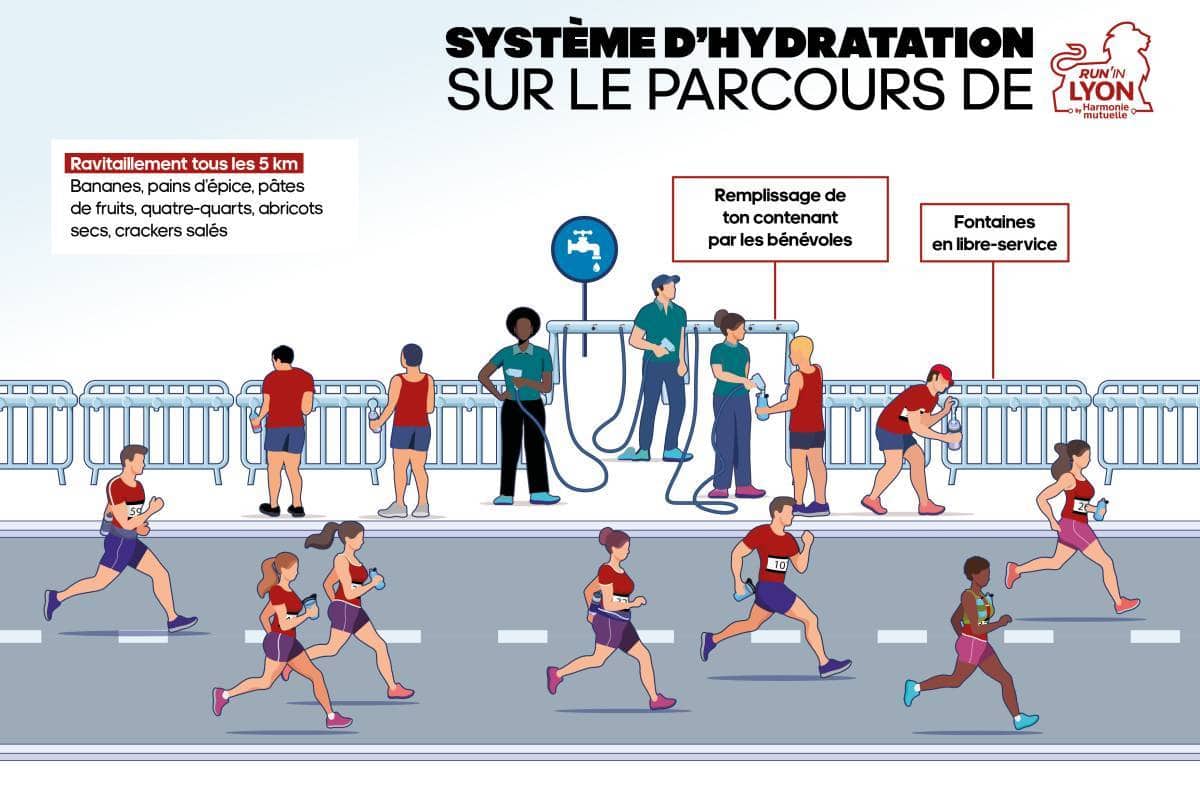
To make the system work at such scale, organizers have redesigned aid stations. Volunteers will help refill runners’ personal containers, and high-flow push-button fountains will fill a 350–400 ml soft flask in under two seconds. The number of water points will increase, with hydration available roughly every 2 to 2.5 kilometers from the halfway mark onward, to prevent congestion and queuing.
Before its full rollout on the streets of Paris, the new water supply system will be tested during the Lyon Marathon on October 5, giving ASO a large-scale opportunity to fine-tune the logistics.
This initiative is part of ASO’s broader effort to reduce the environmental footprint of its events. In 2026, finishers will also have the option to skip the traditional finisher’s T-shirt and instead fund the planting of a tree, a symbolic gesture that aligns with the organization’s wider corporate social responsibility strategy.
Since signing France’s Charter for Sustainable Major Events in 2017, ASO has pursued measures to reduce waste, water use, and energy consumption, promote sustainable transport, and encourage inclusion and solidarity within the running community. The 2026 Paris Marathon represents the next evolution of that commitment.
While this approach is already familiar to trail and ultra runners, it’s a significant shift for road marathons. Participants will need to plan ahead by choosing the right hydration system, practicing with it, and ensuring it’s comfortable and accessible during the race. For many, it will mean adjusting long-standing routines, but it could also make the sport cleaner and more sustainable without compromising performance.
The 2026 Paris Marathon will be watched closely by organizers worldwide. If successful, it could set a new global standard for environmentally conscious road racing, showing that large-scale events can evolve toward sustainability while maintaining the excitement and performance focus that define marathon running.
RunClub
Get more running stories — join RunClub
Daily running news, a community of 300,000+ runners, free training plans for every distance, and a daily running game. Free to join — no card.
Already a member? Log in →











Join the conversation
Especially for the elite runners, how is this not going to compromise performance?
No, just no.....there are better way to manage litter than to require runners to carry their own device. This is a diservice to the running community, that I have been a part of for over 50 years.
This is unsafe and a joke. No sub-elite or elite will ever run Paris again if this is expected to apply to them as well.
Maybe just use some of the money you collect to have sufficient cleanup workers?
Why can they ise reusable cups?
Hope the plan works