


The Athletics Integrity Unit on Friday provisionally suspended Peres Jepchirchir, the reigning world marathon champion and the Olympic champion from the Tokyo Games, over an adverse analytical finding for EPO from an out-of-competition test in Kenya. The AIU has not said when the sample was taken, only that it came before she won in Sydney.
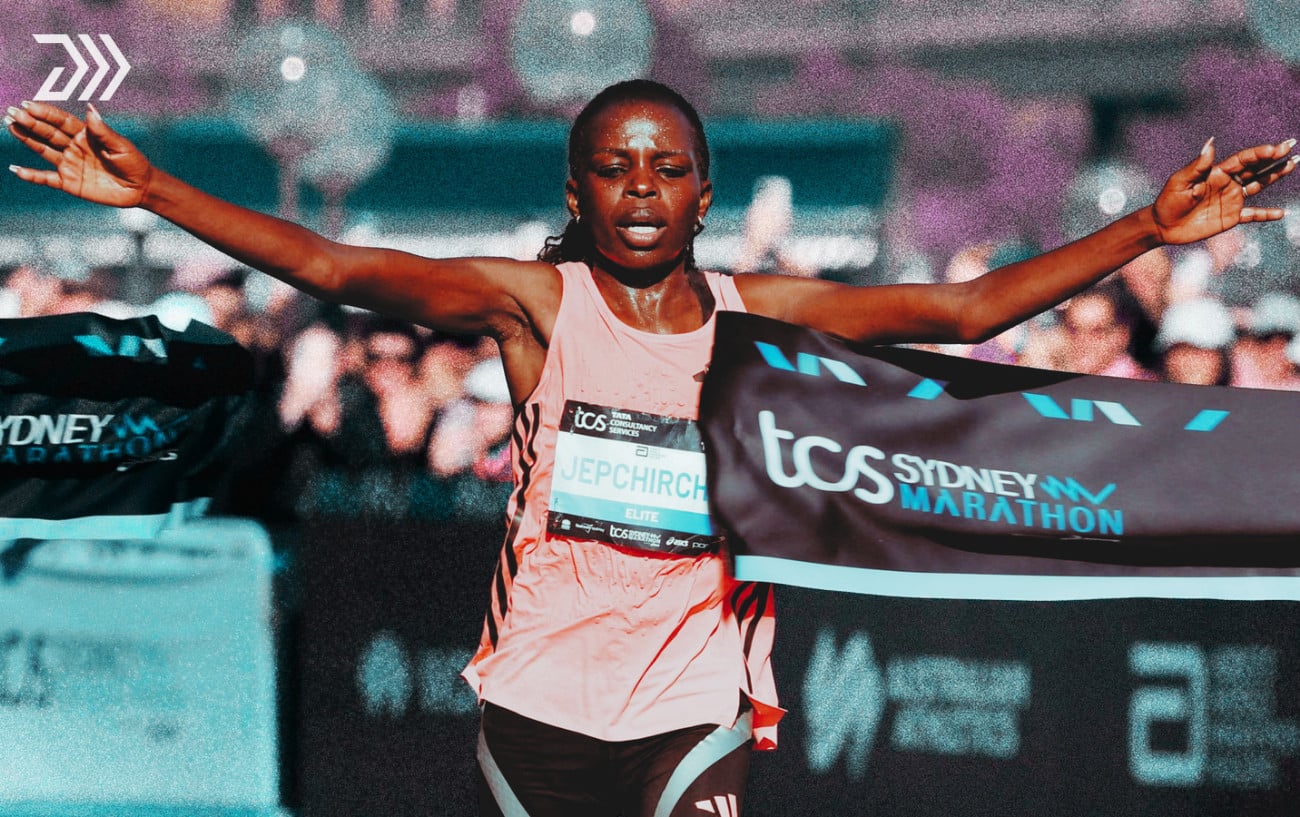
Sydney, on Aug. 30, was her first marathon since Valencia last December, where she ran the fastest time of her career, 2:14:43, behind Joyciline Jepkosgei. A stress fracture afterward forced her to pull out of the London Marathon in April. In Sydney she won by 3:40 from Irine Cheptai in 2:18:31, nine seconds slower than Sifan Hassan’s course record, according to the World Athletics race report. That gave her a fourth different World Marathon Majors title. Under anti-doping rules, results from the day a positive sample is collected onward can be annulled, so a ban could cost her the Sydney title. Ruth Chepng’etich’s 2:09:56 from the 2024 Chicago Marathon is still the world record for that reason: the AIU only annulled her results from March 14, 2025, the day of her sample, as we reported when she was banned last year.
Jepchirchir won the Olympic marathon in Sapporo in 2021 in 2:27:20, and on Sept. 14, 2025, she beat Tigst Assefa by two seconds in Tokyo to become world champion in 2:24:43, according to World Athletics. Before Sydney, her majors came in New York in 2021, Boston in 2022 and London in 2024, where she ran 2:16:16 for what was then the women-only world record. She has also won the world half-marathon title three times, in 2016, 2020 and 2023 in Riga, and once held the half-marathon world record.
The AIU has provisionally suspended reigning World and former Olympic champion, Peres Jepchirchir, after an out-of-competition sample, collected in Kenya prior to her recent Sydney Marathon victory, returned an adverse analytical finding for EPO. 1/2 https://t.co/Y7Z82wyUyk
— Athletics Integrity Unit (@aiu_athletics) October 23, 2026
Jepchirchir, who has not commented publicly, cannot compete while the case is heard, though a provisional suspension is not a sanction. Her agent, Gianni Demadonna, told NBC Sports in an email on Friday: “I can only say that I feel terrible about what happened and I think it’s only right that an athlete who uses the performance enhancing drugs should be disqualified.”
If the finding is upheld, EPO carries a standard four-year ban for a first offense. When Brimin Kipkorir was banned last year for EPO and furosemide, the AIU said that period applied “unless the athlete demonstrates that the Anti-Doping Rule Violations were not intentional,” Kenyans.co.ke reported. An early admission can bring that down, which is how Chepng’etich ended up with three years for hydrochlorothiazide: she accepted the charge inside the 20-day window.
Kipkorir set a course record of 2:06:18 at the Sydney Marathon in September 2024, and his positive sample, The Nightly reported, was taken out of competition on Nov. 22 that year, after the race, so his Sydney win fell outside the annulled results. Jepchirchir is the second Sydney Marathon winner in three years to face an EPO case.
In a statement on Friday, the Sydney Marathon said it was “extremely disappointed to learn” of the suspension and that “Jepchirchir is entitled to due process, and we will make no further comment on the case until that process has concluded.” The organizers also pointed to the testing the majors fund through the AIU and to the circuit’s rule that “any athlete banned for a doping offence of three months or more is banned for life from all eight Majors.”
RunClub
Get more running stories — join RunClub
Daily running news, a community of 300,000+ runners, free training plans for every distance, and a daily running game. Free to join — no card.
Already a member? Log in →





Start the conversation