


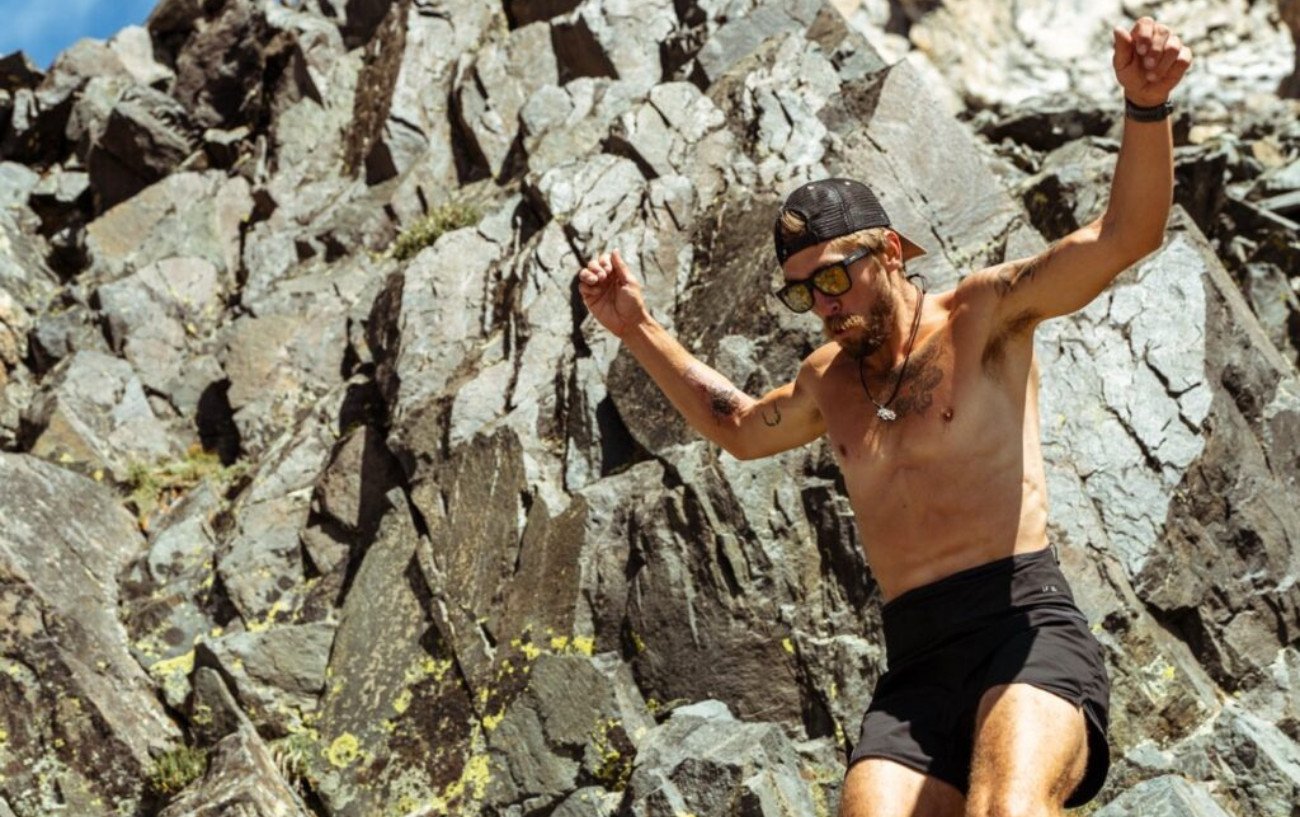
President Donald Trump has pardoned mountain runner Michelino Sunseri, who was convicted earlier this year for running on a closed section of trail during a record-setting attempt on Wyoming’s Grand Teton.
The case, which drew national attention from trail runners and lawmakers alike, had become a flashpoint for debates over government overreach and the limits of park regulations.

Sunseri, a 27-year-old from Driggs, Idaho, climbed and descended the 13,775-foot Grand Teton on September 2, 2024, in two hours and 50 minutes, beating the previous fastest-known-time by nearly three minutes.
But his celebration didn’t last long, as days later, federal prosecutors charged him with trespassing after he admitted on social media that he had briefly used the “Old Climber’s Trail,” a section of path marked “closed for regrowth.” The closure, according to the National Park Service (NPS), was meant to protect fragile alpine vegetation.
In court, Sunseri acknowledged he had used the old trail but argued the signage was unclear and that other athletes had followed the same line in past record attempts without consequence. His defense, led by the Pacific Legal Foundation, described the case as “government overreach,” saying a misdemeanor charge for briefly leaving a trail was an excessive use of federal power.
In September, U.S. Magistrate Judge Stephanie Hambrick found him guilty after a bench trial.
Sunseri faced a fine of up to $5,000 or six months in jail, but before his sentencing hearing could take place, prosecutors and defense attorneys agreed to postpone the process while exploring a deferred prosecution deal.
That plan was rendered moot on Friday when Trump signed the pardon, one of several clemency orders issued in recent days.
In a statement, attorney Michael Poon of the Pacific Legal Foundation said the pardon “ends Michelino’s nightmare,” but added that the group intends to continue challenging “unconstitutional regulations that give low-level park officials the power to criminalize harmless conduct.”
Rep. Harriet Hageman, the Wyoming Republican who had championed Sunseri’s cause, praised the decision and said the prosecution never should have happened. Hageman had earlier written to the Justice Department calling the case an example of bureaucratic excess, arguing that Sunseri had already offered to perform community service and help rehabilitate the path.
Sunseri, who has a large following in the mountain-running community, called the outcome “surreal” in a social media post, writing that the case “should’ve easily been resolved when I offered to help close the trail for good.” He added, “Instead, the system tried to make an example of me.”
The conviction and pardon have reignited a conversation among trail runners about ethics and environmental responsibility in speed attempts on public lands. Some local athletes, including Jackson Hole mountaineer David Gonzales, said the incident was a reminder that elite runners must still follow the same rules as other visitors.
“If you’re going to go for an FKT in a national park, you should stay on the trail,” Gonzales said, adding that the case “got out of control” but raised useful questions about stewardship.
The National Park Service has not commented publicly on the pardon. Officials previously said the closure was clearly marked and enforced to protect sensitive terrain.
Sunseri’s record, meanwhile, remains unofficial. The FKT database rejected his submission after learning that he had taken a prohibited route. But among mountain runners, his 2:50 ascent and descent remains one of the most impressive performances ever recorded on the Grand Teton, if also one of the most controversial.
RunClub
Get more running stories — join RunClub
Daily running news, a community of 300,000+ runners, free training plans for every distance, and a daily running game. Free to join — no card.
Already a member? Log in →







Start the conversation