


At UTMB 2025 in Chamonix, the world’s best ultrarunners once again turned the trails of Mont Blanc into a proving ground not only for endurance but also for the shoes on their feet. As much as the race crowns champions, it also spotlights the footwear that survives 100 miles of punishing climbs, descents, and unpredictable alpine weather.
This year’s podium was a mix of familiar models and unreleased prototypes: Ruth Croft’s Adidas Terrex Agravic Speed Ultra carried her to a historic women’s victory, while Tom Evans and Ben Dhiman stormed to first and second in men’s prototypes from ASICS.
Rounding out the podium, Camille Bruyas relied on Salomon’s updated S/Lab Ultra Glide 1.5, Katharina Hartmuth leaned on Hoka’s Mafate 5, and Josh Wade secured third in The North Face Summit VECTIV Pro 3.
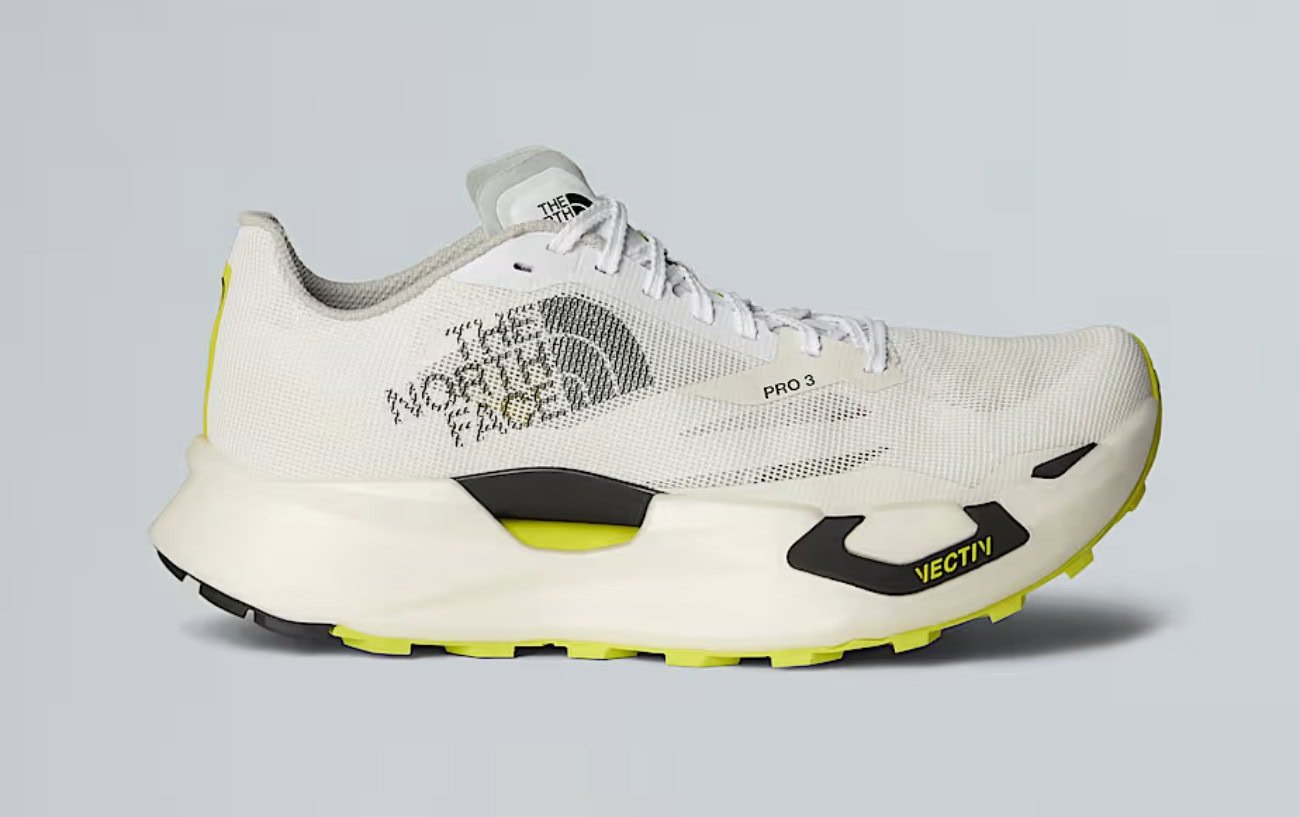
🥉 The North Face Summit VECTIV Pro 3 – Worn by Josh Wade (3rd Place)
- VECTIV 3.0 Dual Plate System – Features a full-length carbon-fiber propulsion plate combined with a recycled carbon-fiber stability top plate to deliver both forward drive and structural support on varied trail terrain.
- DREAM Foam Cushioning – A high-rebound, nitrogen-infused foam offering enhanced stack height (+4 mm) and sustained comfort for ultra distances.
- Rockered Midsole Geometry – Engineered to maintain efficient forward motion through long, technical terrain.
- Outsole – Durable SURFACE CTRL™ rubber with 3.5 mm lugs for optimized grip across mixed surfaces.
- Weight & Stack – Approximately 294 g per half-pair, with a 6 mm drop; high-stack cushioning ranges around 37 mm heel / 31 mm forefoot, enhanced by the added DREAM foam layer.
- Awards & Recognition – Named an ISPO Award Winner for pushing the envelope in trail shoe design, particularly noting its propulsion, stability, and comfort integration.
🥈 🥇 ASICS Prototypes – Worn by Tom Evans (1st) and Ben Dhiman (2nd)
- Tech specs unavailable – The shoes used by both athletes were labeled “ASICS Prototype,” meaning specific details on stack, plate design, and cushioning remain undisclosed. Familiarity with ASICS’s latest developments—such as carbon plate integration in the Metafuji Trail line—suggests they could be pushing similar innovations, but there’s no confirmed data for these prototypes at this time.
Summary Table
| Runner | Shoe | Key Tech Features |
|---|---|---|
| Tom Evans | ASICS Prototype | Details not yet released; likely experimental or pre-production technology |
| Ben Dhiman | ASICS Prototype | Same as above—no publicly available tech specs yet |
| Josh Wade | The North Face Summit VECTIV™ Pro 3 | Dual-stacked VECTIV plate system, high-rebound DREAM foam, rocker geometry, SURFACE CTRL outsole, ~294 g per shoe, 6 mm drop, ultra-distance design |
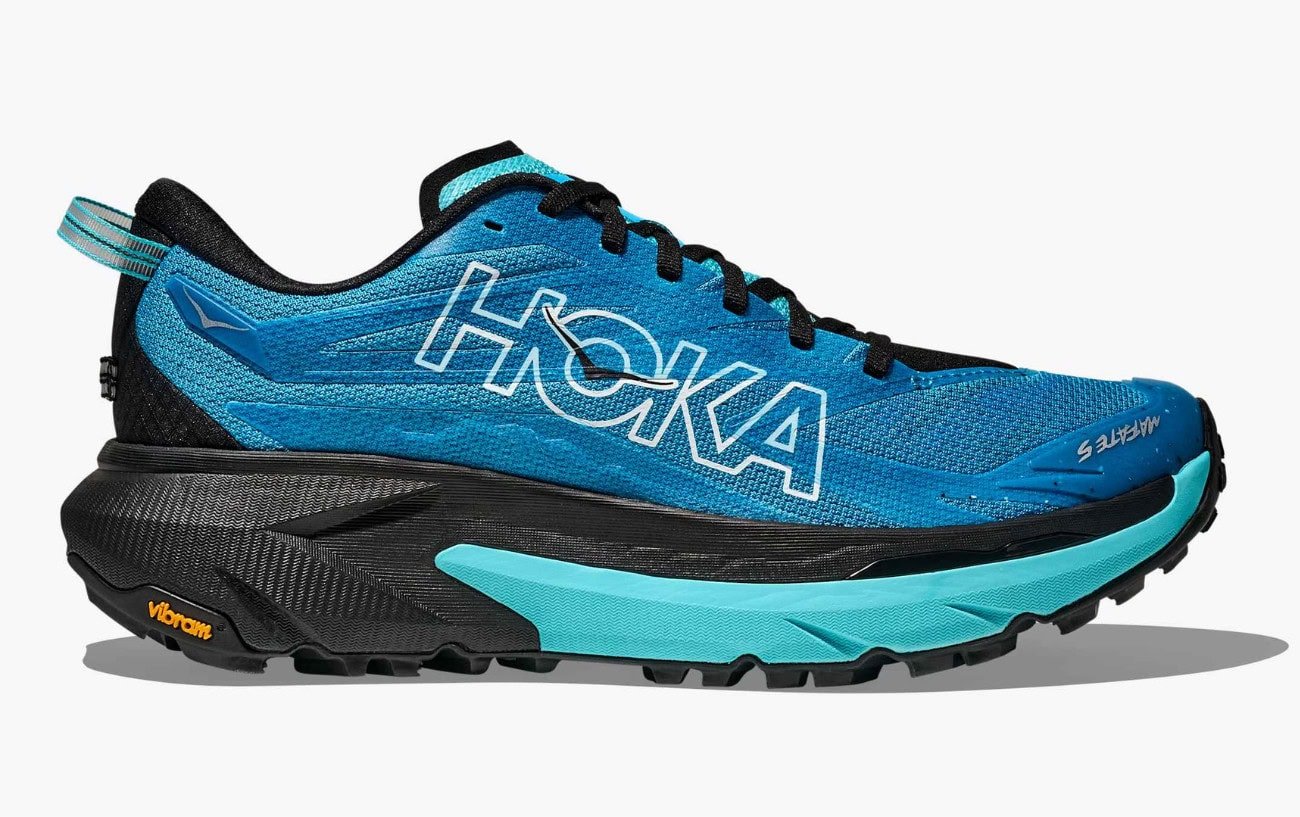
🥉 Hoka Mafate 5 — Worn by Katharina Hartmuth
- Support structure: Incorporates Rocker Integrity Technology—a flexible TPU forefoot plate that helps the shoe retain its rocker shape over time for snappy, stable movement.
- Stability features: Built with a wide base, Active Foot Frame, and J-Frame™ for controlled support—ideal for reducing overpronation without aggressive correction.
- Midsole stack: Adds 5 mm more stack height at the heel (and 2 mm up front) compared to its predecessor, with a dual-density foam setup—soft, energetic top layer over EVA bottom layer.
- Outsole: Uses Vibram Megagrip with 5 mm traction lugs enhanced by “Traction Lug” tech—improving lug shape for better grip and increasing contact surface by ~50%.
- Upper and design: Features a dense yet breathable warp knit upper with overlays for durability and optional ankle gaiter compatibility for added trail debris protection.
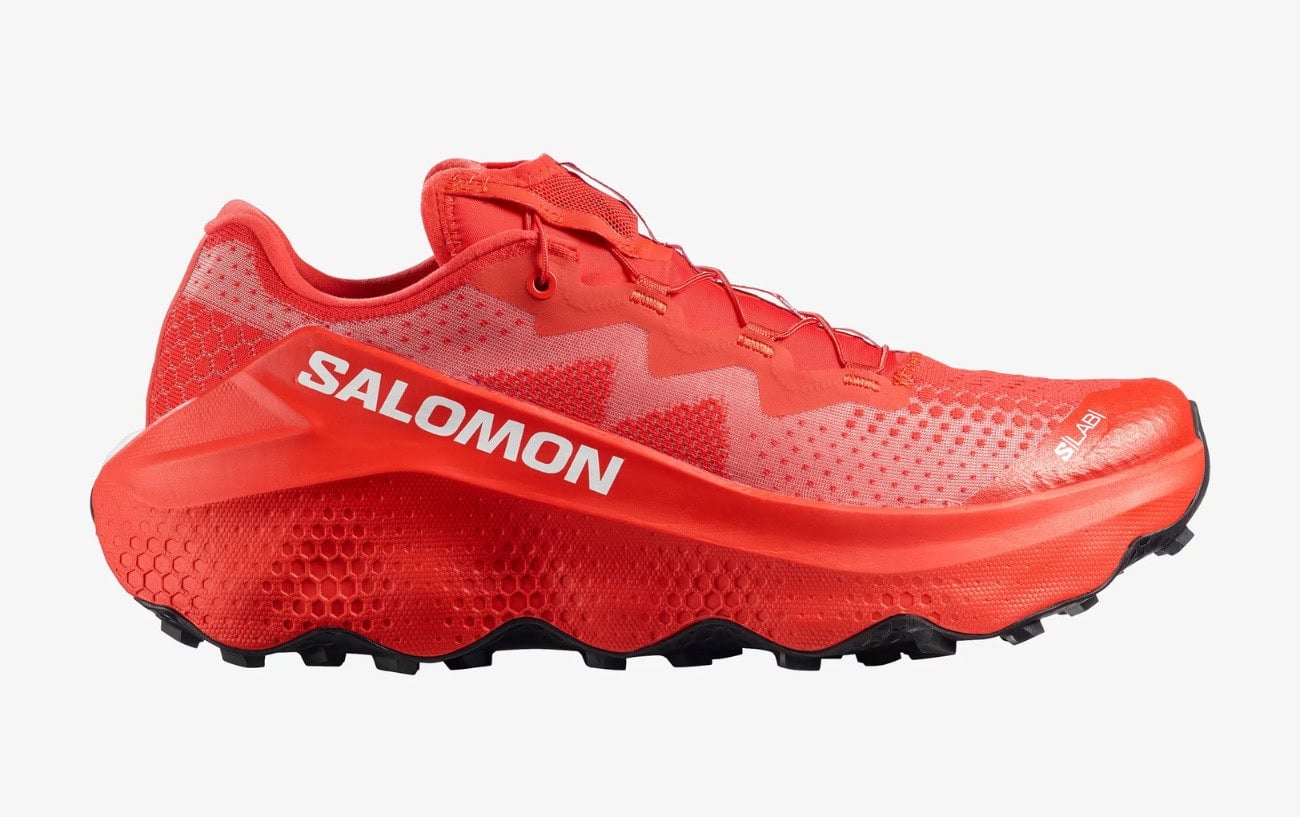
🥈 Salomon S/Lab Ultra Glide 1.5 — Worn by Camille Bruyas
- Comfort and cushioning: Designed to offer “soft, dynamic cushioning that adapts to your needs over distance”.
- Outsole innovation: Incorporates RelieveSphere tech—a wavy outsole geometry crafted to diffuse pressure points and minimize fatigue.
- Heel fit update: The 1.5 version brings a restructured heel collar, addressing slippage and improving comfort compared to the first generation.
- Stack and drop: Roughly 41 mm heel, 35 mm forefoot, yielding a 6 mm drop.
- Midsole composition: Dual-foam setup—EnergyFoam+ core enveloped by a frame of EnergyFoam, creating a cushioned yet stable ride.
- Weight: Around 10.8 oz for a men’s size 10, placing it in the ultradistance, high‑cushion category.
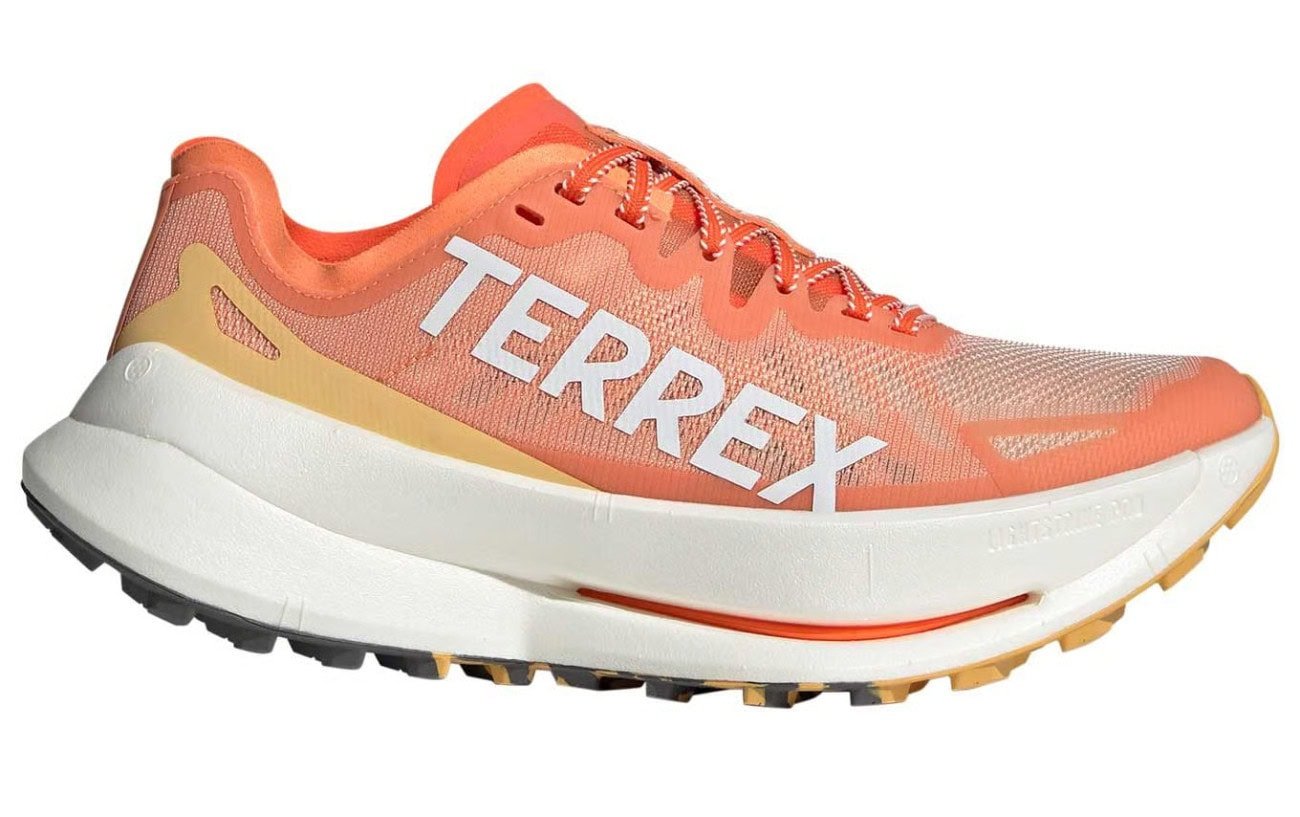
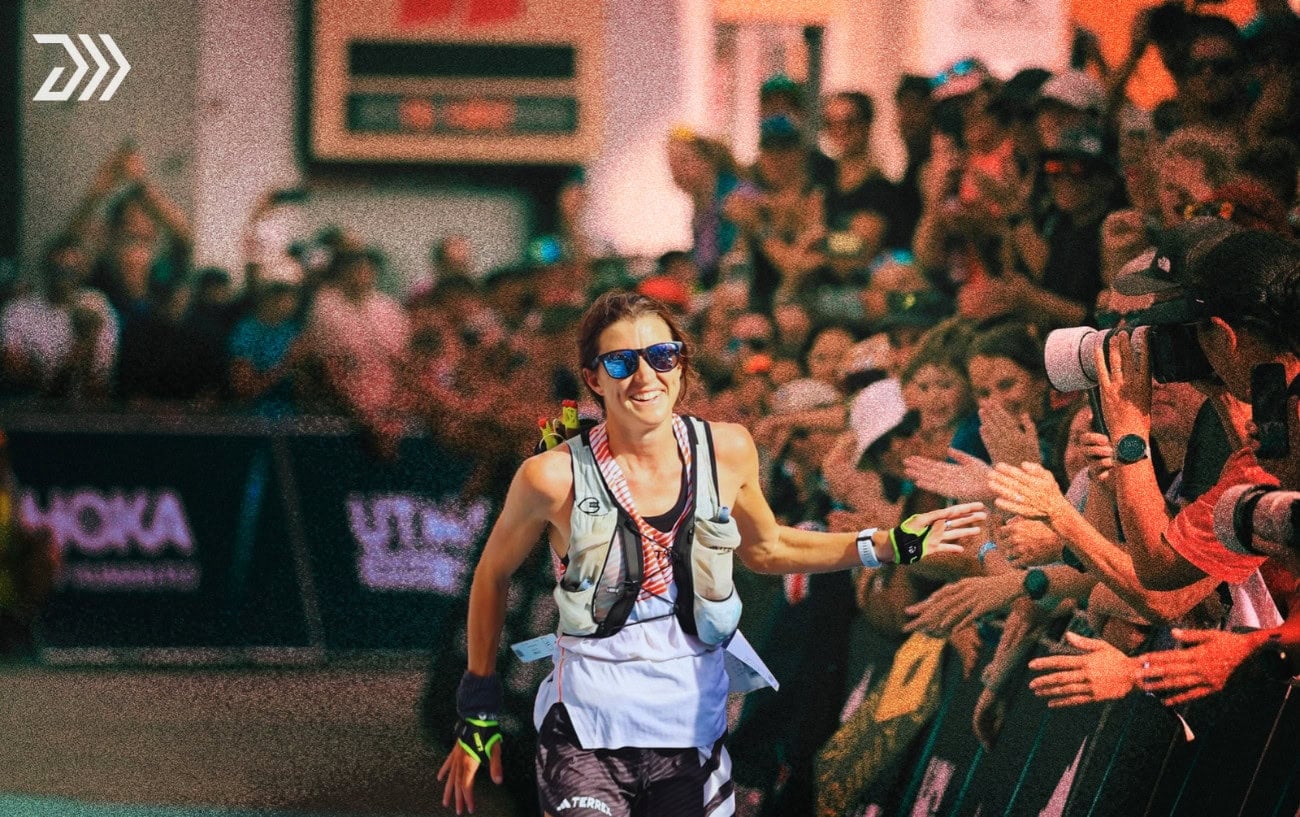
🥇 Adidas Terrex Agravic Speed Ultra — Worn by Ruth Croft
- Rocker design: Built with a “dynamic rocker design for smooth & efficient fore‑foot running”.
- Propulsion: Includes full-length Energy Rods embedded in the midsole for lightweight stiffness and efficient energy return.
- Cushioning: Features LIGHTSTRIKE PRO foam to deliver a responsive, springy feel underfoot.
- Grip: Utilizes a Continental™ Rubber outsole, offering reliable traction on both wet and dry terrain.
- Fit and protection: A gusseted tongue enhances mid-foot lockdown and keeps out debris.
- Upper and weight (women’s version): A minimalistic single-layer upper enables lightweight despite substantial sole tech. Women’s size 6.5 weighs around 8 oz, with a banana-shaped rocker and a 2 mm heel-toe drop.
Summary Table
| Shoe | Key Tech Highlights |
|---|---|
| Adidas Terrex Agravic Speed Ultra | Rocker design; Energy Rods; LIGHTSTRIKE PRO foam; Continental outsole; gusseted tongue; superlight minimal upper (~8 oz women’s) with 2 mm drop |
| Salomon S/Lab Ultra Glide 1.5 | Dual-density Energy Foam midsole; RelieveSphere outsole; redesigned heel collar; ~41/35 mm stack, 6 mm drop; ~10.8 oz weight |
| Hoka Mafate 5 | Rocker Integrity TPU plate; Active Foot Frame & J-Frame; higher dual-density stack; Vibram Megagrip with Traction Lugs; technical knit upper |
RunClub
Get more running stories — join RunClub
Daily running news, a community of 300,000+ runners, free training plans for every distance, and a daily running game. Free to join — no card.
Already a member? Log in →





Start the conversation