


Every runner training for a marathon faces the same problem: How can you increase your miles without also increasing your risk of getting injured?
Runners aren’t the only ones who wrestle with this question. Researchers have long sought an answer and have mostly come up empty-handed.
Why? Because the reasons for running injuries are “multi-factorial.” They arise from poor running form, worn-down shoes, excessive weight, training mistakes, high stress, inadequate sleep, and dozens of other causes.
Now at last we have an answer to the train-without-injury question. A just-released study of marathon runners has revealed a simple, at-home exercise that provides substantial protection from injuries.
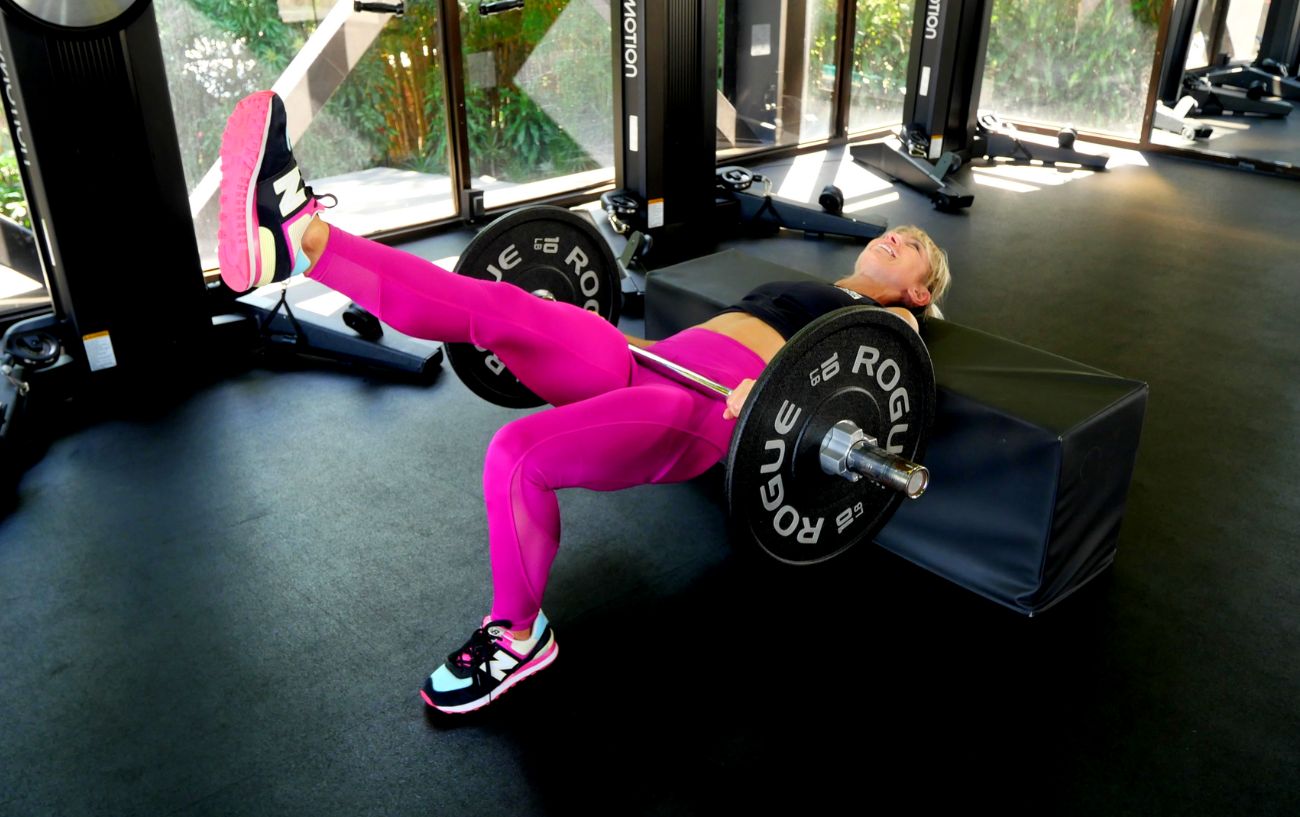
I won’t tantalize you any longer. Here’s the payoff you’re looking for. The almost-magical exercise is the single-leg glute bridge.

Getting A Leg Up Against Injuries
If you perform this exercise regularly during marathon training, you can decrease your risk of injury by more than 50 percent. Indeed, authors of the study of runners training for the New York City Marathon concluded: “Participants who could hold a single-leg glute bridge on their weaker side for 20 to 29 seconds had a 64 percent lower risk of running-related overuse injury” than those who could only hold the bridge for 0 to 9 seconds.
Look at that number again: 64 percent lower risk of injury. It’s astonishing.
But it’s also quite convincing. Because it didn’t come from one of those small pilot studies with a mere handful of runners. The scientific survey included 867 runners in serious marathon training. The paper is titled “Strength and flexibility self-assessment and subsequent training injuries among runners of the New York City Marathon,” and it appeared in the Clinical Journal of Sport Medicine 1.
What Exercises Can Prevent Running Injuries?
The physicians behind the study wanted to see if they could identify any basic strength or stretching exercises that would reduce injuries. The strength exercises included pushups, heel raises, side planks, and the single-leg glute bridge. The flexibility moves included typical stretches like the quadriceps stretch and the sit-and-reach stretch.
Only one exercise, the single-leg glute bridge, reached the point of statistical significance when it came to reducing injuries.
The runner-subjects had completed an average of 10 previous half-marathons and three marathons. They trained for 16 weeks for the 2019 New York City Marathon and had a goal time of 4:04 on average. They were evenly split between males and females, and had an average age of 41.5.
Forget About Pushups
The study period began before the runners launched into their marathon training. At that time, they were asked to test their ability at each of the strength and flexibility exercises. They repeated the test once a month for each of the next four months.
You might be interested in the pushup results because, well, just about everyone is interested in pushups. Yes, there was a trend toward fewer injuries in those who could do a lot of pushups (60 or more).
But the result was not statistically significant, and only 4.5% of all runners could reach the 60 pushups mark. You’ll get a much better outcome by focusing on those leg bridges. They build core stability, which reduces stress on the knees and hips when running.
How To Stay Ahead Of Injuries
Here’s a great article with easy-to-follow visuals explaining how to do a variety of glute-bridge exercises. It includes #4, the single-leg glute bridge. If you’re new to glute bridges, begin with the basic both-legs bridge. After you feel comfortable with that movement, move on to single-leg bridges.
Start with just four or five per session, lasting two to three seconds each. Progress steadily but slowly from there. Remember your goal: achieving at least a 20-second hold on your weaker leg. This will be the one that trembles the most when you extend the length of your bridges.
Here’s another article outlining 15 ways to help prevent running injuries. All are research-based, hence proven in one situation or another.
After six decades of marathon running, I’ve learned one additional golden rule: When pain speaks, pay attention early. As soon as you notice an unusual ache or soreness, take several days off from running. This is often enough to alleviate soft-tissue strains and to prevent the development of more serious injury.
Avoid The “Terrible Too’s” (Too Much, Too Soon)
In addition to building runner-specific core strength with single-leg bridges, you have to be smart about your daily and weekly mileage. This is particularly true of your long runs. The same authors who discovered the single-leg bridge secret previously investigated how training mileage affects injury risk.
In that paper,2 which included 735 runners who logged more than 49,000 runs, the researchers found that no training week should exceed the mileage of previous training weeks by more than 50%.
Sure, it’s easy to get behind on your marathon training program. But don’t try to solve that problem by bumping up your mileage substantially. That will only put you on a road paved with injuries.
An even more impressive runner-injury study3 was published just a couple of months ago by a Swedish team. They followed more than 5,200 runners over an 18-month period. They believe their report represents “the largest study conducted to date on this topic”.
More importantly, they uncovered a “novel finding,” namely that the “spike” in the length of your long run is a major injury factor. Even a modest spike of just 10% (from 10 to 11 miles, for example) produced a 64% increase in injuries.
A long run spike that doubled the distance (say, from 4 miles to 8 miles) led to a 128 percent increase in injuries. The authors concluded that “Runners should avoid running a distance in their current session that exceeds 10% of the longest distance covered in the previous 30 days.”

Expert Answers From A Marathon-Injury Doctor
In the section below, Brett Toresdahl, M.D., answers questions about marathon training and injury risks. He is the first author of the glute-bridge paper and several previous papers on injuries during marathon training.
Toresdahl explains why the single-leg glute bridge is so powerful, and why stretching often doesn’t deliver the hoped-for results. Toresdahl was an assistant attending physician at New York’s Hospital for Special Surgery when he led the marathon studies and is now an associate professor at the University of Utah Health.
Why have researchers found it so hard to establish links between runner habits and injury risks?
Most injuries experienced by runners are overuse injuries. Despite the name, often it is more than just total training miles (or “use”) that is to blame for runners developing these injuries. There are many other factors as well. For example, running injuries could come from issues related to: footwear, strength, form, nutrition, recovery, sleep, and other causes.
When we researchers attempt to account for all these variables, the task becomes very challenging. Some runners might get injured as they increase their total training miles, but other, more experienced runners might not. They might have better form or follow smart recovery methods. So you don’t get consistent results when you just look at one thing, like mileage.
Why do you think the single-leg glute bridge had such a powerful effect in your new study? What does it specifically do that might protect runners from injury?
The single-leg glute bridge exercise involves the gluteal muscles and hamstrings, as well as the core muscles. Gluteal strength, specifically the gluteus medius and minimus, and core strength have been associated with running economy. It appears that running economy might serve as a marker for efficient, balanced strength. These same qualities might prevent injuries as they help runners maintain good form to absorb the impact forces that running generates.
Why does stretching so often seem ineffective?
Here’s my suspicion: The range of motion needed to run is well within the functional range of motion that most runners already have. They don’t need more. If they do a lot of dedicated stretching, it doesn’t really help them run any better. But it might push them into injuries.
You’ve conducted several studies examining injuries during marathon training. Can you summarize your findings briefly with practical advice for runners?
Running is an excellent form of exercise, but it also comes with risks. These are increased when runners build their training mileage before a marathon.
Consistency in training is a key, as is a gradual increase in training miles. Runners should build their miles slowly and avoid big jumps in training load. Strength training is another important concept, along with various forms of cross-training.
We have also found that orthotics are associated with injury. Runners should use them only when necessary to treat an injury or foot condition.
In the end, there’s no guarantee of an injury-free marathon buildup, but a 64 percent reduction is a game-changer. Adding single-leg glute bridges to your weekly routine could be the smartest training investment you’ve ever made.
For a complete glute workout, check out this next guide:
RunClub — Free
Join 300,000+ runners in RunClub
Free training plans for every distance, a daily running game, exclusive coaching content, and a real community of runners. Create your free account in 20 seconds — no card.
Already a member? Log in →




Start the conversation