


Update — 27 April 2026: Since this article was published, Sabastian Sawe became the first man to officially run a marathon under two hours, clocking 1:59:30 at the 2026 London Marathon to break Kelvin Kiptum’s previous men’s world record (2:00:35) by 65 seconds.
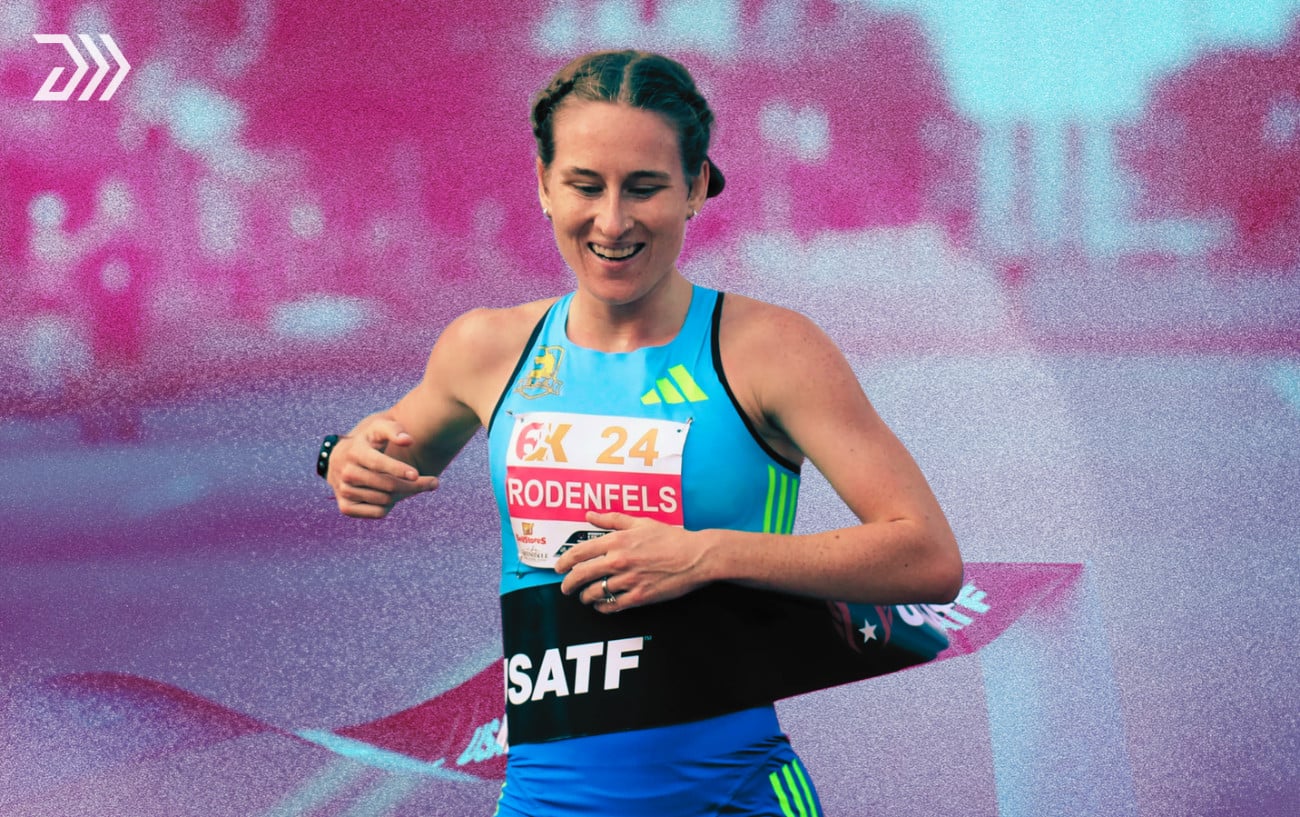
She’s a 38-year-old woman who has spent 18 months chasing this — the 5am track sessions, the 20-milers in January sleet, the foam roller that now lives on the couch. The qualifying standard for her age group is 3:35:00. She crosses the mat in a PR, beating it by more than 5 minutes.
She is, in every conventional sense, a Boston qualifier.
Except she might not be. Because the qualifying standard and the actual standard needed to get into Boston are two very different numbers — and nobody told her that when she started training. The gap between them shifts unpredictably from year to year, isn’t revealed until registration closes months after your qualifying race, and by then there’s nothing you can do about it.
The Boston qualifying system has a problem. Actually, it has two.
The first is the cutoff: the hidden buffer beyond the published standard that you need to actually secure a spot. The second is a quieter inequity baked into the standards themselves — one that consistently advantages some age groups over others in ways that have nothing to do with running ability.
The system is broken. Let’s talk about how, and what could actually fix it.

Two Standards, One Race
Most runners understand the Boston qualifying system at a surface level: run fast enough, get in. The BAA publishes standards by age and gender — 2:55:00 for men 18–34, 3:25:00 for women 18–34, and so on down the age groups. Hit the standard within the qualifying window, and you can register.
What most people don’t fully grasp — at least not until they’re on the wrong side of it — is that there are effectively two qualifying standards.
The first is the published time. The second is the cutoff.
Because Boston receives far more qualifying applications than it has spots for, the BAA fills the race using rolling admission: fastest qualifiers get accepted first, and registration continues until the field is full. The cutoff is the margin by which runners needed to beat the published standard in order to get accepted.
In 2024, that cutoff was 5 minutes 29 seconds. In 2025, it was 6 minutes 51 seconds — the second-highest in history. In 2026, it dropped to 4 minutes 34 seconds.
Here’s the problem: you don’t know what the cutoff will be when you’re training. You don’t know it when you’re standing on the start line of your qualifying race. You don’t even know it when you cross the finish line and think you’ve made it. The cutoff is only revealed after the registration window closes — at which point the race season may be long over, and your next qualifying opportunity months away.

The Cutoff in Context: How Bad Has It Actually Gotten?
The cutoff system began in 2012, when demand for Boston’s time-qualifier spots first started outpacing supply. In the decade since, the trend has been unmistakable.
| Year | Cutoff | Qualified Applicants | Rejected |
|---|---|---|---|
| 2019 | 4:52 | 30,458 | ~7,000 |
| 2021 | 7:47 | ~20,000 | 9,215 |
| 2022 | 0:00 | ~30,000 | 0 |
| 2023 | 0:00 | ~30,000 | 0 |
| 2024 | 5:29 | 33,058 | 11,039 |
| 2025 | 6:51 | 36,393 | 12,324 |
| 2026 | 4:34 | 33,267 | 8,905 |
The 2022 and 2023 anomalies — when no cutoff applied and all qualifiers were accepted — were a function of reduced participation following the pandemic. They were not a new normal. The moment interest rebounded, the cutoff returned with a vengeance.
The trend line is stark: more runners are qualifying every year, the field isn’t growing, and a higher cutoff is becoming the default state of the race. The BAA responded for 2026 by tightening the published standards by five minutes across most age groups — a counterintuitive move that actually lowered the barrier (accepting slightly slower times) precisely because doing so reduced the total applicant pool.
There are now years where a runner can beat the qualifying standard by nearly seven minutes and still not get in. Running a 2:53 marathon — a time that would have turned heads at most local road races a generation ago — isn’t enough to guarantee a place in a field that has, in recent cycles, been rejecting roughly one in three qualified applicants.

The Age Grading Problem: Who Is Boston Actually For?
The cutoff issue is a practical problem. The age-grading problem is a philosophical one — and it cuts deeper.
When the BAA sets qualifying standards by age group, the implicit promise is that they’re calibrated to a consistent level of performance. A 45-year-old man running 3:20 and a 25-year-old man running 3:00 are theoretically being asked to demonstrate the same relative level of ability — running fast, just at different stages of life.
But are they? To answer that, you need age grading: a method of translating performances across ages into a single percentage of world-class performance. A 65% age grade means you’re running at 65% of the speed of the world record for your age — whether you’re 28 or 68.
When you apply age grading to the Boston qualifying standards, the picture gets a bit messy.
Men’s qualifying standards by age-graded performance
| Age Group | BQ Standard | Age Grade % |
|---|---|---|
| 18–34 | 3:00:00 | 66.1% |
| 35–39 | 3:05:00 | 65.0% |
| 40–44 | 3:10:00 | 64.8% |
| 45–49 | 3:20:00 | 63.8% |
| 50–54 | 3:25:00 | 64.8% |
| 55–59 | 3:35:00 | 64.6% |
| 60–64 | 3:55:00 | 62.4% |
| 65–69 | 4:10:00 | 62.6% |
| 70–74 | 4:25:00 | 63.7% |
| 75–79 | 4:40:00 | 65.7% |
| 80+ | 4:55:00 | 65.8% |
Age grading modeled using World Athletics age factors; world record baselines: men 2:00:35, women 2:09:56
At first glance, this looks reasonably consistent — most groups sit somewhere between 62% and 66%. But look more closely at the men’s 60–69 groups, and something becomes apparent: they’re being asked to perform at roughly 62–63% of age-world-record pace to qualify, while men aged 18–34 are held to 66%. The qualifying bar is meaningfully easier for men in their early-to-mid 60s than it is for men in their 20s.
If BQ standards were set at a uniform 65% age grade across the board, the equitable qualifying times would look quite different from the published ones. For men 60–64, the equivalent 65% time would be approximately 3:45 — nearly 10 minutes faster than the current 3:55 standard. For men 65–69, it would be around 4:00, compared to the current 4:10.
Women’s qualifying standards by age-graded performance
| Age Group | BQ Standard | Age Grade % |
|---|---|---|
| 18–34 | 3:30:00 | 61.4% |
| 35–39 | 3:35:00 | 60.4% |
| 40–44 | 3:40:00 | 60.7% |
| 45–49 | 3:50:00 | 60.3% |
| 50–54 | 4:00:00 | 60.5% |
| 55–59 | 4:10:00 | 61.2% |
| 60–64 | 4:30:00 | 60.2% |
| 65–69 | 4:45:00 | 61.1% |
| 70–74 | 5:15:00 | 60.1% |
| 75–79 | 5:45:00 | 60.1% |
| 80+ | 6:15:00 | 58.6% |
Every women’s standard sits around 60–61% age grade — uniformly lower than the men’s equivalent bar. Women are, in aggregate, being asked to perform at a lower relative level to qualify. The 30-minute gap between men’s and women’s standards (for 18–34: 3:00 vs. 3:30) may not accurately reflect the actual performance differential between male and female world-class marathoners. The women’s world record is 9 minutes 21 seconds slower than the men’s — a 7.8% gap — yet the qualifying standards give women a 16.7% buffer at the 18–34 level.
None of this is to say women shouldn’t have different standards — participation gaps and the historically male-dominated nature of the sport are real factors. But it does complicate the idea that the BQ system represents a clean, equitable bar of achievement. It doesn’t. It represents a negotiated compromise that has never been systematically calibrated to age-graded fairness, and the longer it goes without reform, the more runners in some groups are essentially playing a different game to runners in others.

The Two-Day Boston Proposal
If the problem is too many qualified runners chasing too few spots, the most obvious solution is a bigger race.
We’ve written about this in detail before — the case for a two-day Boston. The short version: add a Sunday edition the day before the main Monday race, with a slightly different entry pathway, and you double the potential field size without touching the prestige or character of Patriot’s Day Monday.
The concept would work something like this: Sunday’s race would be open to runners with a sub-5:30 finish at any marathon within the qualifying window, who narrowly miss the standard or fall just short of the cutoff. Priority could go to those closest to the qualifying standard, creating a meaningful second tier of achievement rather than a consolation event. A slightly higher entry fee would offset the additional infrastructure costs.
The practical objections are real: the MBTA only has a fixed number of charter buses. Inter-town coordination along the point-to-point route from Hopkinton to Boston is a significant logistical undertaking. The BAA has historically been resistant to expansion, explicitly citing quality and experience over size.
But those aren’t insurmountable barriers — they’re planning problems. London, Berlin, and Chicago all manage 40,000-plus fields on similarly complex urban courses. The question isn’t whether it’s possible. It’s whether the BAA believes growing the race is worth the organisational investment. With 12,000+ qualified runners being turned away annually, the case is getting harder to dismiss.

Other Fixes Worth Considering
The two-day model is the most structurally ambitious fix. But there are other levers the BAA hasn’t touched.
Publish a target window, not just a standard
The simplest reform wouldn’t change the qualifying system at all — it would just make it more honest.
The BAA has years of historical data on how tough the cutoff is likely to be. They know roughly how many people will qualify at any given standard, and they know roughly what cutoff that’s likely to produce. There’s no good reason not to publish a projected cutoff range before the qualifying season starts — not a guarantee, but a realistic target window based on prior years.
If you’re a 30-year-old man in 2025, and the BAA publishes a “projected cutoff range: 5:30 to 7:30,” you know you need to train for 2:52–2:54, not 3:00. That’s not a guarantee, and it could miss — but it’s better information than nothing. Runners who base race-day pacing decisions on better data make better decisions.
Tiered guaranteed entry
This is a middle-ground option: guarantee a spot for anyone who beats the qualifying standard by a threshold margin — say, 10 minutes. Runners who go sub-2:50 (for men 18–34) are in, no lottery required, regardless of how many others qualify that year. Remaining spots fill on the existing rolling-admission basis.
This creates a genuine stretch goal for serious runners, while preserving the standard cutoff framework for the majority. It also gives training plans a concrete target: not just “BQ,” but “BQ minus 10” — something coaches can work with.
An age-graded qualifying standard
The most radical — and arguably most principled — reform would be to scrap age-group standards entirely and replace them with a single age-grading threshold. Want to run Boston? You need to hit, say, 65% age grade on a certified course. It’s the same bar for every runner, regardless of age or gender.
This would mean some age groups seeing easier times than they have now, others harder. Based on the modelling above, men’s 60–69 standards would tighten significantly, while the very oldest age groups (75+) might see a small easing. Women’s standards would largely tighten to bring them in line with the relative effort required of men.
The objection is complexity: most runners don’t know their age grade, don’t have tools to calculate it easily, and the BAA would be introducing a metric that’s more opaque than a clock time. The counterargument: the BAA could publish an age-grade calculator alongside the standards, and translate each group’s 65% threshold into an easy-to-reference table anyway. It’s a presentation challenge, not a fundamental barrier.
A hybrid qualifier-plus-lottery system
Boston is the only Abbott World Marathon Major that doesn’t offer any kind of ballot system. Tokyo, London, Berlin, Sydney, Chicago, and New York all give non-elite runners a shot at a spot through a ballot, regardless of finishing time.
A hybrid model would reserve the majority of spots — say, 20,000 of 30,000 — for time qualifiers, allocated on the current rolling basis. The remaining spots would open to a ballot for any runner who has completed a marathon in the past two years within a reasonable finishing time. This doesn’t open the doors wide, but it does give the hundreds of thousands of runners who will never run a 3:00 a legitimate, if long-odds, shot at Boylston Street.
The purist objection is obvious: Boston’s identity is built on the qualifying standard. It’s the race you earn. Opening any portion to a ballot dilutes that. It’s a fair concern. But given that charity entries and sponsor allocations already represent thousands of non-qualifier spots in each year’s field, the idea that Boston is purely a meritocracy of fast times is already a polite fiction.

The Underlying Tension
There’s something deeper going on with the Boston qualifying system that none of these fixes fully resolve.
Boston is simultaneously trying to be two things: a historic, meritocratic race defined by a qualifying standard, and a 30,000-person event that functions as a major commercial and civic institution. Those two things are in tension, and they’re becoming more so as running participation grows and demand for Boston spots keeps rising.
In 2025, 36,393 runners met the qualifying standard for a race with 30,000 spots. That’s a demand surplus of 21%. It will almost certainly grow. Unless the BAA either expands the race, tightens the standards further (which just shifts the problem upward), or fundamentally rethinks the qualifying model, the cutoff will keep climbing and the gap between what runners think they need and what they actually need will keep widening.
The BAA has hard choices ahead — about how big Boston wants to be, who it wants to serve, and what the qualifying standard is actually meant to represent. An age-graded bar? A bragging right? A capacity management mechanism? All three of those are different things, and right now the system is trying to be all three at once.
The runners who cross finish lines thinking they’ve made it — only to find out months later they weren’t fast enough — deserve better information, and a more coherent system for translating their effort into an answer.
Right now, what they get is a four-month wait and a hope.
RunClub
Get more running stories — join RunClub
Daily running news, a community of 300,000+ runners, free training plans for every distance, and a daily running game. Free to join — no card.
Already a member? Log in →











Join the conversation
I wonder if limiting entries to those who qualify on a loop, flat or net uphill course would have a major impact on the number of qualifying entries. Many get in by running extreme downhill point to point courses and that doesn’t seem fair does it?
One other useful piece of information in considering this is, through this system (eg. excluding elites, charity places, etc) (a) how many runners were given a place in each category and (b) how many actually participated on the day? So, for instance, were there equal number of men in the 35-39 category as the 60-64? And a commensurate number in the 18-34 category (eg. 17/5ths) and so forth? 🤔