


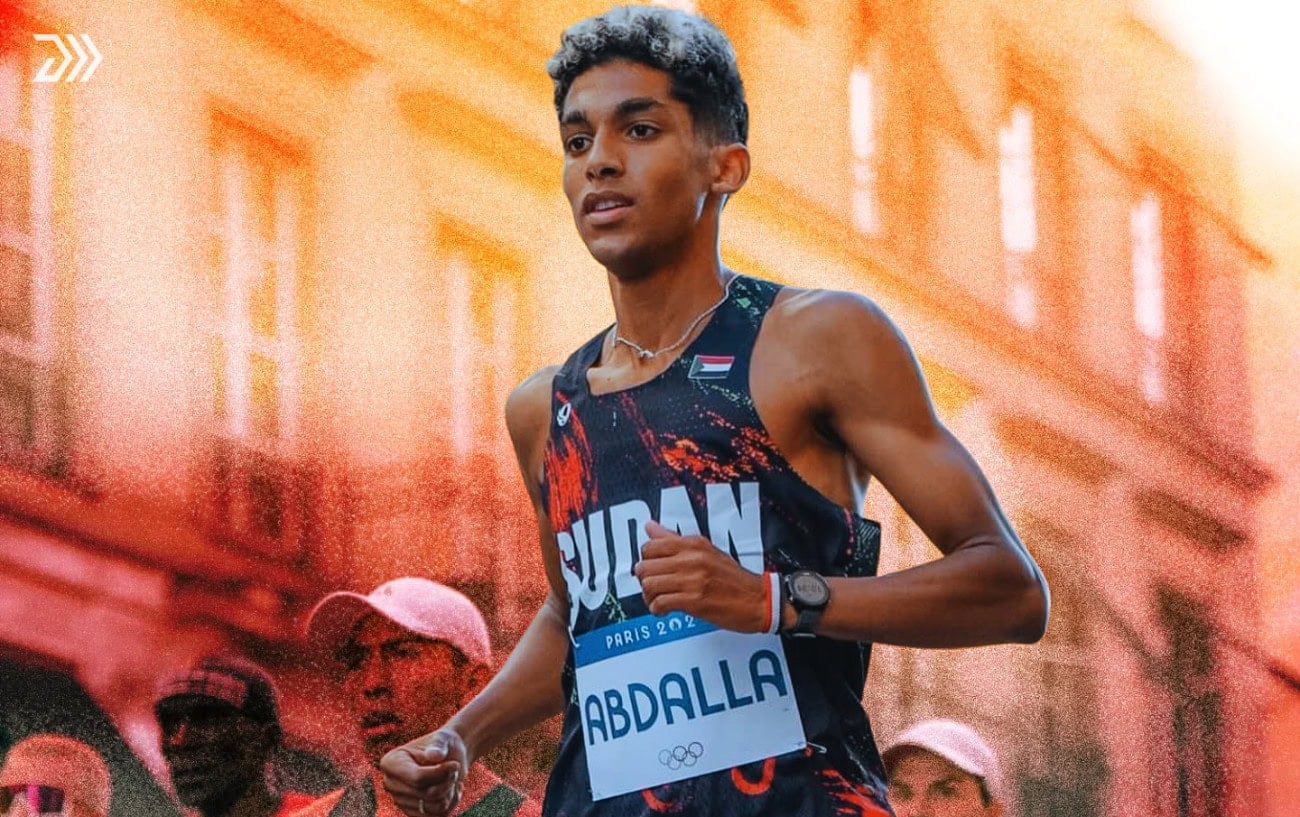
Yaseen Abdalla logged 37.85 kilometers (23.5 miles) in 1:45:09 on a treadmill on Sunday evening, according to the session he posted to Strava, an average of 2:47 per kilometer. That is three seconds per kilometer quicker than the pace Sabastian Sawe held for his 1:59:30 world record in London in April, and Abdalla kept it going until he was only 4.3K short of a full marathon. Carried all the way to 42.2K, it would have produced a 1:57:13.
The session came three weeks after his 59:12 at the Valencia Half Marathon, where he averaged 2:48 per kilometer, and three weeks before he lines up for the full distance in the same city on Dec. 6. By Thursday the run had more than 950 kudos, and one of the comments under it called it a “generational workout.”
The Splits Behind the Summary
Open the laps on the same activity and the run looks very different. Abdalla’s Suunto Race 2 split it into miles, and those 18 laps plus a final 300 meters add up to about 18.2 miles (29.3K) in the same 1:45:09, an average of 5:47 per mile. Not one of them is under 3:00 per kilometer. He started between 3:48 and 3:58 per kilometer, came down into the 3:20s over the second hour and finished with a 3:16, while his heart rate rose from 123 to 185. Several people in the comments noticed the gap within hours.
On a treadmill a watch has no GPS signal, so it estimates distance from the swing of the arm, and that estimate can be well off. The usual fix is to type in the distance the treadmill showed once the run is over. Strava then recalculates the total and the average pace, but the lap splits stay exactly as the watch first recorded them, which is how a summary at 2:47 per kilometer can sit on top of laps that never go under 3:00. One commenter wrote that Abdalla corrects his treadmill runs this way afterward, though Abdalla posted the session without a description.
If the 37.85K is right, the watch came up 8.6K short, close to a quarter of the run, and scaling its laps up to that total would put his first miles near 3:04 per kilometer and his last one near 2:32. If the watch is closer to the truth, Sunday was an 18-mile progression run at roughly 2:31 marathon pace, which is hard to square with a heart rate of 185 from a man who ran 59:12 three weeks earlier. The treadmill’s own reading is not beyond question either, since Abdalla has said pace can read quite differently from one machine to the next. Only he knows what the belt showed, and he has not said.
A Marathon Build Done Mostly Indoors
Abdalla, 25, coaches himself and runs more than 140 miles a week, and a big share of it happens on a treadmill, at a Life Time gym or in a friend’s basement, as RUN described in a profile last week. The Austin heat drives him indoors, and he has said it takes more out of him, at around 150 pounds, than it does out of the lighter men he races.
Sunday was a step up from what he had already shown this fall. On LetsRun’s Track Talk podcast earlier this month he described a recent treadmill session of 22.17 miles in 1:45, which LetsRun put at around 2:04 marathon pace. Sunday’s summary has him covering another 1.35 miles in just about the same time.

From Walk-On to Olympic Marathoner
Abdalla took up running as a sophomore at Lyndon B. Johnson High School in Austin and joined the University of Texas as a walk-on in 2019. He ran the anchor leg when the Longhorns won the 2022 NCAA indoor distance medley relay, then moved on to Tennessee and Arkansas, where he placed fourth at the 2024 NCAA Cross Country Championships and set Sudanese indoor records of 3:55.31 for the mile, 7:34.17 for 3,000m and 13:09.99 for 5,000m.
He was born in the United States but represents Sudan, where his parents come from. Sudan sent him to the 2024 Paris Olympic marathon with a universality place before he had ever run the distance, and he carried the flag at the opening ceremony. He finished 33rd in 2:11:41, a race he started, he told LetsRun, on two hours of sleep and a pre-race pizza. A year later he was 21st at the World Championships in Tokyo in 2:13:32.
He has no agent and no shoe contract, and he has built a following of more than 30,000 YouTube subscribers by filming his training. His half-marathon debut in October showed what that training could do on a fast course. He had planned to follow a 59:30 pace group that the organizers never put on, so he ran with the 59-minute pacers and finished eighth, five seconds under Conner Mantz’s 59:17 American record, a time that cannot count as one because he races for Sudan.
What Valencia Could Hold
Both of his marathons so far were championship races, run in August and September heat with no pacemakers. Valencia will be the first time he races 26.2 miles on a flat, paced course in cool December weather. Put his 59:12 into the Riegel formula, the long-standing rule of thumb for converting race times, and it predicts a 2:03:26.
His own aim, he told LetsRun, is to go under Mantz’s American marathon record of 2:04:43, and he thinks he could run 2:02 or 2:03. A 2:03 asks for 2:55 per kilometer, eight seconds per kilometer slower than the pace on Sunday’s summary. With the treadmill numbers open to question, the road will be the real test, but treadmill-built marathoners have already had a good year: Vinny Mauri spent his summer on Planet Fitness treadmills and ran 2:06:45 in Chicago in October.
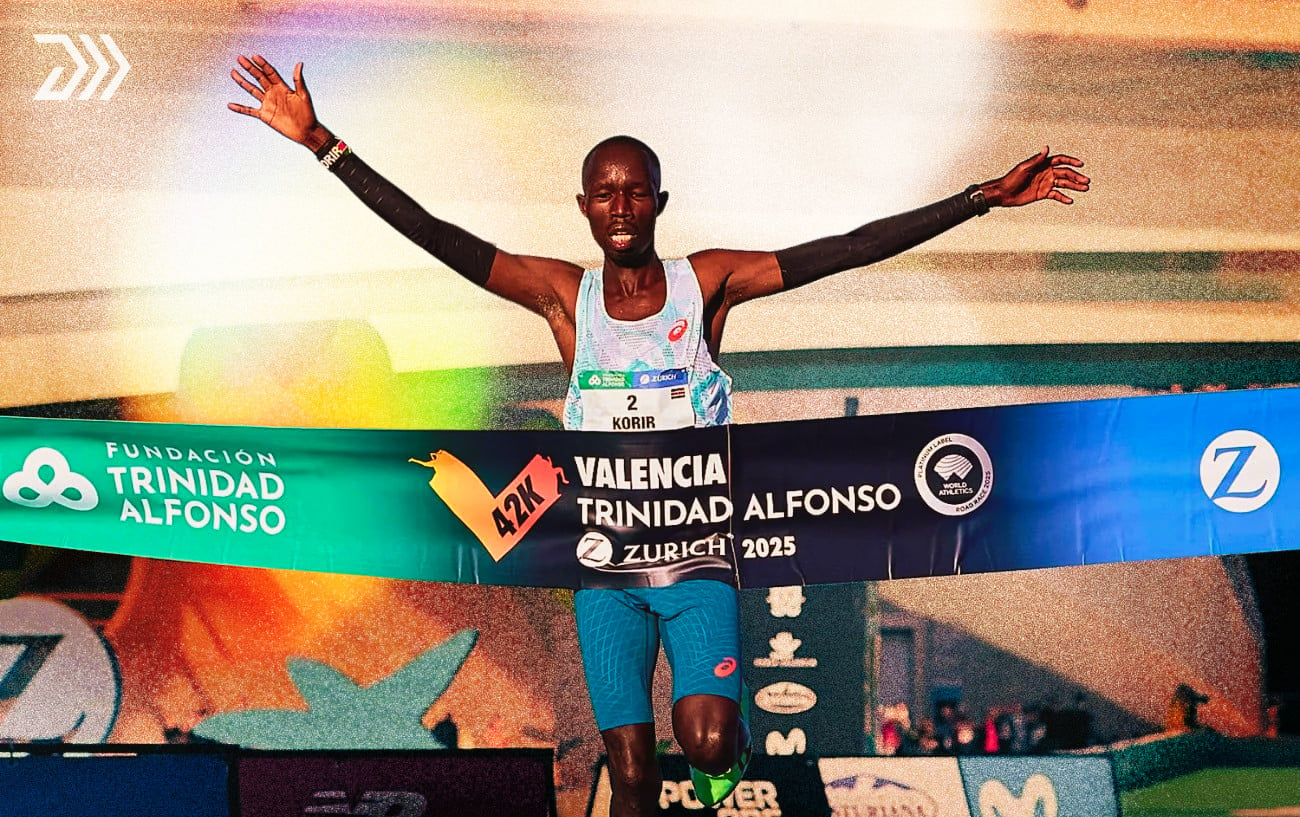
Valencia’s men’s race opened up when Yomif Kejelcha withdrew, leaving no one in the field who has broken two hours. John Korir returns as defending champion, and the race starts at 8:15 a.m. local time on Sunday, Dec. 6.
RunClub
Get more running stories — join RunClub
Daily running news, a community of 300,000+ runners, free training plans for every distance, and a daily running game. Free to join — no card.
Already a member? Log in →


Start the conversation