


7-Eleven has taken Nike to federal court over a sneaker.
The convenience store giant filed a lawsuit on Wednesday in the U.S. District Court for the Northern District of Texas, accusing Nike of copying its trademark orange, green and red stripe design on an upcoming Nike Air Max 95. To make matters worse, in 7-Eleven’s view, Nike scheduled the shoe’s release for July 11 — widely known as “7-Eleven Day,” the retailer’s annual Free Slurpee Day promotion. Reuters was first to report the filing.
“Nike has shown a callous and malicious disregard for 7-Eleven’s rights,” the company wrote in its complaint.

The Shoe at the Center of the Fight
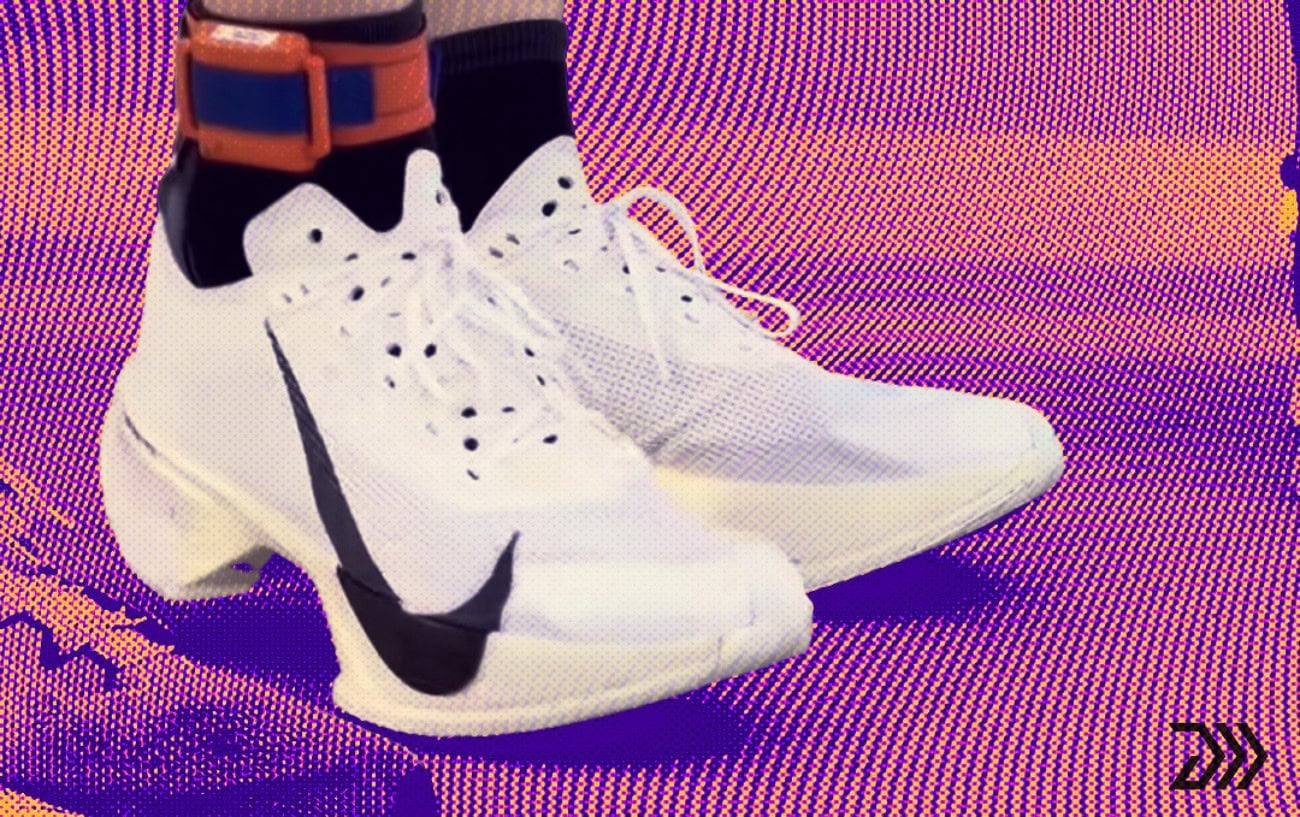
The sneaker in question is part of a two-shoe “Big Bubble” Air Max 95 pack that Nike has been developing, inspired by convenience stores popular in Japan. One colorway draws on 7-Eleven’s orange, green and red palette; the other nods to Lawson, a rival chain, using blue, white and red. Neither shoe is an official, licensed collaboration with either store. The insole of each pair features a blurred photograph that resembles a convenience store aisle, but there are no 7-Eleven or Lawson logos anywhere on the shoes. It’s not the first time Nike has leaned on nostalgia for a design rather than a formal license.
Sole Retriever first reported on the pack last year, and coverage has consistently framed the 7-Eleven pair as an homage. 7-Eleven’s lawsuit quotes several of those articles, noting that outlets including Sole Retriever, Women’s Wear Daily, Complex and Style Rave described its color scheme as “instantly recognizable,” “unmistakable,” “signature” and “iconic.” The complaint also says some online product listings have simply labeled the shoe the “7-Eleven” shoe.

Why 7-Eleven Says the Colors Belong to It
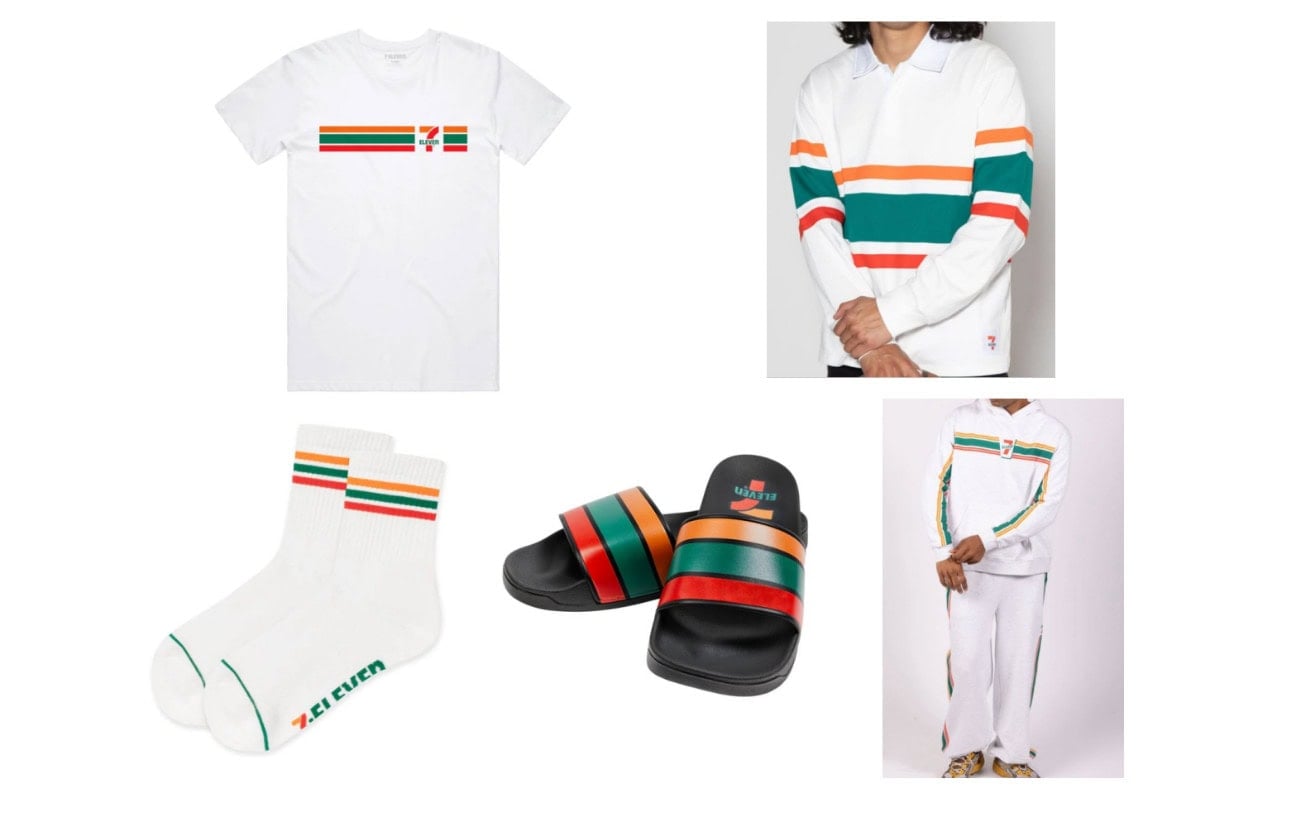
7-Eleven’s case rests on what it calls its “Tri-Color Mark” — the specific combination of orange, green and red stripes it says it has used continuously since at least 1987. The company holds multiple federal trademark registrations covering the color combination and its use on store signage, apparel, footwear and other merchandise, some dating back to the late 1990s.
The retailer operates more than 83,000 stores worldwide, including over 8,000 in the United States, and says it spends millions of dollars a year advertising under that branding. It has also released official footwear collaborations before, with Crocs, the golf apparel brands Sunday Golf and Breezy Golf, and skateboard brand DGK — all bearing the same stripe pattern with 7-Eleven’s blessing. That history, the lawsuit argues, is exactly why customers seeing Nike’s shoe would assume 7-Eleven had signed off on it, too.
The complaint lays out seven separate legal claims, including federal trademark infringement, trademark dilution and unfair competition under both federal law and Texas state law.

An Awkward History Between the Two Companies
This isn’t the first time Nike and 7-Eleven have been in the same room. The two companies had actually worked together before, designing an official 7-Eleven Nike SB Dunk Low ahead of the 2020 Tokyo Olympics. That release never happened — Nike shelved it after the Games were postponed because of the COVID-19 pandemic.
7-Eleven’s lawsuit points to that scrapped partnership as evidence that Nike knew exactly what it was doing this time. If the two companies had a real collaboration in the works once before, the argument goes, Nike understood the value of 7-Eleven’s branding and chose to use a near-copy of it without permission or payment.
7-Eleven Says It Tried to Settle This Quietly First
According to the complaint, 7-Eleven reached out to Nike more than once to resolve the dispute before suing. Nike responded, the lawsuit says, by indicating it would keep advertising the shoe and go ahead with the July 11 launch as planned.
7-Eleven is asking the court to block Nike from selling the shoe, order a recall of any pairs already shipped to retailers, and force Nike to hand over its profits from the release. It’s also seeking damages, tripled damages under trademark law, and attorneys’ fees. The company says at least one consumer has already bought a pair online through a third-party seller ahead of the official launch.
The case is 7-Eleven Inc. v. Nike Inc., No. 3:26-cv-02201-X, filed in the U.S. District Court for the Northern District of Texas. 7-Eleven is represented by Cole Ramey and Zoe Stendara of the law firm Kilpatrick Townsend & Stockton.

What Happens Now
As of Thursday, Nike had not filed a response and had not publicly commented. The Air Max 95’s product page remained live on Nike’s SNKRS app, and pairs were still listed for sale at retailers ahead of the planned July 11 drop — just nine days away.
Whether that launch happens on schedule is now an open question. 7-Eleven could ask the court for emergency relief to stop the release before “7-Eleven Day” arrives, though Nike may choose to pull the shoe on its own rather than fight that battle in court. Nike did not immediately respond to a request for comment on the lawsuit.
Nike’s willingness to lean on unlicensed, culture-inspired designs is part of a bigger trend across the sneaker world right now — a trend that’s reshaping how running brands collaborate outside the sport, too. For runners deciding whether any Nike model belongs in their rotation, our 2026 running shoe rankings are a good place to start.
RunClub
Get more running stories — join RunClub
Daily running news, a community of 300,000+ runners, free training plans for every distance, and a daily running game. Free to join — no card.
Already a member? Log in →



Start the conversation