


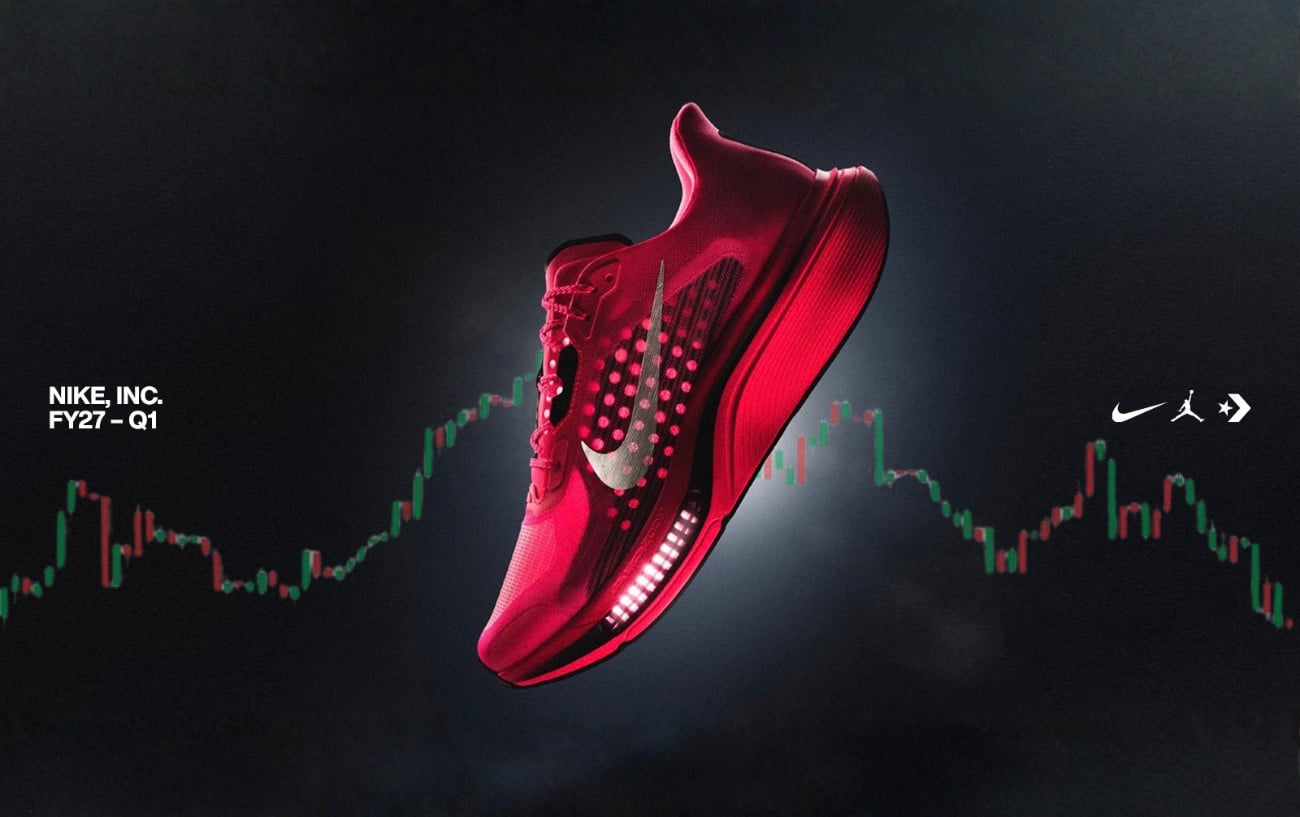
Nike shares opened around $40.17 in premarket trading on Wednesday, down another 2 percent after the company reported fourth-quarter results the night before. The stock has now shed 77 percent of its value since November 2021, when it topped out at $179.10. Over the same stretch, the S&P 500 climbed roughly 60 percent. We flagged the shape of this decline back in April, when Nike’s stock hit an 11-year low and runners already saw it coming.
On paper, Nike had a decent quarter. Revenue came in at $10.97 billion against a forecast of $10.85 billion, and earnings of 72 cents per share crushed the 13-cent estimate, according to Nike’s SEC filing. The catch is that most of the profit came from an $986 million refund of import duties. The U.S. Supreme Court ruled those tariffs unconstitutional in February, and Nike is getting its money back.
Strip out the refund and Nike earned 20 cents a share. Still a beat, but a much smaller one. Gross margin was reported at 49.2 percent, roughly 900 basis points fatter than it would have been without the refund.
Wall Street saw through it.
China Revenue Is The Real Problem
Greater China revenue fell 17 percent on a currency-neutral basis, worse than the previous quarter’s 10 percent drop, Reuters reported. The region accounts for about 15 percent of Nike’s annual sales.
“We continue to face top-line headwinds,” Elliott Hill, Nike’s chief executive, said in a statement. Outgoing CFO Matthew Friend was blunter on the call: sell-through remains weak, and things are unlikely to improve through at least the first half of fiscal 2027.
Local Chinese brands like Anta and Li-Ning have been eating Nike’s lunch for years now. Geopolitical friction hasn’t helped. Converse, which Nike owns, was even worse, with sales down 32 percent to $244 million.

Where On And Hoka Came In
The bigger story for runners is what happened when Nike walked away from the shoe wall.
In 2020, then-CEO John Donahoe launched a plan to exit hundreds of wholesale accounts and drive shoppers to Nike’s own stores and app. The margins on direct sales looked great on a spreadsheet. What the plan missed is how many people discover shoes by wandering into a Foot Locker and trying things on.
While Nike was busy pulling out, On and Hoka moved into the space it left behind. On Running went from around $330 million in fiscal 2020 revenue to $3.71 billion in fiscal 2025. Hoka, owned by Deckers, grew from about $352 million to $2.2 billion. Nike itself grew about 24 percent over the same period. That’s the gap.
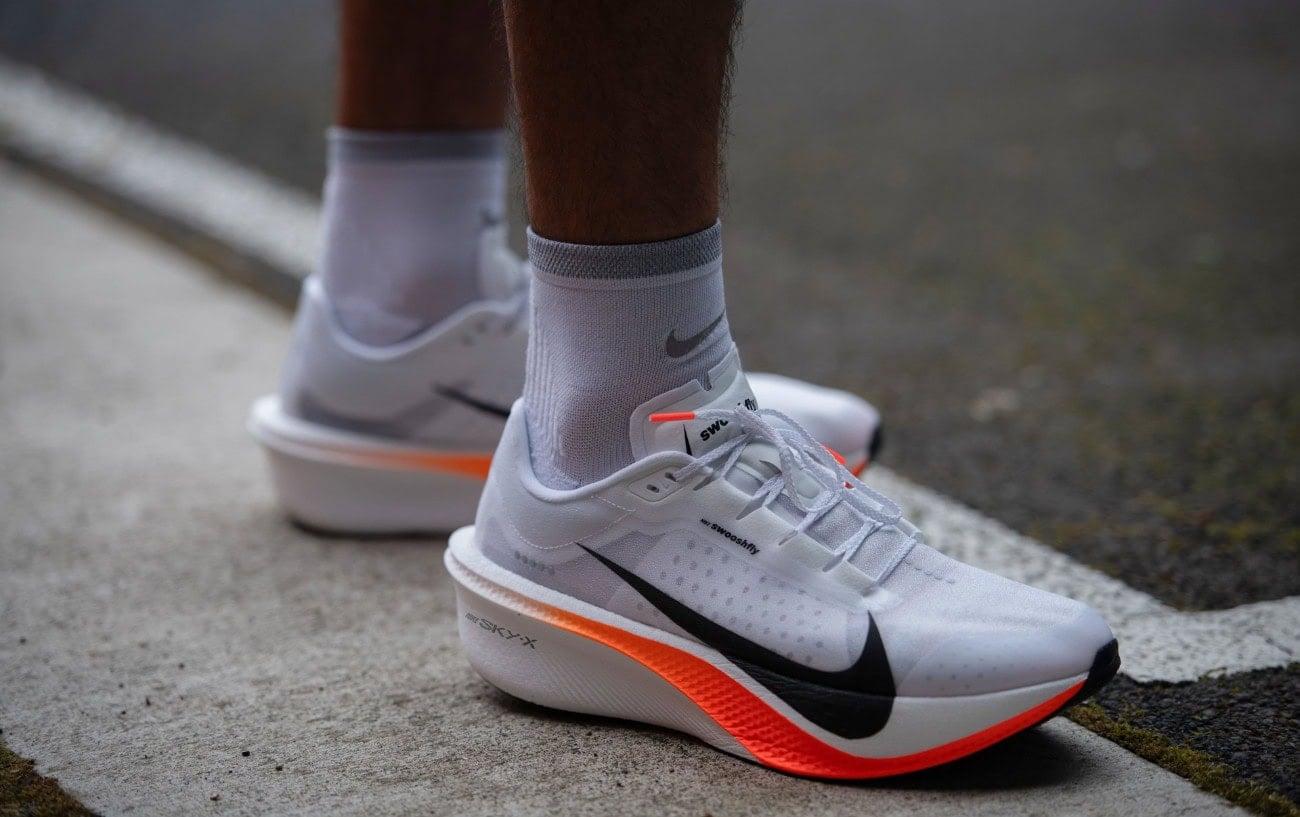
Ask around any marathon start line and you’ll see it. Hokas everywhere. Cloudmonsters everywhere. Nike is still there, but it isn’t the default anymore, even in the super-shoe category it invented.

Hill’s Turnaround, Still In Progress
Elliott Hill came out of retirement in 2024 to take over from Donahoe. His “Win Now” plan is trying to fix three things at once: rebuild the wholesale channel, get inventory under control, and refocus product on actual athletes.
North America is the bright spot. Sales there rose 3 percent last quarter, and wholesale revenue grew 6 percent for the year. Inventory is flat at $7.5 billion, which is healthier than it’s been in a while. The company has also been making noise around the edges, from a first-ever running shop collaboration to handing out free Alphafly 3s at the Brooklyn Half and opening its first East African store with Kipchoge.
But Nike Direct, the channel that was supposed to be the future, keeps shrinking. Digital sales dropped 12 percent last year. Nike-owned stores fell 4 percent. That’s the part of the business Donahoe bet the company on, and it hasn’t turned yet.
Analysts aren’t sold. “The Nike turnaround is progressing slowly,” said Cristina Fernandez of Telsey Advisory Group, adding that a real rebound probably isn’t coming before fiscal 2028. Morningstar’s David Swartz called out the same thing: cost cuts and inventory work are real, but the results haven’t followed.
What’s Next
JPMorgan cut its price target to $47. Deutsche Bank went to $43. Guggenheim and Oppenheimer both settled at $60. The consensus target sits near $59.
Matthew Friend steps down as CFO in August. David Denton, currently at Pfizer, takes over. Nike’s investor day in November will be the next big test for Hill, and probably the moment the market decides whether the turnaround is real.
For now, the stock is priced for a company whose best days as the default running shoe may be behind it. Whether it can win those miles back is up to the shoes.
RunClub
Get more running stories — join RunClub
Daily running news, a community of 300,000+ runners, free training plans for every distance, and a daily running game. Free to join — no card.
Already a member? Log in →






Start the conversation