


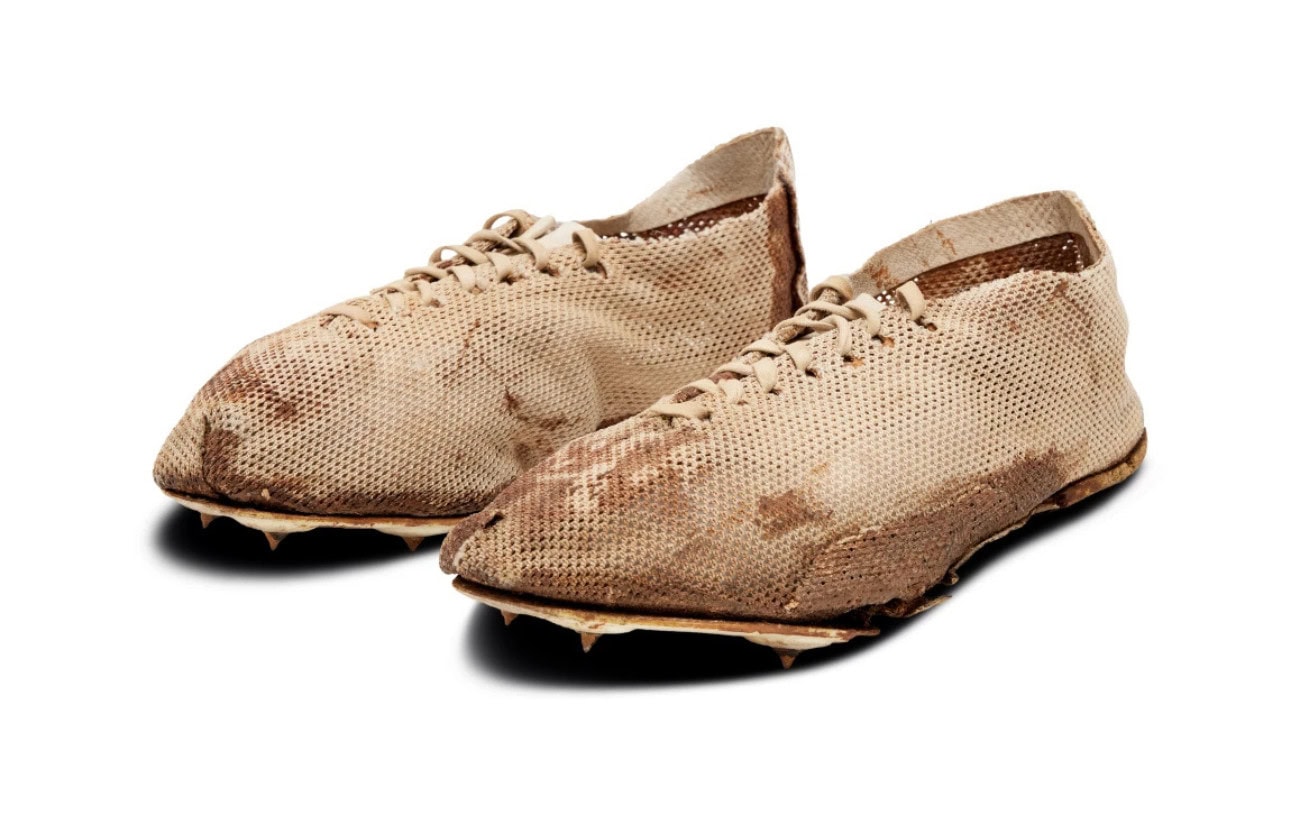
Before Nike was Nike, its co-founder was still hand-building shoes in Eugene, Oregon, for the runners he coached. One of those pairs, made in 1968 for a steeplechaser named Bill Norris, is now up for sale. Sotheby’s has listed it in its Summer Sports Classic auction, with bidding closing July 21 and a starting bid of $250,000. The house hasn’t set a fixed estimate, listing the price as “upon request.”
Bowerman made the spikes for Norris during the 1968 season, while Norris trained with the Oregon Track Club, the post-collegiate group Bowerman ran out of Eugene, Oregon. Norris says Bowerman personally traced and measured his feet before building the shoes to match.
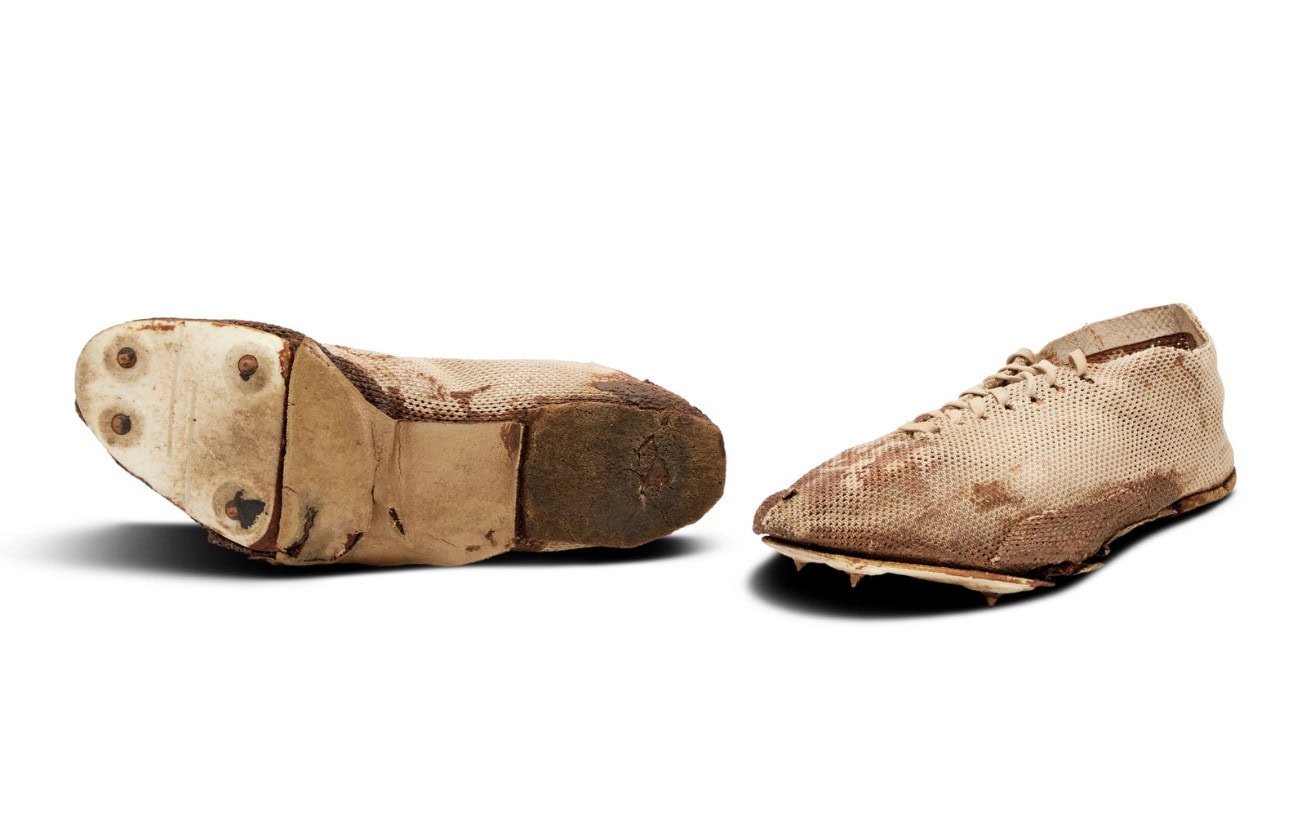
The steeplechase has a problem most track races don’t: a water jump. Runners clear a barrier and land in a pit of water, and a normal shoe soaks it up, adding dead weight for the rest of the race. Bowerman’s fix was an open mesh upper that let the water drain straight through.
He didn’t think much of the event’s difficulty. “The steeplechase is the most trying of the middle- to long-distance races,” he told Sports Illustrated, calling it “a race for men who are talented, intelligent and tough.”
Bowerman judged every shoe by the same short list. “A shoe must be three things,” he said. “It must be light, comfortable and it’s got to go the distance.”
Who Norris Was
Norris was born in Beverly, Massachusetts, in 1944 and ran at Boston College, where he won the IC4A steeplechase title. He joined the Oregon Track Club in January 1968. Bowerman entered him in Oregon’s dual meets as a non-scoring competitor while overseeing his training that year. Norris went on to qualify for both rounds of the 1968 U.S. Olympic Trials steeplechase, reaching the final at Lake Tahoe before the Mexico City Games. He shows up several times in Kenny Moore’s book “Bowerman and the Men of Oregon.”
The shoes predate the Nike name. In 1968, Bowerman’s company was still Blue Ribbon Sports, the venture he’d started with Phil Knight in 1964. Nike didn’t exist as a brand name until 1971.
Provenance
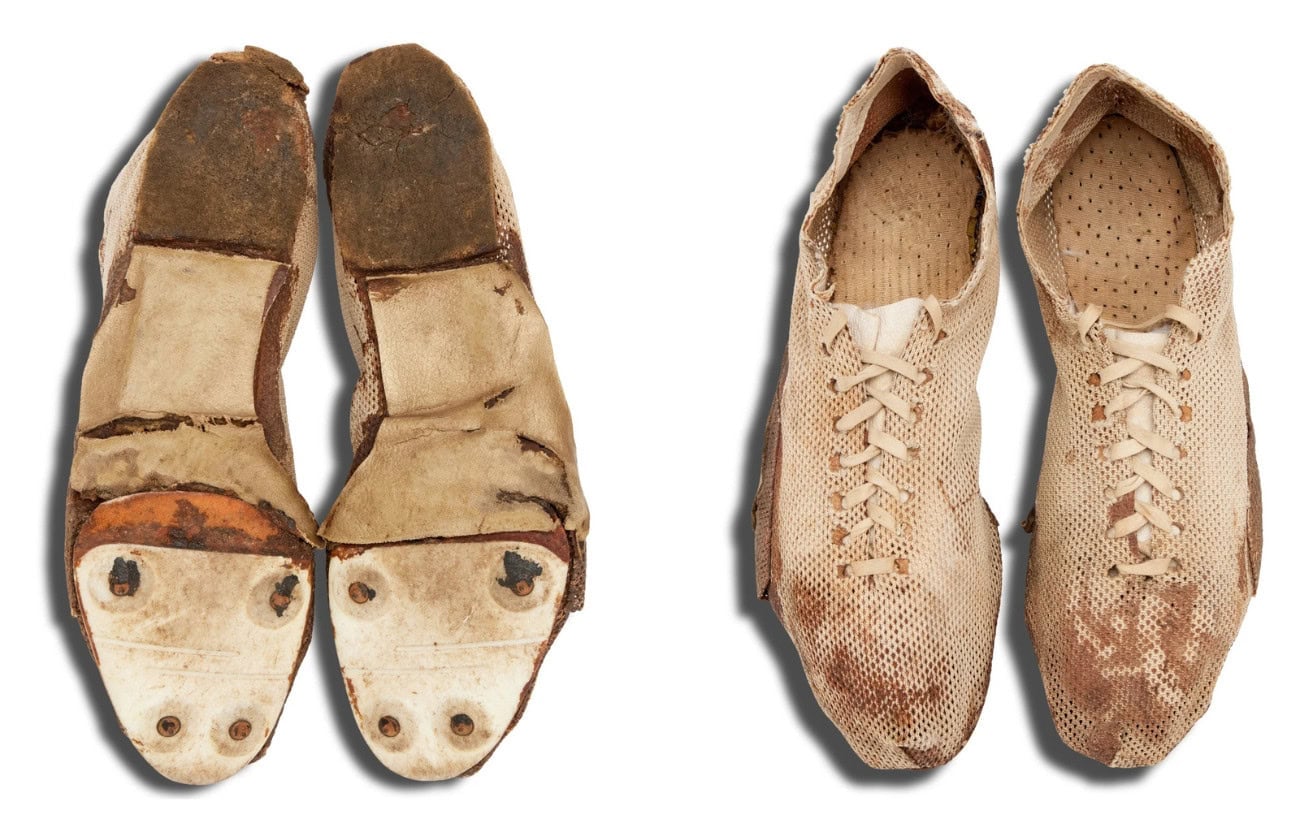
The pair for sale is described as all original, including the laces, and comes in a metal shoe box stamped with the Swoosh and marked “Department of Nike Archives.” Nike has already put the design on public display: it’s the opening artifact in the Bill Bowerman section of “Nike: Form Follows Motion,” the company’s 2024 traveling exhibition. A similar pair Bowerman made for another Oregon runner, David Wilborn, appears in the book “10,000 Years of Shoes,” which calls it “one of the earliest surviving pairs of shoes that were handmade by Bill Bowerman.” The Norris pair was made the same way, around the same time.
The lot comes with a stack of related items: a numbered “Genealogy of Speed” poster (938 of 1,000) that traces the history of speed footwear starting with this shoe, a photo of the Olympic Trials facility, a Trials pictorial, a participation medal from the Trials, a wire photo of Norris after his race, and a copy of “10,000 Years of Shoes.” Full details are listed on Sotheby’s site.
The Coach Behind It
Bowerman coached track and field at the University of Oregon from 1948 to 1972. Over that span, his athletes included 31 Olympians, 51 All-Americans, 22 NCAA champions and 16 sub-four-minute milers. Footwear experimentation was a constant part of his coaching. He studied foot anatomy and materials and routinely modified or built shoes for his runners, testing ideas that later shaped what Blue Ribbon Sports, and then Nike, sold to everyone else. He’s in the National Inventors Hall of Fame for that work, including the waffle sole that became one of Nike’s signatures.
It’s worth remembering how recent this all is. Less than 60 years ago, a top steeplechaser’s shoes came from a coach with a tape measure and a piece of mesh, solving a problem that only showed up in one part of one race — a reminder of just how far running shoe design has come, and how much of that history started with one person’s workbench.
RunClub
Get more running stories — join RunClub
Daily running news, a community of 300,000+ runners, free training plans for every distance, and a daily running game. Free to join — no card.
Already a member? Log in →



Start the conversation