


(Opinion)
Last September, nearly 9,000 runners applied to the Boston Marathon with times faster than the qualifying standard for their age and gender, and all of them were rejected. The published standard for men aged 18 to 34 was 2:55:00. The number that decided their applications was 2:50:26, and nobody could have known it on the day they raced, because it did not exist yet. The Boston Athletic Association’s registration page has carried the fine print for years: achieving a qualifying standard “does not guarantee entry into the event, but simply the opportunity to submit a registration application.”
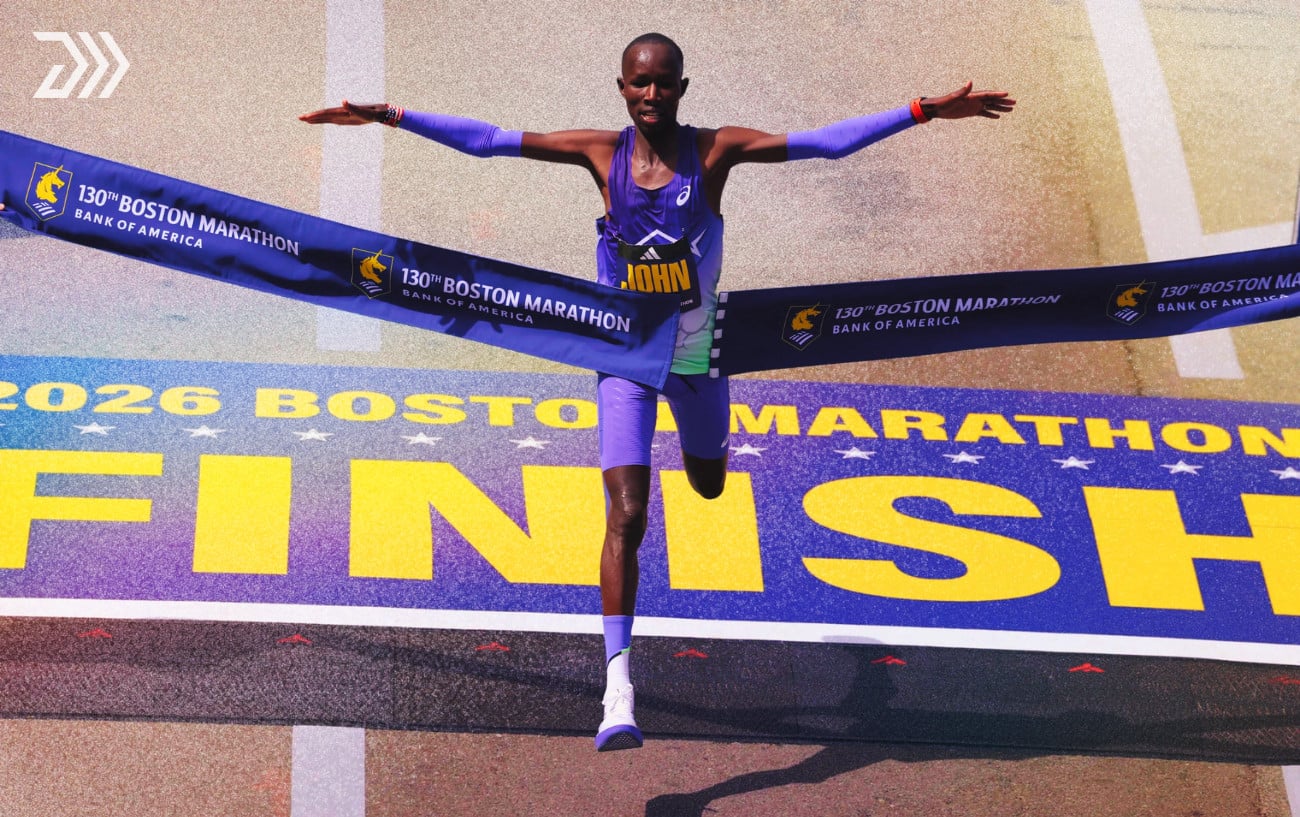
On Wednesday the B.A.A. announced a change aimed at exactly those runners. Under the new Boston Qualifier Selection, part of the registration rules for the 2027 race, the fastest applicants will fill the field exactly as before, and roughly 1,000 of the qualifiers left outside the cutoff will then be drawn at random. The criticism arrived within hours, and it is easy to state: Boston is the one major marathon a runner must earn, and a raffle, however small, corrodes that. The criticism has it backwards. The draw describes how Boston entry actually works more honestly than the race ever has before, and the B.A.A. deserves credit for saying it unprompted. The cutoff would have kept working, and rejected qualifiers would have kept accepting it as the price of chasing Boston.
Consider what the cutoff, the thing the lottery softens, actually measures. Every runner who targets Boston learns quickly that the published standard is only the beginning of the real question, the one asked on every forum and at every club track night: how much faster than the standard do you actually have to run? The honest answer has always been that nobody knows until registration closes. A runner who races in October is judged the following September against the margins of tens of thousands of strangers: how the weather broke in Chicago and Valencia, how many fast 25-year-olds discovered the marathon that year, what the latest super shoes did to finishing times across the sport.
For the 2025 race the margin was 6:51, and 12,324 qualifiers were turned away. The B.A.A. tightened the standards themselves in response, and the margin for 2026 was still 4:34. Runners now try to forecast the cutoff months in advance, and the practical advice in any guide to the qualifying times has long been to beat your standard by several minutes and hope. It is a byzantine arrangement: the published time by itself guarantees nothing, and the margin that matters cannot be known when it counts. A standard that must be beaten by an unknowable margin already functions as a lottery. The new draw makes that official.

The B.A.A. is managing one of the better problems a race can have, and it is managing the problem well. More people want to run Boston, at the required speed, than at any point in its history, and the course is the constraint. Point-to-point from Hopkinton over narrow roads through small towns, it cannot simply absorb the demand. Jack Fleming, the association’s president and CEO, told the Boston Globe that his counterparts in New York, Chicago, and London now talk about “huge numbers that are oftentimes double what we have,” and he was direct about his own race: “That’s never going to be Boston.” The B.A.A. brought in crowd scientists for the first time ahead of the 2026 race and has grown the field slowly through chip timing, wave starts, and better logistics. The crunch itself is the product of a post-pandemic boom that has filled marathons with young, fast runners, their times sharpened by shoe technology. The B.A.A. created none of it.
What the draw changes is deliberately modest. Fleming told the Globe that the number of runners accepted on time will stay in line with previous years, which makes the 1,000 places an addition to the qualified field rather than a carve-out from it. Last September the pool of rejected qualifiers held just under 9,000 runners; if demand holds as strong as it has been, an educated guess but a safe one on recent evidence, a runner in the draw will hold roughly one chance in nine. The draw converts a certain rejection into a small, defined chance, and nothing more. “This consistent, simple component adds an element of hope,” Fleming said.
The strongest objection is worth answering on its merits: if the race can find 1,000 more places for qualifiers, why not give them to the next 1,000 fastest? Because that would move the cutoff 1,000 runners deeper and leave every problem intact. The line would remain arbitrary and unknowable in advance, and it would still describe the field’s capacity rather than any runner’s merit. The draw does something the cutoff cannot: it restores meaning to the published number. Every entrant in the selection beat the time the race asked of them. A runner one second under the standard used to hold a worthless qualifier, and that time is now worth exactly what the B.A.A.’s fine print always said it was, a chance to get in. “It’s certainly innovative for us,” Fleming told the Globe.
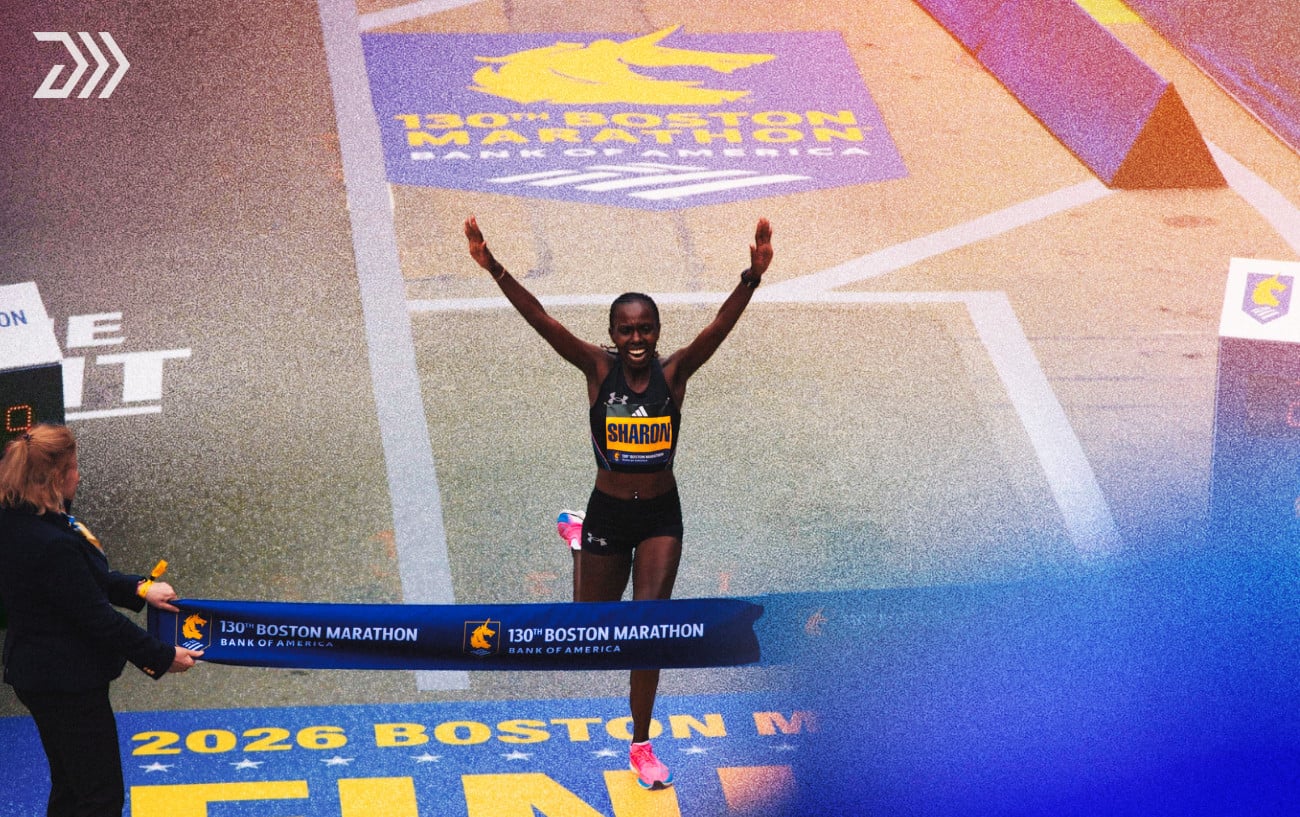
The same instinct runs through the announcement’s other change. Beginning this September, qualifying times from courses that drop more than 1,500 feet will be adjusted upward, by five or 10 minutes depending on the descent, and courses falling 6,000 feet or more will no longer count at all, under procedures the B.A.A. has published. Brian Rock, who analyzed the qualifying data for Outside Run, found that 8 to 12 percent of the 2025 Boston field had qualified on a steep downhill course, and that predictions of downhill racing’s extinction are overdone. The purpose of the indexes is consistency: a 2:54 run in the mountains and a 2:54 run on flat roads should mean the same thing when they arrive at the B.A.A.’s desk.
Registration for the 131st running opens Sept. 14 and closes Sept. 18, and every applicant will have an answer by early October. Most of the runners outside the cutoff will still be told no. About 1,000 of them, for the first time, will be told yes, and when they line up in Hopkinton on April 19, 2027, they will have gotten there the way everyone else did: by running the time Boston asked for.
RunClub
Get more running stories — join RunClub
Daily running news, a community of 300,000+ runners, free training plans for every distance, and a daily running game. Free to join — no card.
Already a member? Log in →








Join the conversation
No matter how you spin it, this \"draw\" STEALS from those most deserving and GIVES to those less deserving. Terrible.
As someone who has been on the right side and wrong side of the buffer in recent years, this new lottery system totally diminishes what Boston is about - that you have to EARN your way in. What a joke…
Agreed. Receiving one of these \"lottery bibs\" is akin to receiving a \"participation trophy\". It takes away from the Boston mystique where only the best of the best get in.