


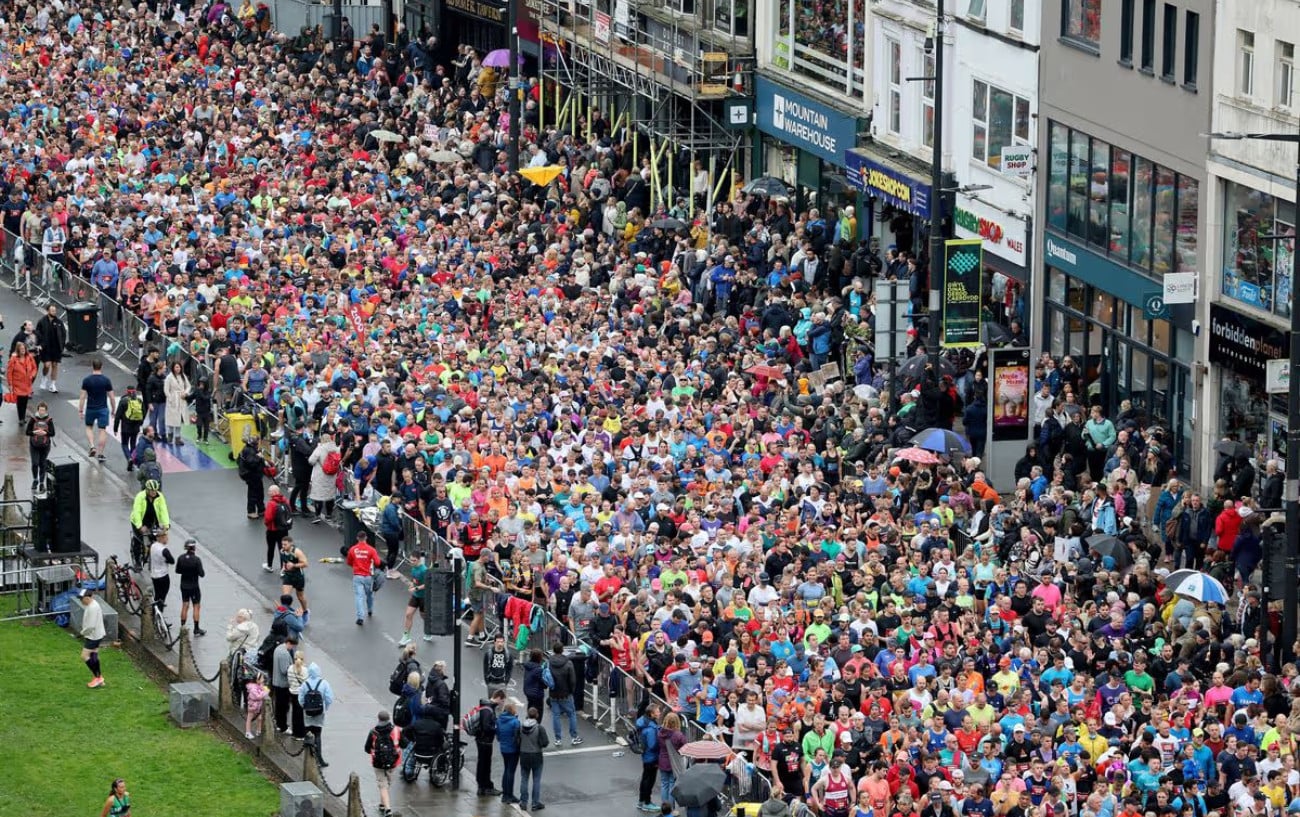
More than 55,000 runners are expected in Grant Park on Sunday for the Chicago Marathon, and the organizers have already warned them that the day will not be ideal. In an email to participants this week, the race said its color-coded Event Alert System will start at yellow, a level it described as signaling “less-than-ideal conditions for marathon running.”

The race’s email paired that with a sunny outlook, a high in the low 70s and an overnight low in the mid-50s. The National Weather Service forecast issued early Wednesday is warmer where it matters most, at the start. It has Saturday reaching a high near 79 F and cooling overnight only as far as 62 F, ahead of a partly sunny Sunday with a high near 72 F. The professional race goes off at 7:30 a.m. CT and the last wave at 8:35 a.m., which should keep the whole field somewhere between those two numbers, and anyone out for five hours or more will likely finish in the warmest part of the day.
CHICAGO WEATHEROn the race’s four-level scale, yellow comes with an instruction to slow down and a warning that the weather may get worse. Green, the lowest level, means good conditions. Red is kept for what the race calls “potentially dangerous conditions,” when runners are asked to think about pulling out, and black means the event has been cancelled or halted. The level can change as the forecast does, and on race day the color in force will be posted on flags and signs at the start, the finish and every aid station.
Organizers introduced the alert system for the 2008 race, a year after the heat reached 88 F and the 2007 marathon was called off roughly three and a half hours in. That same 2008 edition went from 15 aid stations to 20 and added another medical tent shortly before the finish. “We learned a lot from the experience of the 2007 race,” executive race director Carey Pinkowski said in a press release at the time.
In five of the last six editions, the race-day low at O’Hare was between 39 F (2019) and 51 F (last year), in the organizers’ records collected in our complete guide to this year’s race. Only 2021 had a warmer low than this weekend’s forecast, 70 F, with a high of 79 F.
A 2007 study in Medicine and Science in Sports and Exercise looked at up to 36 years of results from seven marathons, Boston, New York and the Twin Cities among them, against the weather on each race day. Across wet-bulb globe temperatures from 5 C to 25 C (a heat-stress reading that factors in humidity, sun and wind as well as air temperature), times got slower the warmer it was. In the coolest quarter of races, the top men finished 1.7 percent off the course record, and in the warmest quarter they were 4.5 percent off, a gap worth about three and a half minutes against a 2:05:00 course record. The heat took more out of the rest of the field than it did the leaders, with the study’s finishers in 25th to 300th place falling further behind.
Getting a “less-than-ideal conditions for marathon running” email from the marathon itself five days before the marathon is not exactly the race week email I was hoping for @ChiMarathon https://t.co/rdSGgUBo0r
— Hank (@HankFrank) October 6, 2026
Jacob Kiplimo, the defending champion, arrives with a 2:00:28 personal best from London in April, just seven seconds under Kelvin Kiptum’s 2:00:35 course record, and a course record is worth an extra $50,000. Clayton Young, racing on a torn hamstring tendon, has said he is going after the 2:04:43 American record that Conner Mantz set on this course last year. Charles Hicks already ran faster than that, 2:04:35 at the Boston Marathon in April, on a course that is not eligible for records, and he has said he races for place rather than time.
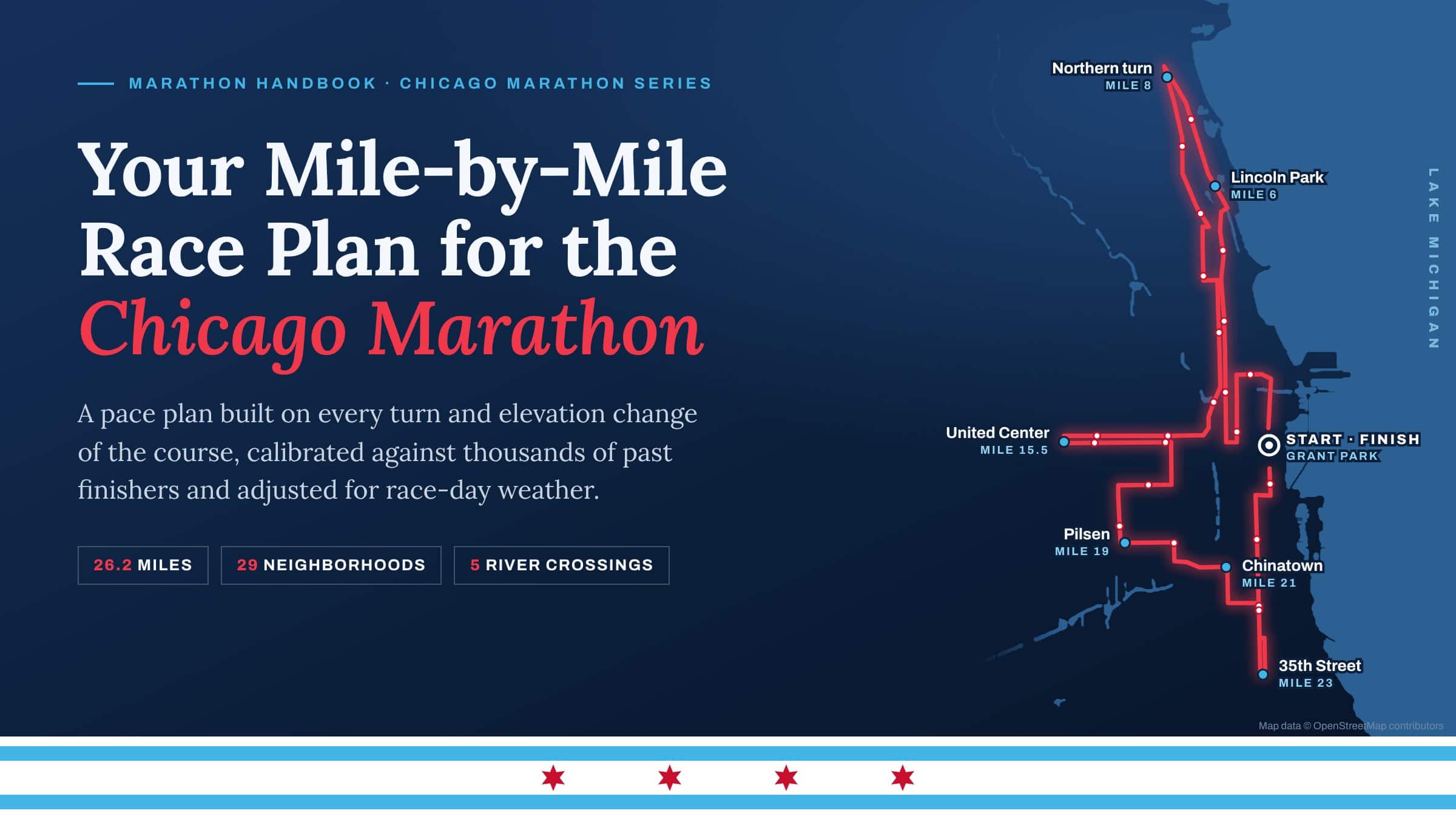
The course has 20 aid stations, each with water, Gatorade and medical staff, and this year it adds the race’s first four water refill stations, at miles 5.7, 10.1, 15.7 and 20.3. Our tips for running in the heat and our breakdown of how much fluid and sodium a marathon takes are both useful reading before Sunday, and the alert level can still change before the start if the forecast does.
RunClub
Get more running stories — join RunClub
Daily running news, a community of 300,000+ runners, free training plans for every distance, and a daily running game. Free to join — no card.
Already a member? Log in →








Start the conversation