


The shocking suspension of Ruth Chepngetich, the 2:09:56 Chicago Marathon winner, on a doping charge has raised many important questions. What’s coming next? Who’s got the cash? What about her world record? What procedural, ethical, and financial changes should big races make?
The answers won’t come quickly. Several key organizations, including the Chicago Marathon and the Athletics Integrity Unit, which conducted the out-of-competition test on Chepngetich, have signalled that they won’t comment again until her case has run its full course. That could take several months to several years, depending on the vigor of her defence.
However, another U.S. prize money race has now revealed the whole story behind its recent dealings with a similar situation. The story is instructive.
A Doper Passes the Post-Race Test—Then Fails in Secret
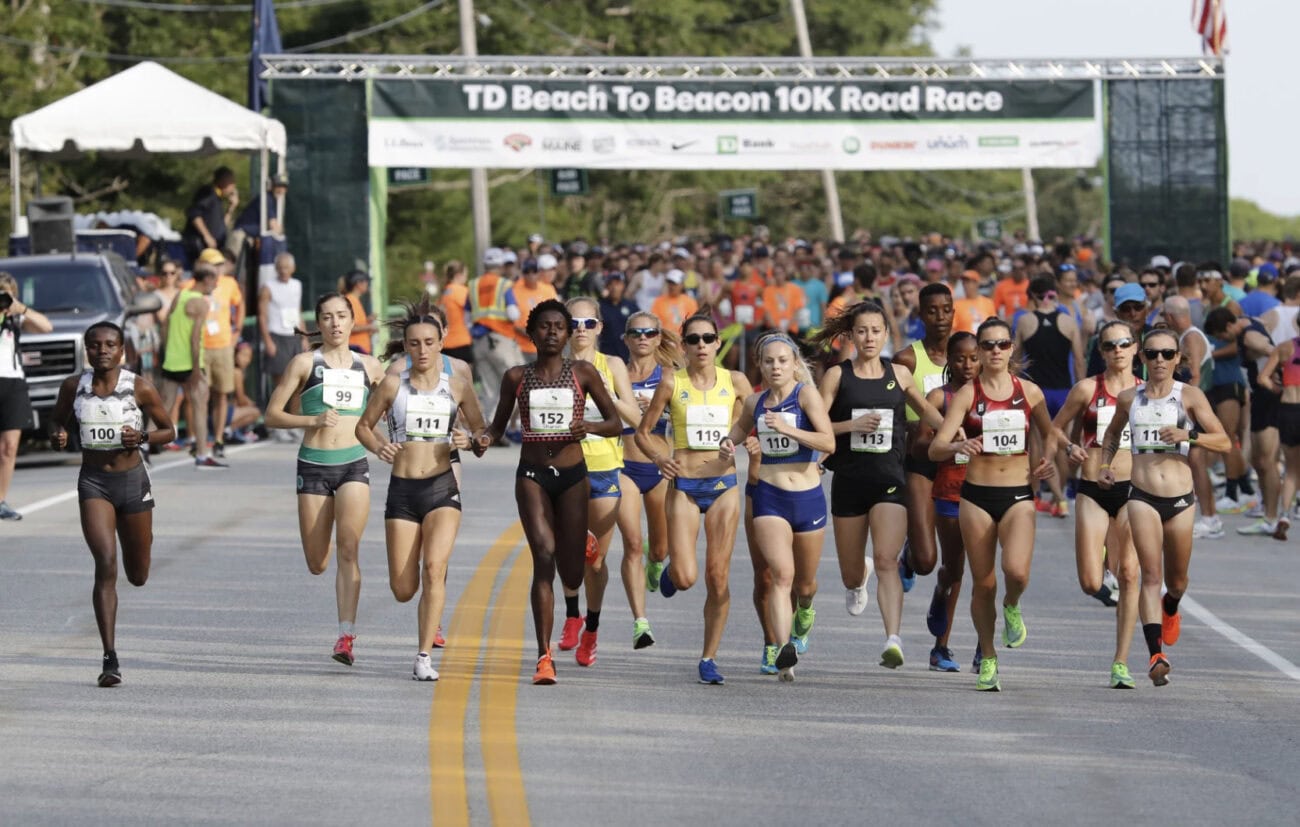
Little-known Kenyan runner Faith Chepkoech won the Beach to Beacon 10K on Aug. 3, 2024, and passed her post-race, “in-competition” doping test in Cape Elizabeth, Maine, where the event has been held annually since 1998.
Race organizers promptly sent her the $10,000 winner’s prize to her agent, Federico Rosa, who based in Italy. Rosa is one of the most influential powerbrokers in elite road and track running, managing upwards of 200 athletes, mostly based in Kenya, Ethiopia and Uganda—the three powerhouse nations that produce the majority of the world’s top distance runners.
After the money was wired to Rosa, Beach to Beacon’s organizers thought 2024 was a wrap, and began looking forward to this year’s 2025 race on Aug. 2.
Only…
Seven weeks later, on Sept. 24, 2024, the Athletics Integrity Unit made public its finding that Chepkoech had failed an out-of-competition test in Iten, Kenya, on July 26. Her urine sample contained evidence of EPO use.1DECISION OF THE ATHLETICS INTEGRITY UNIT Decision of the Athletics Integrity Unit in the Case of Ms Faith Chepkoech. (n.d.). Retrieved July 23, 2025, from https://www.athleticsintegrity.org/downloads/pdfs/disciplinary-process/en/AIU-24-251-Faith-Chepkoech-Decision.pdf
A Test Before Takeoff, a Positive After the Fact
This test was administered shortly before she boarded her flight to the United States. Beach to Beacon organizers knew nothing of the secret test until nearly two months after the race, on Sept. 24.
This test result is a critically important finding on its own. It indicates that even a mid-tier runner like Chepkoech has figured out how to use banned substances to boost her training (and therefore her race-day performance) while nonetheless avoiding a positive test result at a competition, where much of the testing can be administered.
If Chepkoech can do it, no doubt with the assistance of coaches, agents, and doctors, then surely other athletes can do it as well, especially when the stakes are much bigger than at Beach to Beacon. World Marathon Majors pay out hundreds of thousands in prize money. In Chicago last fall, Ruth Chepngetich was paid $100,000 for the win, an additional $50,000 for breaking the course record, and presumably was also paid both an appearance fee as a returning champion and a substantial bonus for breaking the world record. The buying power of that amount of money is exponential in a country like Kenya, where the average annual income is around $7,000 USD.
Beach to Beacon Reacts Quickly—and Transparently
Given the news of Chepkoech’s failed test, Beach to Beacon’s organizing committee had to regroup and figure out how to react. They wanted to figure out if and how they could claw back the prize money, and how to then distribute it promptly to the rightful winner, along with the prestige and notoriety of actually winning the race before the afterglow of the season completely faded. They acted quickly.
First, they recalculated their prize money awards after removing Chepkoech from the results. Unexpectedly, Federico Rosa promptly returned the $10,000 that had been wired to him. This is surprising, given that there is no record of Rosa doing so after other of his athletes failed tests linked to substantial prize winnings. (More on that below.)

To learn more about the Chepkoech-Beach to Beacon situation, I exchanged several emails with David Backer, president of the organization that runs the event.
“We redistributed all prize money by the end of the second week in October, only three weeks after publication of Faith’s disqualification,” Backer said, via email this week.
“It’s a Cat-and-Mouse Game”
Backer noted that he felt “a little blindsided” by the post-race news of Chepkoech’s test in Kenya before she came to Maine and passed the race-day test.
“It was an affirmation of Lance Armstrong’s frequent boast that he had been tested 500 times and never failed a drug test,” Backer said. “It highlights the cat-and-mouse game between cheating athletes and the testing authorities, and it’s a stark reminder of the fallibility of the entire testing process. While I was disappointed by Faith’s positive test, we resolved even more to keep doing our small part to deter doping in road racing.”
The Federico Rosa Problem
I next asked if the Beach to Beacon race had considered any procedural changes to protect itself from similar occurrences in the future. For example, had it decided never again to invite Chepkoech to its race? Or perhaps to stop inviting athletes represented by Federico Rosa?
While any agent can have a bad apple or two in its stable, Rosa athletes have left a long, tainted trail. He’s represented a number of high-profile dopers, including Rita Jeptoo, who won both the Chicago and Boston Marathons in back-to-back years (2013, 2014), and the 2014 World Marathon Series, which came with an enormous $500,000 payday. Like Chepkoech at Beach to Beacon, Jeptoo’s test came out of competition and in advance of the 2014 Chicago race, but was only made public after she’d won. Jeptoo’s 2014 results were annulled, but her 2013 and previous career wins (including another Boston title back in 2006) still stand today. She was eventually banned for eight years for EPO use and “aggravating circumstances”. The 2016 report claimed her “manager and coach” weren’t aware of her doping, according to the Associated Press. Neither Jeptoo or Rosa have paid back any of those winnings.
Rosa also represented Kenyan Jemima Sumgong, the 2016 London winner and Rio Olympic marathon gold medalist. Sumgong also finished second in Boston, Chicago, and New York, and won the 2016 World Marathon Series, though she never received the $500,000 prize money after being banned from the sport for four years following a failed drug test in 2017. Again, Sumgong’s winnings haven’t been recouped.
Rosa has also represented convicted dopers who have won other significant marathons such as Paris and Tokyo, only to wreck these races’ record books, robbing the rightful winners of what should have been a significant moment in their career, prize money and the ancillary earnings and opportunities that come with a big win.
Chepngetich’s Future—and the Sport’s Uncertain Standards
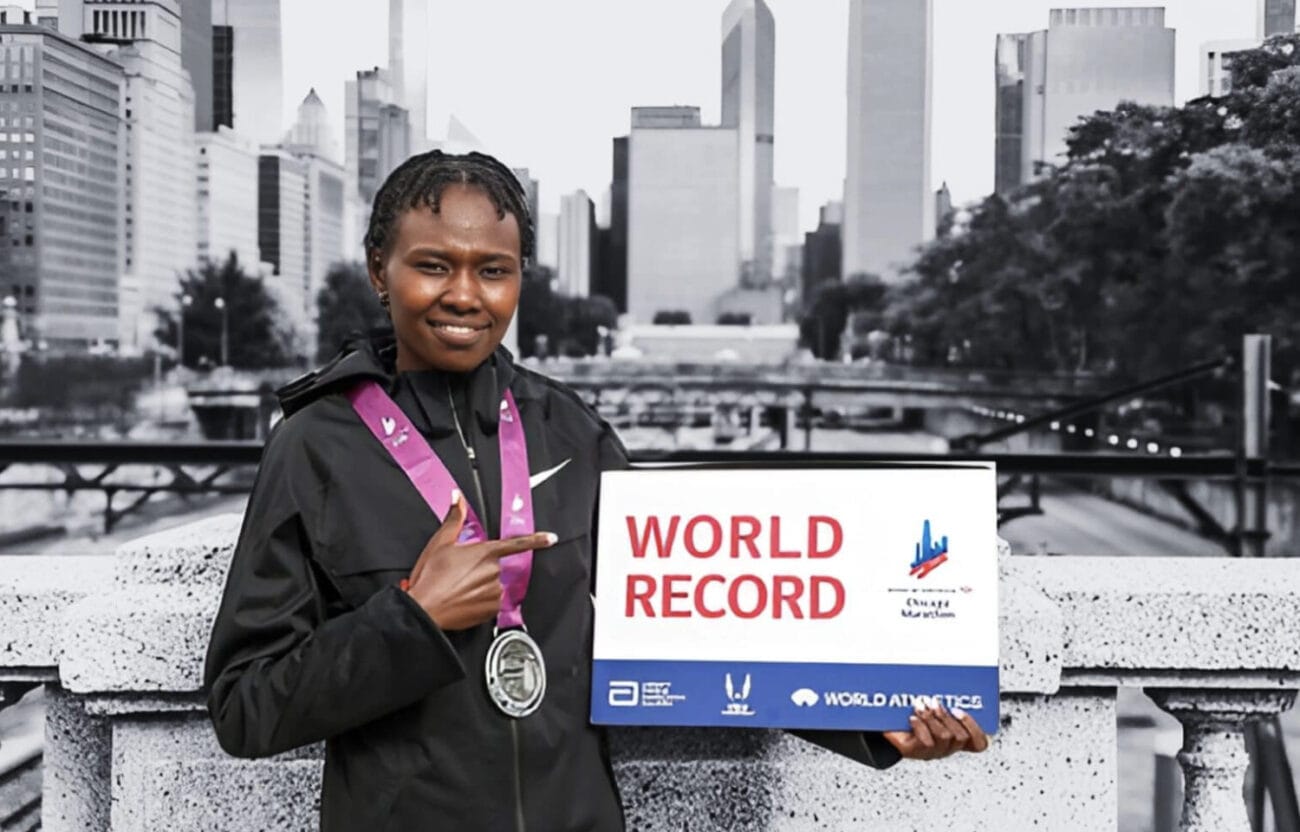
And of course Rosa represents Ruth Chepngetich, the world record holder in the marathon, who was banned for doping related drug use on July 17. It remains unclear if Chepngetich will retain her 2024 Chicago Marathon title, the world record (which World Athletics hastily ratified last December), and the substantial prize money that came with both achievements.
Backer of Beach to Beacon would not say if the event would formally ban Chepkoech from a future edition of its race, citing that she’s unable to compete for the next couple of years anyhow, but he did say the race hasn’t ever invited an athlete who has a failed doping test on their record, and “can’t imagine that we would.”
And as for Rosa, he also wouldn’t commit to a blanket refusal to invite any of the agent’s athletes in the future. “To the best of my knowledge, we have never branded an individual manager’s stable of athletes as unwelcome, and no such discussion has taken place regarding Federico Rosa’s group,” Backer said.
Edna Kiplagat: The Runner-Up, Again
Legendary Kenyan distance star Edna Kiplagat finished second behind Chepkoech at Beach to Beacon, as she had also finished second behind 2021 Boston Marathon winner Diane Kipyokei. Like Chepkoech, Kipyokei was later disqualified for using a banned substance. In both cases, Kiplagat’s athlete representative, Brendan Reilly of Boulder, Colo., managed her situation.
“From my perspective, Beach to Beacon handled everything very well,” Reilly told me by phone. “They notified us quickly, stayed right on top of things, and got us the first-prize cheque as soon as possible. The amounts involved weren’t as big as you see with major marathons, but they did everything by the book.”
When the System Fails, Race Organizers Step Up
Here, it seems, is the story of a race that made the best of a terrible and unexpected turn of events and non-existent guidance from those who oversee the sport. This has not always been the case when elite athletes test positive for doping offences after winning major races with large prize purses.
Sometimes, shoe companies appear at least tangentially involved. The Beach to Beacon 10K is Nike-sponsored, and Chepkoech is a Nike runner. The Chicago Marathon has long been sponsored by Nike, and Ruth Chepngetich, the world record holder from that race, is a Nike athlete. There are also a shocking number of prior Chicago winners who later failed doping tests.
In fairness to Nike, these broad associations associations alone don’t prove anything. Nike is the world’s biggest sponsor of races and runners, so it would be expected to generate more good and bad news than other shoe companies.
The sport would be poorer without Nike’s involvement. Still, people notice associations and talk about them, and you have to wonder how all the jigsaw pieces fit together.
Chepngetich’s Case Is Just the Beginning
Many questions remain regarding Ruth Chepngetich. They won’t be resolved until various tribunals and courts fully adjudicate her case. We don’t know if her prize winnings will be returned, or if her marathon world record 2:09:56, which was “ratified” by World Athletics last December, will stand in the record books. We know little about how other major marathons are dealing with similar problems.2Ratified: world records for Chebet, Duplantis, McLaughlin-Levrone, Chepngetich and Kawano | PRESS-RELEASES | World Athletics. (2024). Worldathletics.org. https://worldathletics.org/news/press-releases/ratified-world-records-chebet-duplantis-mclaughlin-levrone-chepngetich-kawano
Those questions will take more time, and more digging into a system that gets no five-star reviews for transparency or uniform regulations. Thirty-nine years after the Boston Marathon broke through the amateur blockade and began offering prize money for professional runners, it’s still the Wild West out there.
References
RunClub — Free
Join 300,000+ runners in RunClub
Free training plans for every distance, a daily running game, exclusive coaching content, and a real community of runners. Create your free account in 20 seconds — no card.
Already a member? Log in →










Join the conversation
Hard to get excited anymore about these large races with the amount of cheating. It reminds me of baseball's home run race in the late 80's and 90's. I think of all the honest runners losing out financially and competitively. Maybe Race Directors can take the lead by not inviting those under suspicion to race or holding back price money for non-positive drug testing over a sufficient period of time after the race completion.