


One of the biggest and most fascinating debates in sports science—Do women have more endurance than men?—took two giant leaps forward in recent weeks.
The first, on a long, rocky trail in Arizona, was widely covered. The second, and arguably more important, has been overlooked. It happened in a first-of-its-kind controlled experiment in Innsbruck, Austria.
Together, the two have tilted the answer needle toward yes.
On Wednesday morning, May 4, Rachel Entrekin crossed the finish line of the Cocodona 250-mile trail race in downtown Flagstaff. The 34-year-old physical therapist PhD had begun outside Phoenix 56 hours, 9 minutes, and 48 seconds earlier. Entrekin didn’t just finish first overall. She also broke the (men’s) course record by more than 2 ½ hours.
A mere three days later, the Scandinavian Journal of Medicine & Science in Sports published a new paper titled “Highly trained female runners show greater durability and physiological resilience than performance-matched male counterparts”1Jaén‐Carrillo, D., Bruce, C. D., Lawley, J. S., & Zanini, M. (2026). Highly Trained Female Runners Show Greater Durability and Physiological Resilience Than Performance‐Matched Male Counterparts. Scandinavian Journal of Medicine & Science in Sports, 36(5). https://doi.org/10.1111/sms.70299
The explosive finding: In a 3-hour treadmill run punctuated by hard “time trials,” the male subjects slowed by almost 10 percent. A group of performance-matched females? They only lost 1 percent.
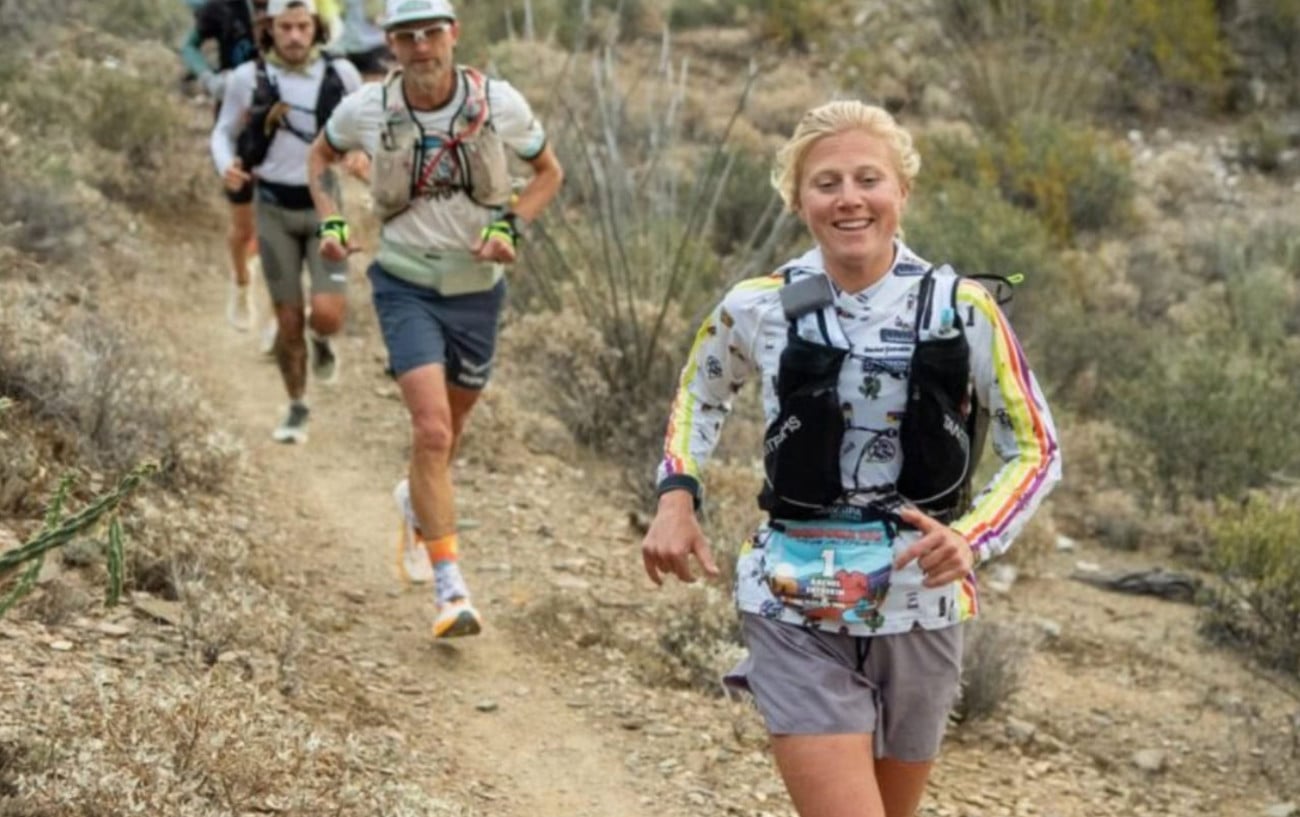
How Rachel Entrekin Built Herself Into a 250-Mile Champion
Entrekin has evolved into a world-class ultra runner through 15 years of grit and intentional strength-building. Raised in Birmingham, Alabama, she began her running career in road races. This led her to a marathon PR of 3:38:15 by 2016.
Then she moved to Washington state and switched focus to FKTs (Fastest Known Times). She established more than a dozen records on trails around Mount Rainier, Mount Hood, and other Pacific Northwest adventures. She also won at least eight 100-mile races, though none were significant enough to make her an endurance star.
That changed in 2024 when Entrekin, who now lives in Colorado, won Cocodona for the first of three straight times. Currently, she stands at or near the top of her sport. She has become known for her all-in approach, taking just 19 minutes of “dirt naps” in this year’s 250, and also for stopping to pet every dog along the course.
Yes, she makes it look easy. After finishing well behind Entrekin in this year’s Cocodona, male winner Kilian Korth watched some race video and noted: “I see myself really struggling while Rachel is running effortlessly, like she’s enjoying herself.”
Entrekin’s Cocodona win wasn’t the first time a female ultra-runner beat a full field of male competitors. Courtney Dauwalter has achieved the feat several times, including at the 2020 edition of Big Dog’s Backyard Ultra in Bell Buckle, Tennessee.
There she completed 283.3 miles in a finish time of 56 hours, 52 minutes. That effort took her beyond top male runner Harvey Lewis, famed for a long history of ultra feats, including winning the Badwater 135 and running the 2,190-mile Appalachian Trail in 49 days.
In 2019, Great Britain’s Jasmin Paris grabbed headlines for outright winning the 268-mile Montane Spine Race (“Britain’s Most Brutal”). She drew attention from the BBC, Vogue, and other global media as much for expressing breast milk en route (for her 14-month-old daughter) as for crushing all the men.
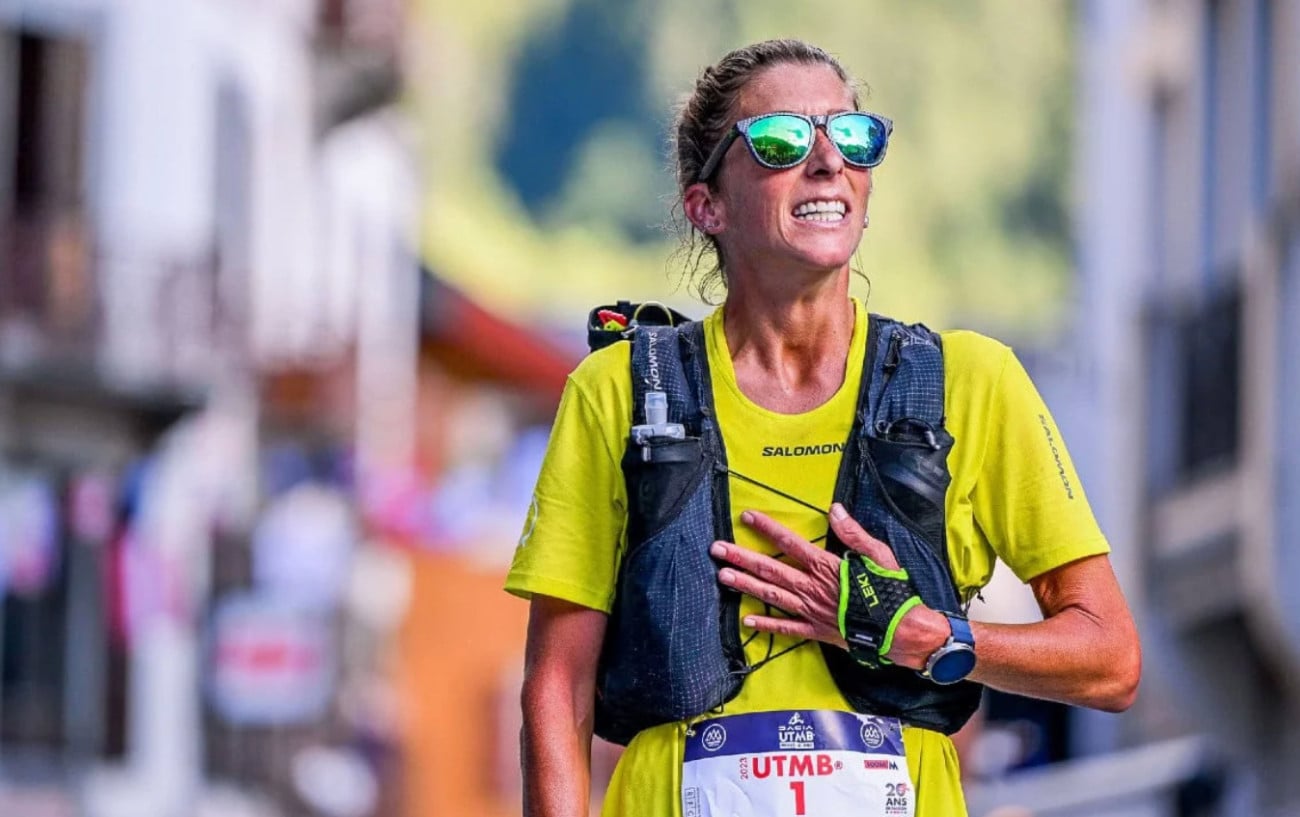
The Science Caught Up On Why Women Were Pulling Ahead
While top female runners kept going farther and faster, researchers were trying to identify key differences between men and women. Much attention was focused on marathon pacing. A highly cited 2015 paper in Medicine & Science in Sports & Exercise2DEANER, R. O., CARTER, R. E., JOYNER, M. J., & HUNTER, S. K. (2015). Men Are More Likely than Women to Slow in the Marathon. Medicine & Science in Sports & Exercise, 47(3), 607–616. https://doi.org/10.1249/mss.0000000000000432 investigated more than 91,000 performances, and found that men slowed by 15.6% in the second half of their marathons vs 11.7% for women.
In 2021, an even larger survey followed in PLOS One.3Smyth, B. (2021). How recreational marathon runners hit the wall: A large-scale data analysis of late-race pacing collapse in the marathon. PLOS ONE, 16(5), e0251513. https://doi.org/10.1371/journal.pone.0251513 This paper delved into more than 4 million marathon results, comparing men and women finishers by their first-half vs second-half split times. Result? The researchers determined that 28% of men “hit the wall,” compared with only 17% of women.
Why did the women exhibit more endurance than men in the second 13.1 miles of a marathon? A key researcher in the field, Sandra Hunter, explained it this way: “Women typically use more fat and less carbohydrate during endurance exercise, which means they’re less likely to deplete their glycogen stores and hit the wall.”
That hypothesis had been discussed for decades, but it wasn’t enough to close the case. Critics argued that women probably ran faster in the second half of marathons because they ran slower in the first half.
In other words, they paced themselves more intelligently. This was smart running, for sure, but it didn’t amount to an inherent physiological advantage.
A second theory appeared in a 2023 meta-analysis of muscle-fiber differences between the sexes.4Nuzzo, J. L. (2023). Sex differences in skeletal muscle fiber types: A meta-analysis. Clinical Anatomy (New York, N.Y.), 37(1). https://doi.org/10.1002/ca.24091 This research in the journal Clinical Anatomy reviewed more than 100 papers on the topic and concluded that women have more slow-twitch Type 1 muscle fibers than men. These are muscles born for steady, long-lasting aerobic effort.
Men, on the other hand, have more fast-twitch Type 2 muscle fibers capable of producing short, explosive bursts of speed. Hence, Usain Bolt.

But the Record Books Told a Different Story
Despite these research findings supporting female endurance, there was a problem on the tracks, roads, and trails where men and women raced. Under close analysis, the record books offered no evidence for a female advantage.
In world-record races from 100 meters to 6 days, the fastest women consistently covered the distance about 10% to 11% slower than the fastest men. If women had more endurance than men, this gap should have narrowed as race distances increased — especially when distances reached 100 miles, 24 hours, and even 6 days. But there was no compelling evidence for such a narrowing.
Those who believed in the female endurance advantage still had a strong rejoinder: Women hadn’t had much opportunity in ultra-distance events. Just as early marathons had few women entrants, the arc of ultra running hadn’t yet included many women. Just give the ladies a little more time.
The time seemed to arrive last year at a 6-day race in France. In the so-called GOMU World Championships (Global Organization of Multi-Day Ultramarathoners) from April 28 to May 4, new world records were established in both the men’s and women’s divisions.
The male winner, a 37-year-old Russian named Ivan Zaborsky, covered 650.919 miles. The female winner, 39-year-old Megan Eckert, became the first woman to top 600 miles with a total of 603.155 miles. Eckert is a special ed teacher and cross-country coach in Santa Fe, New Mexico.
Eckert’s distance put her just 7.3% behind Zaborsky, far below the expected margin of 10% to 11%.
The results of this race emphasized an important point made in a 2021 paper by Nicholas Tiller, an ultramarathon expert and self-styled “skeptical inquirer.” Much of Tiller’s work refutes popular Internet theories, such as the female endurance advantage.
Indeed, in a paper titled “Do sex differences in physiology confer a female advantage in ultra-endurance sport?”5Tiller, N. B., Elliott-Sale, K. J., Knechtle, B., Wilson, P. B., Roberts, J. D., & Millet, G. Y. (2021). Do Sex Differences in Physiology Confer a Female Advantage in Ultra-Endurance Sport? Sports Medicine, 51(5), 895–915. https://doi.org/10.1007/s40279-020-01417-2 in the journal Sports Medicine, Tiller and colleagues wrote the following about female endurance: “We urge a skeptical approach to cursory or simplified answers to this complex question.”
At the same time, they didn’t slam the door shut. They left it ajar, writing that females’ “collective traits may only manifest as ergogenic in the extreme endurance events.” That is, we may need to invent some really long, prestigious races before we see women runners emerge ahead of the best men.
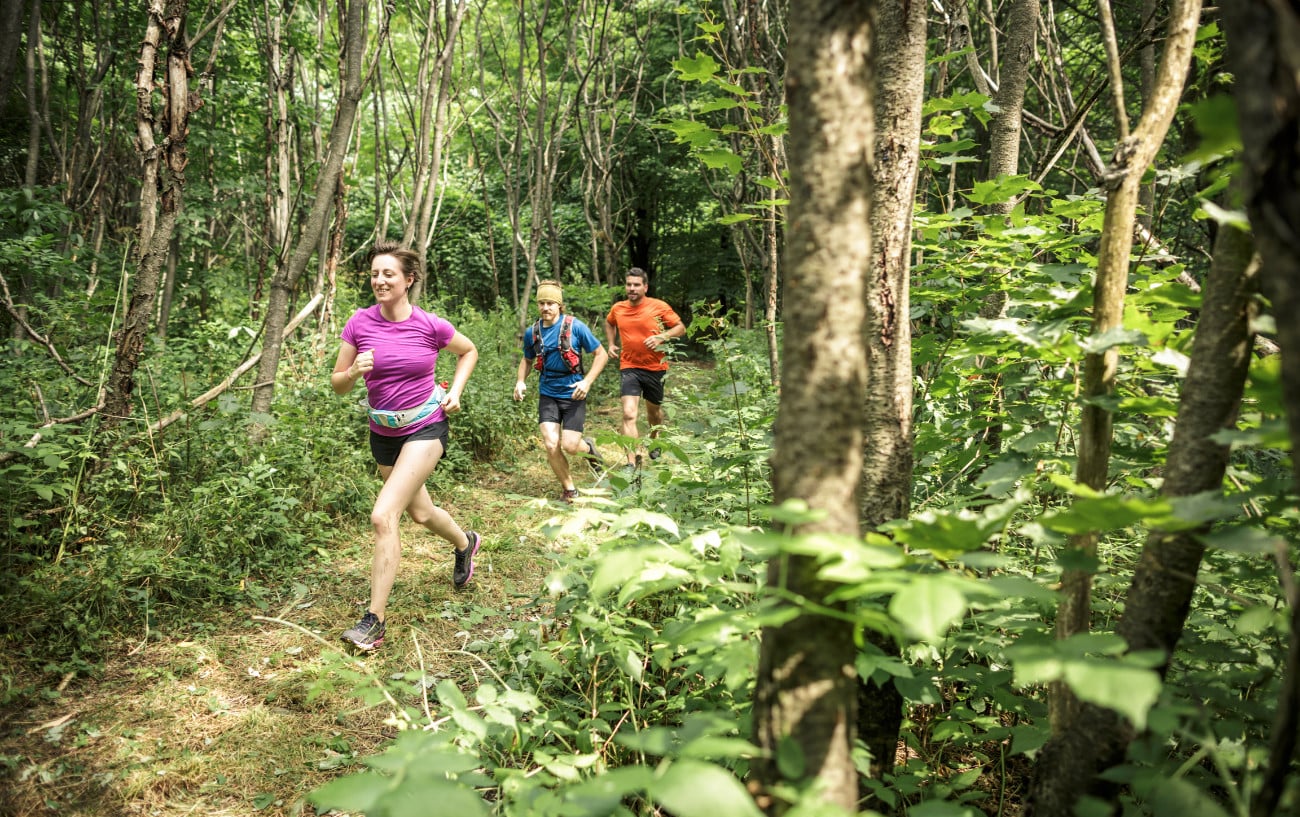
At Last, A Controlled Lab Experiment That Put the Theory to the Test
This brings us to the just-published paper by Michele Zanini, a young Italian researcher who has focused extensively on running endurance studies, including the role of muscle durability, sometimes termed “fatigue resistance.”
Zanini’s research trial compared running endurance between highly trained male and female athletes of equivalent fitness and running ability. All 11 men and 11 women were rated “Advanced 1” by the International Trail Running Association.
To test the subjects’ performance when fatigued, Zanini and colleagues had them complete a 3-hour treadmill run. For the first 48 minutes of each hour, subjects ran at a steady, moderate intensity. But then, in the hour’s last 12 minutes, they had to complete an all-out, uphill time-trial.
Zanini wondered: Would the males and females differ in their time-trial results after 3 hours? Of course, he expected everyone to slow down, but would there be a difference between the sexes?
The answer was yes, a big one. While the men slowed down by 9.9%, the women slowed by only 1.1%.
In addition, the women ran at a lower percentage of their max heart rate, with lower perceived exertion, and with less drop-off in carbohydrate burning (i.e., they were more efficient fat burners). The women also retained more strength in the knee extensor muscles.
Zanini believes these differences occurred because, as noted in other research, the women had a “higher proportional area of fatigue-resistant Type-1 muscle fibers.”
The big conclusion: “Highly trained female trail runners demonstrated superior durability compared to performance-matched males during a 3-hour run at moderate intensity, with smaller decrements in repeated 12-minute uphill time-trial performance, and greater resilience of metabolic and neuromuscular parameters.”
What This Means for the Future of Endurance Sports
The new Zanini paper provides evidence that women runners are not just smarter than men in their pacing strategies. They also have muscle fibers better tuned for endurance and a superior capacity for fat burning.
This appears to give women greater endurance, or “staying power,” than men. If you take a female runner and a male runner with the exact same 5K time, and race them against each other over 26.2 miles, bet on the female.
Still, this isn’t the same as saying women have more absolute endurance than men. If it were, then Megan Eckert would have beaten Ivan Zaborsky in that French 6-Day race last year rather than finishing 47 miles behind him.
Where does that leave us? No one can say for sure.
But you don’t have to be a brilliant futurist to make this prediction: The rapidly growing ultramarathon scene is going to include more and more women runners, some of whom will run faster than any previous women.
In fact, the guys might not be able to keep up.
References
RunClub — Free
Join 300,000+ runners in RunClub
Free training plans for every distance, a daily running game, exclusive coaching content, and a real community of runners. Create your free account in 20 seconds — no card.
Already a member? Log in →






Join the conversation
Mindset. Women don’t plan on running later in life. When reaching 60 they drop out - hills too tough, afraid to run alone.
I’m 78 and plan to run at 100+. I look for timed events 48hour, 6 day events. Love the older crowd.
But - I planned for this when I was 50.