


Editor’s note: After this article was published, Gudaf Tsegay confirmed on Instagram that the Letrozole prescription was part of fertility treatment, and that she is currently pregnant. “I took the letrozole supplement to improve my fertility, as prescribed by my Doctor,” she wrote. “Currently, my pregnancy is progressing perfectly, and I hope to return to sports as soon as my baby is born.” She also thanked her fans and the AIU for their support.
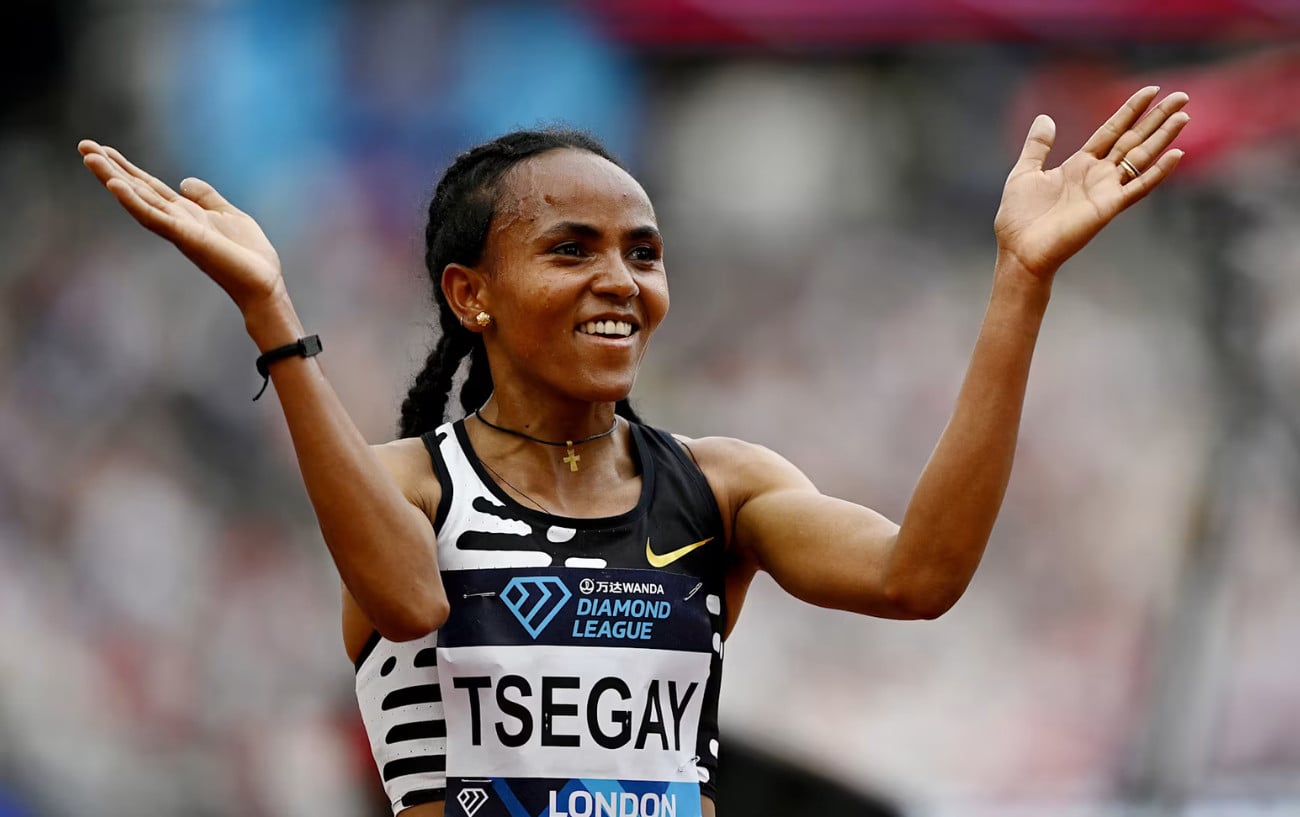
Gudaf Tsegay will not race again this summer. The Athletics Integrity Unit announced on Friday that the two-time world champion has been banned for four months after testing positive for a metabolite of Letrozole, a banned substance she had been legally prescribed by a doctor.
According to the AIU statement, the 29-year-old Ethiopian’s ban runs from June 1 to September 30. That timing wipes out her Diamond League season and rules her out of the inaugural Ultimate Championships in Budapest from September 11 to 13, as reported by The Independent and the Associated Press.
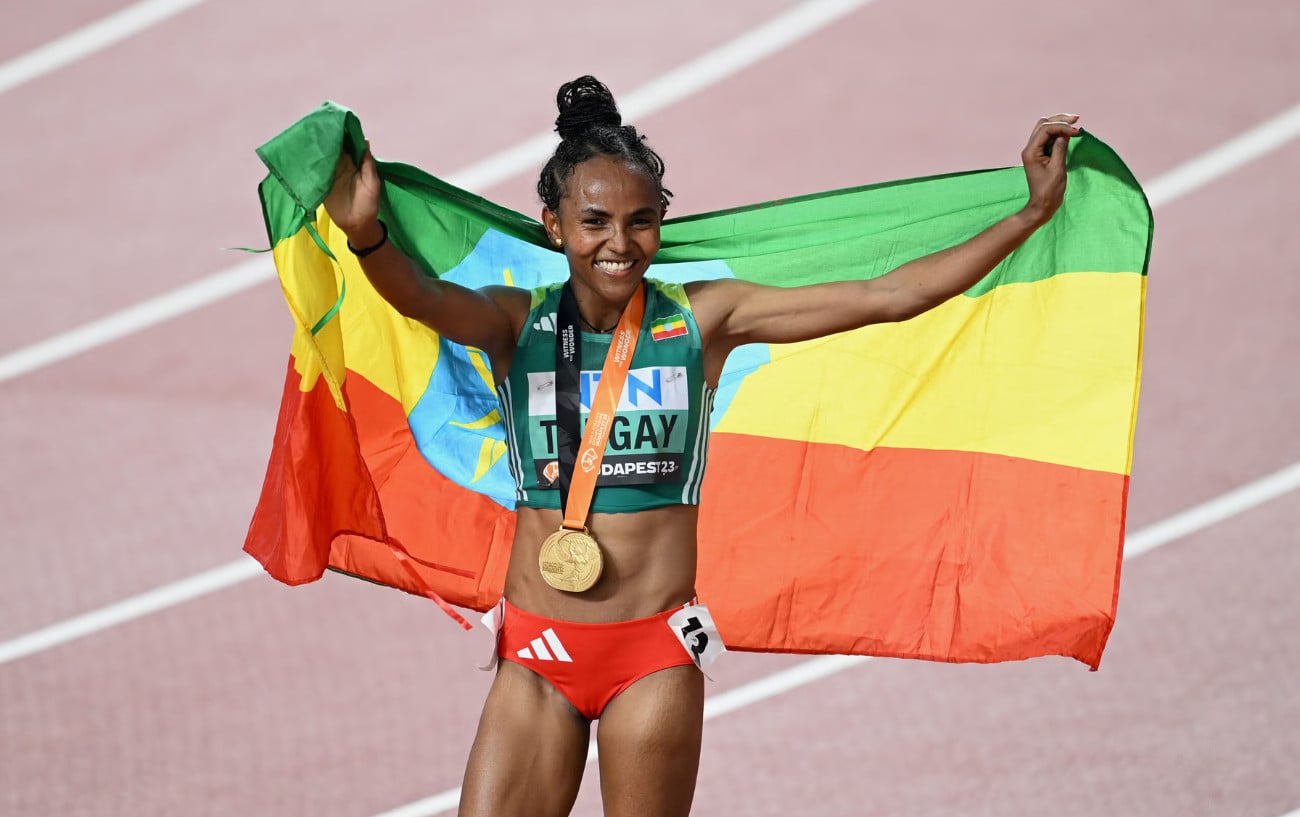
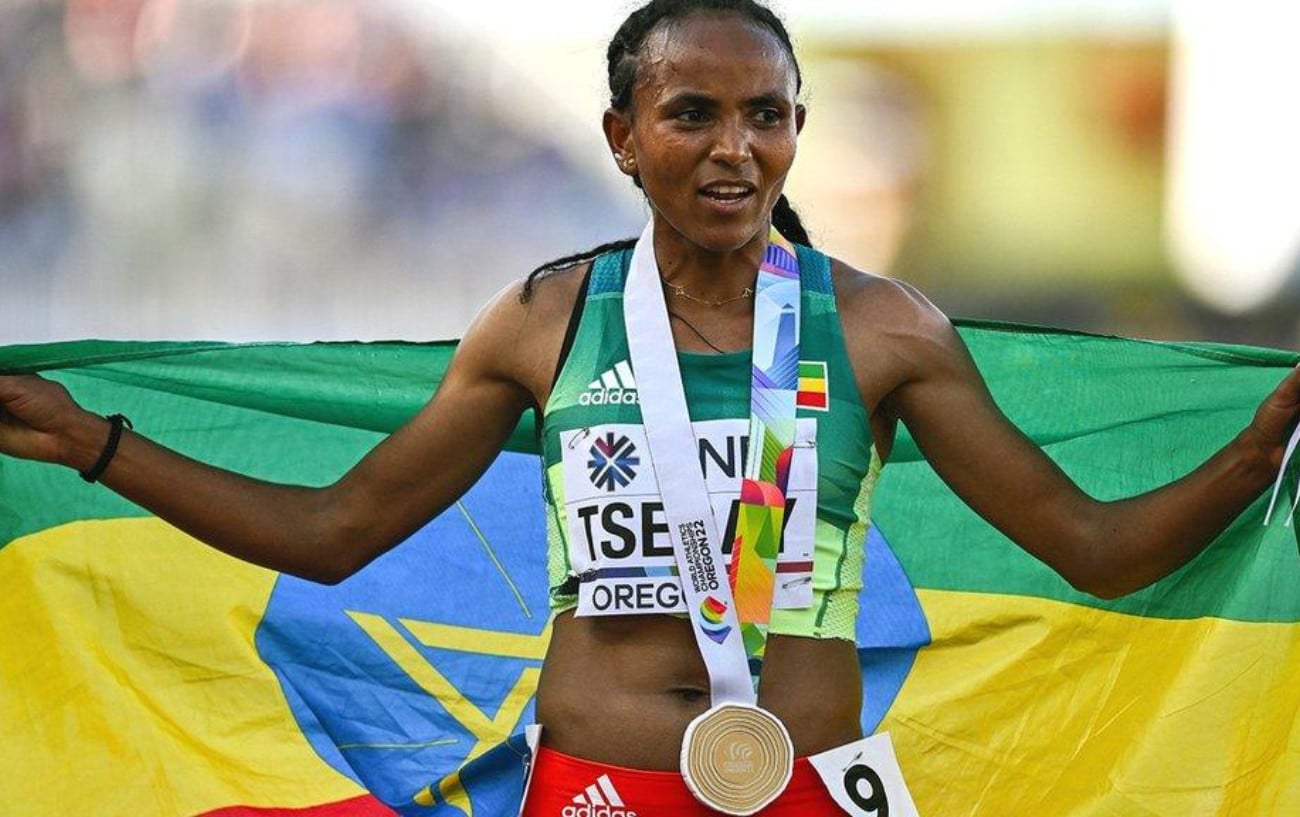
Tsegay won the world 5,000m title in 2022, the world 10,000m title in 2023, and took bronze in the 5,000m at Tokyo 2020. She once held the indoor 1,500m world record. Her personal bests sit at 3:50.30 over 1,500m, 14:00.21 over 5,000m, and 29:05.92 over 10,000m. Her 5,000m mark stood as the world record until Beatrice Chebet went under 14 minutes at Pre.
How a prescription became a sanction
The case began with an out-of-competition test on December 5, 2025, per Athletics Illustrated. The sample came back positive for Letrozole, an aromatase inhibitor banned at all times under section S4.1 of the WADA Prohibited List.
The AIU notified Tsegay on January 26, 2026. She responded the next day with medical documents showing the drug had been prescribed for a diagnosed condition. On February 17 she applied for a Therapeutic Use Exemption. World Athletics’ TUE Committee then confirmed her case met every requirement under WADA’s international standard: the drug treated a real condition, no permitted alternative existed, and the use would not enhance her performance beyond a return to normal health.
The problem was timing. Because she had not secured the exemption before being tested, WADA rejected her application for a retroactive TUE and the violation stood. Tsegay accepted a Case Resolution Agreement. The AIU said the four-month ban was “considered appropriate” under rules covering no fault or negligence, and acknowledged she “would have received a [therapeutic use exemption] if it had been requested in advance.”
The Letrozole question: cancer drug, steroid mask, or fertility treatment?
Letrozole is most famously a breast cancer treatment. It is also a well-known tool in the doping world. By blocking the enzyme aromatase, it stops the body from converting testosterone into estrogen, which can mask anabolic steroid use and prop up natural testosterone. That is why it sits on the banned list at all times.
It also has a third, less-discussed use: fertility. Letrozole is one of the most widely prescribed ovulation-induction drugs in the world. The American Society for Reproductive Medicine and the European Society of Human Reproduction and Embryology both recommend it as a first-line treatment for women with polycystic ovary syndrome who are trying to conceive. Studies put its ovulation-induction success rate at roughly 70 percent.
And critically, fertility is a category WADA explicitly allows. USADA’s own guidance states that a TUE for aromatase inhibitors is possible “to treat certain types of female infertility related to polycystic ovary syndrome and certain estrogen-sensitive cancers.” That is the channel Tsegay’s evidence appears to have travelled through. World Athletics agreed she would have qualified. WADA simply would not let her have it after the fact.
Kara Goucher: ‘full transparency on this one could go a long way’
The fertility angle was raised quickly on social media. Two-time Olympian and NBC commentator Kara Goucher, one of the sport’s most outspoken voices on clean competition, weighed in on Instagram.
“It also is used as a fertility drug. I know she applied for a retroactive TUE. Full transparency on this one could go a long way. Of course there is the very real possibility it was being used to hide steroid use. But since they accepted her claim and evidence, I’m willing to consider it is something else. That’s why we need the transparency.”
Kara Goucher, on Instagram
Tsegay has not publicly stated what condition the prescription was meant to treat. She is married to her coach, Hiluf Yihdego, a former Ethiopian marathoner. Beyond that, she has kept her personal life out of view, partly because her family lives in Tigray, which spent two years inside an active conflict zone.
Female athletes and a complicated banned list
Whatever Tsegay was treating, her case sits inside a real and growing problem. Up to 65 percent of elite distance runners experience some form of menstrual disturbance, mostly driven by low energy availability. Retrospective studies of former elite athletes have found infertility treatment rates close to 12 percent, with the figure climbing among athletes who had irregular cycles during their careers.
That puts a lot of female athletes in awkward conversations with anti-doping authorities. The oral fertility drugs that are easiest to access — Letrozole and Clomiphene — are both banned. The permitted alternative, follicle-stimulating hormone injections, is more invasive and more expensive. Netball star Simone Forbes was effectively forced into retirement in 2011 after testing positive for Clomiphene during a fertility-treatment cycle.
Stories like that loom over the current case whether or not they apply directly to Tsegay.IU said she would have been granted a TUE in advance. World Athletics said her medical case met every WADA criterion. The only people left guessing are the public. Goucher’s point, that transparency would go a long way here, is the open question this story will keep returning to.
RunClub — Free
Join 300,000+ runners in RunClub
Free training plans for every distance, a daily running game, exclusive coaching content, and a real community of runners. Create your free account in 20 seconds — no card.
Already a member? Log in →







Start the conversation