


The fastest mile time in history is 3:42.66, set by Josh Kerr of Great Britain at the London Diamond League on July 18, 2026. Kerr became the first man ever to break 3:43, ending Hicham El Guerrouj’s 27-year hold on the record. From Roger Bannister’s legendary sub-4-minute breakthrough to Kerr’s run in London, here is the complete history and analysis of the mile world record.
It’s a universal benchmark of speed, grit, and progress. That’s why the history and progression of the fastest mile times ever recorded isn’t just fascinating; it’s deeply inspiring.
These record-breaking performances reveal the extent to which human potential can be pushed and provide context for our own goals, regardless of where we start.

The Fastest Mile Ever Run: Mile World Records
The fastest mile ever run is 3:42.66, the world record Josh Kerr of Great Britain set at the London Diamond League on July 18, 2026. Kerr pulled away from American Yared Nuguse over the final lap at London Stadium, with Nuguse finishing second in 3:45.69. The mark is subject to World Athletics’ standard ratification process.
The previous record of 3:43.13 was set by Hicham El Guerrouj of Morocco on July 7, 1999, when he edged out Noah Ngeny at the Stadio Olimpico in Rome. His mark survived 27 years of improvements in training and running shoe technology, the longest reign in the ratified history of the event.
The outdoor American mile record is 3:43.97, currently held by Yared Nuguse, who also owns the American indoor record of 3:46.63 from the 2025 Millrose Games.
Jakob Ingebrigtsen holds the world record for the indoor mile at 3:45.14, set in Liévin, France, on Feb. 13, 2025. His outdoor best of 3:43.73 stood as the European record until Kerr’s run in London.
The current women’s world record for the mile was set by Faith Kipyegon on July 21, 2023, at the Stade Louis II, Monaco, with a time of 4:07.64.1World Athletics | One Mile – women – senior – all. (2023). Worldathletics.org. https://worldathletics.org/records/all-time-toplists/middlelong/one-mile/all/women/senior?regionType=world&page=1&bestResultsOnly=true&firstDay=1899-12-31&lastDay=2025-07-07&maxResultsByCountry=all&eventId=10229517&ageCategory=senior
She ran an even faster mile of 4:06.42 at Nike’s Breaking4 event in Paris in June 2025; however, the exhibition’s pacing setup made the time ineligible for world record purposes.
The world record for women of the fastest mile ever run indoors is 4:13.31, set by Genzebe Dibaba from Ethiopia on February 17, 2016, at the Globe Arena in Stockholm, Sweden.2Goodwin, S. (2016, February 17). Genzebe Dibaba and Ayanleh Souleiman break world indoor records. The Guardian. https://www.theguardian.com/sport/2016/feb/17/genzebe-dibaba-ayanleh-souleiman-world-indoor-records-globen-galan-stockholm#:~:text=Dibaba%2C%20the%20outdoor%201500m%20world
A Brief History Of the Mile
Alongside the 800-meter and 1500-meter distances, the mile is considered a middle-distance event.
If you live outside of the United States, the entire concept of the mile run might be somewhat foreign. The mile is a distance measurement unit in both the United States and Great Britain.
However, the mile distance is completely absent from the metric measurement system, so the idea of running a mile race might scramble your brain as you try to convert distances on the spot.
A mile is 1,609 meters, or just over four laps on a standard 400-meter running track.
The word “mile” comes from the Latin term “mille passus”, which translates to one thousand paces. This is because a mile was initially defined as being 1,000 Roman strides, with each stride being two paces.
In 1592, the mile distance was standardized by the English Parliament to equal eight furlongs. A furlong is a unit of distance that is equivalent to 660 feet; therefore, a mile is 8 x 660 feet = 5,280 feet, or 1,760 yards.
This converts to approximately 1,609 meters, but on July 1, 1959, the metric conversion of the mile was officially standardized as precisely 1,609.344 meters through international agreements.
In terms of entering the picture as a race distance, the mile became a contested event towards the end of the 1800s when professional foot racing rose to prominence in England, becoming the most popular sport.
Today, the mile race is a contested track event officially sanctioned by the International and U.S. federations (World Athletics and USA Track and Field) as a record event, not a metric distance.

History of the Fastest Mile Times
Shortly after the mile first became “The Mile” as a track event in England, Englishman Richard Webster posted the fastest mile time in 1865, which was 4:36.5.
This remained the fastest mile for a few years until it was progressively lowered to 4:29.0 by William Chinner and then 4:28.8 by Walter Gibbs, with both of these recording-breaking times taking place in 1868.
Gibbs’ mile time remained the fastest run to date until 1874 when yet another English runner, Walter Slade, took the mile record down to 4:26 and then 4:24.5.
In the 1880s, Walter George from England became the fastest miler, after whom most other milers were gunning, eventually lowering the mile record to 4:18.4.
Although there were a few other impressive milers before him, Walter George is often considered to be the first real superstar of the mile race.
Finally, just before the turn of the twentieth century, a non-Englishman took over the mile record, as the footrace started to take hold on more of an international level.
Fred Bacon, from Scotland, was the first non-English runner to hold the mile world record.
The first mile world record recognized by the International Association of Athletics Federations (IAAF) was run by John Paul Jones of the United States on May 31, 1913, in Allston, Massachusetts.
American John Paul Jones ran the mile in 4:14.4.
In the 1930s, the progression of fastest mile times accelerated due to increased media coverage of running, which played a significant role in popularizing the sport.
The mile world record started to creep closer to the 4-minute barrier, but it wasn’t until May 6, 1954, that Roger Bannister of the United Kingdom finally broke the seemingly impossible time barrier.
John Landy from Australia wasn’t far behind, also shattering the 4:00 barrier some 46 days later.
After these initial demonstrations of the real viability of breaking the 4-minute mile, many other runners started to follow suit, progressively lowering the mile world record.
The following table shows the progression of the mile time world records, and the fastest mile run ever.3berkshiresports.org – berkshiresports Resources and Information. (2024). Berkshiresports.org. http://www.berkshiresports.org/index.php?ID=milerecordprogression
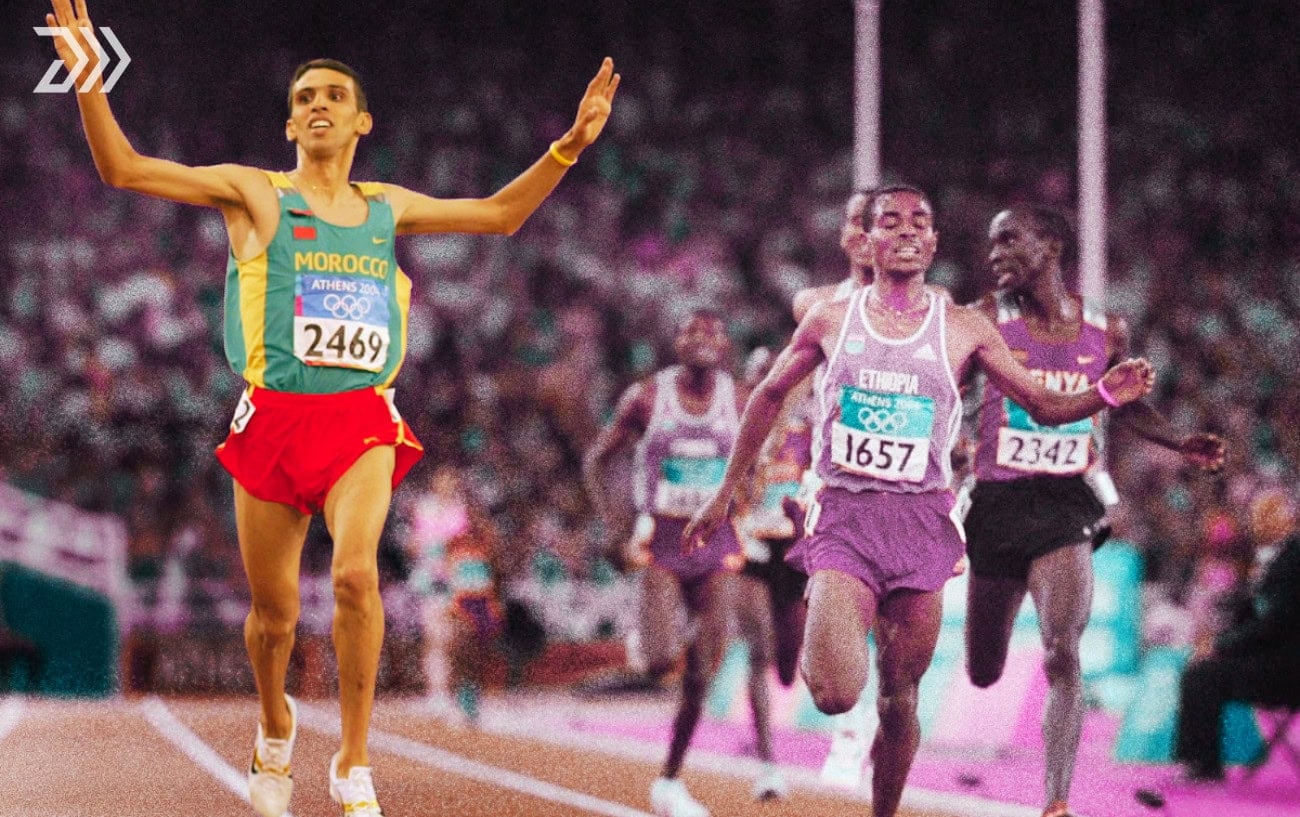
Ready for some fast mile times?
| Time | Athlete | Country | Year | Venue Location |
| 4:36.5 | Richard Webster | England | 1865 | England |
| 4:29.0 | William Chinnery | England | 1868 | England |
| 4:28.8 | Walter Gibbs | England | 1868 | England |
| 4:26.0 | Walter Slade | England | 1874 | England |
| 4:24.5 | Walter Slade | England | 1875 | London |
| 4:23.2 | Walter George | England | 1880 | London |
| 4:21.4 | Walter George | England | 1882 | London |
| 4:18.4 | Walter George | England | 1884 | Birmingham, England |
| 4:18.2 | Fred Bacon | Scotland | 1894 | Edinburgh, Scotland |
| 4:17.0 | Fred Bacon | Scotland | 1895 | London |
| 4:15.6 | Thomas Conneff | United States | 1895 | Travers Island, N.Y. |
| 4:15.4 | John Paul Jones | United States | 1911 | Cambridge, Mass. |
| 4:14.4 | John Paul Jones | United States | 1913 | Cambridge, Mass. |
| 4:12.6 | Norman Taber | United States | 1915 | Cambridge, Mass. |
| 4:10.4 | Paavo Nurmi | Finland | 1923 | Stockholm |
| 4:09.2 | Jules Ladoumegue | France | 1931 | Paris |
| 4:07.6 | Jack Lovelock | New Zealand | 1933 | Princeton, N.J. |
| 4:06.8 | Glenn Cunningham | United States | 1934 | Princeton, N.J. |
| 4:06.4 | Sydney Wooderson | England | 1937 | London |
| 4:06.2 | Gundar Hägg | Sweden | 1942 | Goteborg, Sweden |
| 4:06.2 | Arne Andersson | Sweden | 1942 | Stockholm |
| 4:04.6 | Gunder Hägg | Sweden | 1942 | Stockholm |
| 4:02.6 | Arne Andersson | Sweden | 1943 | Goteborg, Sweden |
| 4:01.6 | Arne Andersson | Sweden | 1944 | Malmo, Sweden |
| 4:01.4 | Gunder Hägg | Sweden | 1945 | Malmo, Sweden |
| 3:59.4 | Roger Bannister | England | 1954 | Oxford, England |
| 3:58.0 | John Landy | Australia | 1954 | Turku, Finland |
| 3:57.2 | Derek Ibbotson | England | 1957 | London |
| 3:54.5 | Herb Elliott | Australia | 1958 | Dublin |
| 3:54.4 | Peter Snell | New Zealand | 1962 | Wanganui, N.Z. |
| 3:54.1 | Peter Snell | New Zealand | 1964 | Auckland, N.Z. |
| 3:53.6 | Michel Jazy | France | 1965 | Rennes, France |
| 3:51.3 | Jim Ryun | United States | 1966 | Berkeley, Calif. |
| 3:51.1 | Jim Ryun | United States | 1967 | Bakersfield, Calif. |
| 3:51.0 | Filbert Bayi | Tanzania | 1975 | Kingston, Jamaica |
| 3:49.4 | John Walker | New Zealand | 1975 | Goteborg, Sweden |
| 3:49.0 | Sebastian Coe | England | 1979 | Oslo |
| 3:48.8 | Steve Ovett | England | 1980 | Oslo |
| 3:48.53 | Sebastian Coe | England | 1981 | Zurich, Switzerland |
| 3:48.40 | Steve Ovett | England | 1981 | Koblenz, W. Ger. |
| 3:47.33 | Sebastian Coe | England | 1981 | Brussels |
| 3:46.31 | Steve Cram | England | 1985 | Oslo |
| 3:44.39 | Noureddine Morceli | Algeria | 1993 | Rieti, Italy |
| 3:43.13 | Hicham El Guerrouj | Morocco | 1999 | Rome, Italy |
| 3:42.66 | Josh Kerr | Great Britain | 2026 | London |
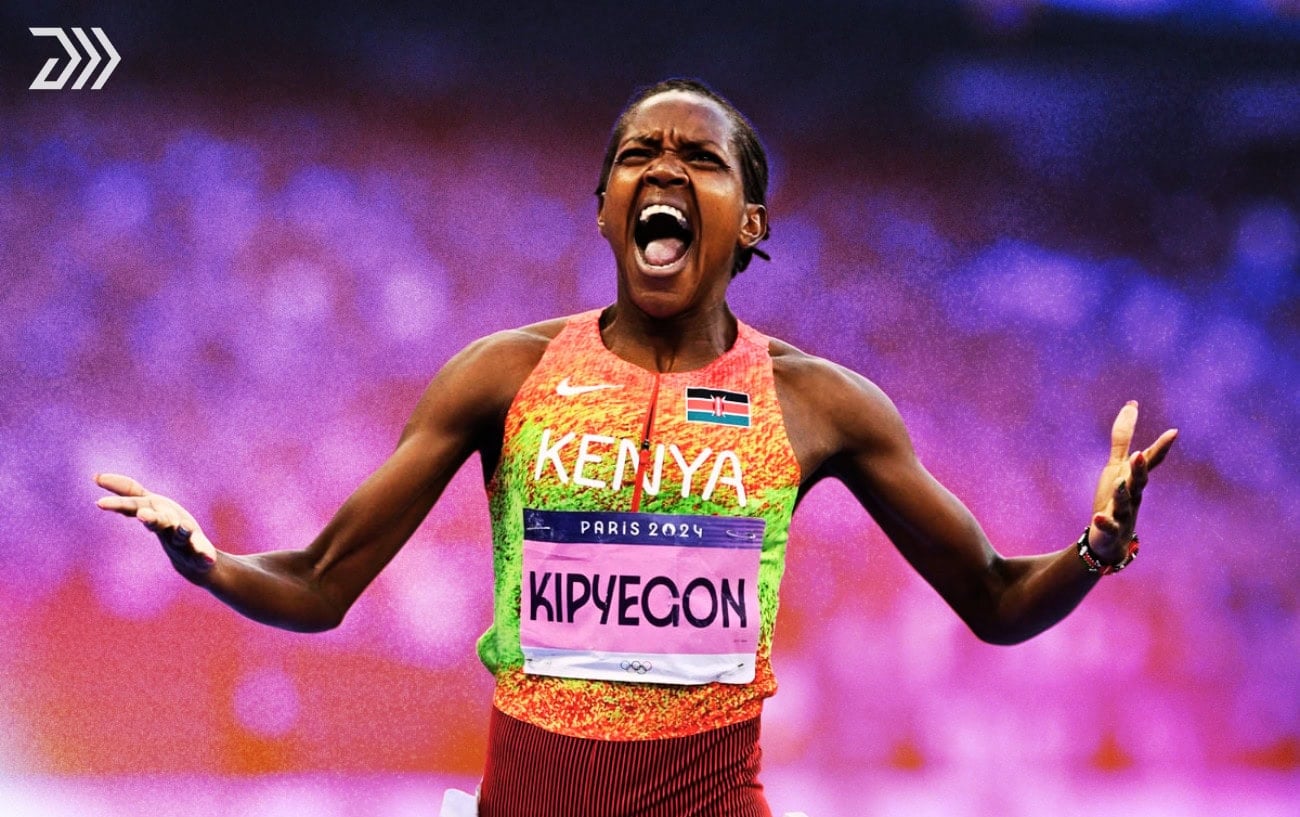
On the women’s side of things, the first recorded mile record is 6:13.2 by Elizabeth Atkinson from the United Kingdom on June 24, 1921.4Mile run world record progression. (2024, June 15). Wikipedia. https://en.wikipedia.org/wiki/Mile_run_world_record_progression#Women
However, the IAAF did not officially recognize the mile as a record event for women until 1967.
The first IAAF women’s mile record holder was Anne Smith from the United Kingdom, who posted a mile time of 4:37.0 on June 3, 1967.
The table below shows the progression of IAAF mile records for women and the fastest mile run ever:5Progressions – Mile History. (2019). Bring Back the Mile. https://bringbackthemile.com/history/progressions
| Time | Athlete | Nationality | Date | Venue Location |
| 4:37.0 | Anne Smith | United Kingdom | June 3, 1967 | London |
| 4:36.8 | Maria Gommers | Netherlands | June 14, 1969 | Leicester |
| 4:35.3 | Ellen Tittel | West Germany | August 20, 1971 | Sittard |
| 4:29.5 | Paola Pigni | Italy | August 8, 1973 | Viareggio |
| 4:23.8 | Natalia Mărășescu | Romania | May 21, 1977 | Bucharest |
| 4:22.1 | Natalia Mărășescu | Romania | January 27, 1979 | Auckland |
| 4:21.7 | Mary Decker | United States | January 26, 1980 | Auckland |
| 4:20.89 | Lyudmila Veselkova | Soviet Union | September 12, 1981 | Bologna |
| 4:18.08 | Mary Decker-Tabb | United States | July 9, 1982 | Paris |
| 4:17.44 | Maricica Puică | Romania | September 9, 1982 | Rieti |
| 4:16.71 | Mary Decker-Slaney | United States | August 21, 1985 | Zürich |
| 4:15.61 | Paula Ivan | Romania | July 10, 1989 | Nice |
| 4:12.56 | Svetlana Masterkova | Russia | August, 14 1996 | Zürich |
| 4:12.33 | Sifan Hassan | Netherlands | July 12, 2019 | Monaco |
| 4:07.64 | Faith Kipyegon | Kenya | July 21, 2023 | Monaco |
FAQ: Fastest Mile Times
Who Has Run the Fastest Mile Ever?
Josh Kerr of Great Britain holds the men’s mile world record at 3:42.66, set at the London Diamond League on July 18, 2026. Faith Kipyegon of Kenya holds the women’s record at 4:07.64, set in Monaco in 2023.
How Long Did the Previous Mile World Record Stand?
Hicham El Guerrouj’s 3:43.13 stood for 27 years, from July 1999 to July 2026, the longest reign in the event’s ratified history.
Who First Broke the 4-Minute Mile?
Roger Bannister, on May 6, 1954, in Oxford, running 3:59.4. John Landy of Australia followed 46 days later.
Has a Woman Broken the 4-Minute Mile?
Not yet. Faith Kipyegon came closest with 4:06.42 at Nike’s Breaking4 exhibition in Paris in June 2025, a run that was not eligible for record ratification.
El Guerrouj’s mark stood for 27 years before Kerr took it down. The questions now are how long 3:42.66 survives, and who becomes the first woman to break 4:00.
Do you want to train for a fast mile, or are you super curious to know the type of training it would take to break a 5-minute mile time?
Whether you’re a high school runner or a pro, if so, check out our blazing 4-minute mile training guide for an inside look at how to train for a fast mile time:
References
RunClub — Free
Join 300,000+ runners in RunClub
Free training plans for every distance, a daily running game, exclusive coaching content, and a real community of runners. Create your free account in 20 seconds — no card.
Already a member? Log in →



Start the conversation