


Most parents would agree that running and exercise offer powerful physical and mental health benefits. Yet even when we know how good movement is for us, motivating others to exercise, especially our own kids, can feel surprisingly challenging.
So how do we help our children not just move more, but actually enjoy it?
Running is one of the simplest, healthiest ways to introduce kids to an active lifestyle. It requires little equipment, and, when approached the right way, feels more like play than “exercise.”
For parents who love running, it’s also a special opportunity to share a hobby you genuinely enjoy, creating meaningful time together while modeling healthy habits.
Early exposure to exercise can help kids develop coordination, resilience, stress management skills, and a sense of accomplishment, benefits that extend far beyond the playground or track.
Of course, kids are natural imitators. They watch what we do, absorb our routines, and often want to join in simply because we do. But while that initial curiosity is powerful, it doesn’t always last on its own.
The key is knowing how to nurture that spark without turning running into pressure, punishment, or another obligation. There is a right and a wrong way to introduce kids to running. We’ll show you how to do it the right way, so your children can build a lifelong love of movement and exercise, starting now.
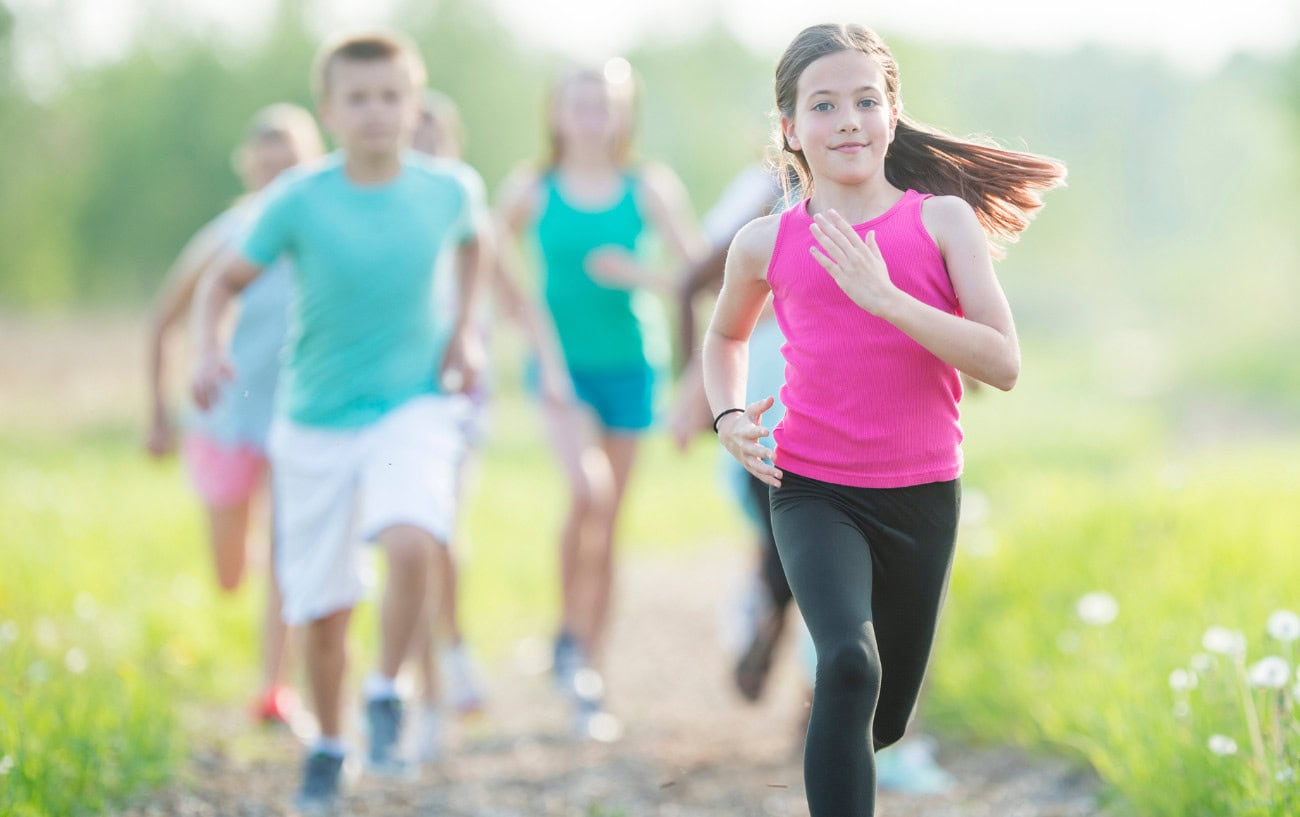
How much exercise do kids need?
According to the US Centers for Disease Control,1CDC. (2024, July 19). Child Activity: An Overview. Physical Activity Basics. https://www.cdc.gov/physical-activity-basics/guidelines/children.html?utm_source=chatgpt.com preschool-aged children (ages 3 through 5 years) should be physically active throughout the day for growth and development.
Kids ages 6 through 17 years should do 60 minutes or more of moderate-to-vigorous intensity physical activity each day, including daily aerobic and activities that strengthen bones, like running or jumping, three days each week, and activities that build muscles, like climbing or doing push-ups, 3 days each week.
Why is exercise important for kids?
Regular physical activity is essential for children’s physical, mental, and emotional development.
Movement helps kids build strong bones and muscles, improve coordination, support mental health, and develop healthy habits that carry into adulthood. Daily activity is also linked to better focus, improved sleep, and greater self-confidence, especially when it’s fun and age-appropriate.
Physical activity in your child’s daily routine sets the foundation for a lifetime of fitness and good health. Kids who exercise have:
- Less screen time.
- Improved thinking and memory skills.
- Stronger bones and muscles, higher levels of cardiorespiratory fitness, and a reduced risk of cancer, diabetes, and depression.2U.S. Department of Health and Human Services. (2018). Physical activity guidelines for americans 2nd edition. https://odphp.health.gov/sites/default/files/2019-09/Physical_Activity_Guidelines_2nd_edition.pdf
- Improved brain development and function.
- Psychosocial health benefits such as perceived competence and confidence, stress relief, anxiety management, and the development of key life skills such as goal setting, teamwork, and cooperation.
“The areas of the brain that are stimulated during exercise are the same areas of the brain responsible for thinking skills, concentration, and focus. That means higher test scores and better grades,” notes Randy McCoy, a senior executive at The Little Gym.
“A wonderful outcome from these benefits is improved self-confidence and positive self-esteem.”
Related: 8 Best Running Games for Kids
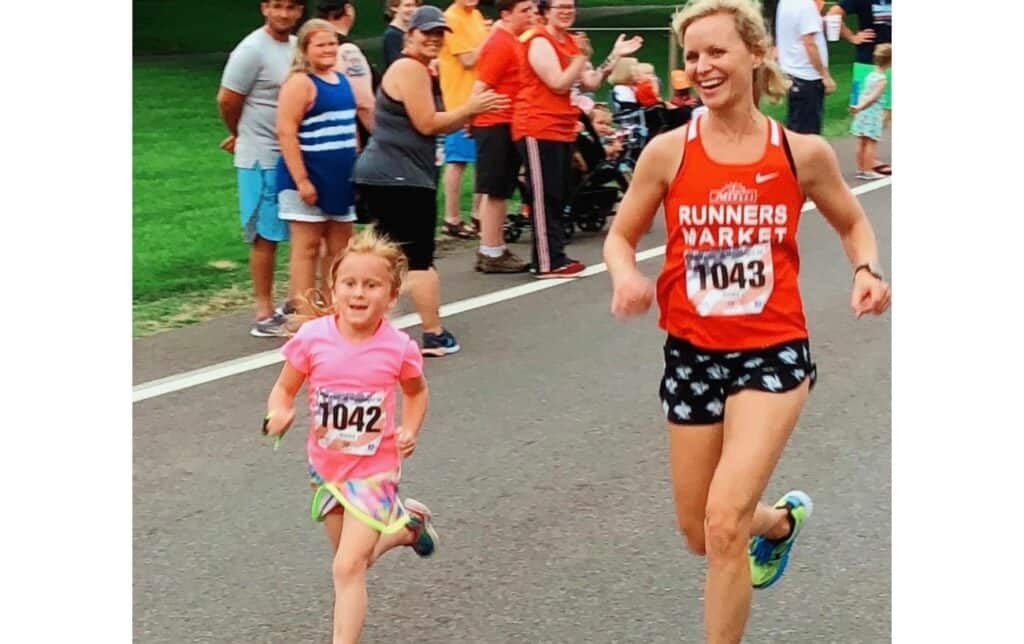
What are ways to get my kids physically active?
The key to helping kids enjoy exercise and running is to make it fun. When movement feels like play, kids are far more likely to stay engaged and want to do it again. Turning exercise into a game, rather than a workout, keeps it exciting and pressure-free.
Aim for activities that get their heart rate up most days of the week, with a mix of aerobic movement and exercises that help strengthen muscles and bones. Running, jumping, climbing, and playful challenges all count—and they don’t need to look structured or formal to be effective.
Some great ideas for kid-friendly physical activities include:
- Running
- Jumping
- Climbing
- Monkey bars and playgrounds
- Freeze tag
- Games like “What time is it Mister Fox?”
- Sports like soccer and basketball
- Scavenger hunts
- Dance parties
- Sock skating
- Video programs like GoNoodle
Get more ideas for physical activity for kids here.

At what age can children start running?
A child can start running whenever they feel comfortable, notes Dr. Siddharth Tambar.
“There is not a specific age or mileage that should be adhered to; rather, base it on what the child naturally feels comfortable doing,” he advises.
McCoy suggests that:
- 3-year-olds can run 50-100 yards
- 7- and 8-year-olds can be introduced to running a 5K (3.1 miles)
- Older kids can run longer based on their preference and motivation
“Remember, physical exercise is good, and most children do not get enough of it on a daily basis. Go at a pace that will maintain the interest of the child,” Dr. Tambar advises.
How often can my child run a week?
McCoy says a frequency of 3 to 4 times a week is a good place to start.
“But let your child’s interest level play a part. If they love it and frequently ask for more ‘running times,’ then follow their lead!” he says.
How do I run with my child?
Start by getting them excited about the idea. Make running feel special, not forced. Something as simple as a new pair of running shoes can go a long way, especially if you frame it as a “grown-up” activity they get to share with you. Let them know they’re running just like mom or dad.
Another great way to spark interest is to bring kids along to your own races or group runs. Seeing the community, the energy, and the celebration around running helps them understand why you love it.
Talk openly about what running gives you, how it makes you feel strong, happy, or proud, rather than focusing on pace or distance.
When you do start running together, set small, achievable goals, like running twice a week or working toward a fun local 5K. Always start slow and build gradually.
As coach Miller advises, “A quarter mile turns into a half mile and so on. No big jumps in mileage, and keep the pace dictated by what the child wants or feels comfortable doing.”
Most importantly, never push your child. Let them lead the pace, the distance, and even how often they want to run. If they need to stop, walk, or turn it into a game, go with it.
The goal isn’t training; it’s enjoyment. Keep it fun, positive, and pressure-free, and you’ll give your child the best chance to develop a lasting love for running and movement.
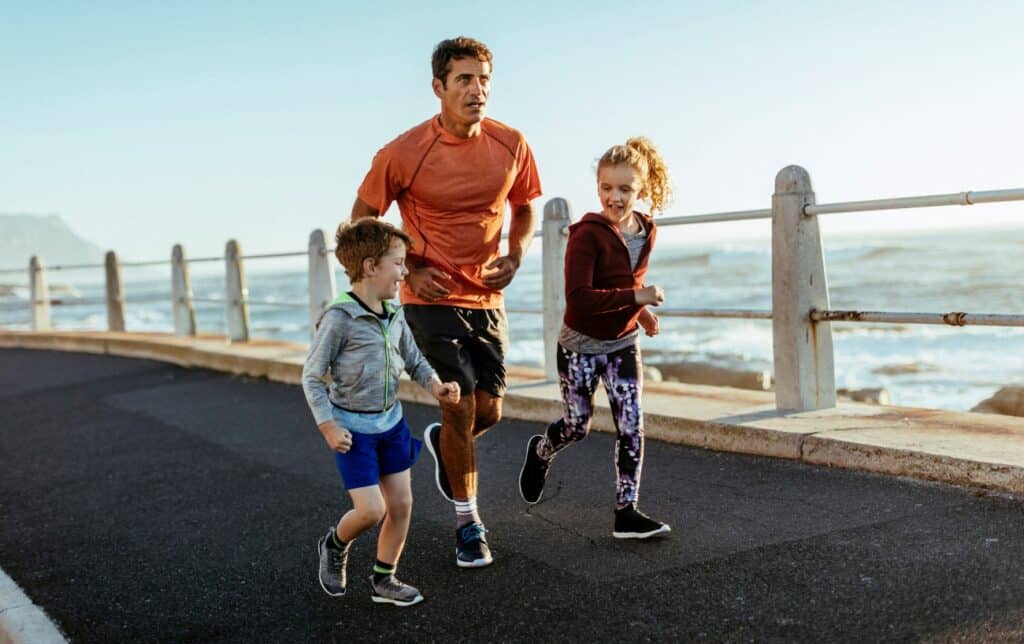
10 Tips to Get Your Kids to Start Running Today
We spoke with experts who have successfully started kids running and exercising regularly and shared their pro tips to get your kids to love running.
#1: Have realistic expectations
Parents should have low to zero expectations about what their kids can and will run, suggests McCoy. “Start nice and easy, keep it fun, and see what happens,” he says.
#2: Always make it fun
Kids won’t do it if it isn’t fun. So, telling them to go out and run a mile or for 10 minutes isn’t going to appeal to most kids. It’ll sound like punishment. Instead, incorporate activities like jumping rope, obstacle courses, and dance breaks to keep it interesting.
#3: Keep the communication open
Regularly check in with your child to ensure he or she is having fun. You want this to be a positive experience. If they aren’t having fun, talk about what could make it more enjoyable for them.
#4: Don’t pressure your kids
If you make running a “have to,” your kids will not be into it. Decide on a frequency that is doable for your kids. Don’t shame them if they aren’t up for it on a certain day.
#5: Start slow
Begin with a walk/run combination, such as one minute of walking followed by one minute of jogging, and let your child set the pace.
You can also make it playful by using music. Run for one song, then walk for the next. This keeps things fun and gives kids natural breaks without making it feel structured or demanding.
Starting slow helps kids build confidence and endurance while reducing the risk of frustration or burnout. If they want to stop, walk longer, or turn it into a game, follow their lead. The goal isn’t distance or speed buthelping them associate running with enjoyment and success.

#6: Run with your child
“If parents can participate in the running and model positive, fun running habits on a regular basis, this will help keep the child motivated,” advises McCoy.
You can have your child run your cool-down or warm-up with you. If you run with a stroller, have them get out and run the last half-mile or so with you.
#7: Be a cheerleader
Tell your kids how proud you are of them and how amazing they are doing. This reassurance will give them the mental strength to keep doing it.
Be specific in what they are doing well, for example, that they kept running even though they were tired, advises Dr. Allie Riley of Girls on the Run.
#8: Talk about your “why”
You love running, so talk openly with your kids about why you love it.
Make it about the mental and physical benefits, or the amazing running community, or how good it makes you feel, or how satisfying it is to reach goals.
Steer really clear of body image or weight loss discussions. Instead, frame running as a way to be healthy and treat our one-and-only bodies well.
#9: Set goals
Just like you set goals for your own running, involve your child in setting goals of their own. Ask what they want to work toward, whether it’s running around the block without stopping, running twice a week, or participating in a fun local race together.
When kids help choose the goal, they’re far more invested in the process.
Age-appropriate goals help keep expectations realistic and fun. For younger kids, this might mean running for five minutes without stopping, completing a short loop at the park, or playing a running game twice a week.
For school-aged kids, goals could include running a mile comfortably, training for a local fun run or kids’ 5K, or consistently joining you for a weekly run.
Signing up for a low-key, kid-friendly race can be a great motivator, as long as the focus stays on participation and enjoyment rather than performance.
To make goals feel more tangible, track progress visually. As Miller notes, using a simple chart, calendar, or sticker system allows kids to see how far they’ve come, building confidence and a sense of accomplishment along the way.
#10: Celebrate
After your kids accomplish a new goal or have a great run, let them do something they want to do as a reward.
Just like you remind yourself of your “why” when the going gets tough in a running race or workout, do the same when running or exercising with your child.
Is the reason you want to start your kids running to improve their physical health, confidence, or goal-setting skills?
Being their biggest cheerleader, not a nag, is the best way to achieve this with lasting results.
If you want help reaching your running goals, check out my getting-started running guide:
References
RunClub — Free
Join 300,000+ runners in RunClub
Free training plans for every distance, a daily running game, exclusive coaching content, and a real community of runners. Create your free account in 20 seconds — no card.
Already a member? Log in →





Start the conversation