


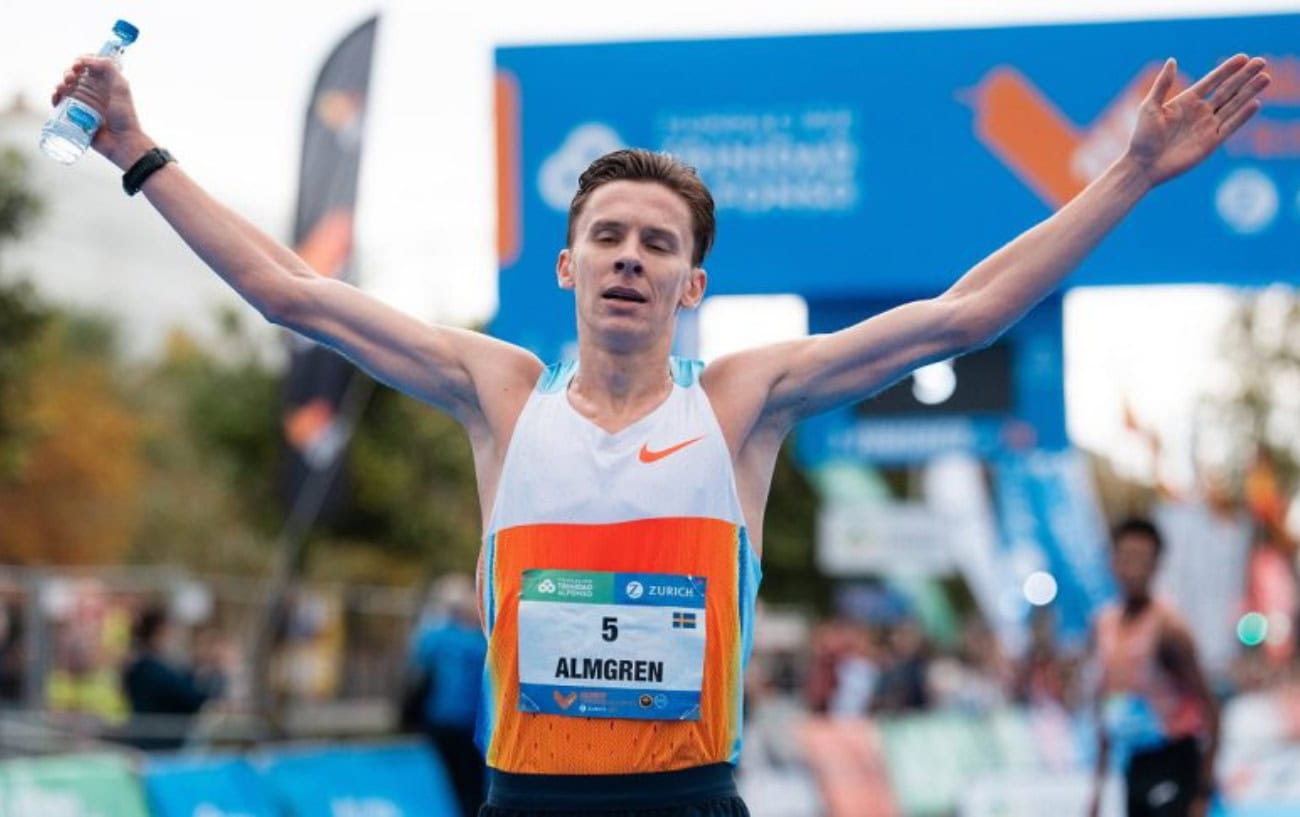
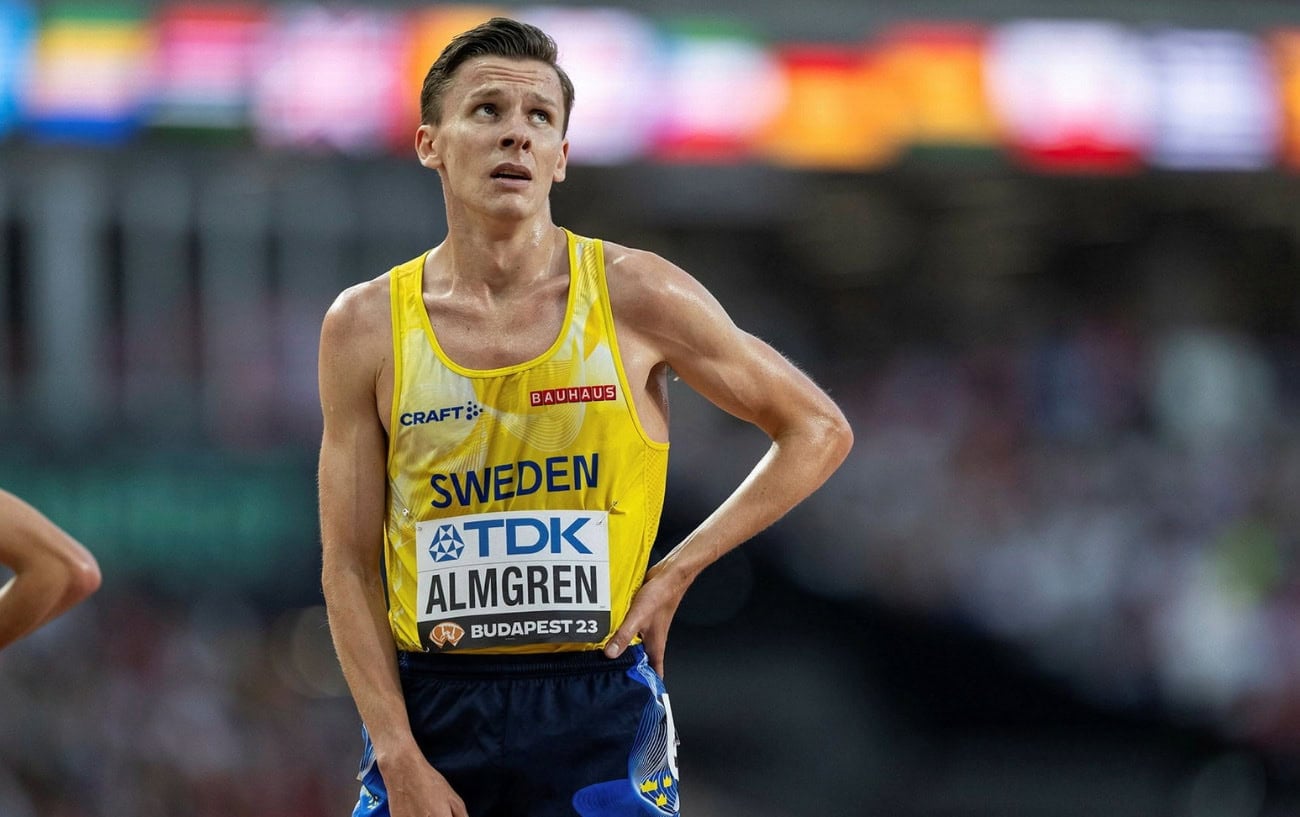
Andreas Almgren has spent the past year rewriting the European record books, but he doesn’t sound satisfied.
“I have not done my best yet,” the Swedish star said recently.
Almgren, 29, has become one of Europe’s most feared distance runners after setting European records in the 5,000m, 10,000m, and half marathon, all within the past calendar year. His recent marks include 12:44 for 5K, 26:45 for 10K, and 58:41 in the half marathon.
In a detailed interview on The Running Effect podcast, Almgren offered an unusually open look into how he trains and recovers, including the high-volume workload he believes is setting him apart. A COROS feature published Jan. 6 also highlighted the data-driven approach behind his recent breakthrough.

A Training Load Most Runners Wouldn’t Survive
Almgren’s training weeks are extreme even by elite standards.
He told The Running Effect he recently ran 206 kilometers in one week, roughly 125 to 128 miles, while still stacking workouts and gym sessions.
“For me right now, last week I ran 206 km,” Almgren said. “Two runs every day of the week.”
That mileage is closer to what many marathon specialists run, but Almgren is aiming for medals and records in the 5K and 10K. He believes the volume gives him a major advantage later in the season when training turns more race-specific.
“I run a lot with control,” he said. “It makes me handle the hard workouts… a lot better.”
The Workouts That Signaled Something Big Was Coming
Before his European record-breaking 10K in Valencia, Almgren said he had several sessions that convinced him he was in special shape.
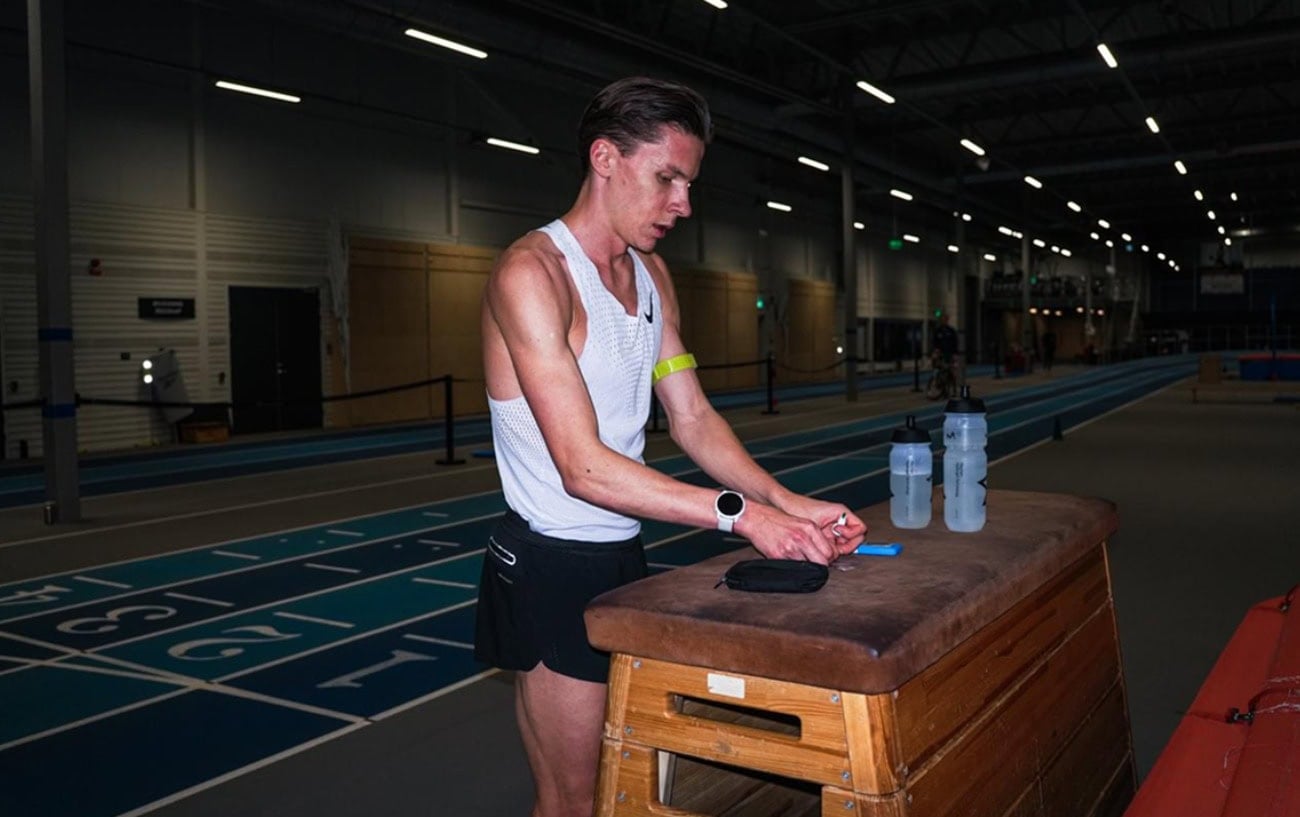
One was a 3 x 3K workout with three minutes rest, completed indoors with bike pacing. He said he ran 8:00, 7:52, and 7:43.
“I did a 3x3k with 3 minutes rest,” he said. “Closed the last one in 7:43.”
Another workout that drew attention online was 10 x 1,000 meters off one minute rest, where he said he averaged roughly 2:33 per kilometer and closed in 2:28.
“That one went kind of viral,” Almgren said.
The COROS feature backed up the session’s intensity, listing an average pace of 2:34 per kilometer with an average heart rate of 162 beats per minute.
Threshold Training, Measured Like a Science Experiment
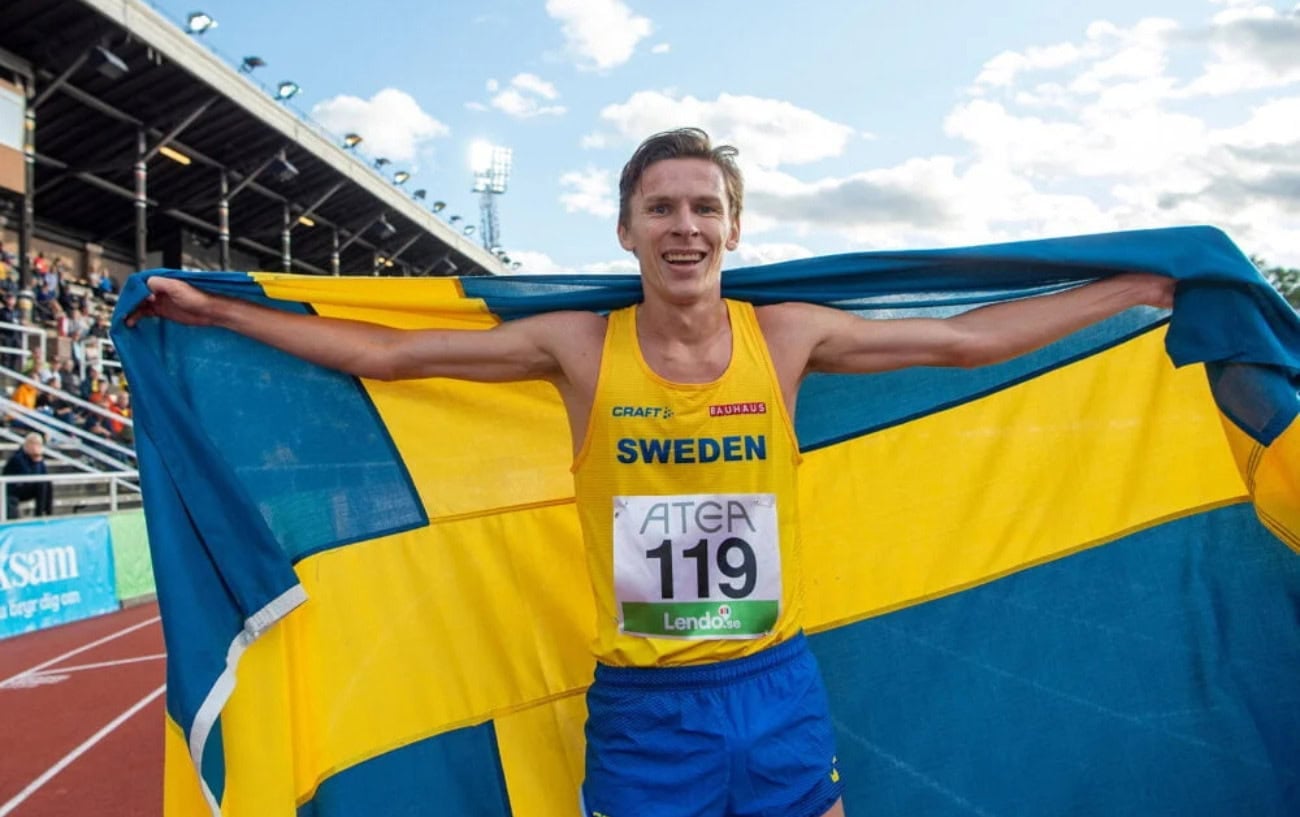
Almgren credits much of his development to strict threshold training, monitored with heart rate, lactate readings and effort.
“I usually check four things: speed, lactate, heart rate, and overall feeling,” he said. “It’s not just ‘go out and run threshold and you’re going to run fast.’”
According to COROS, Almgren often targets threshold sessions in the 167–178 bpm range, while running as fast as 2:40 per kilometer.
He says the goal is not going hard once, but being able to repeat quality work week after week.
Double Threshold Days and “Easy” Runs at 6:26 Pace
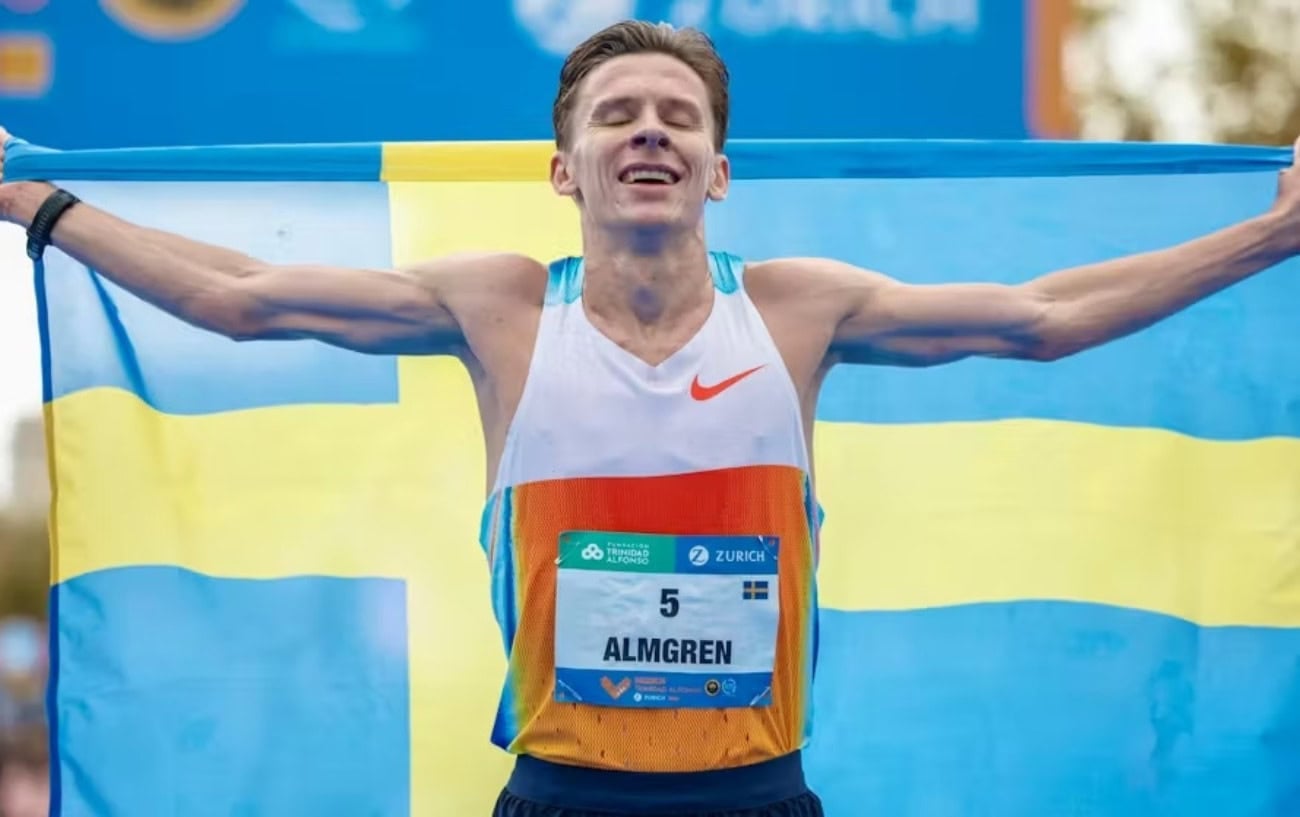
Almgren also uses double threshold training, a Scandinavian method built around two controlled sessions in one day.
He said his morning session often includes 6 x 6 minutes, followed later by 400-meter reps with short recovery.
“In the morning I usually do six by six minutes,” he said. “And then in the afternoon I do 400s with 30 seconds rest.”
Even his easiest day of the week would be a huge training day for most runners. He said his lightest day includes 12K in the morning and 10K in the afternoon, plus strength work.
His easy pace is around 4:00 per kilometer (about 6:26 per mile), with his heart rate sitting near 120 bpm.
Recovery: Massage, Compression Boots, and Trying to Sleep
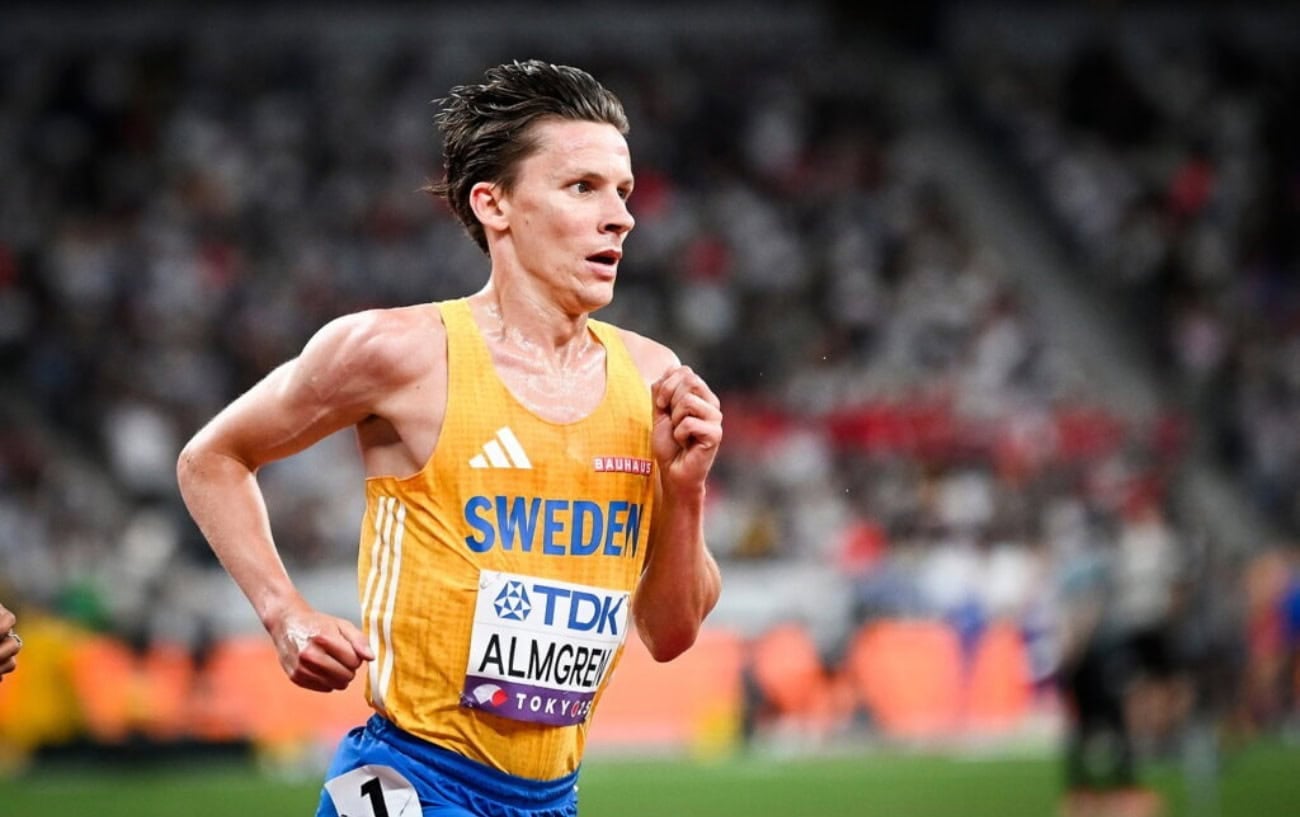
To survive that kind of workload, Almgren says recovery is constant. He uses compression boots, massage guns, and regular treatment.
“I actually had a massage earlier today,” he said.
Sleep is an ongoing challenge.
“I’m not the best sleeper,” Almgren said, adding that he usually gets seven to eight hours and tries to nap when possible.
He also spends significant time in the gym, training four days a week, including heavy lifting on Sundays after his long run.
Why He Believes Breaks Matter
Despite his volume, Almgren strongly believes in taking time off, especially after long racing stretches.
After his season-ending half marathon in Valencia, he traveled to New York City for downtime. He described the break as mostly mental.
“It was really nice just walk around New York and eat and drink very very nice things,” he said.
He said he returned to training quickly and didn’t feel like he lost much fitness.
“It took like one week and then two full weeks and I was basically back in the same shape,” he said.
What’s Next: A Sub-12:40 5K and a Title Chase
Almgren says his biggest championship goal for 2026 is winning gold at the European Championships.
“I’ve never been on the top of a podium,” he said. “Trying to get the gold… is probably my main goal.”
He also wants to break 12:40 in the 5K, and hinted another major 10K attempt may be coming soon.
“I’m already racing a new 10K in four weeks,” he said. “I hope I can come close to the low 26:30s.”
For a runner already holding three European records, it was a reminder that Almgren isn’t training like someone trying to defend what he has.
He’s training like someone trying to take more.
RunClub
Get more running stories — join RunClub
Daily running news, a community of 300,000+ runners, free training plans for every distance, and a daily running game. Free to join — no card.
Already a member? Log in →




Join the conversation
Since then, Almgren won the European 10.000 with an impressing front run. No-one could stay with him the last 3k.. And this weekend is World Championships in Half Marathon. Maybe Joshua Cheptegei, who is in the start list, will be hard to beat though.