


The biggest question going into this year’s Cape Town Marathon is: what will Eliud Kipchoge do?
The 41-year-old Kenyan, widely considered the greatest marathoner of all time, will run his first race this Sunday since announcing his retirement from elite competition. At last year’s New York City Marathon press conference, Kipchoge said he was done competing for the win, and would pivot to what amounts to an extended farewell tour, running marathons on all seven continents, including Antarctica, over two years.
Cape Town was supposed to be the first stop on that goodwill mission. But in the months since, Kipchoge has been conspicuously coy about what, exactly, he plans to do on Sunday.
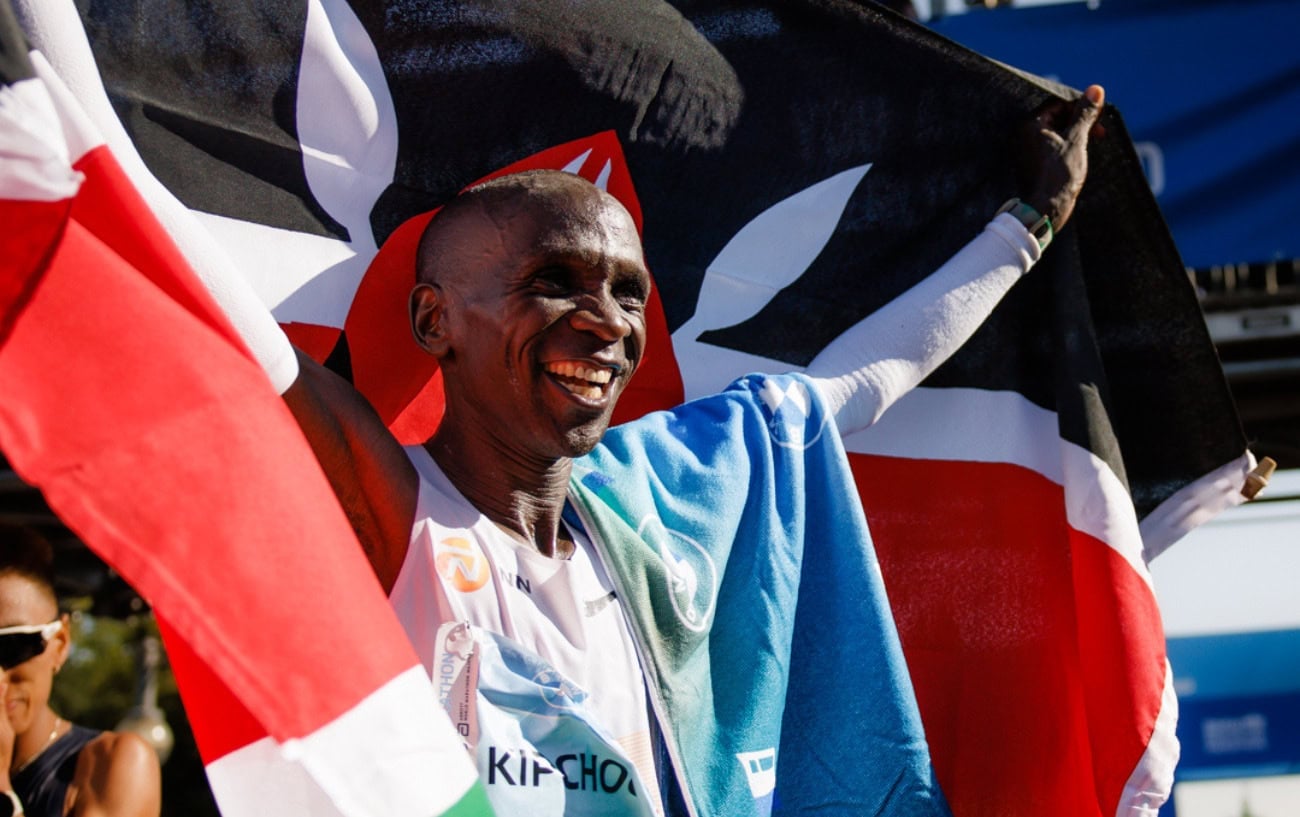
There are any number of possibilities. He could pace toward the front of the race. The course record is a relatively attainable 2:08:15, and 13 runners in the field besides Kipchoge have seed times faster than that. He is probably just a touch off what the leaders will run, but he could comfortably slot in behind them and clock something in the 2:10 to 2:15 range even on a bad day at the office. He ran 2:14 on the hilly New York course last fall, after all. He could also drop back further and run with the top local South African contenders, or tuck in with the fastest age-groupers. Or he could try something stranger, like starting at the back and working his way through much of the field over the course of the morning.
During the press conference announcing his entry, our news editor Jessy Carveth asked him directly which of these he had in mind. His response was vague and classic Kipchoge: “I want to run a beautiful race.”
What would a “beautiful race” entail for Kipchoge at this stage of his career?
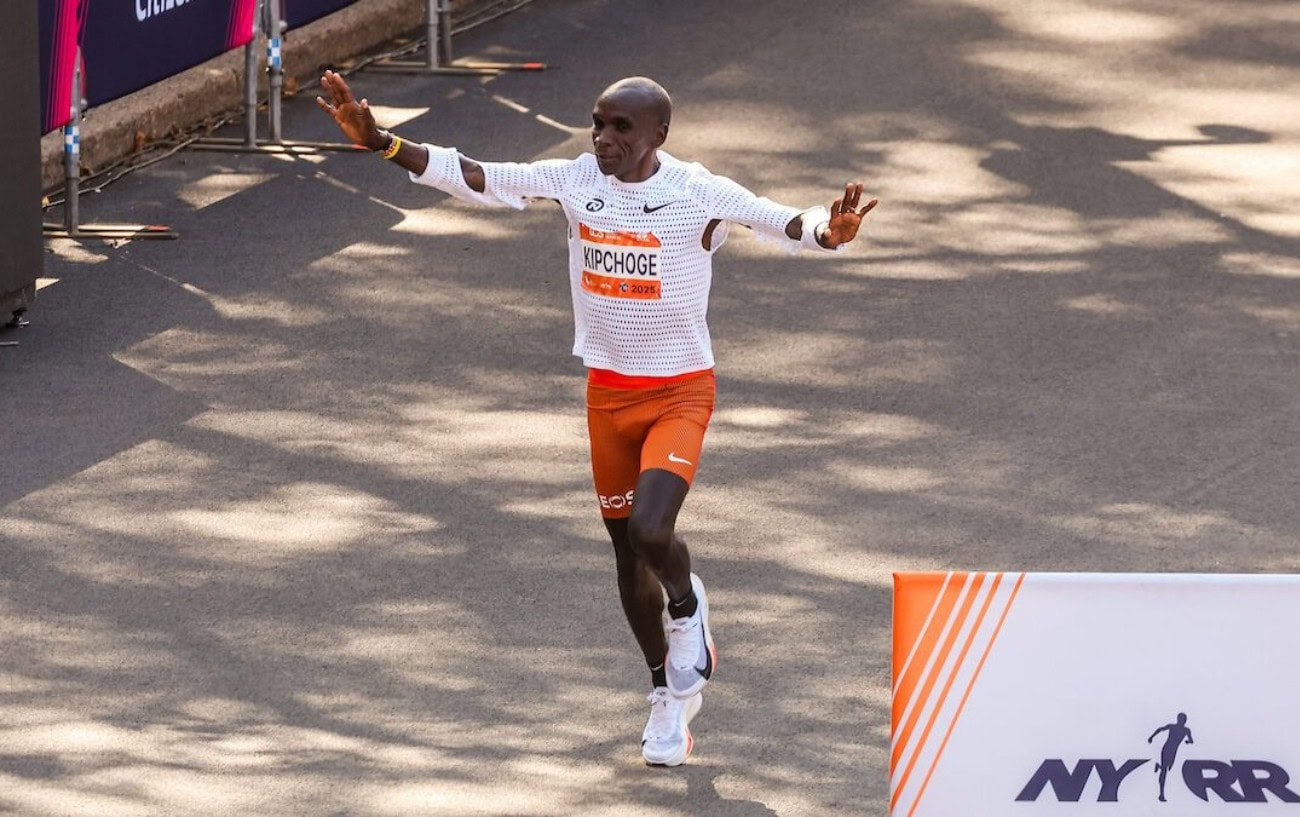
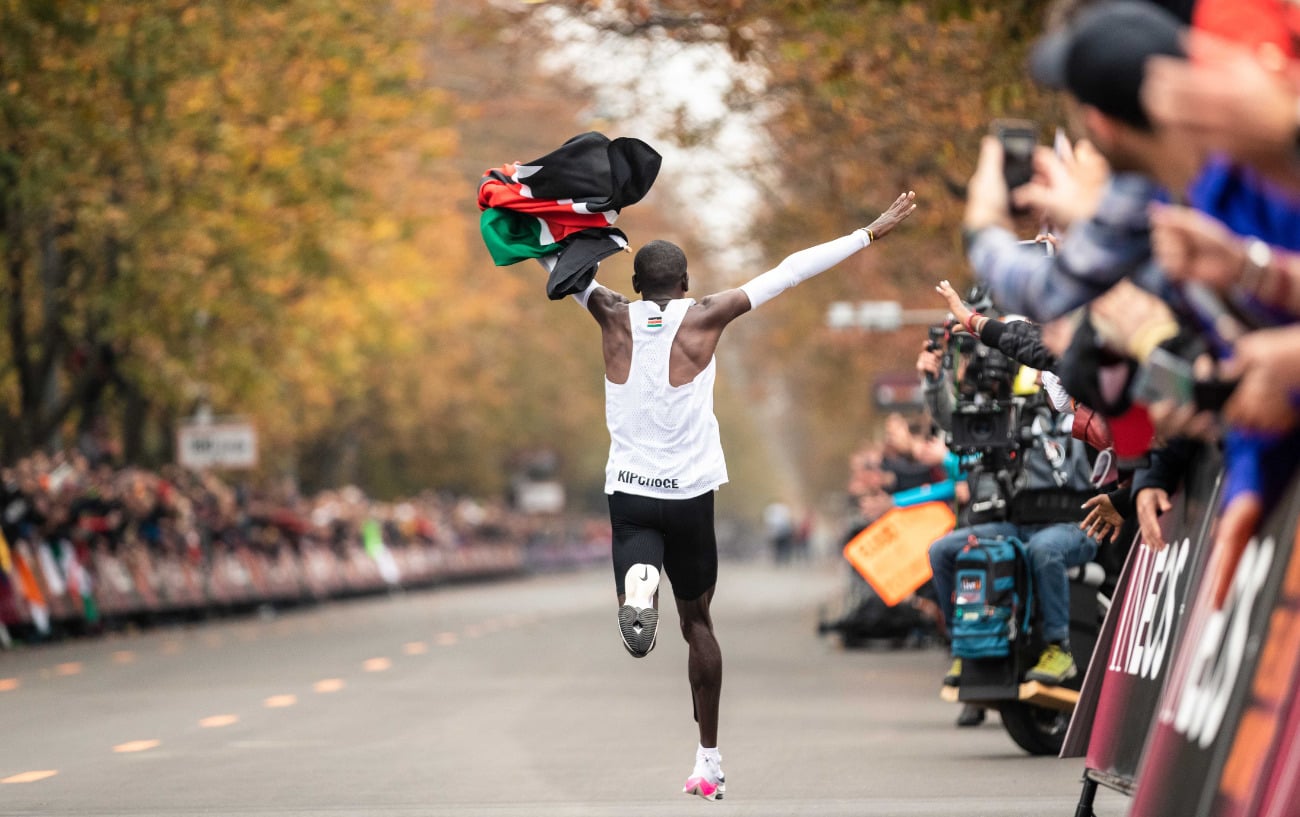
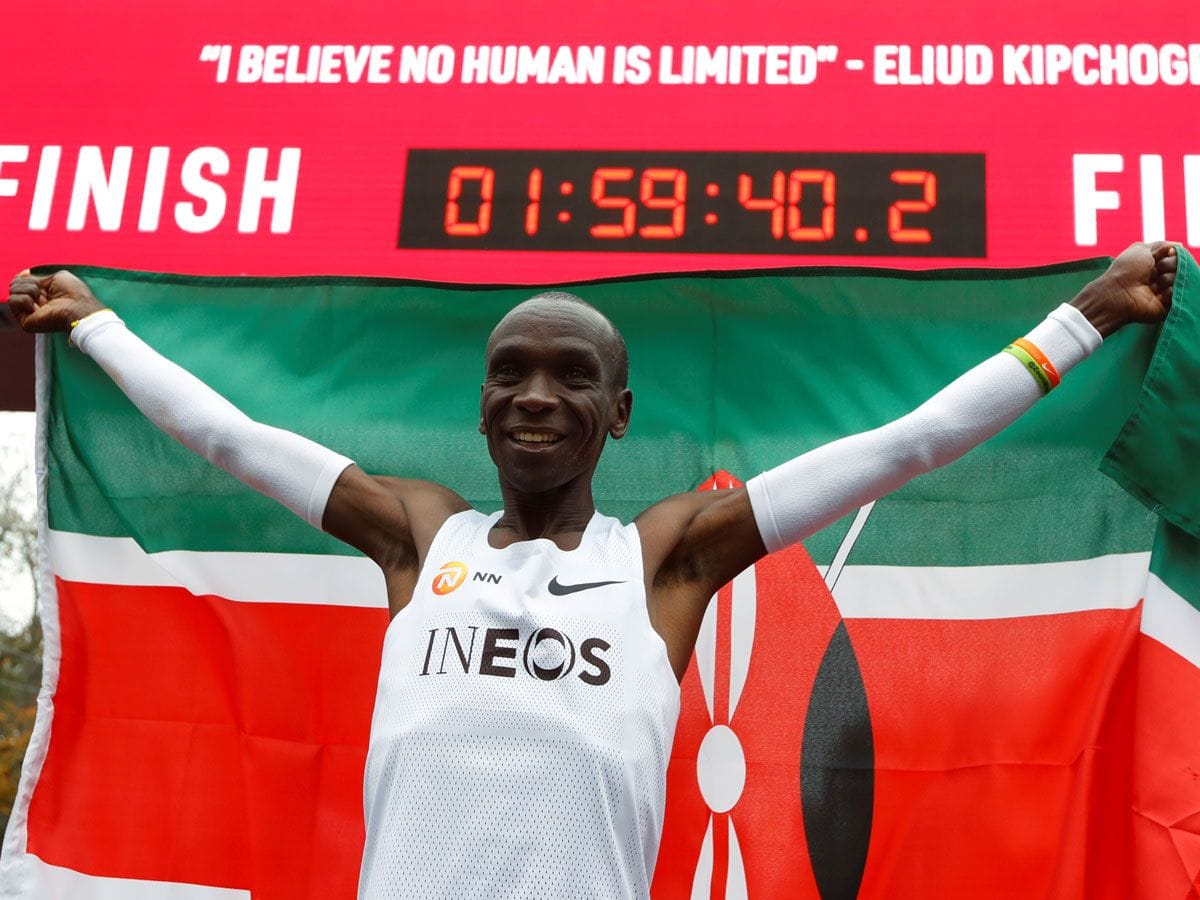
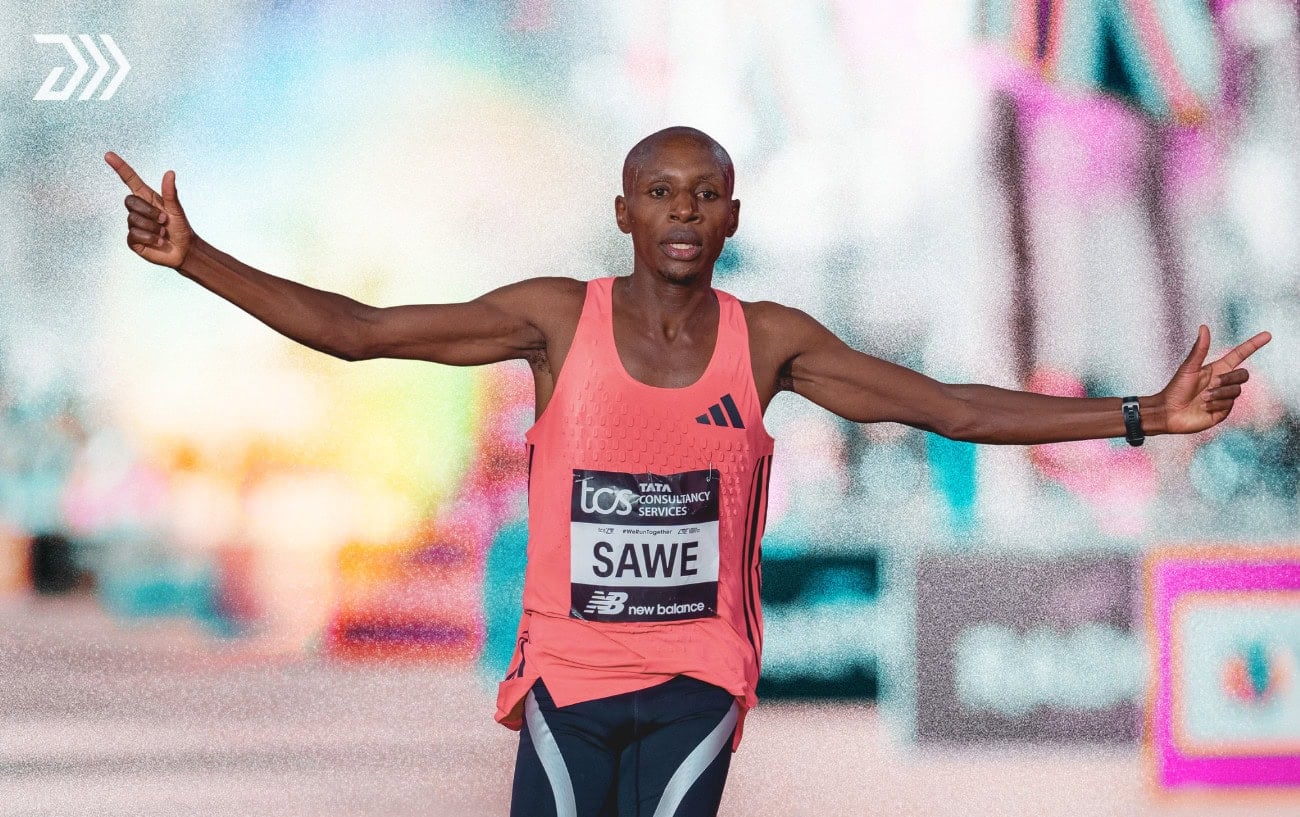
His legacy, of course, is already cemented. Two Olympic gold medals in the marathon (2016, 2021). A record 11 World Marathon Majors, including an unprecedented ten consecutive wins between 2014 and 2019. He also held the world record twice during that span, lowering it again with his 2:01:09 in Berlin in 2022, before Kelvin Kiptum brought it down to 2:00:35 in 2023, and Sabastian Sawe finally cracked the two-hour barrier in a sanctioned race with his 1:59:30 in London this April. A very Kipchogean effort, that one. And of course there was Breaking2 and the 1:59 Challenge, where Kipchoge himself became the first human to run a sub-two-hour marathon, even if the performance was ineligible for the record books because the course wasn’t sanctioned.
Kipchoge’s talent and warrior-monk persona were the perfect vehicle for Nike to quietly develop super shoe technology, which has reshaped distance running forever. Even with the record now twice removed from him, we still live in a world Eliud Kipchoge created.
So what’s next for the Kipper, and how does he manage a God-like legacy that now extends well beyond the running world?
Here is the genuinely interesting wrinkle. Kipchoge could, theoretically, still win this race. The Cape Town elite field is talented but young, and notably lacks anyone with the top-end speed to match a prime Kipchoge. The temptation to test himself one more time, to slot in with the lead pack and see what is left in the tank, has to be real. An elite race in which Kipchoge genuinely competed would be one of the most compelling marathon stories of the year.
But it would be a poor decision, with far more to lose than to gain.
His results from last year tell an honest story about where he is at 41: 2:14 in New York in November, 2:08 in Sydney in late August, 2:05 in London last April. Impressive times for a man his age, on the courses he ran, against the fields he faced. But they are not winning times in a deep, hungry elite field. And the calculus for Kipchoge is brutally asymmetric. He is not lining up against a top-tier rival or a long-standing nemesis, so anything short of victory gets framed as another loss. He all but acknowledged this when he crossed the finish line in New York last fall and said his days of entering races to win were behind him.
So what should Kipchoge do instead?
A Nike executive once told me that the company internally tiers its athletes, with its pinnacle figures positioned essentially as deities. Michael Jordan. LeBron James. Serena Williams. Eliud Kipchoge, the executive said, is on that level. It tracks. Nike is at its core a running brand, and perhaps the most effective marketing engine in the world. Kipchoge’s legacy and ongoing presence in the sport are strategically vital to them.
Cape Town, meanwhile, is in a curious and transitional moment in its own history. Founded in 2007, it grew steadily without ever cracking the top tier of global events. But when the World Marathon Majors decided to expand, Cape Town became the obvious choice to give the series a foothold on the African continent. Interest in the race has swelled, and it appeared poised to be formally announced as the next Major, beginning with the 2026 edition. Then, last year, a windstorm forced organizers to cancel the race on its eve, delaying the announcement.
Which is why having Kipchoge in South Africa is such a coup. He attracts a media circus everywhere he goes. In Sydney and New York, the global press and the influencer ecosystem followed his every move more closely than they followed the actual winners. Cape Town will be no different. That is already a victory for the event before a single step is run.
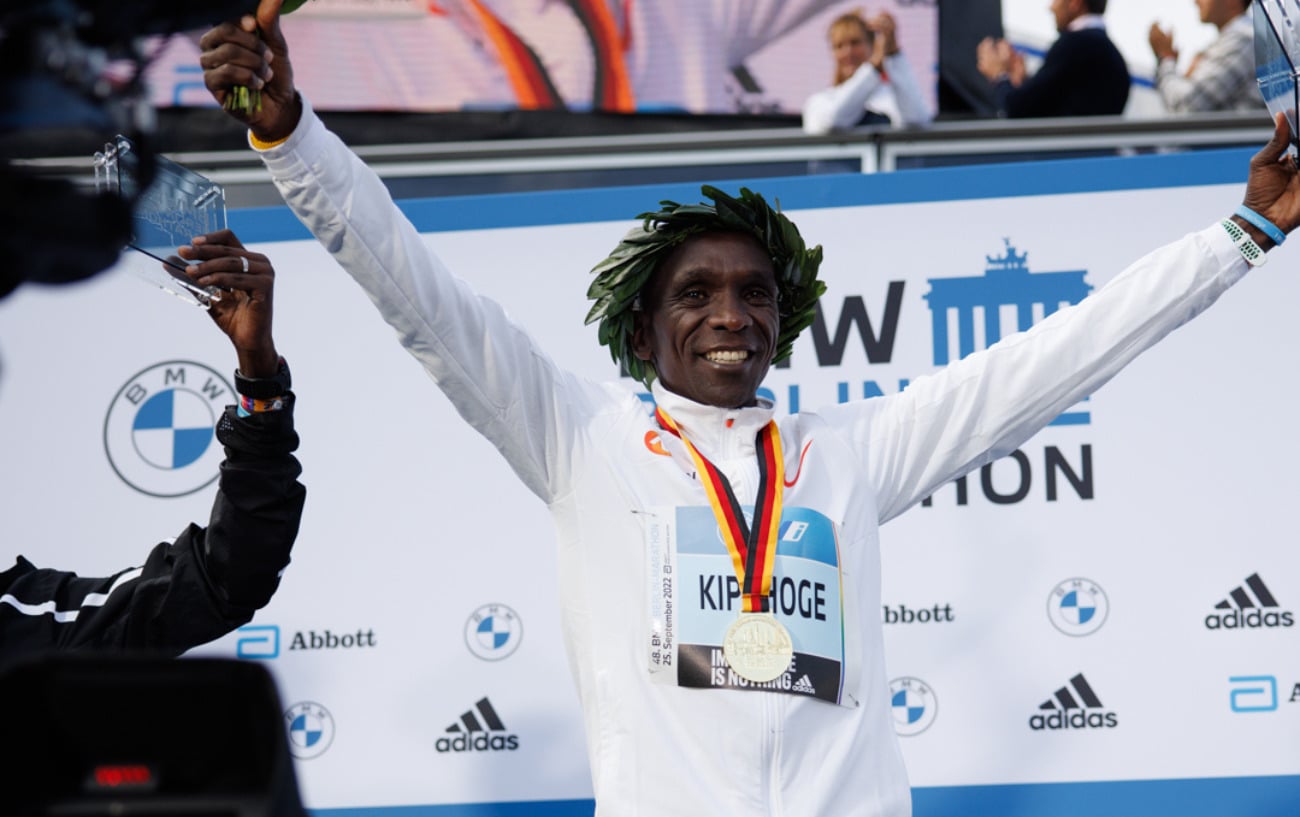
The best race plan, then, for Eliud Kipchoge on Sunday morning is this. Step to the front of the elite field before the start, acknowledge the crowd and the cameras with that signature smile, and then quietly fade back into the pack before the horn sounds. Settle into an easy pace, easy for him anyway, and run with the middle of the field. If he does this, hundreds, maybe thousands, of other runners will end up running in unison with him. A drone shot from above would capture something larger than any race result: the singular power of Kipchoge as a figure, and the unifying force of the marathon itself.
If Cape Town’s organizers are wise, they will have a drone in the air to capture that moment, and they will seed the footage with every media outlet in the world by Sunday afternoon. If they don’t have the foresight, Nike certainly will.
The payoff would be enormous. Not just for Cape Town’s bid to formally join the Majors, but for the broader idea of marathoning on the African continent, the spiritual home of distance running, yet still strangely underrepresented in the sport’s biggest commercial moments. It would also reinforce, to a global audience well outside the running world, just how big this sport has become in the years since the pandemic. A sport whose greatest figure can now move tens of thousands of people, on foot, in any city he chooses.
And then it is on to Porto Alegre, Brazil, the next stop on Eliud Kipchoge’s farewell tour of the world.
RunClub
Get more running stories — join RunClub
Daily running news, a community of 300,000+ runners, free training plans for every distance, and a daily running game. Free to join — no card.
Already a member? Log in →


Start the conversation