


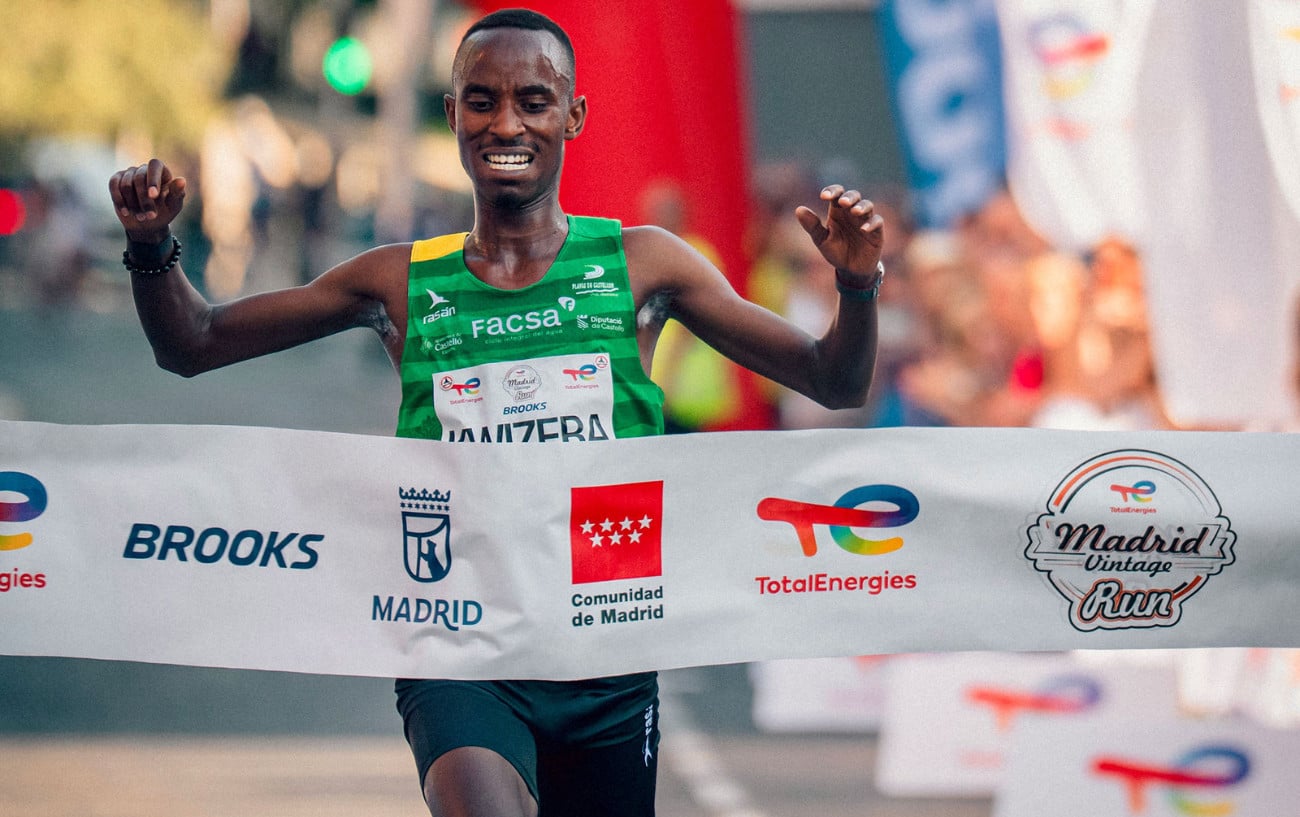
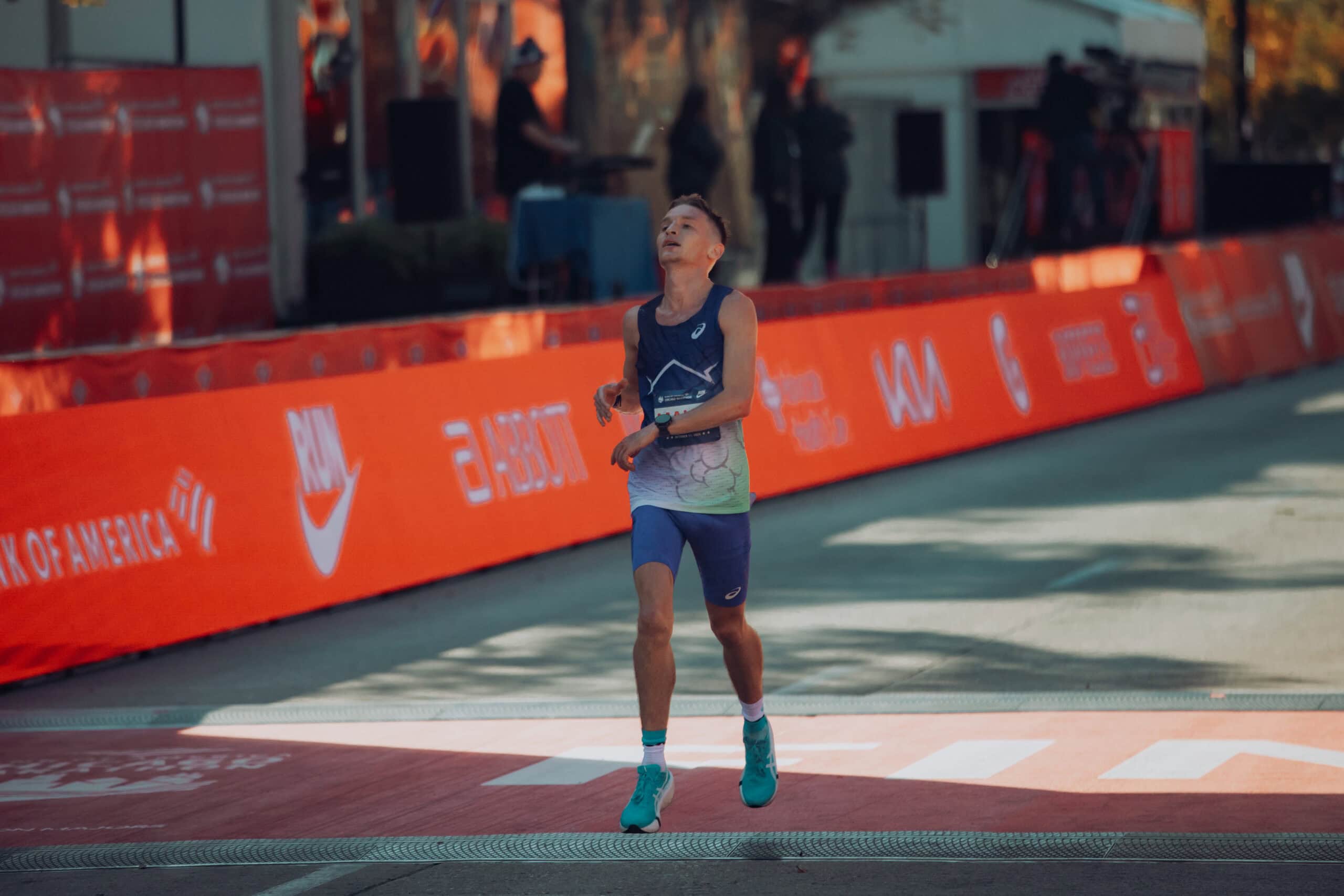
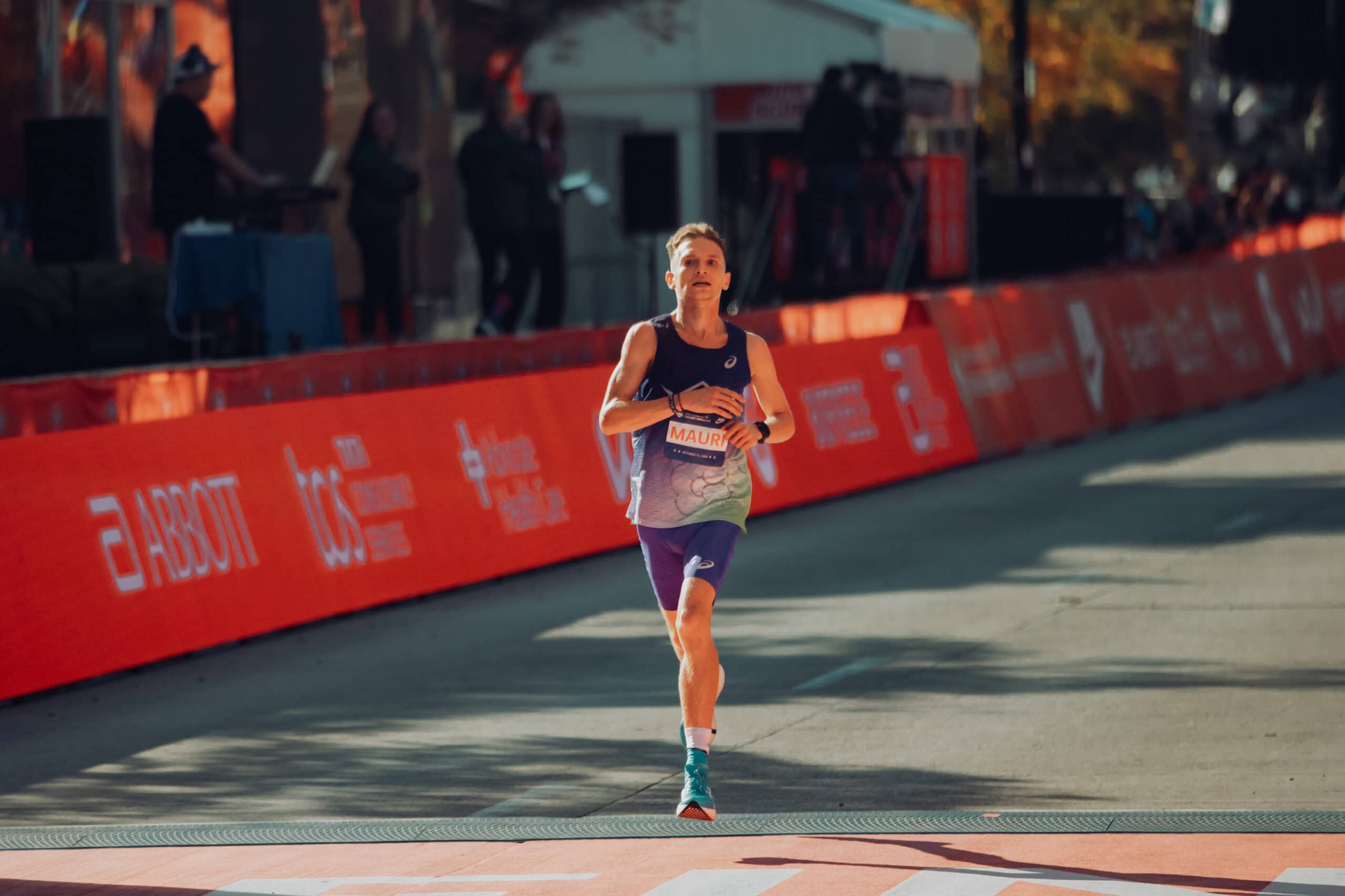
Rodrigue Kwizera covered 10 kilometers of Madrid asphalt in 26 minutes and 1 second on Sunday, the fastest time any human has ever recorded over the distance on a road or a track. The 26-year-old from Burundi, who lives and trains in Spain, finished the Madrid Vintage Run by TotalEnergies a full 30 seconds clear of the official world record of 26:31, held by Ethiopia’s Yomif Kejelcha. His pace averaged 2:36 per kilometer.
Thousands of spectators packed the final stretch of the course to watch him close. According to the race organization’s account of the day, Kwizera started fast along Bravo Murillo, hitting the first kilometer in 2:30. He passed 5K near Plaza de Colón in 13:14, slightly ahead of schedule. By that point only one of his two pacemakers was still on his shoulder. The other had dropped off.
Kwizera made his decisive move at kilometer 7, overtaking the remaining pacemaker and running alone. He reached Paseo de las Delicias at 8K with the record clearly in range. The last two kilometers turned into a flat-out time trial.
“I’m so happy to have made history,” Kwizera said after crossing the line. “We were able to push ourselves to the limit. And now I know this course and I’ll be coming back next year to improve my time.”
Why the time won’t count
World Athletics requires road courses to meet strict criteria for record ratification, including limits on net elevation drop and on the distance between the start and finish. The Madrid Vintage Run course doesn’t satisfy those rules, in part because of its net downhill profile. The organizers were open about that going in. They were not trying to chase an official record.
“We knew it was extremely difficult. But we also knew it was worth trying,” said Pedro Rumbao, CEO of MAPOMA and head of the project. “Today, Madrid has shown that limits are not a fixed line, but a frontier that can continue to advance. We are proud that this historic moment has happened here.”
The event was built around one question: how fast can a human run 10 kilometers when every variable is optimized? The organizers selected the route specifically for performance, recruited a team of international pacemakers, monitored weather conditions closely, and built the race around a single goal of pushing the clock.
A 53-second leap
Kwizera’s official 10K personal best going into the race was 26:54. He took 53 seconds off it on Sunday.
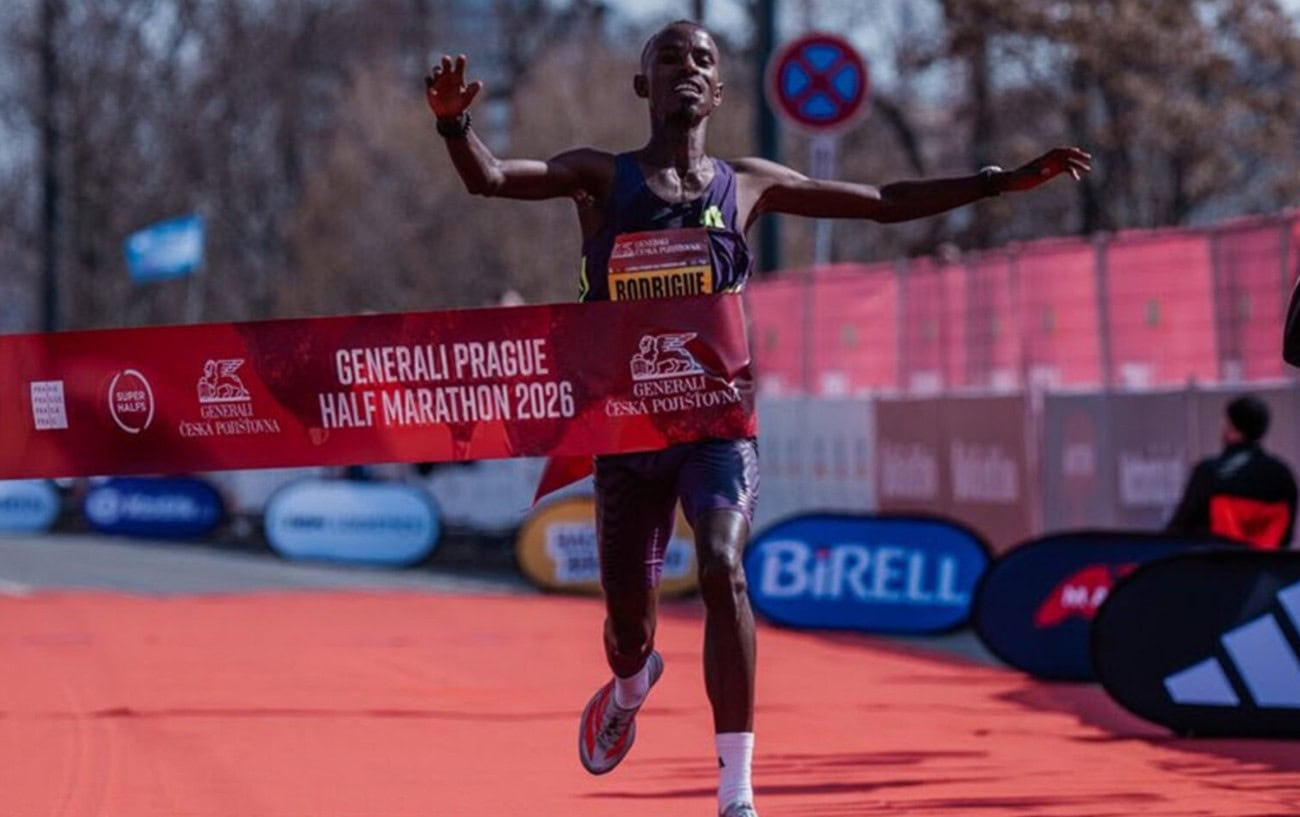
The result fits with how his year has gone. In March, Kwizera won the Generali Prague Half Marathon in a course record of 58:16, beating Sabastian Sawe’s previous mark from 2024 by eight seconds. He won that race by 32 seconds. The performance moved him to 14th on the half marathon all-time list. Kenya’s Samwel Chebolei Masai finished second in Prague in 58:48, with Owen Korir Kapkama third in 58:58. Prague is one of six races in the SuperHalfs series.
Kejelcha’s 26:31, the standing world record, was set in February 2024 in Barcelona. It still stands.
RunClub
Get more running stories — join RunClub
Daily running news, a community of 300,000+ runners, free training plans for every distance, and a daily running game. Free to join — no card.
Already a member? Log in →








Start the conversation