


Fotyen Tesfay has not raced since Barcelona. She has barely been heard from. But she has not been standing still.
Two months after running the fastest women’s marathon debut in history, the 28-year-old Ethiopian is fully back in training and planning a return to the marathon this autumn, her agent Monica Pont Chafer has told Marathon Handbook. And for the first time, her team is willing to say publicly what many who watched her run 2:10:51 in Barcelona have been thinking ever since.
A world record attempt is on the agenda.
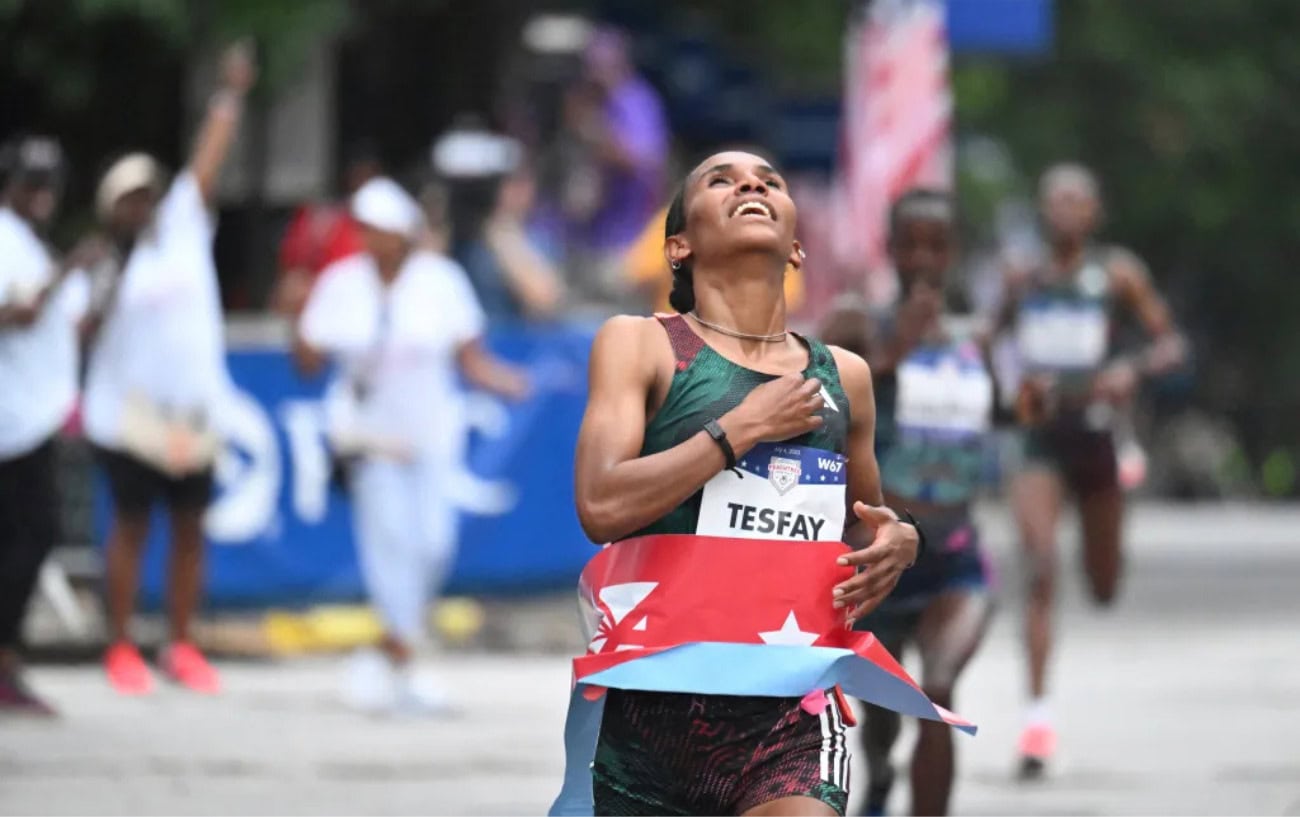
“After her debut in the 42km distance with a 2h10’51 a WR attempt is not a crazy idea,” Pont Chafer told Marathon Handbook, “and if the preparation for her next marathon will go in the best way (not injuries…) is something all of us have in mind (athlete, coach, manager).”
The specific race has not yet been confirmed, but an autumn marathon is the plan. Before that, Tesfay is expected to race a half marathon or 10km to sharpen her fitness. Track, her original home, is no longer part of the picture. As for her current condition, Pont Chafer is straightforward: “she is fully back in training and really she looks very ok following all the program being very focus and healthy.”
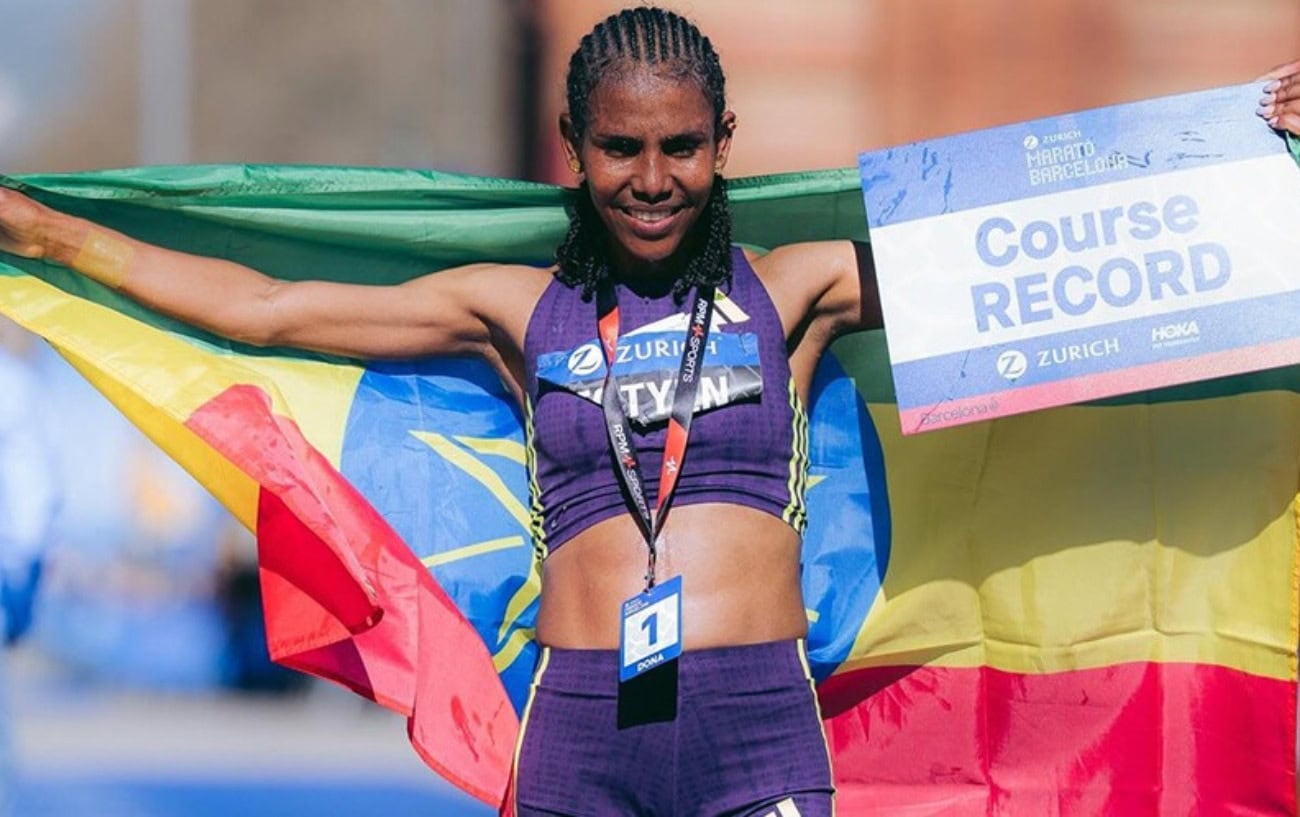
The Decision Nobody Saw Coming
The full story of how Tesfay ended up at the Barcelona Marathon start line is more improvised than anyone realised at the time.
Her coach, Gemedu Dedefo, approached Pont Chafer in mid-December 2025 asking her to find a marathon. Tesfay — a two-time sub-1:04 half marathoner and Olympic 10,000m runner — had decided she wanted to race 42.195 kilometres. She had never run beyond 21km in competition. The agent admits she was taken aback: “I was kind of surprised by the fast jump to the marathon, but both of them were very determined.”
The catalyst was an injury that had effectively ended Tesfay’s track career. Spikes have long caused her physical problems, and at the 2025 World Championships in Tokyo she was injured mid-race during the 10,000m final, finishing eighth in 31:21.67. The injury also compromised her Valencia Half Marathon that October, where she ran only 1:05:10 — well below her best. After that, she and Dedefo made the decision together: no more track. Road racing only.
The first choice for her marathon debut was Seville, but her condition following the Tokyo injury led them to delay. Barcelona — flat, fast, and well-organised — fitted perfectly. According to Pont Chafer, the relationship with the race organizers was central to making it work: “We were in continuous communication planning for the race according to Fotyen’s progress in training. Organizers did a great job and we feel very grateful to the full Barcelona team.”
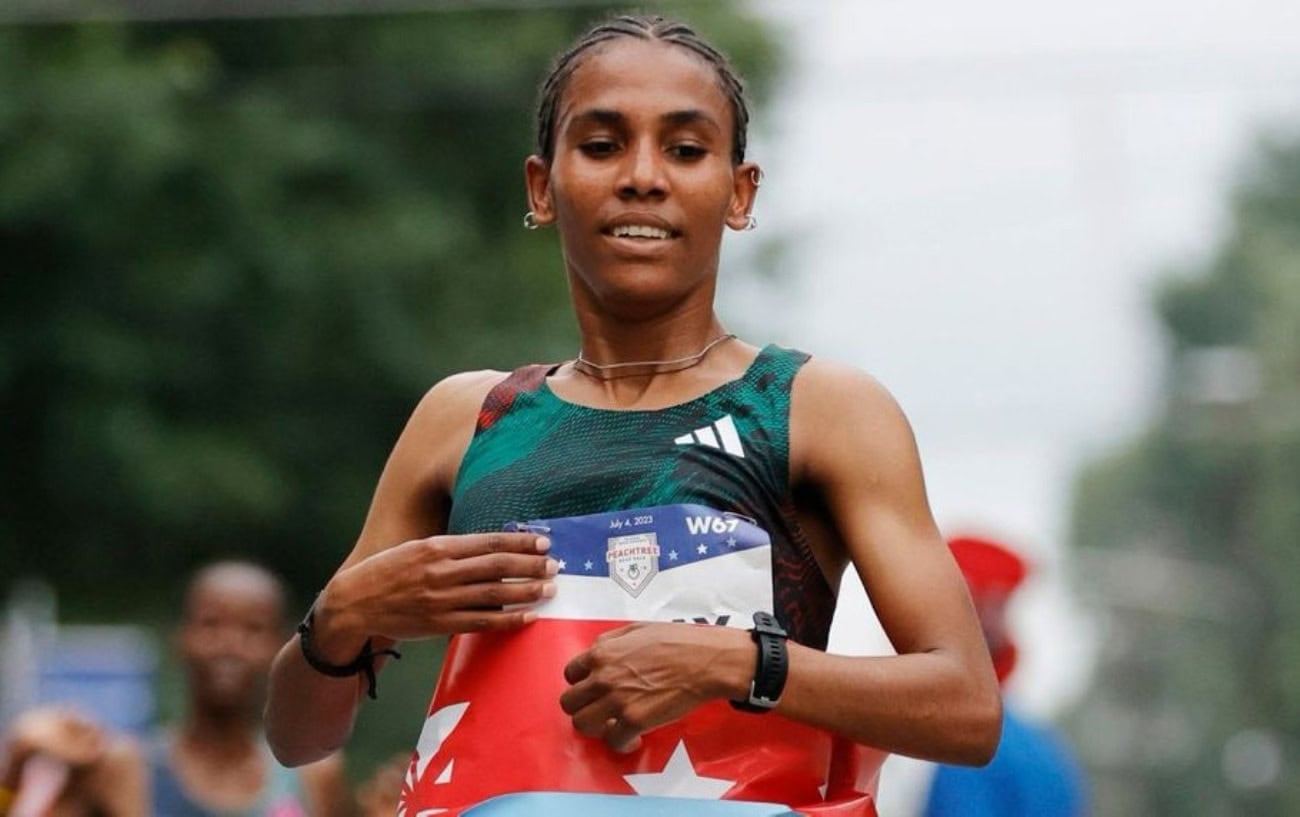
She Wasn’t Chasing the World Record — Until She Was
The original goal in Barcelona was not the world record. Tesfay and her team had targeted the Ethiopian marathon record of 2:11:53, held by Tigist Assefa — itself a remarkable ambition for a debut. Then the race unfolded differently.
According to Pont Chafer, “the plan/goal was to do Ethiopian record 2h11’53 (Tigist Assefa), but during the race she was feeling very well and pushing harder because she saw the chrono and realized WR can be there, which made everyone struggle more than expected.” The male pacemakers — runners capable of finishing a marathon in 2:12 — began dropping off not through lack of preparation, but because Tesfay had upgraded her own ambitions mid-race.
The moment at kilometre 35 that television viewers watched as a visible struggle looked different from the inside. At that point Tesfay was not afraid — in fact the opposite. “If you saw the race at km 35 she was not at all afraid even was the moment she was really feeling confident she could do even a WR,” said Pont Chafer, “some km later her body started to struggle, and from 38km she tried to survive and fought to finish the race.” The wall, when it came, cost her the minute that separated her from the record — not her fitness.
The wind Tesfay cited post-race as a factor in those final kilometres was significant. A calmer day, her team believes, changes the final number. The next attempt, with the benefit of experience and a better-dialled race strategy, will be a more targeted effort from the start.

Trained Through a War
Tesfay’s path to Barcelona was shaped by more than athletics. She grew up in the Tigray region of Ethiopia — a part of the country engulfed in civil war from 2020 to 2022 — and trains at altitude above 2,000 metres, as she has done her entire career.
According to Pont Chafer, stopping was never something Tesfay considered. It was simply the circumstances that made consistent training impossible during those years. When she was able to travel to Addis Ababa she took the opportunity and relocated, which allowed her to continue her career.
The discipline she has shown in getting here — a decade of quiet work before an explosion onto the world stage — is part of what makes her story compelling.
RunClub
Get more running stories — join RunClub
Daily running news, a community of 300,000+ runners, free training plans for every distance, and a daily running game. Free to join — no card.
Already a member? Log in →





Start the conversation