

Changing of the Guard
I hauled out my standard I’d-Love-To-Run-A-Marathon-But-Speech, for I had long since decided that at least in this area, I was destined to aspire and never conquer. Indeed, I was ready to call it quits after four miles that day. But Ed looped us around the neighborhood one more time. . . .
NEVER SAY NEVER
Fast forward a few months: Sharon and I were back in Malaysia after spending a wonderful honeymoon in Australia where, in true honeymoon fashion, we drank a great deal of excellent wine and gorged on fine foods. We took “Why not? It’s our honeymoon” to the max.
The unfortunate consequence was more than a few excess pounds around the middle. Recalling the inspiring run with Ed, I decided to sign up for and train toward a 10K race as a way to get my sorry self back into shape.
What happened next I can’t explain. No sooner had I signed up for a 10K than I found myself signing up for a half-marathon. I can’t explain the process, but goals were being set, feet were moving, and goals were being reset.
Perhaps it came from the new-found discipline of being a “responsible married guy.” Perhaps it was a way to relieve some of the stresses related to our new life away from the United States. Or perhaps it was that I was now part of a family that had a history of running.
I had been transferred from New York to Kuala Lumpur on a work assignment. It was, I concluded, a fantastic opportunity—especially at my young age—to observe firsthand the burgeoning growth of Southeast Asia. Sharon and I regarded the move as a terrific way to explore an exotic country and a fascinating corner of the world.
Located roughly three degrees north of the equator, Malaysia is no place to run a marathon. Or so the reasoning went, especially after I completed the half-marathon, which began at 6 A.M. in a vain attempt to beat the heat.
So for my first marathon, I settled on Hong Kong, which was a three-hour plane flight north. Sharon had never been to Hong Kong, so we were keen to go for a visit. Additionally, the timing was right. I had exactly four months to prepare, and the weather would be cold at that time of the year, but not freezing.
The most attractive factor about the race, though, was the fact that the marathon was unique: The Hong Kong–Shenzhen (China) Marathon began in Hong Kong’s New Territories, crossed the border into China, and ended in downtown Shenzhen, a bustling new city born of China’s experiment in economic liberalization. What added to the uniqueness was that with Hong Kong reverting to China that summer, this would be the last such cross-border event ever.
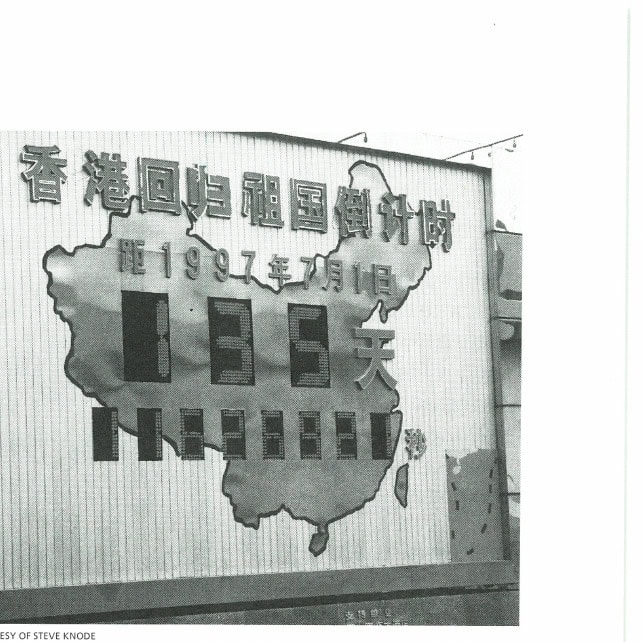
Not only would I be making my own history by running my first marathon, but I would also be participating in actual history by passing through a soon-to-be-eliminated border.
THE CHALLENGE OF BORDER CROSSINGS
As interesting and enticing as it was, this border-crossing aspect of the race posed some unusual challenges not often associated with a marathon. For starters, as a prerequisite to applying for the race, all participants were required to obtain a visa for entry into China. (And we think getting a USATF card is a chore!) In my case, this involved a trip down to the Chinese Embassy in downtown Kuala Lumpur and relinquishing my passport for a few days in order to obtain the appropriate stamp. For my troubles, I was relieved of $30.
Once the visa stamp was in place, I could apply for entry into the race. My follow-up phone calls to ensure that the organizers had received all my materials were met by Chinese race officials who spoke only Cantonese. The few English words I heard assured me (sort of) that I was signed up for the race.
Tough Training
Training for the race was also a challenge. Although Hong Kong has a full share of all four seasons, Malaysia has one: hot and humid. I attempted to adapt. I did nearly all my training in the dark, either in the wee hours of the morning or more often—due to my aversion to early morning—at night. Long runs were especially difficult. My pace was usually 10-minutes-per-mile, which meant that to get in a 20-miler, I had either to get out of the house before 5:00 A.M. or finish after 11:00 P.M. It was just too hot to run anytime between 8:00 A.M. and 8:00 P.M. In spite of the adjustments I was forced to make, we left for Hong Kong feeling that I was as prepared as could be expected.
Arriving in Hong Kong
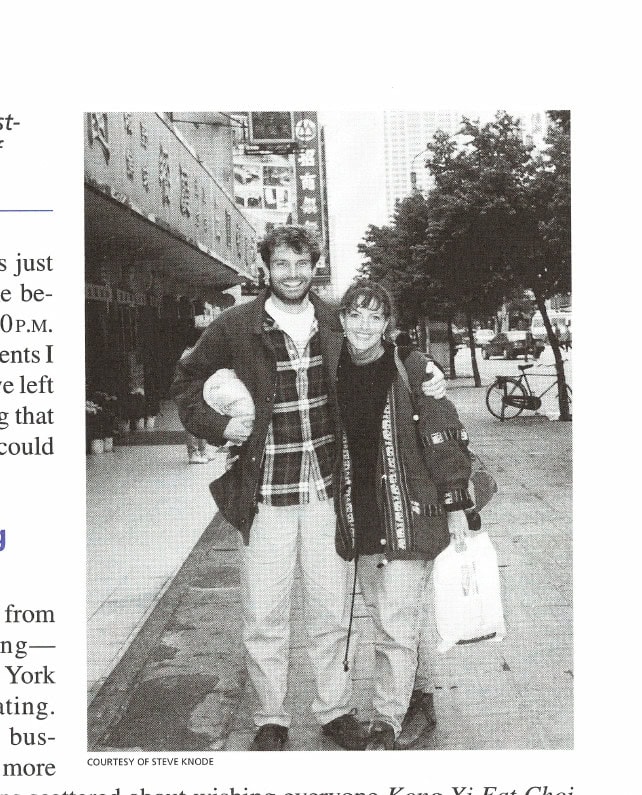
The vibes I picked up from being in Hong Kong—Asia’s answer to New York City—were intoxicating. People hustling and bustling. Neon, neon, and more neon. Posters and signs scattered about wishing everyone Kong Xi Fat Choi (Happy New Year) as the lunar calendar had just begun. A holiday spirit saturated the air, and I felt that it was an auspicious time to be in this famous harbor city. It was drizzly, dreary, and cold, as predicted, but nobody seemed to notice. Things were moving very, very fast. Did I mention the constant buzz from all the neon?
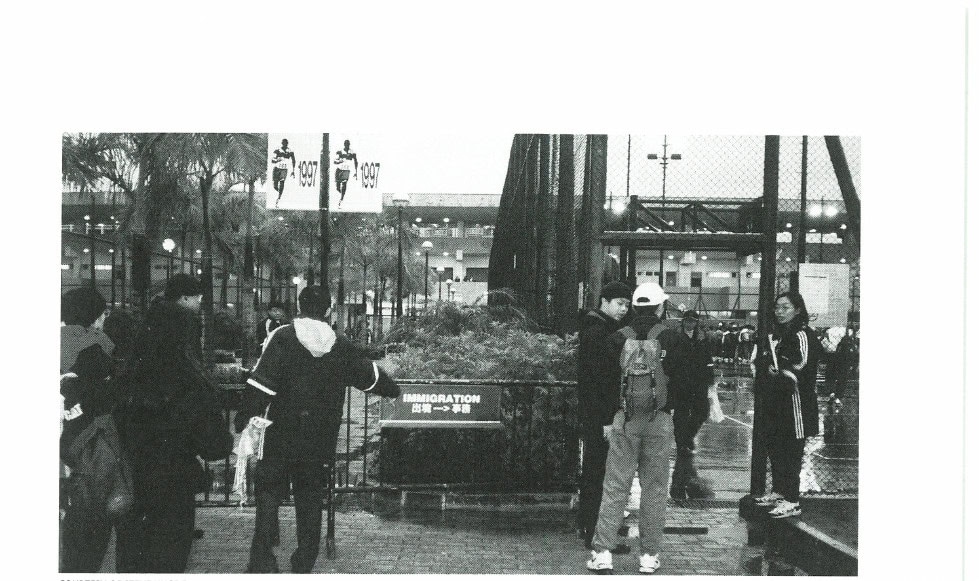
More formalities awaited me on race day. Since we would be crossing the border from Hong Kong to China during the race, we had to go through immigration before we could receive our race number. (We can only imagine how disruptive it would have been actually to stop and clear immigration at the border itself, which was roughly 10K into the race!)
We were required to present our passports for inspection. Once each passport was approved, it was given to a race official for transportation over the border. We received not only our race number but also two “chits,” one that we were to relinquish on the Hong Kong side of the border, the other to be given up on the China side. The chit was proof to the border guards that we had already cleared immigration. I wondered if it was a political statement that the Hong Kong-side chit was green as an American dollar bill while the China-side chit was red . . . .
PUMPED AT THE START
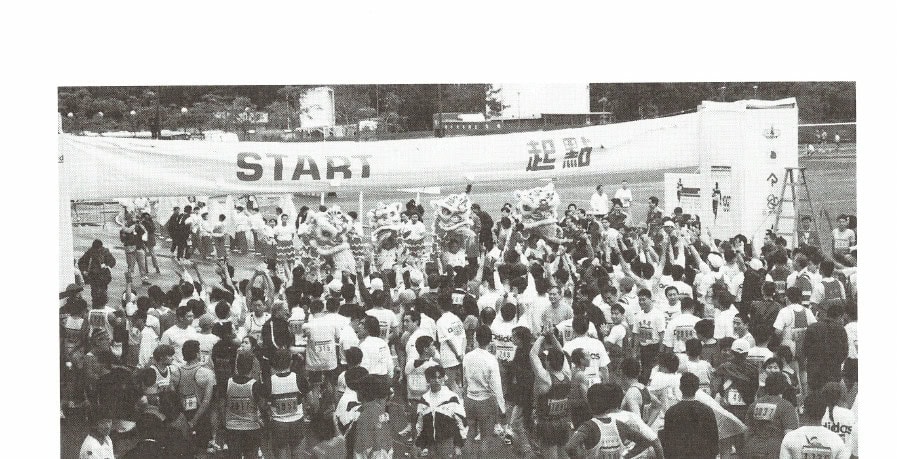
Roughly a thousand runners congregated at the start. The temperature was 13°C—definitely chilly but not especially bad as far as I was concerned. We were treated to all sorts of raucous activities before the gun went off, including an enthusiastic display of the famed Chinese lion dance with a dozen or so men maneuvering the head and body of the papier-mâché lion to the beat of loud and incessant drums. We were definitely not in Kansas anymore. All of the excitement pleased the nervous crowd.
Suddenly, the gun! We did one loop around the track and then poured out into the streets. As I left the stadium, Sharon waved and shouted, “I’ll see you in China!”
As a first-time marathoner equipped with Ed’s cautions, I began conservatively and paced myself slowly enough that I felt assured I’d have enough gas left to reach the finish.
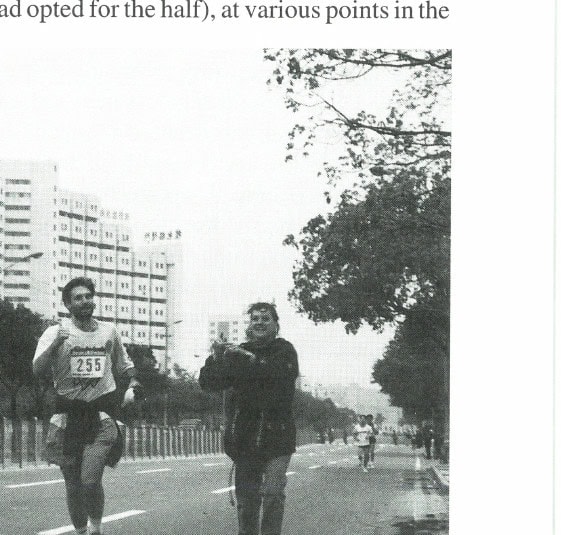
The first few kilometers were golden. It was early Sunday morning, and we ran along the main highway, one side of which was blocked off for the race. To the left were rolling hills, a delightful natural landscape. To the right, in sharp contrast, were enormously tall (and obviously cramped) high-rise apartment buildings. I spotted one early-riser who, still in pajamas, stood staring curiously out his window from one of the top floors. I waved. He shook his head in the universal language that said, “You’re crazy.”
Soon the skyline of Shenzhen materialized before us in the distance. (“Distance” is the correct word here: it looked mighty far away to me.) Unlike New York or Chicago, which have rather spectacular skylines, Shenzhen’s skyscrapers were, well, not quite finished. Most of the buildings were still only half-completed, each with a crane or two on top of what had been finished to date. The exception was the Diwang building, an impressive modern structure and one of Asia’s tallest. No doubt that Shenzhen is a city-in-the-making, with development clearly more important at this point than aesthetics. The view piqued my curiosity as to what New York or Chicago looked like at the turn of the century.
As we approached the border crossing, I saw something that will remain with me for the rest of my life. Right in front of me, still on the Hong Kong side, was a British flag, the Union Jack, waving proudly, while in the background, on the China side, stood the bright red Chinese flag, flying equally strong. It was just the type of “historical moment” I had hoped would make running the race worthwhile. In just a few months, though, all such distinctions would vanish.
Enthusiasm from the Guards
As I crossed the border into China, half a dozen border guards, clad in their brown uniforms, and obviously thrilled to have the morning off, cheered me on. Although I still had a long way to go, I could at least brag I’d made it all the way to China.
Once inside Shenzhen proper, we ran along a series of highways (which, of course, were still being built) and broad thoroughfares. Onlookers lined the streets, but by no means in droves. Their expressions reflected largely bemusement and curiosity, effectively making them onlookers and not spectators. There were the occasional claps and cheers, especially from the children, but mostly the onlookers were silent. Clearly, the road racing craze has yet to infect China.
Etiquette and encouragement from the race officials were also in short supply. Because I had begun slowly, and because there were few runners participating in the marathon (most had opted for the half), at various points in the race I found myself in the back of the pack.
With the sag wagon nipping at my heels and the rescue van buzzing around me like a vulture hoping for road kill, I began to feel intimidated. A Chinese race official, furiously pointing at his watch, yelled at me in Chinese. Obviously, he wanted me to make a sprint for the end.
It is true that the marathon had an official time limit of four hours and 30 minutes, but surely I wasn’t that far behind pace. The scolding I received did nothing to elevate my spirits. I thought to myself how the same scenario would never occur in a U.S. marathon. At least it wouldn’t be administered with such chilliness. But I didn’t find it entirely out of character, either. The Chinese are very practical people. It was not that the officials were intentionally trying to be rude, I concluded. Rather, without real appreciation of what I was attempting to accomplish, they simply wanted to clear the road and get back to business-as-usual.
Stubbornly ignoring the calls to give it up, I managed to enjoy many memorable encounters on the way to the finish line. I ran a short portion of the race with Peter, a second-time marathoner from Hong Kong, whose son was also running in the race. He was impressed that I had traveled all the way from Malaysia to participate. We shared a bit of my PowerBar. Later, while running with a fellow from Australia, I acknowledged that this marathon probably wouldn’t win a prize for the most scenic. He nodded in agreement. And, in the late stages, when I had become weary, worn, and hungry, I was able to coax a young boy of about eight to share his mandarin orange. The exchange left a huge smile on the child’s face and gave me the extra boost of energy I needed.
THE END IS IN SIGHT
By the 35K mark, I was confident that I would finish the race, and thus was able to pay more attention to my surroundings in downtown Shenzhen which, though not beautiful, were nonetheless new and intriguing.
The entire area was deemed a “special economic zone” by Deng Xiaoping in the early 1980s, and the result has been a semichaotic boomtown of roughly three million people. Mopeds, motorbikes, and bicycles buzzed about like annoying insects. Evident, too, were the latest Toyotas.
Commercial activity was obvious and pervasive, even though it was Sunday. In fact, I even ran past a Sam’s Warehouse outlet! And there was so much rubble strewn about as part of the dozens upon dozens of construction projects that it looked almost as if the town had been hit by an earthquake.
The newspapers report the growth in China, but here it was laid out graphically right before my eyes. Strict communism is surely dead in Red China, I thought.
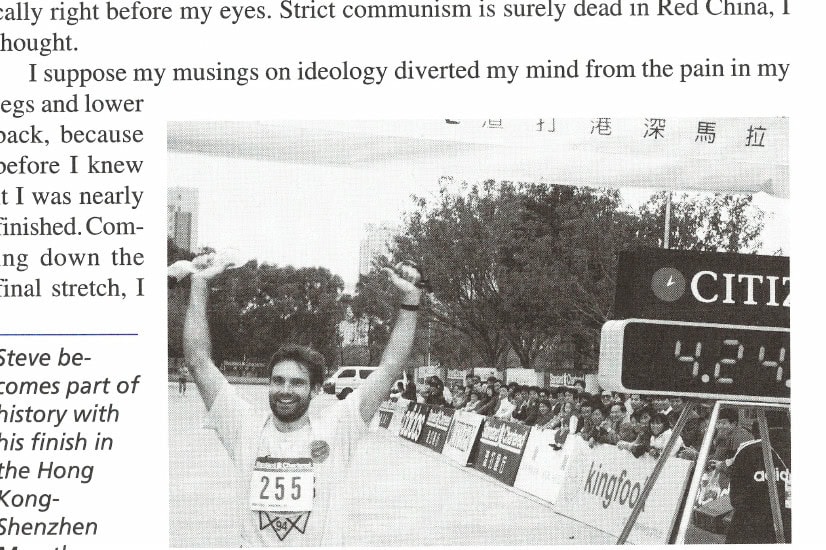
I suppose my musings on ideology diverted my mind from the pain in my legs and lower back, because before I knew it I was nearly finished. Coming down the final stretch, I
spotted my wife and a couple of friends screaming wildly and congratulating me. I crossed the finish line, fists pumped above my head, exhausted but elated.
I’d done it! I’d run from Hong Kong to Shenzhen, China, in just under 4:25. My legs had served as my own personal Oriental Express. Well, in retrospect, maybe it was more like the Oriental Local.
Later that day we settled in for an absolutely delicious Szechuan meal of stuffed dumplings, succulent Peking duck, and steamed fish. One of my friends, who happened to be working in Shenzhen, asked me what on earth compelled me to run a marathon. I looked over at Sharon and said, “You see, there was this run I did last year with my father-in-law . . . .” Sharon gave me a worried look. Had she, as they say women do, married her father?
Editor’s note: Joe Henderson’s newest book, Marathon Training, is subtitled “The Proven 100-Day Program for Success” and includes marathon training programs for runners at three levels: cruisers, pacers, and racers. Besides providing a daily training log, each day’s pages provide a “thought for the day” and a training tip. We’ve included here a selection of our favorite days and tips. Joe is West Coast editor of Runner’s World and editor of Running Commentary, a monthly running newsletter. The following excerpts are used with the permission of the publisher, Human Kinetics.
DAY 12 THOUGHT: Rest Assured
Rest isn’t just for the weak of will and body anymore. It isn’t just for the older runners whose recovery has slowed. Rest is as big a part of the training puzzle as long runs and speedwork. For everyone.
I say this as a born-again rester. But don’t just take my word for it. Read the testimonials of a much higher level of believers, appearing in the January 1995 issue of Runner’s World. Dave Kuehls asked 17 runners about their resolutions for the new year. Six of them vowed to get more rest. Two of these runners are Olympic gold medalists, and another has held world records. Their comments:
Joan Samuelson: “I’m finally going to take a tip from something my older brother told me several years ago: ‘Rest is the basis of all activity.'”
Frank Shorter: “As soon as any pain inhibits my biomechancis, I’ll go immediately to cross-training for two weeks. I won’t run at all.”
Arturo Barrios: “I won’t overrace. . . . I’ll give myself time to recover after hard races, taking at least five weeks off from racing after a marathon.”
A young Alberto Salazar was one of the hardest training, biggest winning, and most injured runners in U.S. history. Hindsight now tells him that his biggest mistake was not recovering enough after races. He now applies this lesson to his own running and passes it on to the athletes he coaches: Rest is not a four-letter word.
This article originally appeared in Marathon & Beyond, Vol. 2, No. 1 (1998).
← Browse the full M&B ArchiveMore like this
1,000+ stories from 19 years of Marathon & Beyond
The complete archive of the legendary long-distance journal — digitized and free to read.
