

Wretched Excess
WRETCHED EXCESS
Nobody gets out of here alive. Our only positive options are to take steps to lengthen our stay and make our visit as lively and fulfilling as humanly possible. The best method of doing both is to do what comes naturally: Be physically active and burst with curiosity.
Unfortunately, in the half century we are about to kiss off, an unnatural shift in perspective has occurred. Most people have wrapped themselves in the mantle—or rather, the soft fuzzy blanket—of physically passive “victimology.” Nothing is anybody’s fault anymore: My life’s a mess, my body’s a mess, my health’s a mess; look at what life has done to me—and it ain’t my fault. Really.
Americans are becoming increasingly fat, as though doing so were an inescapable, natural process. Africans and Europeans rip their nations apart in bloodbaths spurred by centuries-old disagreements, the origins of which no living person recalls. Growing numbers of people worldwide wait anxiously for benign space aliens in UFOs to drop in and solve the world’s problems . . . and perhaps spirit them off to a better place. A sense of dread and powerlessness spreads, as the hyperdrive of modern communication overwhelms us with instant tragedy. Events seem intimate and local because they haven’t been filtered by days and weeks before the news reaches us, which gives us time to place the events in their proper perspective.
Individuals who are simultaneously intellectually and physically active are viewed as strange, weird, bizarre, elite, egocentric, hedonistic, and hurtful to passive individuals. A century ago, the active individual would have been viewed as, well, “normal.” Most people led physically active daily lives—they had to to survive. The passive, inactive individual was either physically incapacitated, lazy, or rich enough to hire someone else to do his or her basic daily chores.
These days, the physically active have no perspective on what is going on with average, sitting-around folk because like-minded (and like-bodied) people gravitate to people like them. Hence, runners gravitate to other runners, bingo players gravitate to other bingo players, and NFL football game watchers gravitate to other NFL football game watchers.
And, of course, like-minded people rationalize their activities—or lack of activities. Inactive, overweight people, for example, have concocted the rationalization that it is physically and mentally dangerous to run marathons. Look at what happened to Jim Fixx, they say. You’ve heard about exercise addiction, haven’t you?
While these naysayers perch unnaturally atop their duffs, their blood pressure climbs, their arteries set like concrete, their muscles atrophy, their blood pools, diabetes cuts off active participation with the body’s extremities, cigarette smoke tars up lung tissue, highly processed foods roil, ferment, and turn to brick in the small intestines, and oxygen to the brain is compromised—if it gets there at all.
On the opposite side of the track, distance runners rationalize not that less is more, but that more is more, and that the more mileage their bodies can tolerate, the better off they and their bodies will be.
Government scientists have wrestled for years under thousands of studies touting how fitness generates health; and then, for political reasons, the findings are sugar-coated so they won’t inflict a fatal shock to the terminally inactive and lay guilt on them about how much more they should be doing to be healthy.
Moderate exercise—20 minutes, three times a week—is all it takes to be fit and healthy, Americans are told. Of course, that’s nonsense, and the scientists involved in the massive compilation of studies know it. The Iowa farmer who lived to be 82 years old 75 years ago and who had four percent body fat didn’t live into his ninth decade by being physically active for 20 minutes a day, three days a week. He and his family would have starved before the first week was up.
Some recent studies cite conclusions that serious distance runners knew decades ago—that the more mileage you put in each week, the healthier your heart becomes; strenuous workouts sandwiched between easier workouts for recovery maximize the body on every possible physical level, on several psychological levels, and on a few spiritual levels.
Which raises the question: Is there such a thing as excess when it comes to long-distance running? Of course. Everything in life has the potential for excess, from religion to computer games, from stretching to stamp collecting. Running long distances on asphalt and concrete is nearly as unnatural as total physical inactivity. Too much running on hard surfaces will exact a physical price on certain biomechanical systems below the waist.
Is running a marathon excessive? Most certainly, which is why the human body is capable of running a quality marathon only once or twice a year. Marathons should be chosen carefully and then portioned over a career.
Many years ago, a theory circulated that there was a biological/anthropological reason to explain why marathoners hit the wall after 18 or 20 miles. The theory went that in ancient times, when man was a hunter-gatherer, hunting parties ranged roughly 8 to 10 miles from the cave because that distance left enough time for a successful hunt, including the return trip dragging or carrying the game. The theory is cute, clever, and neat.
There was also a theory that the reason the brain releases endorphins after a runner warms up is that endorphins—a natural morphine—mask minor injuries and discomforts hunters experienced during the hunt, which allowed them to overcome those discomforts to guarantee a more successful hunt. Another neatly-forged theory.
Nifty theories aside, we know from practical evidence—not the least of which is the experience of Mexico’s Tarahumara Indians—that men and women are capable of covering great distances under their own power, if they train themselves and pace themselves properly. Human beings were, after all, designed that way.
The body’s largest muscles and bones are in the legs, which allows human beings to move themselves from one place to another. And in a beautiful design concept, the more those muscles and bones are used in pursuit of the purpose for which they were designed, the more efficient they become at performing that function.
If the human being were designed to sit around on its duff all day, there would be an expected reward: Under such faithful use, the human rump would become more beautifully shaped the more it was used. Well, scratch that theory.
Those who run what many might consider excessively can theorize that, based on emerging research, they are adding to both the quantity and quality of their lives—as long as they have a life left once the training is done.
While the inactive see the active as excessive and egocentric, and the active see the inactive as excessive and victim-centric, the world continues to turn. Evolution is too slow to catch up to make asses more beautiful the more they are used, and we are faced with reconsidering a philosophy that today is more than a half-century old. It was expounded by one of the most profound (and practical) philosophers of the 20th century, Jack LaLanne, who said, “I’d rather wear out than rust out.”
—Rich Benyo
THE MIRACLE OF THE UNLIKELY
WASHINGTON, D.C., April— Twenty-five years ago this spring, I came down from New York City to visit my parents in Virginia. I was on my way to Florida to do a magazine article on fishing, of all things, and the great baseball player, Ted Williams, who was also a great angler.
Williams was a cantankerous, untalkative guy even then, and the magazine thought if they sent a woman reporter, Williams would be caught off guard. The sticking point was that the reporter also had to be a good fisherman. Williams had already sent two reporters packing, and he was losing what little patience he had left.
With a bundle of clippings about my running prowess, and some totally convoluted reasoning about athletic capability in one sport carrying over to another (you know, if baseball equals fishing, then running also equals fishing), I convinced the magazine that I was an ace fisherman. What can I tell you? I was broke, and the magazine was paying $500—huge money in those days.
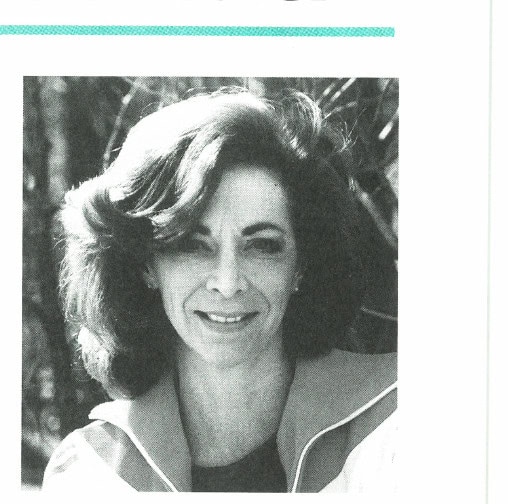
Gar Williams (unrelated to Ted Williams), one of the top U.S. marathoners at the time (seventh at Boston ’61 and national marathon champion in ’65) lived in the same town as my parents, and I phoned him just to chat. Gar was the president of the Road Runners Club of America, an organization I had come to love as much as I hated the AAU.
Among other things, Gar told me about a race the next morning called the Cherry Blossom 10-Miler, which went around the Jefferson Memorial and the Tidal Basin. He convinced me that I had time to run it and still catch my plane. I needed to run 10 miles that morning anyway, so the race was an excuse to get out of bed and get moving.
It was a nice enough race, under the cherry blossoms and all, and outside of using it for a 71-minute tempo run, I didn’t think much more about it. I was recognized as the “first woman,” but that was no big deal—I think there was only one other woman who showed up. Races were popping up everywhere in those days, and most of the ones I entered I “won” the women’s division because there were no other women!
I went on to Florida and met the irascible Williams, who was indeed an intimidating figure. But with all his steam and bluster, he reminded me of Jock Semple; and if Jock and I wound up friends, Williams would be a piece of cake. All I had to do now was fish.
I’ve never believed that I was “talented,” and I’ve had to work very hard at everything to get results. But nature is interesting. In moments of incredible pressure, when we totally focus, sometimes we can accomplish the impossible.
With totally artificial outward calm, I watched every move that Ted Williams made, memorized it, imitated it, and outfished him. Had the trip lasted more than two days, I could not possibly have held the tension. But I only needed the two days, and the visit produced one of the best stories I’ve ever written. And one of my best lessons in life: Give it everything, even when the odds are against you, and you might do something amazing.
For various reasons, I haven’t been in the Washington, D.C., area for the Nortel Cherry Blossom 10-Miler since 1972. The years have brought prestige and thousands of runners to the starting line. One of the best sponsors in the business, Nortel (Northern Telecom), has transformed the little event I ran in 25 years ago into one of the hottest races on the international calendar.
The race has also made me kick myself annually for 25 years because the entry form has a column of the women’s winning performances, beginning with my glaringly pedestrian 71 minutes right at the top. If I had known that history was going to record me, I would have kicked it under 70 minutes for heaven’s sake, since everyone knows that even 69:57 sounds three minutes, not three seconds, faster than 70. This year, the race even had a special souvenir mug made for every woman who could run faster than my 1972 time. “That must have required an entire china factory,” I grumbled at Phil Stewart, the event’s tireless race director.
So it was fun to find myself invited to the VIP dinner the night before the race as one of the “originals.” After two glasses of wine, old friends at the table suggested that I actually run the race the next day. Since I needed 10 miles on Sunday anyway, I figured it was a good excuse to get out of bed and get moving.
Don’t worry. Nothing spectacular occurred because I suddenly put myself in a pressure situation. At age 50, I don’t do that any more. Not without preparation, anyway. Instead, I ran the race at about the same effort as I expended when I was 25. And that effort came out at 84 minutes. When I passed the 71-minute mark, though, I did wonder for a moment if it would be
This article originally appeared in Marathon & Beyond, Vol. 1, No. 4 (1997).
← Browse the full M&B ArchiveMore like this
1,000+ stories from 19 years of Marathon & Beyond
The complete archive of the legendary long-distance journal — digitized and free to read.
