

I do a little running off the bike, but as I have progressed more in my career, it has been less and less. I think it is important to maintain bricks [following one workout with one from another discipline] throughout the year, but many
of mine come in the form of racing. I probably average one every 10 days in training, but I don’t think they need to be overstressed as part of a triathlontraining regime. 3. Is there a benefit to biking after running in order to give your legs a
break from the pounding? I think that there is definitely a recovery aspect to some lighter training after hard running. I find that I bounce back a little quicker from my hardest sessions if I do some low-intensity, short-duration swimming or biking to flush out
the muscles. Stimulating blood flow to damaged muscles is the key to getting things restored, so light massage, recovery boots, foam rolling, and alternating cold and warm baths can also help in this way. 4. Do you ever do deep-water in-pool running? With or without an aqua belt?
I don’t ever run or train in the pool, but I know many people who have, usually due to an injury. I know that maintaining the neuromuscular side of running by aqua jogging can be immensely beneficial for returning to running. I would
guess that for almost anyone, injured or not, this could be a good substitute workout for running when trying to avoid heavier impact. 5. How can swimming be used to supplement marathon training?
© Bill Greineisen/Studio G Photography
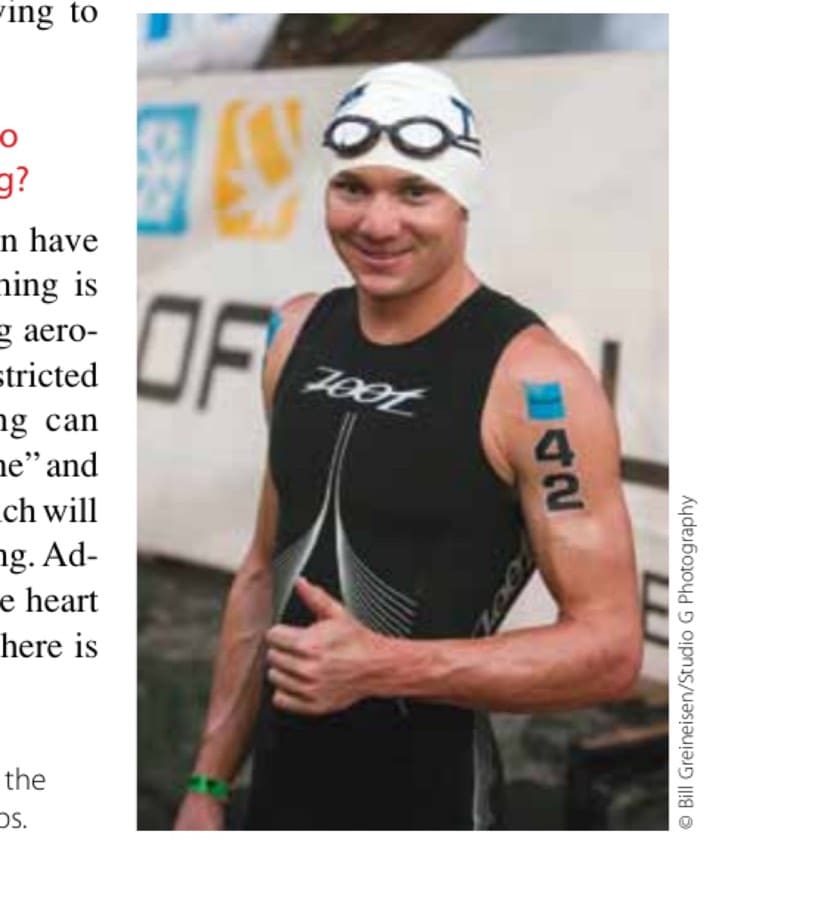
I think any aerobic exercise can have crossover benefits, and swimming is certainly one of the most taxing aerobic workouts with its more restricted breathing element. Swimming can help fine-tune the “aerobic engine” and make it much more efficient, which will have obvious benefits for running. Additionally, core strength is at the heart of swimming and running, so there is great crossover there. ▲
Ben Hoffman at the swim start of the Hawaii Ironman World Championships.
6. How can bicycling be used to supplement marathon training? There is good research to show correlation between bike fitness and run fitness, but less so in the reverse. It is possible, in other words, to maintain some run
ning ability through cycling. Again, aerobic fitness is the cornerstone for most of these sports, so you can’t really go wrong. I find that focusing on climbing routes on the bike, including some good periods of unseated (standing), trans
lates to the running muscle groups well. 7. For your peak race, what is your maximum training volume and how far out from the race is it? For my Ironman build, I tend to do six very quality, high-volume weeks before
a race. This assumes good fitness going in, but I average between 30 and 37 hours of total weekly training during that block, and my highest usually lands about three weeks before the event. This consists of between 24,000 and 26,000
yards of swimming, 375 to 400 miles of riding, and 68 to 75 miles of running. 8. What type of running drills do you use, if any?
© Bill Greineisen/Studio G Photography
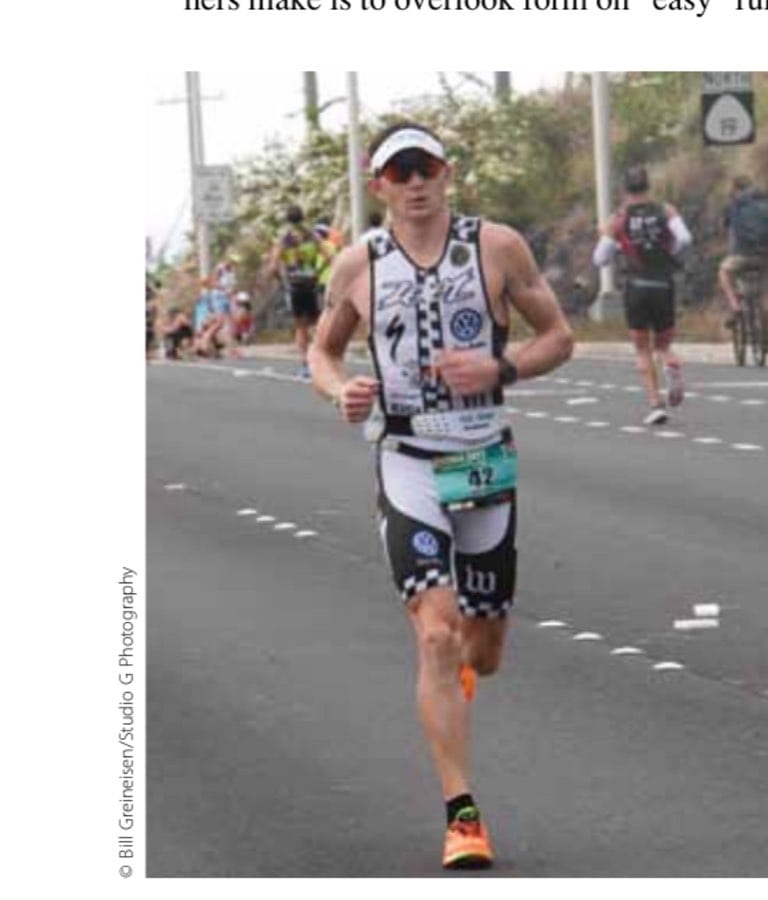
I do weekly speed work and hill repeats and several sessions where the focus is on high turnover. I think one of the big mistakes triathletes and even runners make is to overlook form on “easy” runs. It’s actually the most important
▲
Ben running a 3:00:28 marathon at the Hawaii Ironman after swimming 2.4 miles and biking 112.
ad
time to make sure that you are holding proper form. Finally, my weekly gym sessions are all about working on proper form. 9. What race nutrition works best for you? I am all about liquid nutrition for all my races. I find that working at higher
intensity, it’s all about having things be as easy on the stomach as possible, since there is less blood flow for digestion. The main thing I always stress to people is to make sure to dilute sugar/food sources. An ideal level for efficient
digestion during exercise is around 6 percent, so that means a lot of water to offset the concentrated gels, bars, and drinks! 10. What are your stretching and strength routines? I do a lot of stretching at home, foam rolling, using golf balls underfoot, wear
ing my recovery boots and compression socks, and just about every other tool you can imagine. I get a massage at least once a week, do some self-massage at home, and use Graston tools and dry needling regularly for recovery. For
strength, I do two one-hour weight sessions every week with a trainer and occasionally add a core session at home. It’s a full-time job, and recovery is as important as training!
This article originally appeared in Marathon & Beyond, Vol. 18, No. 3 (2014).
← Browse the full M&B ArchiveMore like this
1,000+ stories from 19 years of Marathon & Beyond
The complete archive of the legendary long-distance journal — digitized and free to read.
