

The Painful Heel
Over time, the constant pulling of the fascia on the heel bone can cause a bone spur to form on the bottom of the heel (see Figure 2).
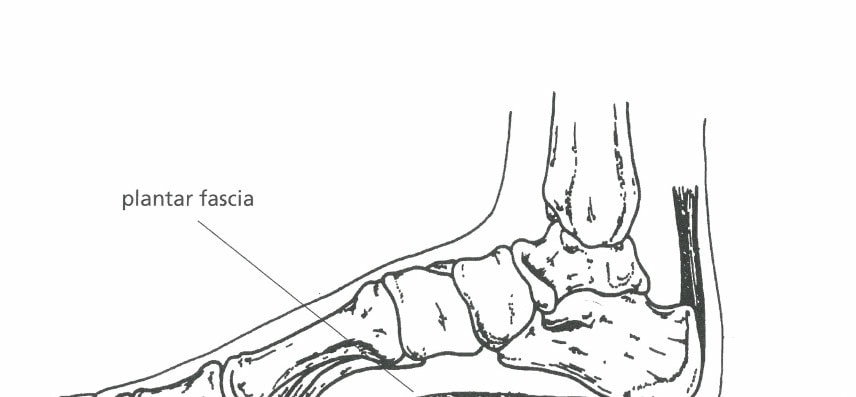
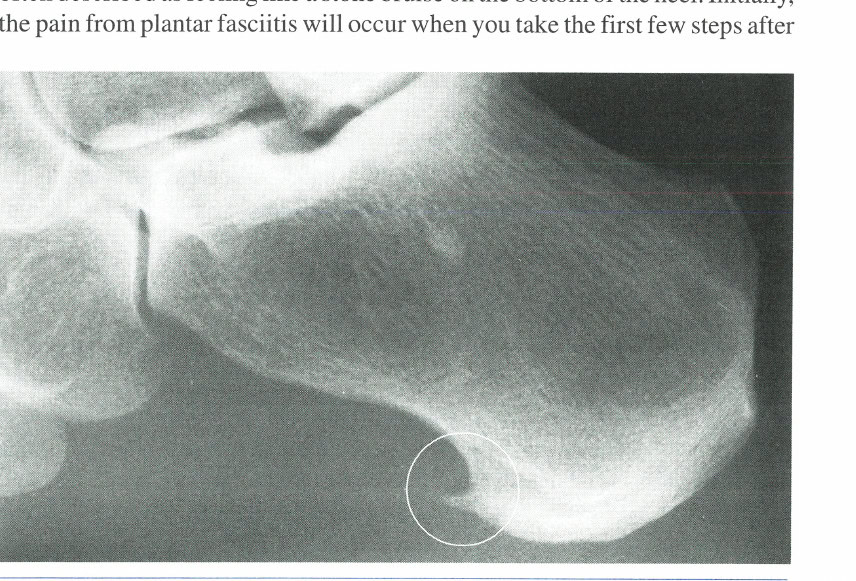
A heel spur alone is not usually painful, but it represents a chronic irritation at the junction of the fascia and the heel bone. Plantar fasciitis generally does not result from a single traumatic episode, but rather from repetitive stress placed on the bottom of the foot. The early symptoms of plantar fasciitis are often described as feeling like a stone bruise on the bottom of the heel. Initially, the pain from plantar fasciitis will occur when you take the first few steps after getting out of bed in the morning or after sitting for a long time. As the fascia stretches slightly, the pain usually disappears, allowing you to train with little or no discomfort.
However, if left untreated, this injury will become more severe, and you will feel pain throughout the day, and running will be very difficult. Plantar fasciitis can result from overtraining, worn-out or inappropriate running shoes for your foot type, contact with hard running surfaces (such as concrete), or structural or biomechanical abnormalities affecting the foot and leg. These abnormalities include rigid, high-arched feet and overpronation.
Runners with rigid, high-arched feet probably make up less than five percent of the running population. This foot type has an arch that remains high when bearing weight and is often equated with the term “oversupination.” When having your arch height evaluated, make sure you are standing, as it is common for an arch that appears high when not bearing weight to flatten when weight is placed upon it. The structure of a rigid, high-arched foot makes it a poor shock absorber, which in turn increases the stress on the plantar fascia and, therefore, the potential for injury.
A much more common biomechanical fault that can cause plantar fasciitis is overpronation. Pronation is the normal foot motion that gives the appearance of the heel rolling inward and the arch flattening out. Pronation helps the body absorb the impact of the footstrike. Overpronation occurs when the foot rolls inward more than normal, effectively lowering the arch excessively and making the foot less stable. Any time the foot overpronates, the plantar fascia can become stretched at its origin, which may lead to plantar fasciitis.
Overpronation can result from inherited foot structure or from a runner compensating because of some biomechanical abnormality, including leg length differences, ligament laxity (hypermobility), and muscular imbalances.
One of the most common causes of overpronation in runners is tightness in the gastrocnemius and soleus (calf) muscles. When this muscle group lacks adequate flexibility, the upward motion of the ankle is restricted, which causes the foot to overpronate to make up for the lack of motion.
Treating Plantar Fasciitis/Heel Spur Syndrome
The first step in treating any overuse injury is to self-evaluate any factors that may have led to the injury. This evaluation may include a review of your current training mileage and intensity, shoe gear, training surfaces, flexibility, and other variables that may have contributed to your symptoms. By changing or modifying these factors as appropriate, you will reduce the likelihood of your injury becoming a lingering problem.
Specific treatment for plantar fasciitis/heel spur syndrome breaks down into two categories:
- Pain reduction, and
- Correction or control of the causative factors
You can reduce pain and inflammation by applying ice over the heel region for 15 minutes two to four times a day. This treatment has the advantage of providing both an anti-inflammatory effect and pain reduction directly to the heel with little risk of undesirable side effects.
Nonsteroidal anti-inflammatories such as ibuprofen can also alleviate discomfort; however, these pills do not “cure” plantar fasciitis, and in most cases they provide only temporary relief. Cortisone injections should not be a first-line treatment for plantar fasciitis, but it can be effective when chronic inflammation persists. In general, you should not have more than three cortisone injections in one localized area of the foot because of the effects cortisone can have on the surrounding tissue.
The most important aspect in treating plantar fasciitis/heel spur syndrome is to correct or control the biomechanical factors that may have led to the injury. Since the most common cause of plantar fasciitis is a repeated stretching of the fascia itself, treatment should be directed toward supporting the fascia and addressing any indirect causes that place undue stress on it. As mentioned previously, the most common cause of indirect stress on the plantar fascia comes from tightness in the calf muscle group. A tight gastrocnemius–soleus muscle group prevents the ankle from being able to bend sufficiently for normal motion to occur while you run. To make up for this lack of motion, the foot may overpronate and strain the fascia. Thus, an important component in the long-term management of plantar fasciitis is ensuring adequate flexibility in the calf muscle area.
There are many excellent stretches for the calf muscles; be sure to use good technique for the stretch you are performing and avoid overstretching. In some circumstances you may use a device called a dorsiflexion or night splint (see Figure 3), which keeps the foot in a 90-degree position, stretching the calf muscle while you sleep. Maintaining adequate calf flexibility is an integral component in the treatment and prevention of plantar fasciitis and other lower extremity overuse injuries.
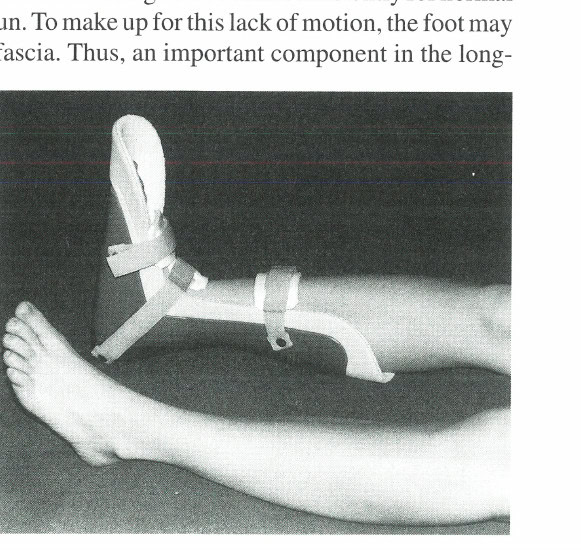
Although the bottom of the heel is often the primary area of discomfort in plantar fasciitis, the actual mechanism of injury causing the pain is a stretching of the plantar fascia itself. For this reason heel cups or heel cushions seldom offer significant relief from this condition. The goal of treatment should be to provide support for the fascia to prevent it from pulling excessively.
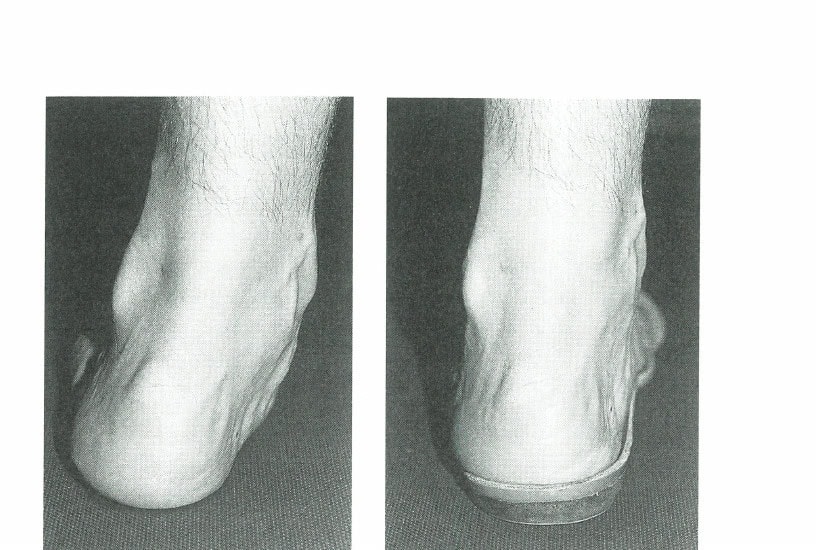
Supporting the longitudinal arch can be accomplished by taping or padding, using over-the-counter arch supports, or custom-made, functional orthotics. Taping techniques that support the arch can help relieve stress on the plantar fascia. The disadvantages to this form of treatment are that you have to know how to tape the foot correctly and that the tape has to stay on the foot to be effective. Taping can sometimes result in blisters and skin irritation when used for an extended period. Over-the-counter arch supports will usually provide greater support for the foot than the sockliners typically found in running shoes. There are many kinds of these arch supports available from your local running store, and you should make sure they fit comfortably before you run in them. In general, avoid arch supports that are rigid, since they are not custom-molded to your foot and can create areas of irritation. If, despite these self-treatment methods, your heel pain persists, your sports medicine physician may recommend functional orthotics, which differ from arch supports. These orthotics require a mold of your foot and are designed not only to support the arch, but also to place the foot in a more biomechanically correct position, thereby controlling the forces contributing to plantar fasciitis (see Figure 4).
Functional orthotics should be considered after other forms of treatment have failed to alleviate your symptoms. In these resistant cases, biomechanical control of the foot can have a significant role in treating and preventing plantar fasciitis/heel spur syndrome. Almost all cases of plantar fasciitis/heel spur syndrome will improve or resolve with conservative treatment.
Heel Surgery
If your heel pain persists after you have exhausted these forms of treatment, surgery may be indicated. Traditionally, surgery for heel spur syndrome and plantar fasciitis required a large open incision to release the fascia from the bone and removal of the bone spur. However, since almost without exception the bone spur itself does not cause the pain associated with this injury, newer procedures have been developed that can release the fascia without significant trauma to the surrounding tissue.
One such procedure is endoscopic plantar fasciotomy (EPF), which uses a small camera called an endoscope that is inserted near the heel through two
small incisions and allows the surgeon to visualize the fascia. The fascia is then partially released with a special instrument. The heel spur is not removed in this procedure.
Although recovery from EPF is less involved than undergoing open heel surgery, it will still take several weeks for full healing to take place. After a few days, however, you can return to activities such as pool running and bicycling to maintain aerobic fitness.
Although plantar fasciitis/heel spur syndrome is the most frequent cause of heel pain in distance runners, other conditions can also cause heel pain. Be aware of these other injuries to ensure that you are accurately diagnosed and that your treatment is specific to your particular problem.
Let’s look at other conditions affecting the heel, including heel bursitis, calcaneal stress fractures, nerve entrapments, and retrocalcaneal problems.
HEEL BURSITIS
A bursa is a fluid-filled sac that provides cushioning in certain parts of the body. The heel has a bursa that lies directly underneath the calcaneus. Excessive pressure on this area can inflame the bursa. This may occur from running in shoes that lack adequate rearfoot cushioning or are worn out. Overtraining and running on hard surfaces can also irritate the bursa. The symptoms of heel bursitis can often resemble those of plantar fasciitis with pain directly underneath the heel. However, with heel bursitis, the pain will usually persist with any weight-bearing activity, whereas with plantar fasciitis the symptoms tend to diminish after the fascia “warms up.”
Treating heel bursitis usually includes replacing worn-out shoes, using a cushioned footbed in your running shoes (and dress shoes as appropriate), and icing the heel region to reduce inflammation. If these measures do not resolve the problem, your physician may recommend a cortisone injection into the bursa.
CALCANEAL STRESS FRACTURES
A stress fracture is a break in the bone as the result of repetitive, low-grade impact or trauma that eventually weakens the bone to the point of fracture. As mentioned earlier, while you run your heel bone is subject to a great deal of impact stress, often exceeding three times your bodyweight. Overtraining, worn-out running shoes, training on hard surfaces, and metabolic considerations such as eating disorders, menstrual irregularities in women, and decreased bone density can predispose a runner to a stress fracture.
Symptoms of a calcaneal stress fracture differ from plantar fasciitis in that the pain is usually present with all weight-bearing activities. There may be slight swelling, and there is often discomfort if you press the sides of the heel.
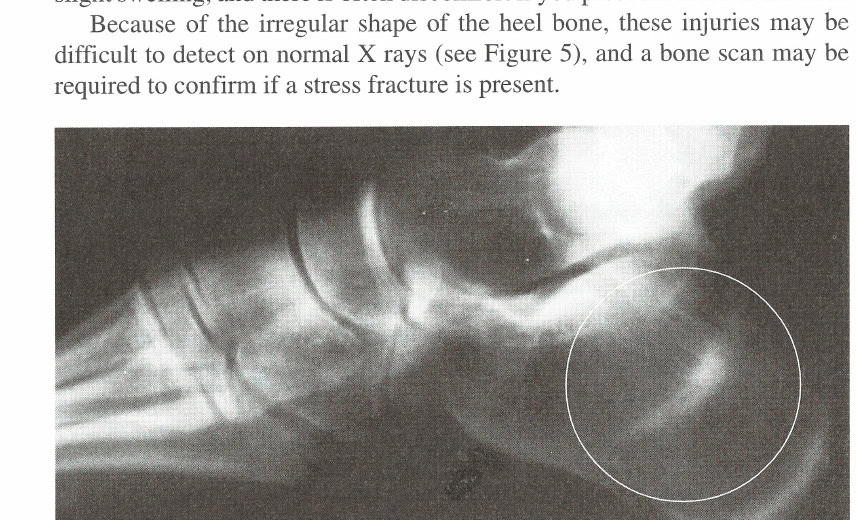
Because of the irregular shape of the heel bone, these injuries may be difficult to detect on normal X rays (see Figure 5), and a bone scan may be required to confirm if a stress fracture is present.
Once a stress fracture is diagnosed, treatment consists of stopping all weight-bearing exercise for at least six weeks but could extend to six months. A cast is often not necessary, but you may need crutches for a few weeks if it is too painful for you to walk or stand.
Cross-training activities such as bicycling, pool running, and swimming are permissible while the injury is healing, but a premature return to running can result in prolonged healing and possible complications, including a complete fracture of the heel bone.
NERVE ENTRAPMENTS
Although uncommon, irritation to the nerves on the inside of the heel region can also result in heel pain. The most common nerves affected are the posterior tibial nerve on the side of the ankle or one of its branches, the medial calcaneal nerve. The tissue surrounding these nerves can become inflamed or the nerve itself entrapped as a result of tendonitis, varicose veins, or biomechanical factors such as overpronation. When the posterior tibial nerve is affected, the condition is known as tarsal tunnel syndrome. Symptoms of nerve-related problems may include numbness, a sensation of pins and needles known as parasthesias, or shooting pain in the heel, foot, or leg.
The diagnosis of a nerve injury may involve specialized tests such as nerve conduction velocities, electromyography, or magnetic resonance imaging (MRI). Treatment is often geared toward reducing the inflammation around the nerve and addressing the factors that may have contributed to the condition. As with other heel problems, surgery should be contemplated only as a last resort.
RETROCALCANEAL HEEL INJURIES
Heel pain occurring on the back of the heel is often due to injury to the Achilles tendon or its related structures. The Achilles tendon inserts into the posterior aspect of the heel. Underneath the tendon is a bursa called the retrocalcaneal bursa. Don’t confuse pain in this area with the pain of plantar fasciitis/heel spur syndrome. This injury is the result of Achilles irritation where the tendon inserts into the heel bone.
The treatment for pain in this region depends on whether there is calcification in the tendon, whether the tendon or retrocalcaneal bursa is inflamed, or whether there is a bony prominence contributing to the symptoms. These injuries tend to be slow to heal because of relatively poor circulation to this area.
MEDICAL HEEL PAIN
Although most heel pain in runners is related to overuse, abnormal biomechanical function, or impact-related causes, some heel pain can be due to diseases or problems that originate in other parts of the body. Medical conditions such as gout, diabetes, and certain types of arthritis can affect the heel before showing signs elsewhere in the body. When symptoms are not consistent with biomechanical heel pain, or when discomfort is not relieved by conservative treatment, your sports medicine physician may want to order additional tests to determine whether your heel pain is medically related.
PREVENTING HEEL PAIN
Distance running presents a unique biomechanical challenge that forces the lower extremity to absorb continuous repetitive impact of over three times our body weight, often for several hours at a time. Injuries to the foot, ankle, and leg are not uncommon in runners, and the heel region is one of the most frequent areas.
Common sense can often prevent many of these injuries from occurring. Following a realistic training program that allows for a gradual increase in distance and intensity can help your body adapt better to the increasing demands placed on it. Alternating your running surfaces and seeking out softer surfaces such as trails can reduce impact stress to the foot as can wearing appropriate running shoes for your foot type and replacing them before they are significantly worn out.
Maintaining adequate lower extremity flexibility can also reduce the chance of abnormal compensation taking place, which can contribute to overuse injuries. Be aware of biomechanical faults such as overpronation, leg length differences, and rigid high arches, and take steps to control these when appropriate.
Heel injuries can be challenging to resolve the longer they are left untreated. If self-evaluation and care does not provide relief, and your pain persists longer than seven days, gets worse, or reoccurs, get your heel evaluated by your sports medicine physician so you can learn what further forms of treatment are necessary to get you back on the roads and trails as quickly as possible.
WE ALL know runners who never miss a day out on the roads. Torrential downpour, three feet of snow, fever, cold—it doesn’t matter. The Run or The Race rules. You may even be this runner. As much as you don’t want to hear it, there are days when you would be better off skipping your run—or cross-training or exercising indoors. A brutally hot and humid day may be one of those days. The effect of heat stress on marathon and road race injury and performance is predictable, and this article aims to make you a more informed competitor so you know your personal limits regarding heat stress and can answer the question, “When is it too hot for me to run safely?”
SOME BACKGROUND INFORMATION
Body heat is distributed in the core and shell of the body. The body shell is the surface for heat exchange and varies in “thickness” based on the need to lose or conserve heat. Cellular heat is accumulated during running along with a corresponding rise in body temperature. The rise in cell temperature in the essential organs causes the syndrome of exertional heat stroke (EHS).
Core temperature is a sum of exercise-produced metabolic heat plus environmental heat added to the body minus heat lost to the environment. Metabolic heat is a function of intensity and duration of exercise. Environmental heat is gained when the ambient air temperature is greater than skin temperature or from the sun’s radiant heat. Heat is lost from the body by evaporation, conduction, convection, and radiation.
Evaporation is the most powerful means of heat loss to the surrounding environment. High humidity limits evaporation heat loss, and high ambient

This article originally appeared in Marathon & Beyond, Vol. 2, No. 6 (1998).
← Browse the full M&B ArchiveMore like this
1,000+ stories from 19 years of Marathon & Beyond
The complete archive of the legendary long-distance journal — digitized and free to read.
