


The week of a goal marathon is when most runners forget half of what they need, double-pack what they don’t, and arrive at the start line stressed. The fix is a checklist you build during training and follow on race day. Below is the literature-backed marathon race-day checklist used by experienced marathoners — the gear, the timing, the pre-race meal, the mid-race fuelling protocol, and the small contingencies most runners discover by accident the hard way.
Race Week Checklist (T-7 to T-1)
- T-7 days: confirm bib pickup logistics, check race-day weather forecast, finalise pacing strategy
- T-5 days: gentle taper run + start carb-loading at 8 g/kg/day
- T-3 days: short race-pace tempo (max 20 min) + heaviest carb-loading day
- T-2 days: easy 20–30 min jog + first night of “good sleep” priority
- T-1 day: walking shake-out only + finalise race-morning kit + early dinner (familiar carb-rich meal) + lights out by 22:00
Race-Morning Checklist (T-3 hours to start)
- 3 hours before: breakfast (1–2 g/kg carbs from familiar food — bagel + banana, oatmeal + honey, etc.)
- 2 hours before: 500 ml water with a pinch of salt
- 1.5 hours before: travel to race start, leave gear bag at bag-drop, complete first bathroom stop
- 45 minutes before: warm-up jog 5–10 min + 2–4 strides ending 15 min before gun
- 20 minutes before: final bathroom stop + position in correct corral
- 5 minutes before: pre-race gel (if planned protocol includes one), final mental cues rehearsal
The Honest Truth: 5 Race-Day Rules That Actually Matter
1. Pacing: the first half should feel easy
Hubble and Zhao’s analysis of major-marathon pacing data shows finishers who run a 30+ second positive split (slower second half) outnumber even-paced finishers by roughly 3:1, and the most common cause is starting too fast in miles 1–61Hubble C, Zhao J. Optimal pacing strategies for the marathon. PLoS One. 2016;11(4):e0153671.. The literature-backed pattern: first half ~5–10 seconds per mile slower than goal pace, settle into goal pace by mile 8–10, hold form through mile 18, then push the last 8 miles. If miles 1–6 feel hard, you’re going to blow up. If they feel easy, you’re doing it right.
2. Fuelling: practise the protocol in training, not on race day
The literature-backed fuelling target for marathon runners is 60–90 g/hour of multi-transportable carbohydrate (glucose + fructose 2:1 ratio)2Jeukendrup AE. A step towards personalized sports nutrition: Carbohydrate intake during exercise. Sports Medicine. 2014;44(Suppl 1):S25–S33.. For most marathoners that translates to a gel every 25–30 minutes plus electrolyte fluid every aid station. Critical: every gel and drink you’ll use on race day should have been used during 2–3 dress-rehearsal long runs at race pace. The single biggest cause of race-day GI distress isn’t race nerves — it’s using untested products at race intensity.
3. Gear: dress for 10°C warmer than the start temperature
The standard rule: dress as if it’s 10°C / 18°F warmer than the actual start temperature, because you generate significant body heat once running. For a 10°C race, singlet + shorts. For 0°C, long sleeves + shorts (not tights) + light gloves + hat. For 20°C+, the gear is mostly already on you — but pre-race cooling (ice towel, cold water on the head) helps lower starting core temperature. Avoid all-new gear on race day; wear the kit you’ve dress-rehearsed in your final 3 long runs.
4. The mental script: 3 rehearsed cues
Hatzigeorgiadis’s self-talk meta-analysis found roughly 1–2% performance gains from pre-rehearsed verbal cues used during efforts3Hatzigeorgiadis A, Zourbanos N, Galanis E, Theodorakis Y. Self-talk and sports performance: A meta-analysis. Perspectives on Psychological Science. 2011;6(4):348–356.. The cues that reach you when your central governor is screaming at you to slow at mile 22 are the ones you’ve repeated 50 times during weekly intervals. Pick three short instructional cues — “stay smooth”, “drive the arms”, “trust the work” — and rehearse them in training so they fire automatically on race day.
5. Contingencies: what to do when the wheels come off
Three predictable race-day failures and the recovery moves: (a) early-pace blow-up — slow to easy effort by mile 18 and aim for negative split rather than chasing the lost time; (b) GI distress — water-only at next 2 aid stations, then attempt half-gel + slow re-introduction; (c) cramping — slow down, sodium intake, walk briefly, then resume at 80% effort. None of these are race-ending if recognised early. The runners who finish despite mid-race problems are those who adjust within 1–2 km of the first signal, not those who push through and break down at mile 22.
Frequently Asked Questions
What should I pack for marathon race day?
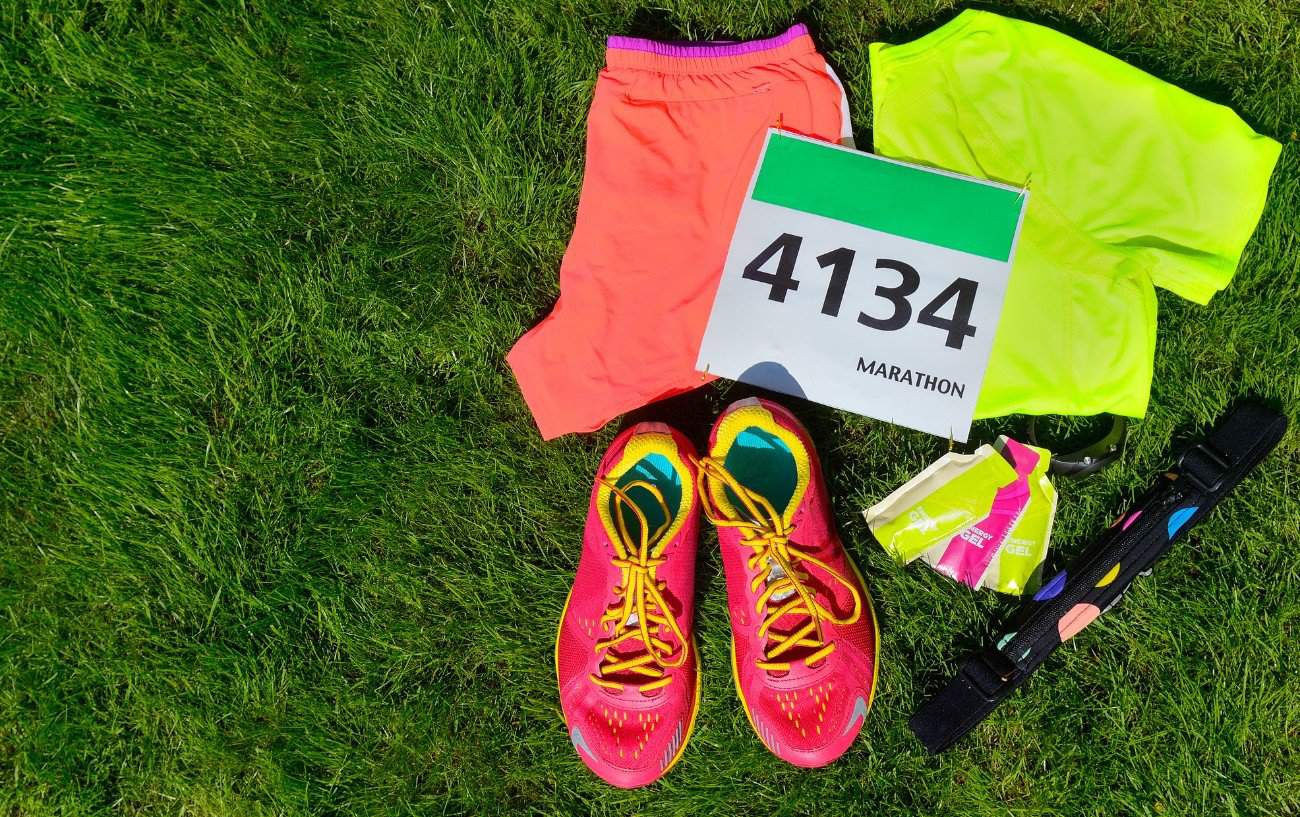
Race kit (singlet, shorts, socks, shoes, sports bra, watch, race number with safety pins, timing chip if separate). Pre-race throwaway layers (cheap T-shirt + bin bag for cold weather). Gels and salt tabs (per protocol). Anti-chafe (Body Glide, Vaseline, KT tape if needed for nipples). Small towel. Phone for emergency contact. Cash or card for post-race food. Bag-drop kit (warm clothes, change of clothes, recovery shoes, snacks). Plus the boring essentials: charged watch, charged phone, sufficient gels, vaseline.
How early should I get to the marathon start?
For major city marathons, 90–120 minutes before the start. You need time for parking or transport, gear check, porta-loo queues (often 30+ minutes at major events), and a 15–20 minute warm-up. The cost of arriving 30 minutes too early is boredom; the cost of arriving 10 minutes late is a stressful start that affects pacing for miles.
What should I eat the morning of a marathon?
A familiar carbohydrate-rich breakfast 3 hours before the start. Most marathoners do well on bagel + banana + small amount of nut butter, or oatmeal + honey + banana — totalling 1–2 g/kg of carbs. Avoid high-fibre, high-fat, or untested foods. The “familiar” part matters more than the specific food: race day is not the time to try a new pre-race meal.
Should I take caffeine on marathon morning?
If you’re a regular caffeine consumer, yes — same dose, same timing as your typical training morning. The performance benefit of caffeine is well-supported (1–3% time-trial improvement) and missing your normal dose tends to cause withdrawal headaches mid-race. If you don’t typically use caffeine, race day is not the time to start.
What if I sleep badly the night before a marathon?
Run anyway, and don’t worry about it. Pre-race anxiety insomnia is well-documented and rarely affects race performance — the body is well-rested from the previous nights and adrenaline carries you through. The sleep that matters is two nights before the race, not the night before. See our sleep and running performance guide.
Related Marathon Handbook Hubs
References
RunClub — Free
Join 300,000+ runners in RunClub
Free training plans for every distance, a daily running game, exclusive coaching content, and a real community of runners. Create your free account in 20 seconds — no card.
Already a member? Log in →







Start the conversation