


16 Week Marathon Training Plan
Get this plan free — join RunClub
Create your free RunClub account to download the 16 Week Marathon plan as PDFs — miles, km, and the coach guidance notes — plus every other plan in our library, the daily running game, and the community. Takes 20 seconds, no card.
Free forever. No card required.
Why create a free account?
It's genuinely free — and it unlocks more than just this plan:
- Every plan as free PDFs — miles, km + guidance notes, 5K to 100-miler
- The daily running game + weekly quiz
- The runner community — real runners, plus the MH team
- Badges and member perks
Browse the full Marathon plan library →
Go further with RunClub Premium
The plans are free. RunClub Premium is for runners who want people in their corner.
- The community + direct access to the MH coaching team — advice and accountability, every day
- Exclusive training videos & support to go deeper than any plan
- The members-only podcast — AMAs and deep-dives you won't hear on the main show
- Editable Google Sheet versions of every plan, so you can tailor them to your life
Try everything — first week $1 →
Then $6/month, billed yearly ($72). Cancel anytime — the whole plan library stays free either way.
This 16 week marathon training plan is designed for beginner to intermediate runners who want to cross the finish line in 4 months. It includes a free downloadable PDF schedule, daily workouts, and pace guidance to get you marathon-ready.
Perhaps you’re getting ready for your first marathon, or you’ve run a marathon or two in the past and are looking for a training program to get yourself back into shape: this 16-week marathon training plan is the one for you.
Want to compare this with other plan lengths? See our complete marathon training plans hub for 12-week, 20-week, 6-month, and beginner Couch-to-Marathon options.
This plan is designed to get you to the finish line – if you have any pace-specific goals (such as beating 4hrs 30mins), I’ve included one day of pace training to focus on your speed.
If you’ve got more time to prepare, I’d suggest checking out my 20 week marathon training plan, or my How To Train For A Marathon In Six Months guide – both are written with 1st-time marathon runners in mind (or check out our complete Marathon Training Plan database)!
In this post, I’m going to explain the rationale and building blocks of a 16 week marathon schedule, share our free downloadable beginner marathon training plan (in PDF and Google Sheets / Excel spreadsheet format), and point you towards some additional resources for your marathon training!
Ready?
Let’s jump in!
The Honest Truth About A 16-Week Marathon Training Plan
Sixteen weeks is the most-prescribed marathon-build window for good reason: it’s long enough to capture both the fast-adapting cardiovascular gains and the slow-adapting connective-tissue changes a marathon demands, and short enough to maintain motivation and avoid mid-cycle staleness. The literature on training-load progression places 14–20 weeks as the meta-evidence-supported optimal range; 16 weeks sits in the middle and works for most runner profiles. Knowing what each phase of the 16 weeks is actually doing physiologically prevents the runner from training too hard early, too easy late, or skipping the elements that matter most.
What adapts across 16 weeks (fast to slow)
The fastest-adapting systems do their work early. Plasma volume expands 10–15 percent within 1–2 weeks of consistent endurance training, lowering submaximal heart rate and improving stroke volume 1Convertino VA. Blood volume: its adaptation to endurance training. Med Sci Sports Exerc. 1991;23(12):1338-48.. Mitochondrial enzyme activity rises measurably within 2–4 weeks 2Burgomaster KA, Howarth KR, Phillips SM, et al. Similar metabolic adaptations during exercise after low volume sprint interval and traditional endurance training. J Physiol. 2008;586(1):151-60.. VO2max plateaus around 6–8 weeks of structured stimulus 3Midgley AW, McNaughton LR, Wilkinson M. Is there an optimal training intensity for enhancing the maximal oxygen uptake of distance runners? Sports Med. 2006;36(2):117-32.. The slower systems take longer: tendon stiffness adapts on an 8–14 week timeline 4Arampatzis A, Karamanidis K, Albracht K. Adaptational responses of the human Achilles tendon by modulation of the applied cyclic strain magnitude. J Exp Biol. 2007;210(Pt 15):2743-53.; cardiac structural remodeling continues for 4–6 months 5Joyner MJ, Coyle EF. Endurance exercise performance: the physiology of champions. J Physiol. 2008;586(1):35-44.. The 16-week build captures the full timeline of fast-adapting systems and most of the slow-adapting timeline — one reason it consistently outperforms 12-week and shorter plans for marathon-specific outcomes.
Periodization: base, build, peak, taper
The clean macro structure for a 16-week marathon plan: weeks 1–6 are aerobic base building (easy-dominant volume, weekly threshold work, long run growing 6–8 to 14–18 km), weeks 7–12 are marathon-specific build (M-pace progression, threshold cruise intervals, long run climbing to 28–32 km), weeks 13–14 are peak specificity, weeks 15–16 are the taper. The Seiler 80/20 polarised intensity distribution — 80 percent easy aerobic, 20 percent at threshold or above — outperforms threshold-only and pyramidal distributions in trained distance runners 6Seiler S. What is best practice for training intensity and duration distribution in endurance athletes? Int J Sports Physiol Perform. 2010;5(3):276-91.. The Daniels Running Formula framework structures the workouts (tempo, cruise intervals, M-pace, VO2max repeats) within that distribution 7Daniels J. Daniels’ Running Formula. 4th ed. Human Kinetics; 2021.. The intensity distribution that compounds across 16 weeks delivers measurably better marathon performance than higher-intensity short-block plans 8Esteve-Lanao J, Foster C, Seiler S, Lucia A. Impact of training intensity distribution on performance in endurance athletes. J Strength Cond Res. 2007;21(3):943-9..
Long run and M-pace progression
Long-run length and time spent at marathon pace are the two strongest training-stimulus correlates of marathon performance. Tanda’s analysis of training-volume predictors found marathon performance correlates with both weekly volume and long-run length, with diminishing returns past about 32–35 km of long-run distance 9Tanda G. Prediction of marathon performance time on the basis of training indices. J Hum Sport Exerc. 2011;6(3):511-20.. The 16-week structure allows for 8–10 long runs in the marathon-relevant 24–32 km range — enough volume to develop fueling tolerance, soft-tissue durability, and pacing intuition. Marathon-pace blocks within long runs (16–25 km of cumulative M-pace across the final 4–6 weeks) deliver the highest-yield intensity for marathon performance 10Billat V. Interval training for performance: a scientific and empirical practice. Sports Med. 2001;31(1):13-31.. The dose-response curve for total mileage flattens past about 65 km/wk for most amateurs; volume past that threshold raises injury risk faster than performance 11Nielsen RO, Buist I, Sorensen H, et al. Training errors and running related injuries: a systematic review. Int J Sports Phys Ther. 2012;7(1):58-75..
Fueling rehearsal and the gut-training timeline
Marathon racing requires in-race carbohydrate intake at 60–90 g/h with multi-transporter formulations (glucose plus fructose) for events past about 90 minutes. Gut tolerance for that intake is itself an adaptation that takes 4–6 weeks of long-run practice to develop 12Jeukendrup AE. Training the gut for athletes. Sports Med. 2017;47(Suppl 1):101-10.. The 16-week structure gives ample window to test in-race fueling, identify what your gut tolerates, and rehearse the race-week protocol. Carb-loading at 8–12 g/kg for 36–48 hours pre-race lifts muscle glycogen 25–100 percent above habitual stores; this matters meaningfully for marathon racing in a way it doesn’t for shorter events 13Burke LM, Hawley JA, Wong SH, Jeukendrup AE. Carbohydrates for training and competition. J Sports Sci. 2011;29(Suppl 1):S17-27.. The runner who skips fueling rehearsal during long runs and tries new gels on race day is the runner who shows up at km 25 with GI distress and a lost target time.
Taper, race-week, and recovery
Mujika’s scientific-bases-for-tapering work places the optimal endurance taper at 41–60 percent volume reduction across 8–14 days, with intensity maintained, producing approximately 3 percent performance gain on average 14Mujika I, Padilla S. Scientific bases for precompetition tapering strategies. Med Sci Sports Exerc. 2003;35(7):1182-91.. The 14-day window for marathon racing is well-supported and feasible within the 16-week structure. Strength training in the build phase reduces injury risk by 33 percent for overuse injury (Lauersen meta-analysis) and improves running economy by 2–8 percent over 8–14 weeks (Beattie review) 15Lauersen JB, Bertelsen DM, Andersen LB. The effectiveness of exercise interventions to prevent sports injuries: a systematic review and meta-analysis of randomised controlled trials. Br J Sports Med. 2014;48(11):871-7.. The runner who skips strength training in a 16-week marathon plan is leaving substantial injury-protection and economy-gain on the table.
When 16 weeks isn’t the right plan length
The clean candidates for 16 weeks: experienced runners with a 30–50 km/wk base, moving from half-marathon volumes to marathon volumes in a structured progression. The candidates 16 weeks doesn’t serve well: true beginners (better at 24–30 weeks with a couch-to-5K-then-half-marathon-build sequence first), runners returning from injury that included reduced loading (need a longer base-rebuild phase), and runners targeting an aggressive personal-best time without prior marathon racing experience (often benefit from 18–20 weeks). Hulme’s systematic review identifies training-error variables — sudden volume jumps, rapid intensity escalation, inadequate recovery — as the dominant injury predictors regardless of plan length 16Hulme A, Nielsen RO, Timpka T, et al. Risk and protective factors for symptoms and risk of injury among long-distance runners. Sports Med. 2017;47(5):869-86.. The honest reading: 16 weeks is the right plan length for most marathoners with a sensible base; the runner not yet ready for it is better served by a longer pre-build period rather than compressing the marathon-specific work into a shorter window.
Why 16 Weeks? The Training Science Behind The Timeline
Sixteen weeks isn’t an arbitrary number — it’s the minimum runway most running coaches consider safe for a first-time marathoner to build an aerobic base, tolerance for long runs, and the recovery capacity a 26.2-mile race demands.
The framework comes from three converging sources in the running-science literature:
- Jack Daniels’ Running Formula sets a minimum of 12–16 weeks of structured training before a marathon for runners with an established base. Starting from near zero, Daniels extends this to 18–24 weeks.
- Pete Pfitzinger & Scott Douglas’s Advanced Marathoning builds its canonical 18-week protocol around the principle that adaptations to high-volume training — mitochondrial density, capillarisation, muscular endurance — take 14–18 weeks to compound meaningfully.
- Tim Noakes’ Lore of Running argues that the long run — which this plan peaks around 20 miles — should be built progressively over at least 12 weeks to avoid the soft-tissue overuse injuries that spike when peak long-run volume arrives in under 10 weeks.
In practice, sixteen weeks gives most runners enough time to safely build mileage, absorb one or two lost training weeks (illness, work, life), and still taper properly into race day. It’s the shortest window that doesn’t force compromises.
When 16 Weeks Isn’t The Right Plan
This plan assumes you can already run three or four times a week for 30+ minutes without injury. If that doesn’t describe you — or any of these apply — consider an alternative:
- You’re running less than 10 miles a week right now. You need a longer base-building runway first — look at my 20-week marathon plan or the six-month marathon build.
- You’ve run a marathon in the last 8 weeks. Sixteen weeks of block-on-block training can tip you into overtraining. A shorter, lower-volume 12-week plan or a dedicated recovery block is safer.
- You’re coming back from injury. Speed and volume progressions in a stock 16-week plan don’t account for reconditioning — see a physio and pace the build to your reloading tolerance, not the calendar.
- You have a performance goal under 3:30. This plan is built for finishing strong, not for chasing a Boston-qualifying time or sub-3. A performance-targeted plan (e.g., Pfitzinger’s 18/70) has the speed volume this one deliberately omits.
If you’re locked in on a specific finish time, cross-reference your training pace with our marathon pace chart and our analysis of 110,013 Boston Marathon finishers — the data shows most first-time marathoners go out 8–15 seconds per mile too fast, which costs more time than any single workout you’ll skip.
Can You Get Ready For A Marathon In 16 Weeks?
If you have some running experience and can complete a 5 mile run without stopping (regardless of your speed), then yes – it’s entirely within your abilities to be marathon-ready within a 16 week marathon training schedule.
This 16 week period includes 13 weeks of gradually increasing your weekly mileage until it peaks with your longest long run of 20 miles, before spending 3 weeks tapering – – – i.e. winding down your training so you get to the start line feeling relaxed and your body primed to do it’s best.
These 4 months will be fairly intense, but designed to increase your training volume gradually as not to overwhelm you.
6 Tips For Nailing Your 16 Week Marathon Training Period

1. The Long Run Is Your Most Important Run
Your weekly long run is all about increasing your endurance – your body’s ability to keep running for a long time without stopping. The long run increases your muscular and cardiovascular endurance, and trains your body to fuel itself during extended workouts.
The biggest mistake many rookies make with their long runs is they try to run them too fast – your long run should be performed at an easy, comfortable, conversational pace.
So the long run is the most important run in your marathon training plan – if at all possible, do every one. If you need to miss a workout, try not to make it the long run.
2. Strength Training Helps Keep Injuries At Bay (And Makes You a Better Runner)
My 16 week training program includes one day of cross training, or strength training, per week.
Many runners simply neglect any form of exercise that isn’t running, but for my money it’s the 2nd most important workout of the training schedule (following the long run).
Cross training means any form of exercise which complements your running, and strength training is, without doubt, the most effective way to cross-train.
I’m not necessarily talking about lifting heavy weights (don’t start this if you haven’t done so previously, before your marathon training) but rather bodyweight exercises and lighter weight, high rep gym routines – it all counts as strength training.
By focusing on your upper legs, hips, core, and upper body during these sessions you’ll strengthen many of the areas left weakened by all your run training, and improve your running economy (essentially the miles per gallon you get from your body).
Don’t know where to start?
Here’s a short, 20-minute, no-equipment bodyweight workout you can follow at home.
(Youtube is stacked with strength training workouts you can do at home with minimal equipment!)
In fact, I usually recommend 2-3 short strength training sessions per week in a training plan to runners looking to improve their performance. However, when you’re in marathon training mode, we have to balance the cross training with an already busy week of run training and make time for rest too. That’s why there’s only one session per week.

3. Speed Ain’t All That
I designed the 16 week marathon training program for runners who are not overly concerned about their race finishing time.
Often, when training for a marathon, it’s easy to get fixated on aiming for a specific finishing time.
For less experienced runners, especially if it’s your first marathon, I tend to recommend you focus simply on running a comfortable, even pace throughout your event, and have the goal of finishing your marathon.
Having said that, the training plan does include one ‘race pace run’ per week – the idea being that if you have a target marathon pace in mind, you should practice running it during this workout.
Not sure what your running pace should be for your target finishing time? Check out our Marathon Pace Charts here.
If you’ve decided on a target finishing time, you can utilize our Marathon Pace Calculator in order to plan your pacing throughout the race.
4. Recognise When To Take A Break
The 16 week marathon training program includes two rest days per week, but always remember that this plan is a guide – it shouldn’t be set in stone.
Every runner goes through ups and downs in terms of energy levels, motivation, and fatigue. And while you’re following a marathon training schedule, you’ve going through high-volume training – which is bound to affect you.
So be sure to listen to your body carefully during the training plan – any signs of fatigue, the onset of a minor injury, or simply lack of energy are signals that you’re perhaps pushing a little hard and need to back off.
Never be afraid to take an extra rest day, or re-shuffle your training plan around your personal schedule.
Just try to preserve that long run, if you can.

5. Taper Well!
The Taper is the last 3 weeks of the 16 week marathon training plan, and is when you will gradually decrease your training volume.
The purpose of the taper is to allow your body to consolidate the gains it’s made in training, heal any micro-tears in your muscles, and build up glycogen stores – all of which help get you to the start line in optimal condition.
What’s interesting is that many runners really struggle with the taper!
You’d assume that after 13 weeks of intense run training, you’d be ready for a break. But many runners are left feeling restless and with pent-up energy after having to curb their training 3 weeks before their big event.
It’s tempting to try to sneak in a few longer / more intense runs during those final 3 weeks – especially if you’ve skipped a few earlier in the training.
However, beware! Any last-minute long runs will just leave you a little more beaten up come race day.
6. A Successful Marathon Is All In The Preparation
Up til now, all we’ve really discussed is marathon training.
But marathon preparation is a huge part of your overall strategy, and one you need to be thinking about as race day approaches.
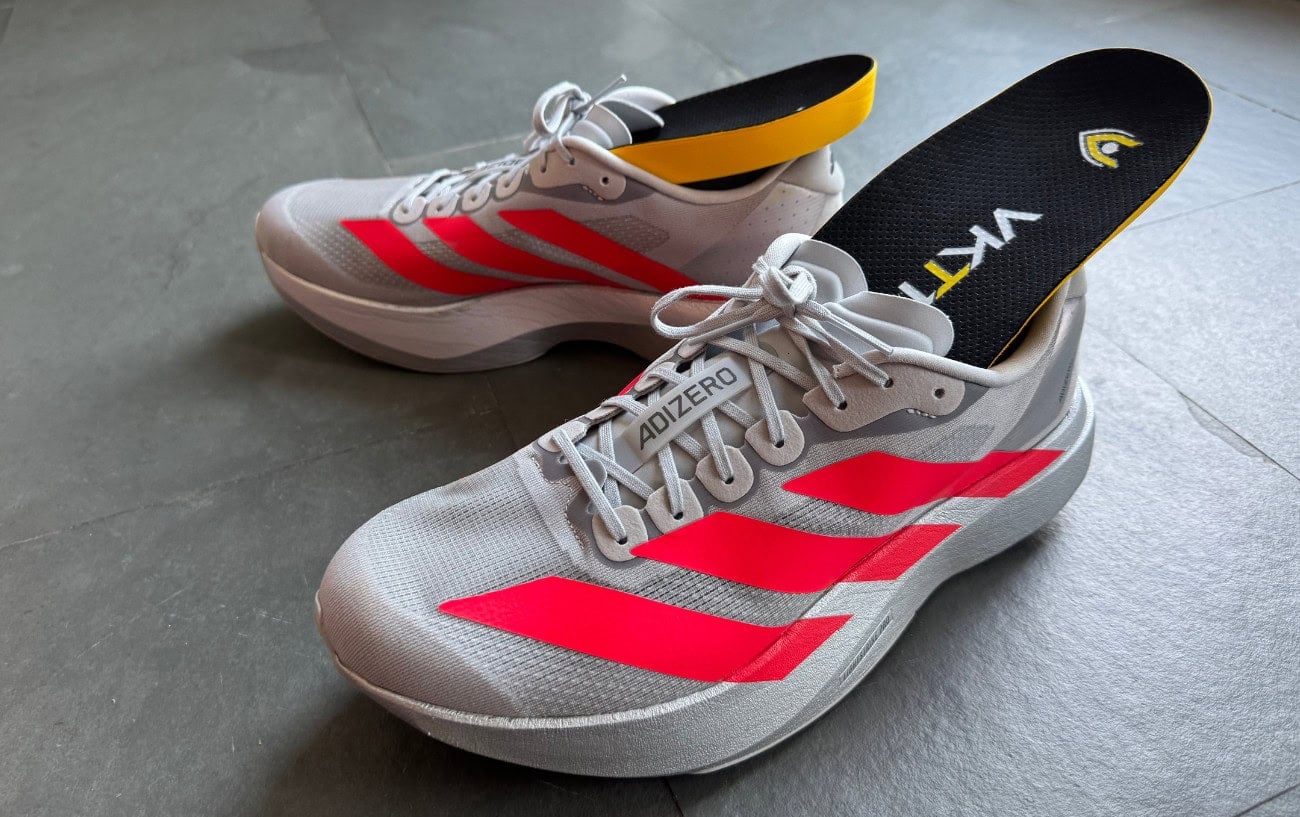
This means having all your running gear (including marathon running shoes and GPS watch) selected and road-tested as early as possible.
It means studying your marathon route and knowing the terrain – the hills, the likely weather conditions, the aid station locations and what they’ll supply, the race registration procedures…everything.
It means knowing all about marathon nutrition; what you’re going to eat the day before your race, the morning of your race, and during your race.
Lastly, it means running through every detail of your race beforehand – any good athlete knows what each step of a good race day looks like days or weeks before the actual race. It’s a form of sports visualization, getting you mentally ready to run your best race!

Here’s Our 16 Week Beginner Marathon Training Plan
Who Is The Training Plan For?:
Beginner or intermediate runners looking to ready for their marathon!
Perhaps you’ve run a marathon before, or a half marathon or two.
Ideally you should have already been running for a few months, if not longer, and be able to run 5 miles without stopping.
Remember that speed is not important for this training plan – more important is your ability to keep running the distances necessary.
If in doubt, grab a copy of the plan and see if you can follow the first week – which includes 2 x 3 mile runs, one 5 mile run, and a long run of 8 miles at the weekend (which you can choose to run / walk).
How Long Is The Marathon Training Schedule?:
16 weeks // 4 months.
Training Schedule Description:
The training plan focuses on building your strong running base and adding mileage.
The ‘training runs’ should be done at a comfortable, sustainable pace – their purpose is to help you get the miles and time on your feet in.
The ‘race pace run’ is designed for those who have a specific target finish time in mind: during these runs, stick to your target marathon pace. If you don’t have a target marathon pace, maintain a comfortable, sustainable pace.
Long runs are there to increase your maximum mileage and time on your feet. The whole purpose of these is to run slowly – at a conversational pace – no faster. If you are struggling during these long runs, feel free to take walking breaks – no worries.
The marathon training schedule includes one day of cross training and two rest days.
The rest days are especially important for letting your body recover.
Feel free to download the training plan and change it up to suit your schedule.
Your Week-by-Week Training Schedule
Here’s the complete week-by-week breakdown. Monday and Thursday are rest days throughout. All distances are in miles.
| Week | Tue | Wed | Fri | Sat | Sun | Total |
|---|---|---|---|---|---|---|
| 1 | Pace Run 3 miles | Training Run 4 miles | Training Run 4 miles | Strength Training | Long Run 8 miles | 19 miles |
| 2 | Pace Run 3 miles | Training Run 4 miles | Training Run 4 miles | Strength Training | Long Run 10 miles | 21 miles |
| 3 | Pace Run 4 miles | Training Run 5 miles | Training Run 5 miles | Strength Training | Long Run 11 miles | 25 miles |
| 4 | Pace Run 4 miles | Training Run 5 miles | Training Run 5 miles | Strength Training | Long Run 9 miles | 23 miles |
| 5 | Pace Run 5 miles | Training Run 6 miles | Training Run 6 miles | Strength Training | Long Run 13 miles | 30 miles |
| 6 | Pace Run 5 miles | Training Run 6 miles | Training Run 6 miles | Strength Training | Long Run 15 miles | 32 miles |
| 7 | Pace Run 5 miles | Training Run 7 miles | Training Run 6 miles | Strength Training | Long Run 10 miles | 28 miles |
| 8 | Pace Run 5 miles | Training Run 7 miles | Training Run 7 miles | Strength Training | Long Run 16 miles | 35 miles |
| 9 | Pace Run 6 miles | Training Run 8 miles | Training Run 7 miles | Strength Training | Long Run 18 miles | 39 miles |
| 10 | Pace Run 6 miles | Training Run 8 miles | Training Run 7 miles | Strength Training | Long Run 14 miles | 35 miles |
| 11 | Pace Run 6 miles | Training Run 8 miles | Training Run 8 miles | Strength Training | Long Run 19 miles | 41 miles |
| 12 | Pace Run 6 miles | Training Run 6 miles | Training Run 6 miles | Strength Training | HALF MARATHON 13 miles | 31 miles |
| 13 | Pace Run 6 miles | Training Run 8 miles | Training Run 8 miles | Strength Training | Long Run 20 miles | 42 miles |
| 14 | Pace Run 6 miles | Training Run 6 miles | Training Run 6 miles | Strength Training | Long Run 12 miles | 30 miles |
| 15 | Pace Run 6 miles | Training Run 5 miles | Training Run 4 miles | Strength Training | Long Run 8 miles | 23 miles |
| 16 | Training Run 3 miles | Rest Day | Rest Day | Easy Run | MARATHON 26.2 miles | 34 miles |
Want a printable version? Download the free PDF or Google Sheets version below.
16 Week Marathon Training Plan
Get this plan free — join RunClub
Create your free RunClub account to download the 16 Week Marathon plan as PDFs — miles, km, and the coach guidance notes — plus every other plan in our library, the daily running game, and the community. Takes 20 seconds, no card.
Free forever. No card required.
Why create a free account?
It's genuinely free — and it unlocks more than just this plan:
- Every plan as free PDFs — miles, km + guidance notes, 5K to 100-miler
- The daily running game + weekly quiz
- The runner community — real runners, plus the MH team
- Badges and member perks
Browse the full Marathon plan library →
Go further with RunClub Premium
The plans are free. RunClub Premium is for runners who want people in their corner.
- The community + direct access to the MH coaching team — advice and accountability, every day
- Exclusive training videos & support to go deeper than any plan
- The members-only podcast — AMAs and deep-dives you won't hear on the main show
- Editable Google Sheet versions of every plan, so you can tailor them to your life
Try everything — first week $1 →
Then $6/month, billed yearly ($72). Cancel anytime — the whole plan library stays free either way.
Check Out The Premium Version of The 16 Week Marathon Training Plan . . .
Access the plan via the TrainingPeaks website and app, track your workouts in real-time against the plan, and get performance data analysis on your progress.


Proven Training Plans by a UESCA-Certified Running Coach
Every one of our training plans has been developed by Thomas Watson, a UESCA-certified running coach.
Thomas is also a podium-finishing ultra-marathon runner and has dozens of marathons under his belt.
Each training plan has been road-tested by hundreds of runners, refined and improved, and is free to download and customize to suit your needs!
Frequently Asked Questions
Who is a 16 week marathon training plan best suited for?
A 16 week plan works well for intermediate runners who have completed at least one half marathon and run 15-20 miles per week consistently. It provides enough time for a gradual build without being overly long.
How many long runs are in a 16 week marathon training plan?
A typical 16 week marathon plan includes 12-14 long runs, with the longest run reaching 20-22 miles about 2-3 weeks before race day. Long runs usually take place on weekends.
Should I include speed work in a 16 week marathon training plan?
Yes, incorporating tempo runs and interval sessions helps improve your lactate threshold and running economy. Most 16 week plans introduce speed work around weeks 4-6 after establishing a solid aerobic base.
Other Suggested Marathon Training Plans
Beginner + Novice Training Plans
Intermediate Training Plans
- 16 Week Marathon Training Plan
- 12 Week Marathon Training Plan
- Sub 4-Hour Marathon Training Plan
- Sub 3:30 Marathon Training Plan
- 8 Week Marathon Training Plan
Advanced Marathon Training Plans
- Sub 3-Hour Marathon Training Plan
- 20 Week Advanced Marathon Training Plan
- 20 Week *Intense* Advanced Marathon Training Plan
References
PDF, printable and editable-sheet versions of our Marathon Training Plans — plus guidance notes and every other distance — live in the member training-plan library.
Browse the Marathon Training Plans →










Join the conversation
😏