



For more than half a century, Flint, Michigan native Mark Bauman has quietly rewritten what consistency looks like in distance running. The Michigan mentor and longtime running‑store owner holds the world record for the longest marathon streak at a single race: 56 consecutive Boston Marathon finishes, with number 57 on deck.
Along the way, he has helped start and grow much of mid-Michigan’s running culture, from being at the heart of the CRIM Festival of Races in Flint—one of the region’s largest and most iconic running events—to running every single Detroit Marathon since its inception.
As he chased his 50th Frankenmuth Folkslauf finish, and looks forward to the 50th CRIM and 50th Detroit Free Press Marathon in the coming years, his definition of success has shifted from racing the clock to simply training well, showing up, and finishing — now alongside a third generation of family runners.
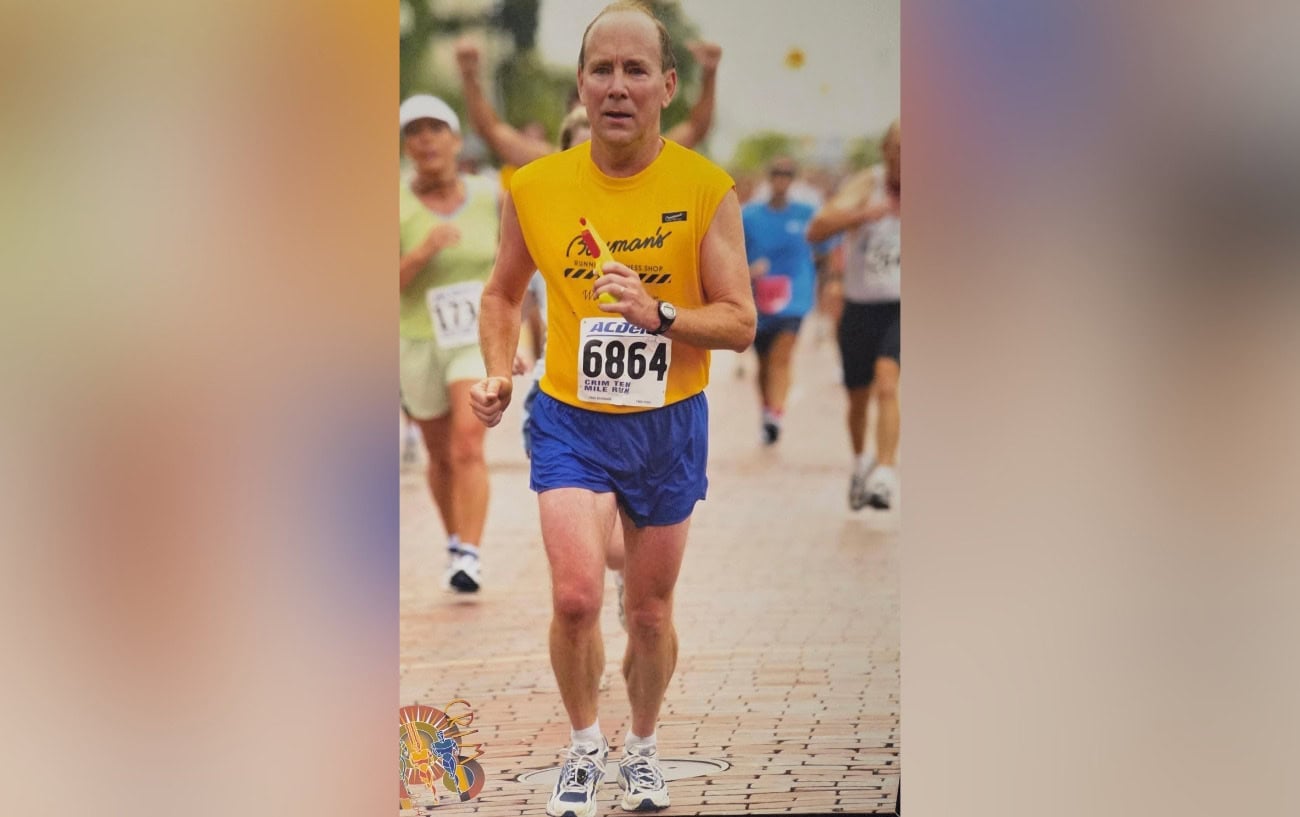
We caught up with Bauman to hear how it all started and what keeps him coming back.
56 Bostons, One Runner: The Conversation
Q: How did you start this Boston streak?
Bauman says there was “never any intention to start a streak”. When he first ran Boston as a 20‑year‑old, you just needed a note from your coach to get in, and later, hitting qualifying times that he met from his 20s into his early 50s. He simply kept coming back year after year and training to earn that BQ. By the time he reached the quarter‑century club and earned automatic entry, he realized he was in the middle of something much bigger than a single race, and just wanted to keep coming back as long as he could.
Q: Were there any years when you almost didn’t keep the streak?
He points to one particularly hot year in Boston about a decade ago as his closest call. Coming in with a hamstring injury, he also encountered brutal heat on race day and spent time in aid tents; he describes it as the biggest challenge he’s ever had just to finish a marathon.
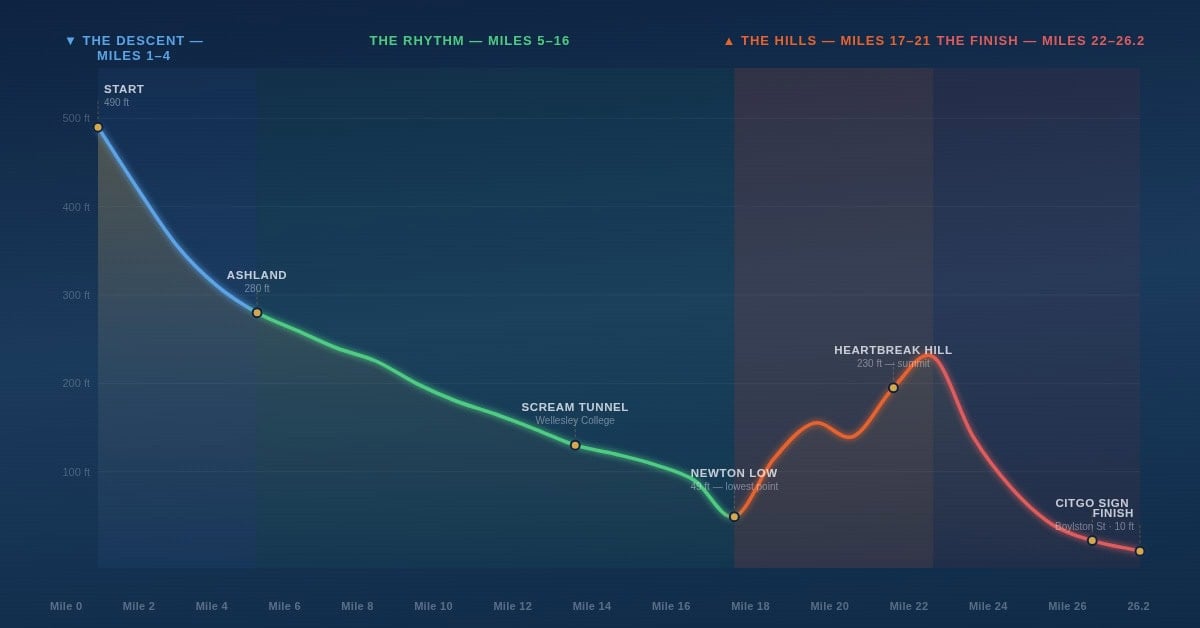
At the top of Heartbreak Hill, his quads and both hamstrings cramped from heat and dehydration, aid stations had run out of electrolytes, and he began asking spectators for bags of chips and water to get enough salt and fluids to move forward. They happily provided. To the best of his knowledge, he was the very last official finisher that day, before Boston implemented a seven‑hour legacy cutoff, and he still considers it one of the hardest‑earned finishes of his life.
Q: What are the secrets to keeping streak motivation and marathon training through tough Michigan winters for 57+ years?
For Bauman, the “secret” is no secret at all: routine, positive mental habits, and supportive community. Simple but not easy. He treats training commitment like a non‑negotiable part of his day, especially through dark, icy winters, and leans heavily on a tight‑knit run crew in Flint—a half dozen or so runners who keep him going and hold one another accountable.
He readily admits he relies on them “way too much,” but also notes that it works in both directions. Being at the heart of the CRIM movement for health in Flint since its inception has kept him in the middle of everything and continually reminded him that he’s part of something bigger.
Q: What is the largest challenge or obstacle for you now?
These days, Bauman’s biggest concern is not pacing but physiology. His physical therapist has emphasized that flexibility is now his nemesis, affecting pesky foot drag and increasing fall risk. He sees this as a clear lesson for younger runners: start working on flexibility and balance early, not decades later. For him, training now includes as much focus on staying mobile, upright, and flexibly steady as it does on logging miles.
Q: How do you define success at this stage?
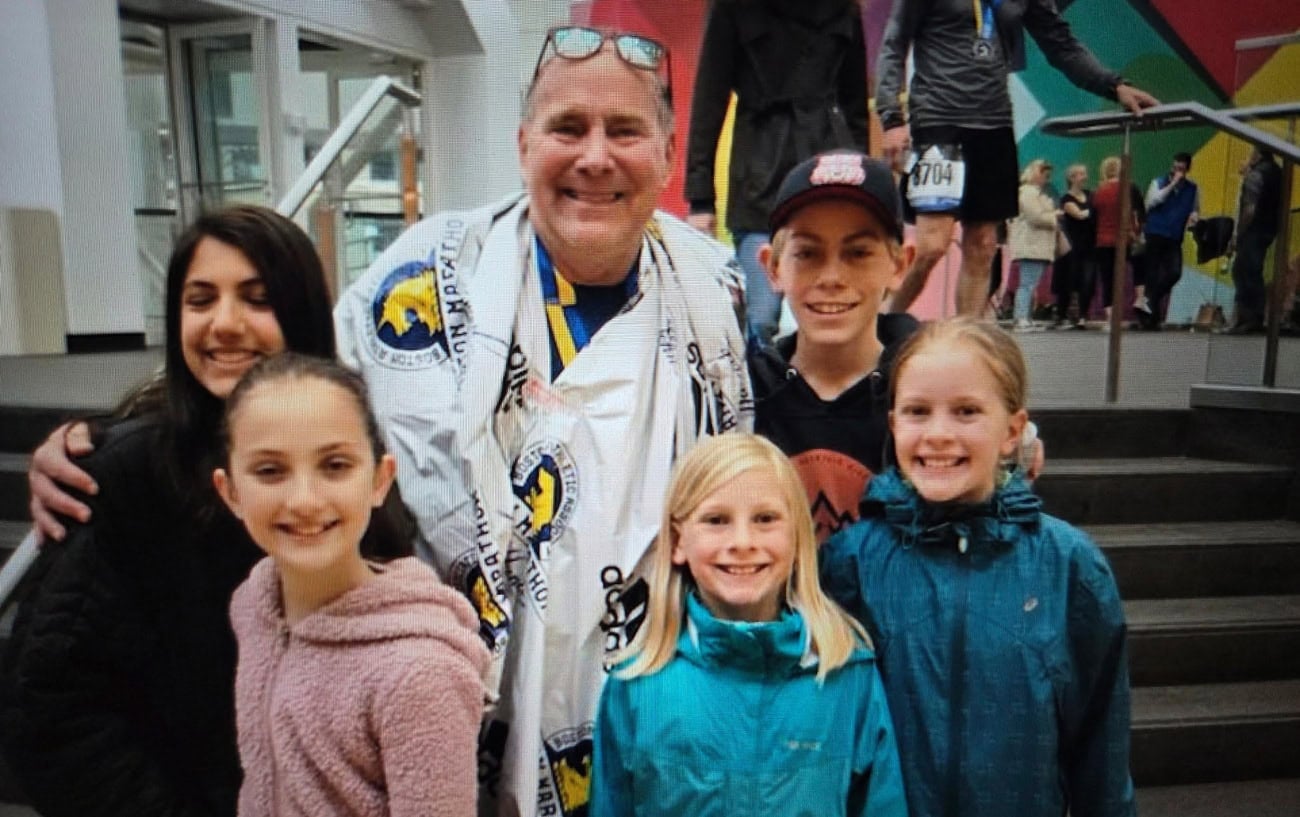
Bauman openly says he hasn’t “raced” a marathon in more than 15 years. Success for him now means being able to keep showing up and finishing his marathons and goal races, and training well with his friends. His race is simply to be there, to cross the finish line, and to share the journey with others. A big part of that joy is being joined by a third generation at marathons—his granddaughters— including Boston, which he describes as one of the great satisfactions of this chapter of his running life.
Q: Were there years when something came up, and you had to sacrifice to keep the streak alive?
One of the most difficult years came when his mother passed away the day before a marathon. Thanks to the support of friends and travel companions, he was still able to get to the start line, knowing she would have wanted him to run. Aside from moments like that, he credits a mix of luck and the strength of the run community. He arranges each race year well in advance, planning the finances and time so those race weekends are protected. That long‑view planning has been essential to keeping the streak intact.
Q: You also owned the longest‑running specialty store in the U.S. until recently. How does that connect to your streak?
Bauman’s Running & Walking Shop was for decades an extension of his philosophy on running: community‑focused, consistent, and welcoming. It started in the trunk of his car and at home storage, and is believed to be the longest-running specialty store in the United States. Character note: He recently sold the successful store to three longtime associates for $1, ensuring it would stay locally rooted and runner‑centered. That decision mirrors how he has managed his racing life—thinking years ahead, putting people first, and making sure the legacy continues even when his own role changes.
Q: Lastly, what advice would you give to would‑be streakers?
His first piece of advice is clear: “Get your family on board.” Everyone needs to know that certain weekends are “off limits”—for him, one weekend in April (Boston), one in August (CRIM), and one in October (Detroit). Protecting those dates has been crucial. He also suggests seeing each marathon as a gift and focusing on one at a time; you may just start a streak without realizing it, as he did at Boston 57 years ago.
As Bauman heads to Hopkinton for his 57th consecutive start, the streak almost seems beside the point. What he’s really built, over decades of showing up, is a life shaped entirely around running, and a community that runs because of him.
RunClub
Get more running stories — join RunClub
Daily running news, a community of 300,000+ runners, free training plans for every distance, and a daily running game. Free to join — no card.
Already a member? Log in →







Start the conversation