


Most marathon nutrition guides tell you the same things: carb-load the night before, eat a familiar breakfast two to three hours before the gun, dial in your mid-race fueling. For the vast majority of marathons, this framework is solid. But Boston is not most marathons.
The Boston Marathon introduces three logistical realities that completely reshape the nutritional picture: a prolonged pre-race bus journey to the start, a potentially cold and wind-exposed athlete village, and a late morning wave start that misaligns with standard caffeine protocols. Ignore these factors and your carefully designed nutrition plan may be half-dismantled before you cross the start line in Hopkinton.
This guide addresses each of these factors with evidence-based strategies, so that when the cannon fires, your body is fueled, warm, and primed to perform.
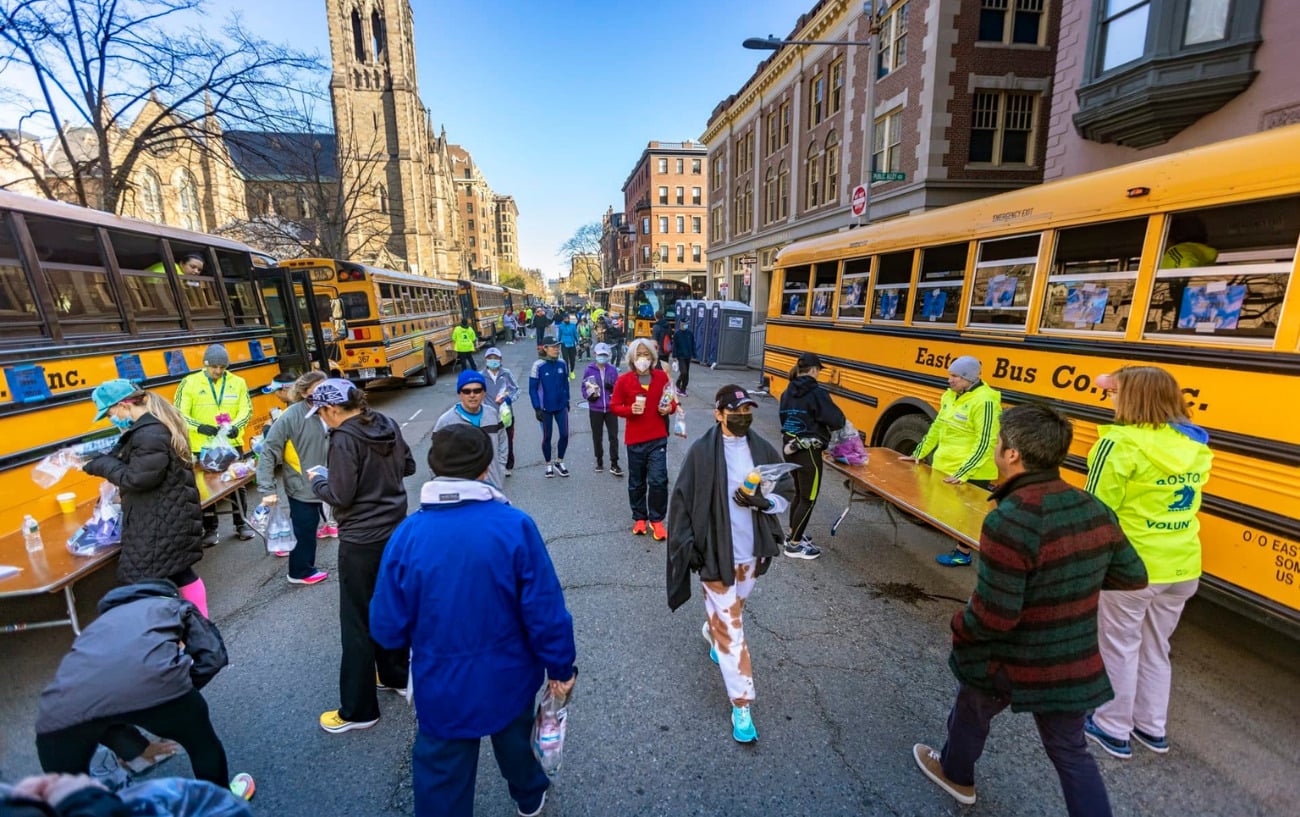
The Bus: Your Nutrition Plan Starts Before You Leave Boston
On race morning, Boston Marathon runners board buses at Boston Common and make the roughly 26-mile journey to Hopkinton. Factor in boarding, loading, and traffic, and athletes commonly spend between 90 minutes and three hours in transit before they even enter the athlete village. This window is frequently overlooked in nutrition planning—and that is a costly mistake.
By the time you board the bus, you have likely already eaten a pre-race breakfast. That is good practice. The problem, however, is that for many runners, the bus journey and subsequent village wait push total pre-race duration well beyond three hours.
Liver glycogen, in particular, depletes continuously during fasting—including the period when you are sitting on a bus doing nothing. Research consistently shows that overnight fasting already reduces liver glycogen by approximately 40–60% before you even eat breakfast; extended post-breakfast waiting adds further metabolic stress.
Treat the bus as part of your pre-race nutrition window, not dead time. It is one of the few opportunities you have to fine-tune your fuel status before the race.
The practical solution is to plan a small, low-fiber carbohydrate snack specifically for the bus. This should not be a second breakfast; it is a top-up. Approximately 30–50 grams of easily digested carbohydrate—a banana, a small portion of white rice, a plain rice cake with a thin layer of nut butter, or a sports chew—consumed 60 to 90 minutes after your breakfast keeps liver glycogen stable without stressing your gastrointestinal system.
Avoid fiber-heavy foods, high-fat options, and anything unfamiliar during this window. The last thing you want is GI distress two miles into the race because you experimented with a granola bar at mile marker zero. Stick to foods your gut knows well.
Hydration on the bus also warrants attention. Arrive at the bus well-hydrated and sip water steadily throughout the journey—roughly 150–200ml every 30 minutes. Avoid excess caffeine-containing drinks at this stage unless they are part of your deliberate caffeine timing strategy (discussed below).

The Cold Start: How Temperature Changes Your Caloric Equation
Boston in April carries no guarantees of pleasant weather. The course, the exposure in the early miles, and New England’s unpredictable spring climate mean that athletes frequently face start temperatures in the 40s°F (4–10°C), sometimes accompanied by wind and rain. Cold weather imposes a meaningful but underappreciated increase in caloric expenditure.
The mechanisms are straightforward: in cold conditions, your body increases thermogenic activity to maintain core temperature. This involuntary heat production, driven in part by shivering thermogenesis but also by non-shivering thermogenic processes, burns additional carbohydrate and fat. A 2019 review published in the journal Temperature estimated that running in cold conditions can increase metabolic rate by 10–15% compared to thermoneutral conditions, depending on clothing, pace, and individual body composition.
Cold conditions don’t just make you uncomfortable—they accelerate the rate at which you burn through fuel. Build that into your race-day calorie calculations.
For practical purposes, this means two things. First, glycogen stores will be drawn upon more rapidly in the early cold miles, especially if you have been standing or sitting in the athlete village for over an hour with inadequate layers. Second, if you are underdressed or unable to stay warm at the start, you may begin your race already in a mild caloric deficit.
The mitigation strategy has both nutritional and logistical components. Wear disposable layers at the start—old sweatshirts, bin bags, throwaway gear—to reduce thermogenic fuel cost during the wait. Pack these in your gear bag or simply discard them at the start. The athlete village offers drop bag services, so plan your layers accordingly.
On the nutrition side, consider slightly uprating your pre-race carbohydrate intake if you know the morning will be cold. An extra 15–25g of carbohydrate during the bus ride provides the additional substrate your body may call upon during the cold wait. Additionally, during the race itself, do not delay your first gel or chew based on an arbitrary mileage rule. In cold conditions, some elite sports dietitians advise beginning mid-race fueling at mile 4–5 rather than mile 6–8, particularly if the temperature is below 50°F.

Late-Morning Caffeine: Why Standard Advice Doesn’t Apply
Caffeine is the most evidence-supported ergogenic aid in endurance sport. A meta-analysis published in the British Journal of Sports Medicine found that caffeine supplementation produced a mean improvement of approximately 2.2% in endurance performance—a meaningful margin in marathon racing. The mechanism is well understood: caffeine antagonizes adenosine receptors, reducing perceived effort, improving neuromuscular efficiency, and potentially sparing glycogen in the early race stages.
The standard protocol widely cited in sports nutrition literature recommends consuming 3–6mg of caffeine per kilogram of bodyweight approximately 45–60 minutes before the start of exercise. For most marathons, with a 7:00 or 7:30am gun, this means consuming caffeine between 6:00 and 6:45am.
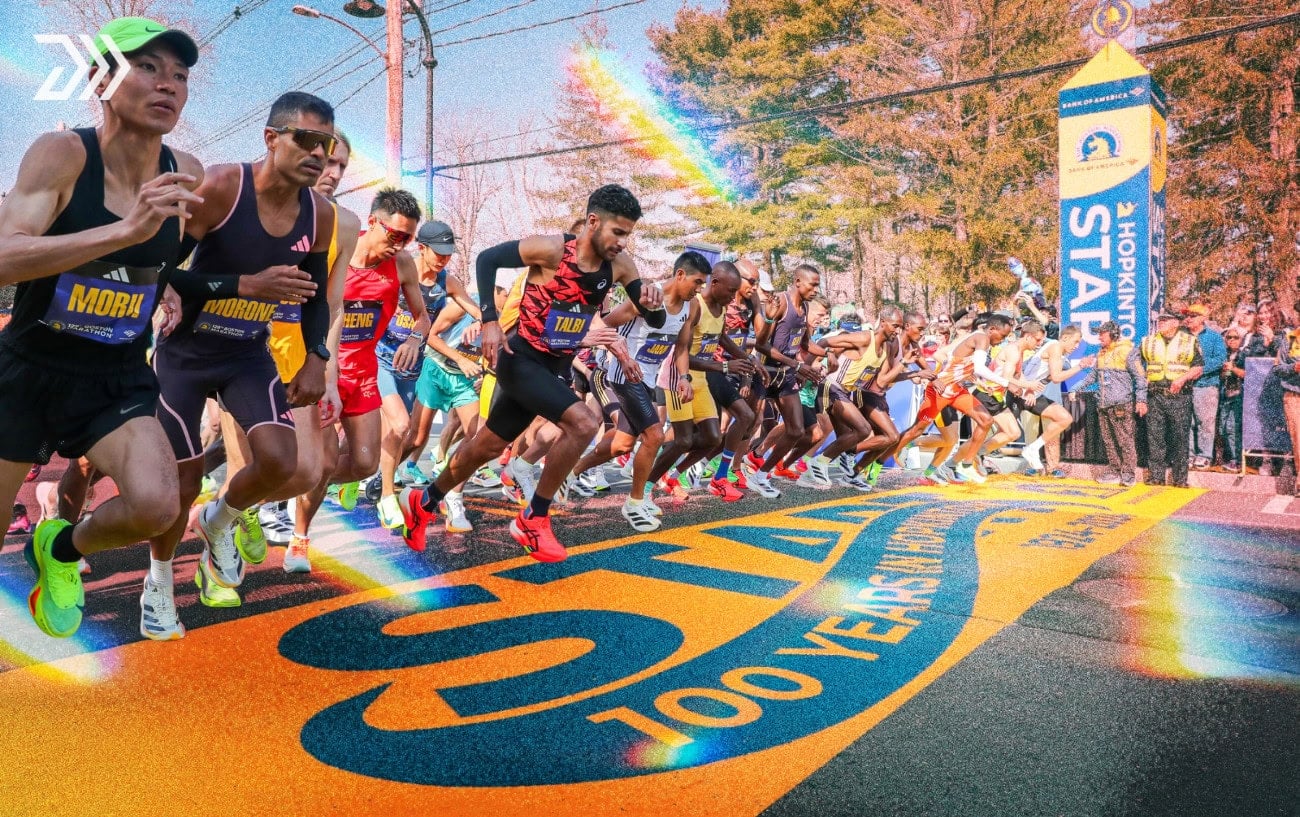
Boston does not have a 7:00am start. Wave 1 begins at 9:02am. Wave 4 does not go until after 11:00am.
For late-wave starters, drinking your coffee at 6am is not a caffeine strategy. It is simply a morning habit. Plan your timing to match your actual gun time.
If you consume your primary caffeine dose at 6:00am because that is when you make your pre-race coffee, your caffeine plasma concentration will already be declining significantly before you even arrive in Hopkinton. Caffeine typically reaches peak plasma concentration within 30–60 minutes of ingestion and has a half-life of approximately 3–5 hours, though this varies meaningfully between individuals based on liver enzyme activity.
The solution is to deliberately time your primary caffeine dose to the gun time of your specific wave. For wave 1 starters (9:02am), aim for primary caffeine intake between 7:45 and 8:15am. For wave 3 or 4 starters, consider pushing that primary dose to between 9:30 and 10:00am. This means your coffee, caffeine gels, or capsules need to come with you on the bus—not be left behind at your hotel room.
One important consideration: many runners drink coffee first thing in the morning as part of their GI routine. The distinction is between a small, habitual early-morning coffee consumed for GI purposes and the primary performance-oriented caffeine dose. These can be separated. A small 100mg dose at 5:30–6:00am for GI purposes, followed by your main pre-race caffeine dose at the wave-appropriate time, is a practical and evidence-supported approach.
Additionally, plan your in-race caffeine carefully. Many runners rely on caffeinated gels in the second half of the race for a secondary boost. Given the already-delayed schedule at Boston, consider whether a caffeinated gel at mile 18 might interact poorly with a late morning caffeine dose. Spacing caffeine intake to avoid stacking too much too close together reduces the risk of jitteriness, elevated heart rate, and GI distress.

Putting It Together: A Sample Race-Day Timeline
The following framework is illustrative and should be adapted to your individual physiology, wave start time, and tested nutrition preferences.
6:00–6:30am — Wake up. Eat a familiar, carbohydrate-rich breakfast (60–90g carbohydrate). Small coffee optional for GI purposes.
7:00–7:30am — Leave for Boston Common. Arrive well-hydrated.
7:30–8:00am — Board bus. Sip water steadily. Pack your mid-bus snack and primary caffeine dose.
8:45–9:15am (Wave 1) — Take primary caffeine dose (3–6mg/kg). Small carbohydrate top-up (30–50g).
8:30–9:00am — Arrive at athlete village. Wear all disposable layers. Stay warm. No hard effort.
9:30–9:45am — Move to start corrals. Discard throwaway gear. Last small sip of water.
10:00am — Wave 1 gun. Begin fueling at miles 4–5 if cold, miles 6–8 if temperate.
Runners in later waves should shift the caffeine timing window accordingly and plan additional small carbohydrate top-ups in the athlete village if their wait extends beyond 90 minutes post-breakfast.
Boston is a race that rewards preparation in every domain—including nutrition. The logistical complexity of race morning, the unpredictable cold, and the late start create a set of nutritional challenges that simply do not exist at most major marathons.
Address the bus window deliberately. Respect the thermogenic cost of the cold. And time your caffeine to your gun, not to your alarm clock. These are not dramatic interventions—they are small, precise adjustments that reflect the unique demands of Patriot’s Day in Hopkinton. And on a course this unforgiving, precision is everything.
RunClub
Get more running stories — join RunClub
Daily running news, a community of 300,000+ runners, free training plans for every distance, and a daily running game. Free to join — no card.
Already a member? Log in →




Start the conversation