


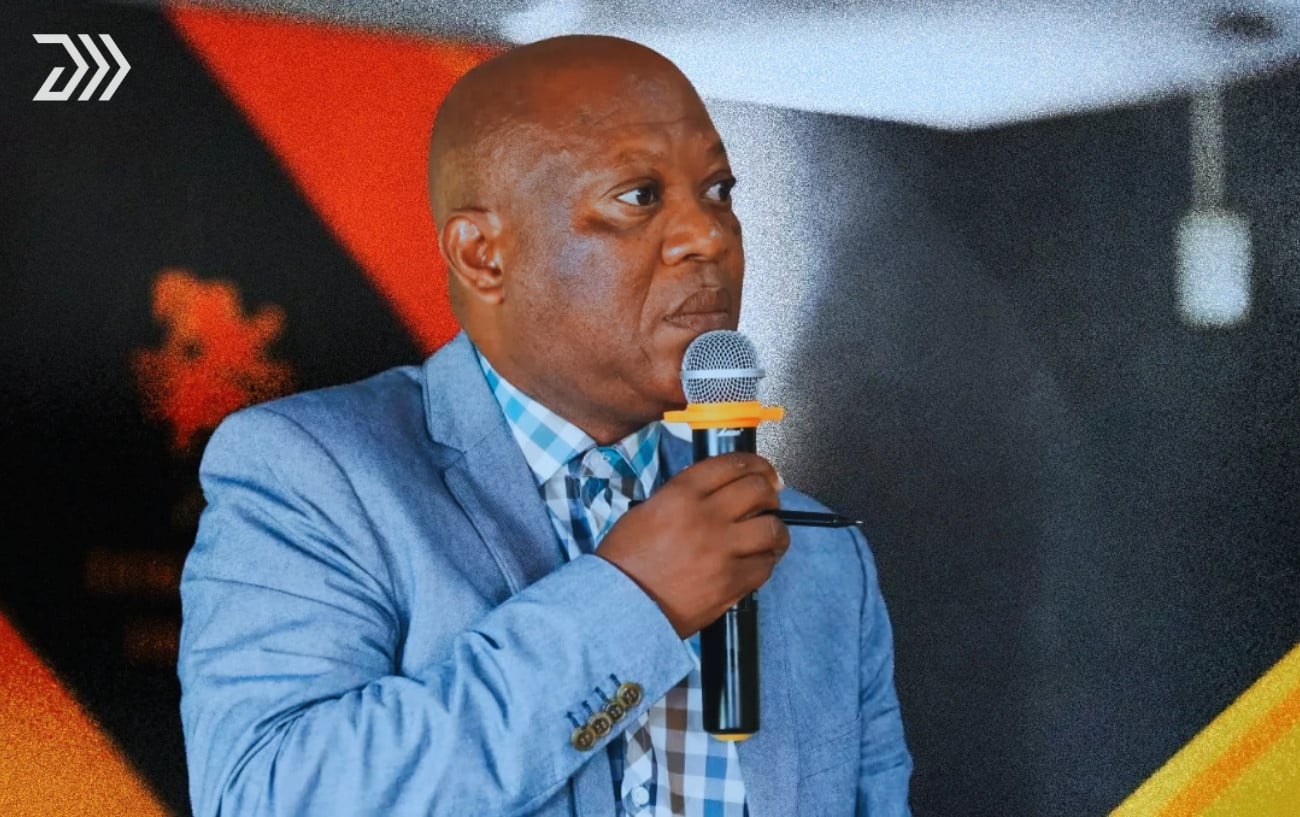
Michael Johnson has spoken publicly for the first time about the collapse of Grand Slam Track, telling The Telegraph in an exclusive interview that the professional track league he built was sunk by what he called “a catastrophic capital issue,” and that the athletes it failed to pay last year have since been paid.
Johnson, 58, launched Grand Slam Track in June 2024 with a promise to pay nearly 100 of the sport’s best athletes to race four times a year for $12.6 million in prize money. The venture debuted in Kingston, Jamaica, in April 2025, held further meets in Miami and Philadelphia, then canceled its Los Angeles finale on about two weeks’ notice. In December 2025 it filed for Chapter 11 bankruptcy.

Johnson drew a firm line between the league’s finances and its product, which he said beat every reasonable first-year expectation: free-to-air television in 200 countries, a United States deal with NBC and the CW, and 30,000 tickets sold in Philadelphia. The money was the problem. A key backer, Eldridge, the investment vehicle of Chelsea co-owner Todd Boehly, pulled an indicated cash injection The Telegraph reported at $40 million (£30 million), leaving the league short against its budgets. Johnson said he stayed quiet through more than a year of damaging headlines because “what was going to matter was what I did,” not what he said.
He now says the athletes have been made whole, telling The Telegraph he paid out $11 million, “more money than has ever been paid to track athletes to compete.” The court record is more complicated. Grand Slam Track listed more than $40 million in debts against less than $2 million in revenue, and only an emergency lifeline from an outside investor kept it operating. Under the approved bankruptcy plan, the athletes it owed are recovering about $4.9 million of some $7 million in claims, roughly 70 cents on the dollar, a sum they voted 123-0 to accept even though it fell short of what they had been promised. Vendors recovered a far smaller share.

The most personal wound, Johnson said, was a March court filing in which the league’s creditors accused him of “secretly” paying himself about $500,000 as the season fell apart. He rejected the allegation, describing the money as reimbursement for athlete and staff travel he had put on his personal credit card when the company’s cards were full, and noting that he had also loaned the league $2 million and gone without a salary. “I’m happy to clear it up, because it’s the most hurtful thing and the exact opposite of what was reported,” he said. Johnson has denied wrongdoing throughout, and as part of the approved plan he agreed to return $500,000 to the estate for distribution to creditors, a step the league described as a goodwill gesture.
The collapse drew sharp public criticism. Patrick Magyar, a founder of the Diamond League, called the venture “Grand Flop Track,” and Sebastian Coe, the president of World Athletics, said of the payment delays, “There’s no point pretending this is a satisfactory situation.” Some athletes went public too: Olympic 200m champion Gabby Thomas commented “Pls pay me” on a Grand Slam Track video, and hurdler Eric Edwards Jr. said he was owed about $19,000 and had taken a part-time job as an Amazon delivery driver. Others stood by Johnson, among them the British middle-distance runner Josh Kerr, who said he was “standing with the people I’ve signed with” and considered them “good people.”

Johnson, who survived a stroke in 2018 and handed back an Olympic relay gold medal in 2008 after a teammate admitted to doping, said the past 18 months rated a 10 on his own stress scale, higher than anything outside his competitive career. He described sleepless nights and moments of doubt, asking himself, “Are you stupid? Why did you do this?” The period overlapped with the January 2025 wildfires that drove him and his wife from their Malibu home.
Johnson stopped short of promising the league will come back, saying only that he would keep trying to help athletes “as long as I am in position to” do so. He remains convinced of the concept, saying the venture was “absolutely on the right track” before “everything got overshadowed,” and his BBC commentary work, paused during the crisis, is now handled year by year. Any revival rests on new money: the approved plan leaves Johnson in control, but the league’s only committed funding runs through the end of the year.
RunClub
Get more running stories — join RunClub
Daily running news, a community of 300,000+ runners, free training plans for every distance, and a daily running game. Free to join — no card.
Already a member? Log in →









Start the conversation