


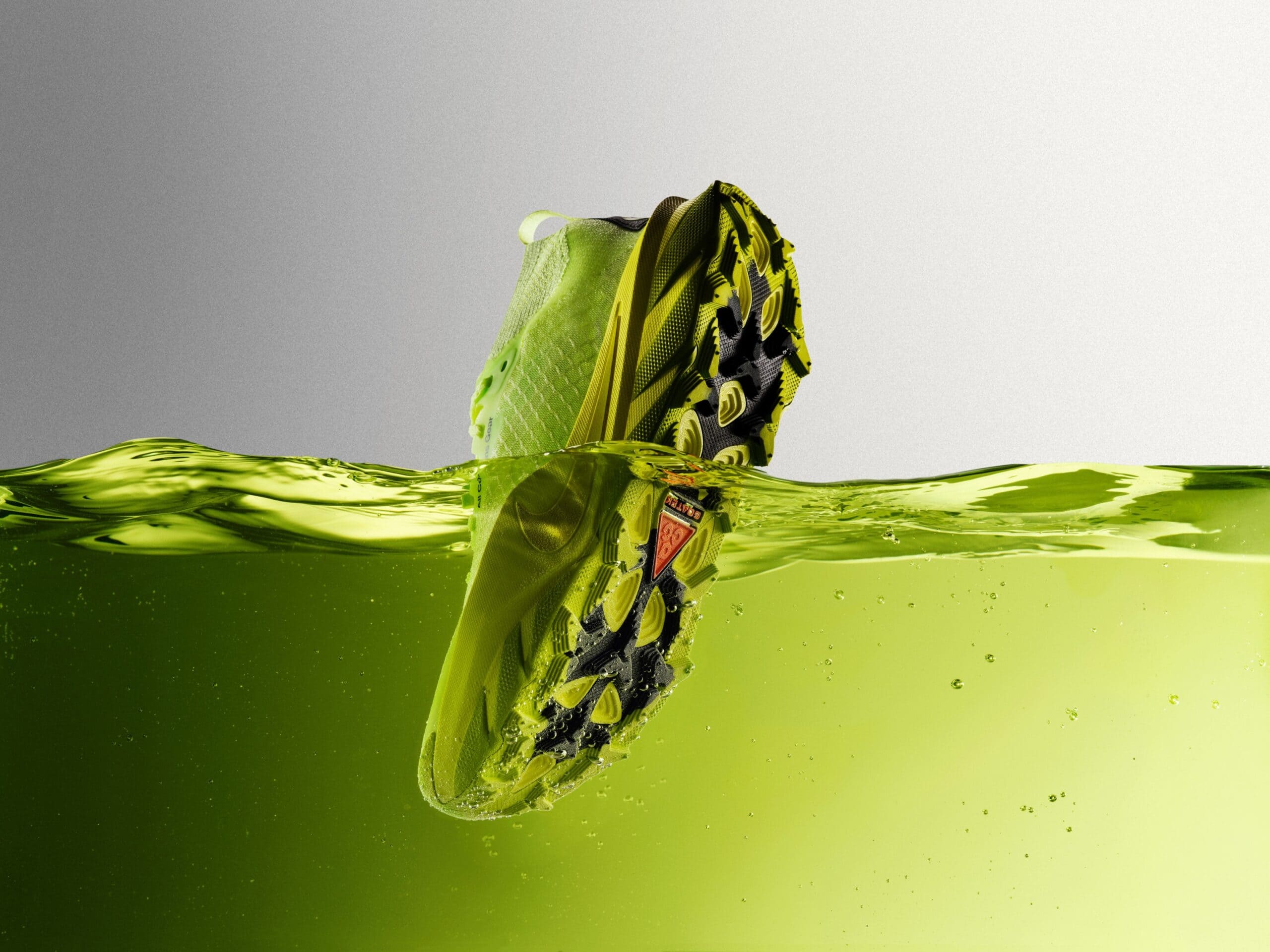
During UTMB week in Chamonix, Nike unveiled the ACG Picklejus, a big-mountain trail runner built around a new proprietary outsole compound called Goatek, with availability set for late 2027 at nike.com and select retailers.
Brands routinely preview shoes at UTMB, but a launch window more than a year away is unusual even by the lengthening standards of the running shoe preview cycle. The gap suggests the announcement is meant to do more than introduce a product. With the Picklejus, Nike is stating an intention to compete in big-mountain ultrarunning using only its own proprietary materials.
Nike’s recent flagship trail shoes have shipped with outsoles from Vibram, the Italian rubber specialist whose Megagrip compound has become a default specification on premium trail footwear across the industry. For a company that built its reputation on proprietary technology, buying traction from a supplier was clearly a reluctant concession for the Swoosh. Goatek is a risky play by Nike, as it aggresively pushes further into the trail space with its ACG sub-brand refashioned late last year into being an ultra-trail powerhouse franchise.
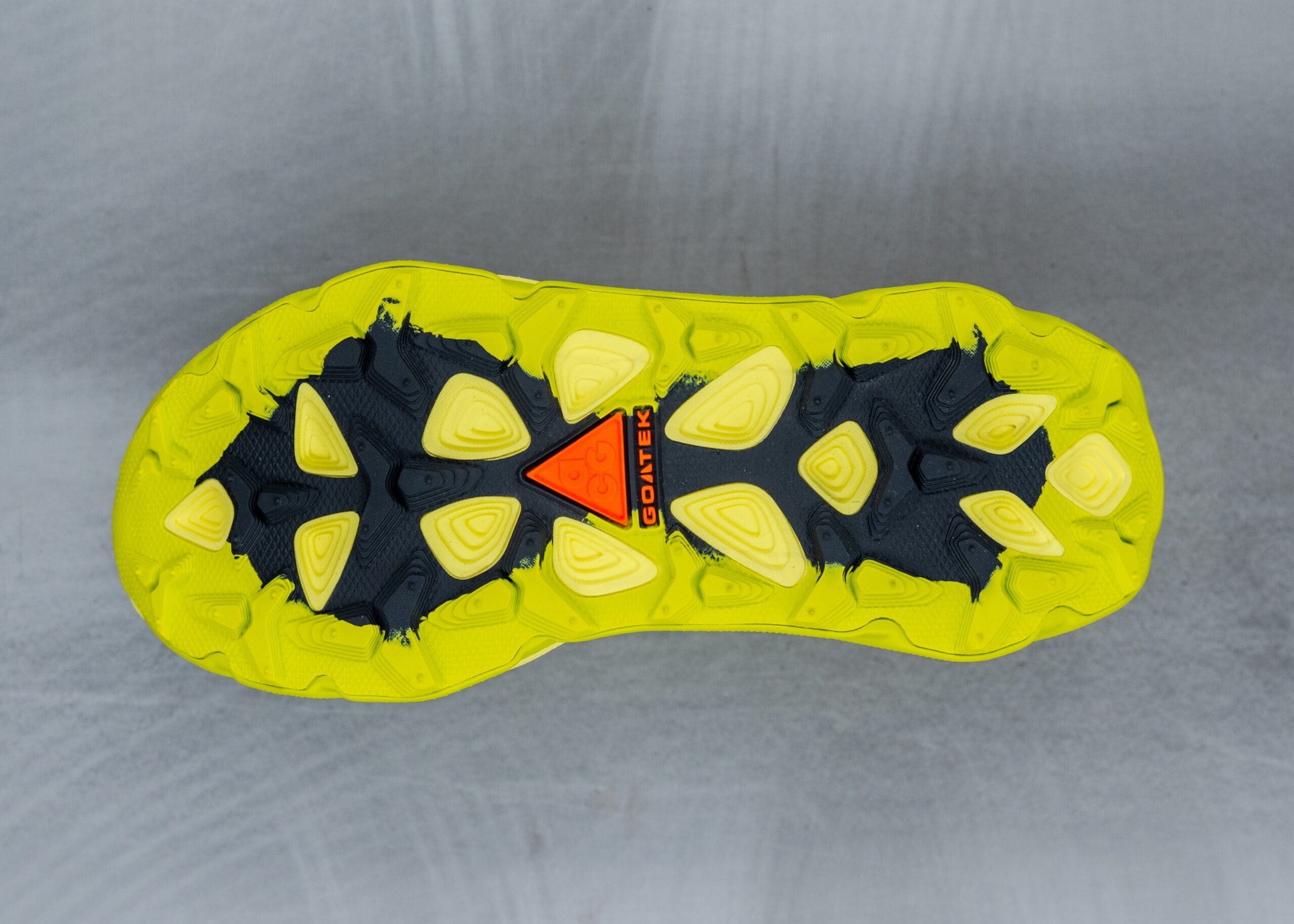
The shoe, by Nike’s numbers
Nike says Goatek delivers a 45% increase in wet traction and 25% greater abrasion resistance compared with its previous all-terrain outsoles, figures the company attributes to more than 18,000 test miles logged across five rounds of wear-testing in mountain terrain. Those numbers come from Nike’s own lab, a caveat worth keeping in mind until independent testing is done.
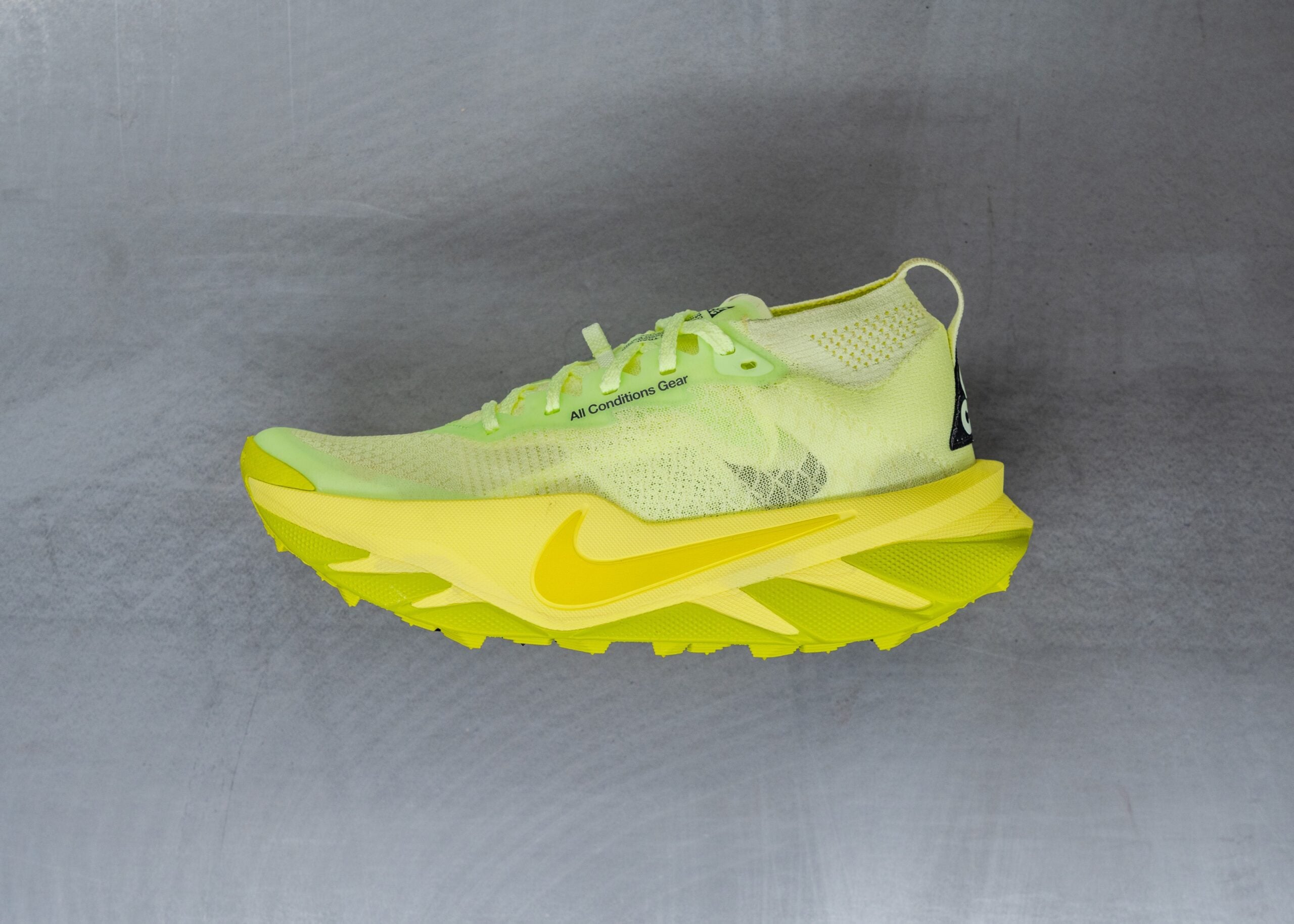
The midsole is a dual-density ZoomX platform, co-molded from supercritical foam with a soft central core for cushioning and a firmer perimeter ring that Nike says provides “a plate-like effect, support, confidence and durability.” The wording is notable, as the current Ultrafly ACG, Nike’s flagship trail super shoe, contains a more conventional carbon plate. At UTMB this year, rival Adidas launched its next gen trail super shoe, which uses a multi-plate system in the midsole in order to allow the shoe to contort with the uneven surfaces encountered on the trails.
The upper of the Picklejus is a trail-tuned Flyknit that uses what Nike calls “hydrophobic” yarns to shed water, knit cables for containment, and a gaiter-inspired collar to keep debris out. Nike says that development included 10 research studies, 20 prototypes, more than 100 test athletes, and three years of work with top trail runners.
“The driving element behind Picklejus was no compromises,” said Emily Farina, senior principal of running footwear at the lab. Shea Aquilano, a member of ACG’s All Conditions Racing Department, called the shoe “one less thing to think about.”
Nike has not disclosed a price, a stack height, a drop, or a weight.
The Vibram question
Nowhere in the release does Nike frame Goatek as a replacement for Vibram, but this announcement suggests the brand is moving away from outsourcing materials, and instead is betting on its own history of innovations to convince trail runners it can create a trustworthy outsole. Vibram’s position in trail outsoles gives a single supplier unusual leverage over the category, and every brand that licenses its rubber for a flagship shoe is conceding that its own compound is not the best available.
That concession was more striking at Nike than elsewhere, given how much of the company’s identity rests on inventing its own solutions. Goatek reverses this strategy, at least with this shoe. Whether the new compound matches Megagrip’s performance is a separate question, and one no one outside Nike can answer until independent testers run in the shoe. That will not happen for more than a year.
Why ACG, and why now
Nike’s most ambitious mountain shoe arrives under ACG, the outdoor label the company has spent recent seasons rebuilding into a performance brand, complete with its own athlete program in the All Conditions Racing Department.
That choice suggests Nike sees big-mountain ultrarunning as a market distinct from the trail category it already serves, one that rewards alpine credibility over road-running pedigree. UTMB has become the most important week on the trail calendar, and announcing there, during race week, in front of the exact audience the shoe is built for, is an unsurprising choice.
The 15-month launch runway serves a similar purpose. By announcing now, Nike enters the conversation about the future of trail footwear before rivals’ 2027 lines are set, and the Picklejus will shape that conversation for more than a year before anyone can evaluate it.
Nike’s claims will eventually be testable on mountain trails rather than in the company’s lab, and we will test them when the shoe ships. Until then, the most revealing detail of the ACG Picklejus is the date on the press release.
RunClub — Free
Join 300,000+ runners in RunClub
Free training plans for every distance, a daily running game, exclusive coaching content, and a real community of runners. Create your free account in 20 seconds — no card.
Already a member? Log in →










Start the conversation