


The question arrived the moment Nikki Hiltz crossed the line at the Prefontaine Classic mile on July 4, a stride ahead of Faith Kipyegon. Kipyegon is the Olympic champion, the world record holder, and by any reasonable measure the greatest middle-distance runner alive. She had not lost a race over 1500m or the mile in more than five years. Hiltz beat her in 4:17.49, the fastest mile ever run on American soil, and three weeks later won a fourth straight national 1,500m title in New York, a record eighth in a row once indoor championships are counted. So it is fair to ask where this run leaves Hiltz in the long history of American middle-distance running. The honest answer is that it has moved Hiltz close to the top, without yet settling the argument, and that the case may finally be closed or denied in Los Angeles in 2028.
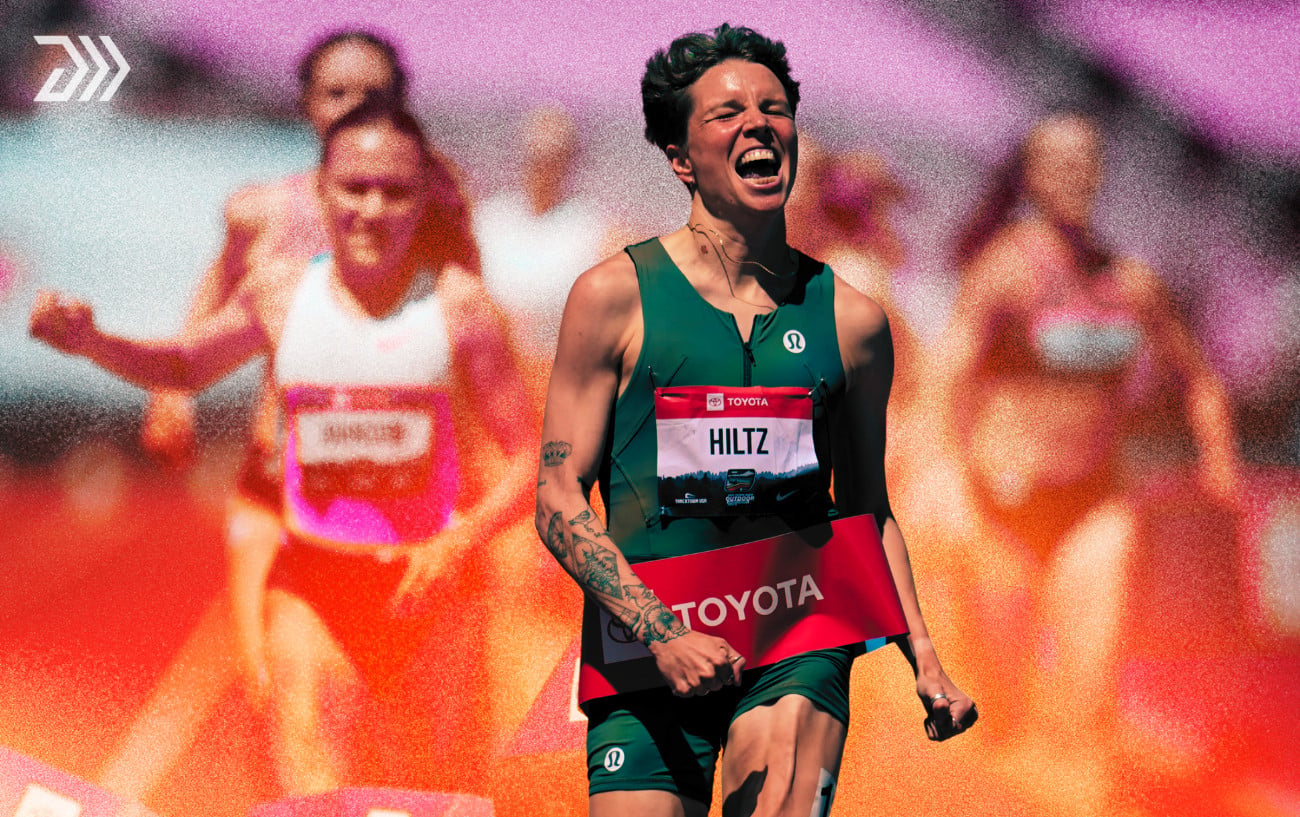
Start with the evidence in Hiltz’s favor, because it is considerable. The eight consecutive national titles are a record for the event. The American mile record, 4:16.35, has belonged to Hiltz since 2023. There are World Indoor 1500m medals from 2024 and 2026, silver and then bronze. And there is the Kipyegon result, which matters more than any of the rest, because no American miler before Hiltz had beaten the standing global GOAT at her own distance while she was in her prime. Jenny Simpson never did it. Mary Decker Slaney, in her era, never faced anything like it. That single race is the strongest exhibit in the entire case, and it is why the GOAT question is being asked at all rather than dismissed.
Then comes the evidence against, which is just as real. Hiltz does not own the American 1500m record; Shelby Houlihan does, at 3:54.99, a mark that still stands after Houlihan returned from a four-year doping ban in 2025. Hiltz’s best, 3:55.33, is the second-fastest ever run by an American. More significant is the gap on championship hardware. Hiltz has no Olympic or outdoor World Championship medal, finishing seventh in the 1500m final at the Paris Games.
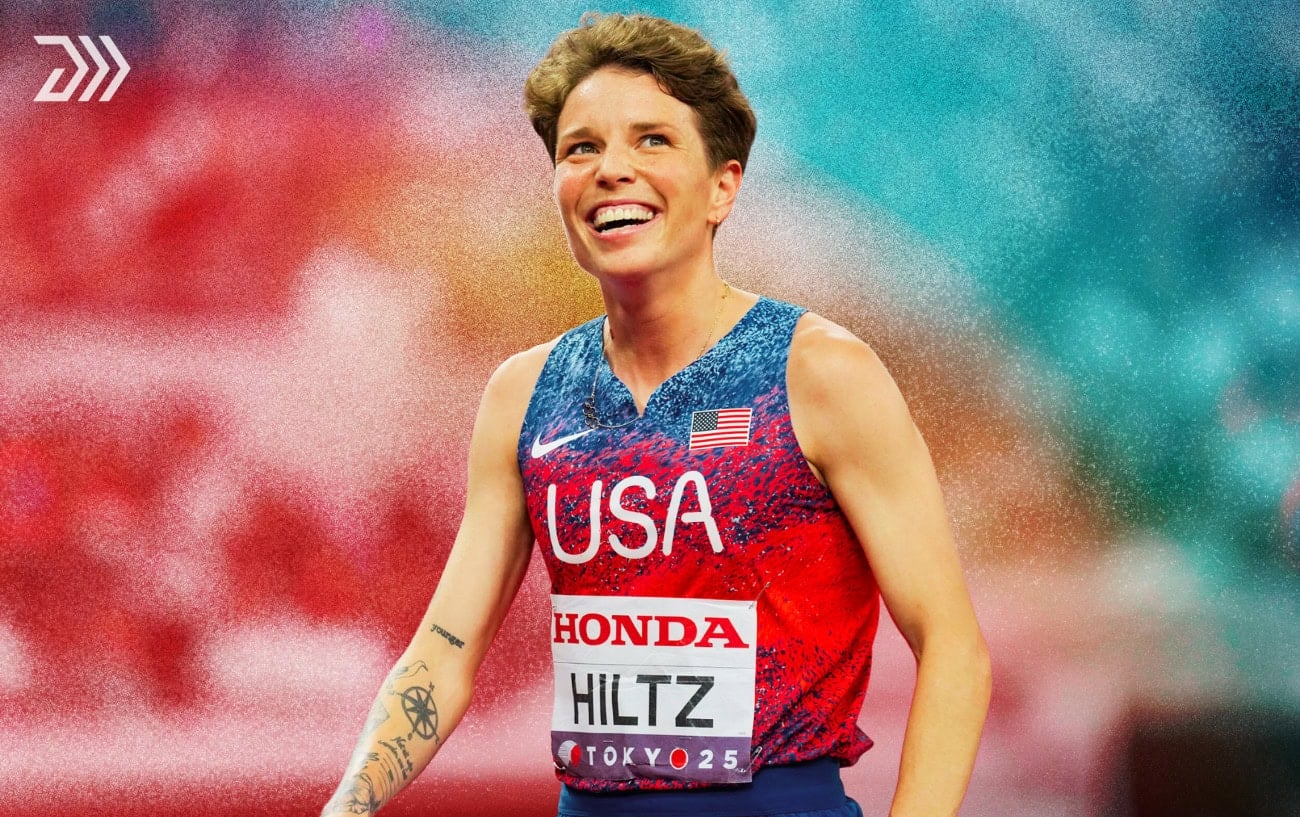
The two runners usually named as the greatest American women over this distance are ahead precisely because of what they won on the biggest stages. Simpson took the world 1500m title in 2011, the first American woman to do it, added a bronze at the 2016 Olympics, the first American woman to medal in the event there, and collected two more World Championship silvers along the way. Slaney won both the 1500m and the 3000m at the 1983 World Championships and held world records at the mile, 5000m and 10,000m. Against that, a record run of national titles is dominance, but it is dominance at home.
The scope of the question matters too, and the popular version of it tends to hide that. Stretch “middle distance” to include the 800m and Athing Mu enters immediately, an Olympic champion at 19 who ended a 53-year American drought in the event. Include the men and both Matthew Centrowitz, the 2016 Olympic 1500m champion, and Cole Hocker, who won gold in Paris in 2024, own the one thing Hiltz does not. Narrow the frame to the American women’s mile, which is the fairest ground for the claim, and Hiltz is genuinely in the conversation with Simpson and Slaney. It is only there, and even there the ledger is not yet even.
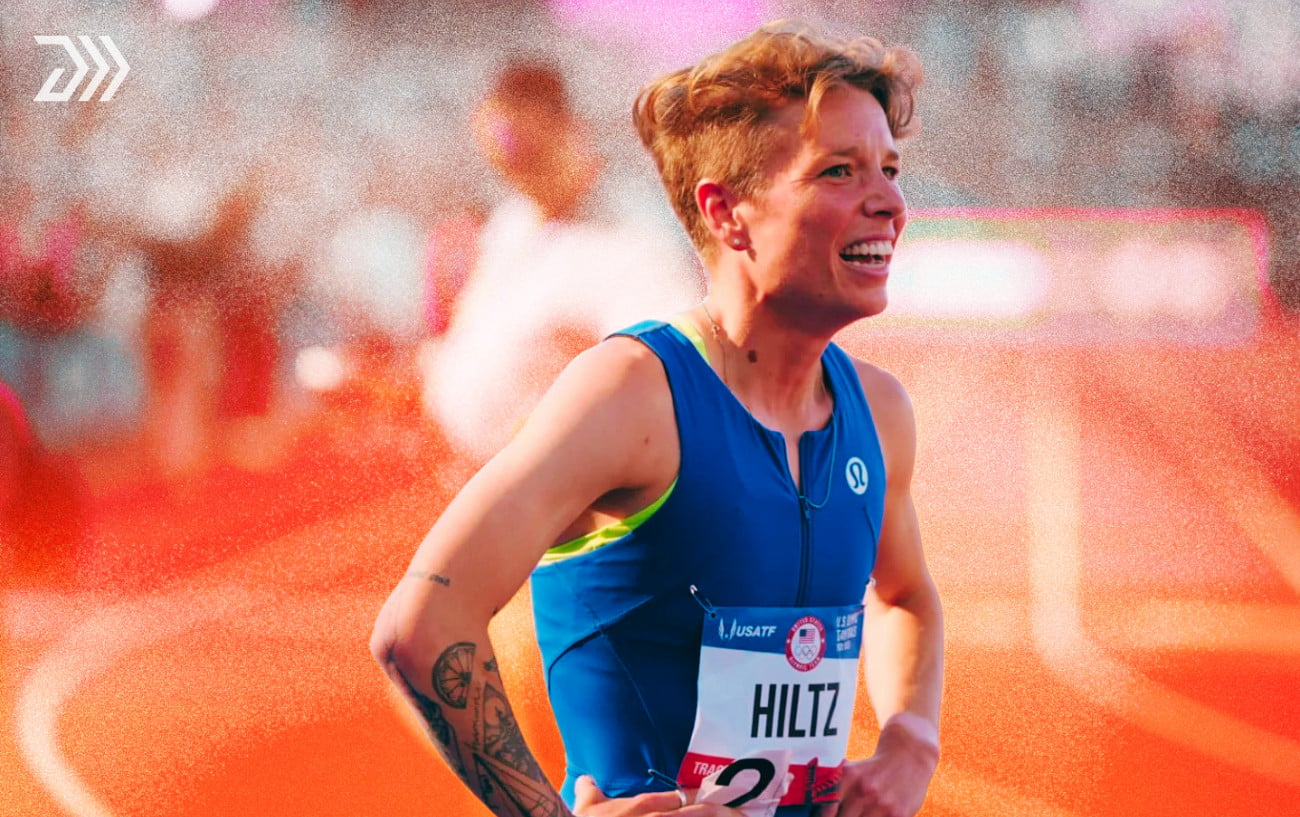
That is what makes Los Angeles the deciding exhibit. The 2028 Olympic track program runs from July 15 to 24 at the Memorial Coliseum, a home Games, and Hiltz will be 33, old for the event but not impossibly so. The missing line on the résumé is an outdoor global medal, and there is no better place to earn one than in front of an American crowd. A podium in Los Angeles, and a gold above all, would move Hiltz out of the category of the most electric American miler of the era and into the company of Simpson and Slaney on merit rather than on promise. A nearer test comes first, at the inaugural World Athletics Ultimate Championship in Budapest in September, where Kipyegon will almost certainly be waiting.
None of this is a verdict, and it is not meant to be one. The case is still being built, exhibit by exhibit, and Hiltz has assembled more of it in a single month than most runners manage in a career. What remains is the piece that has always separated the very good from the historically great in this sport, a medal won when it counts most. Hiltz has three summers to find it, and the closest of them is at home.
RunClub
Get more running stories — join RunClub
Daily running news, a community of 300,000+ runners, free training plans for every distance, and a daily running game. Free to join — no card.
Already a member? Log in →





Start the conversation