


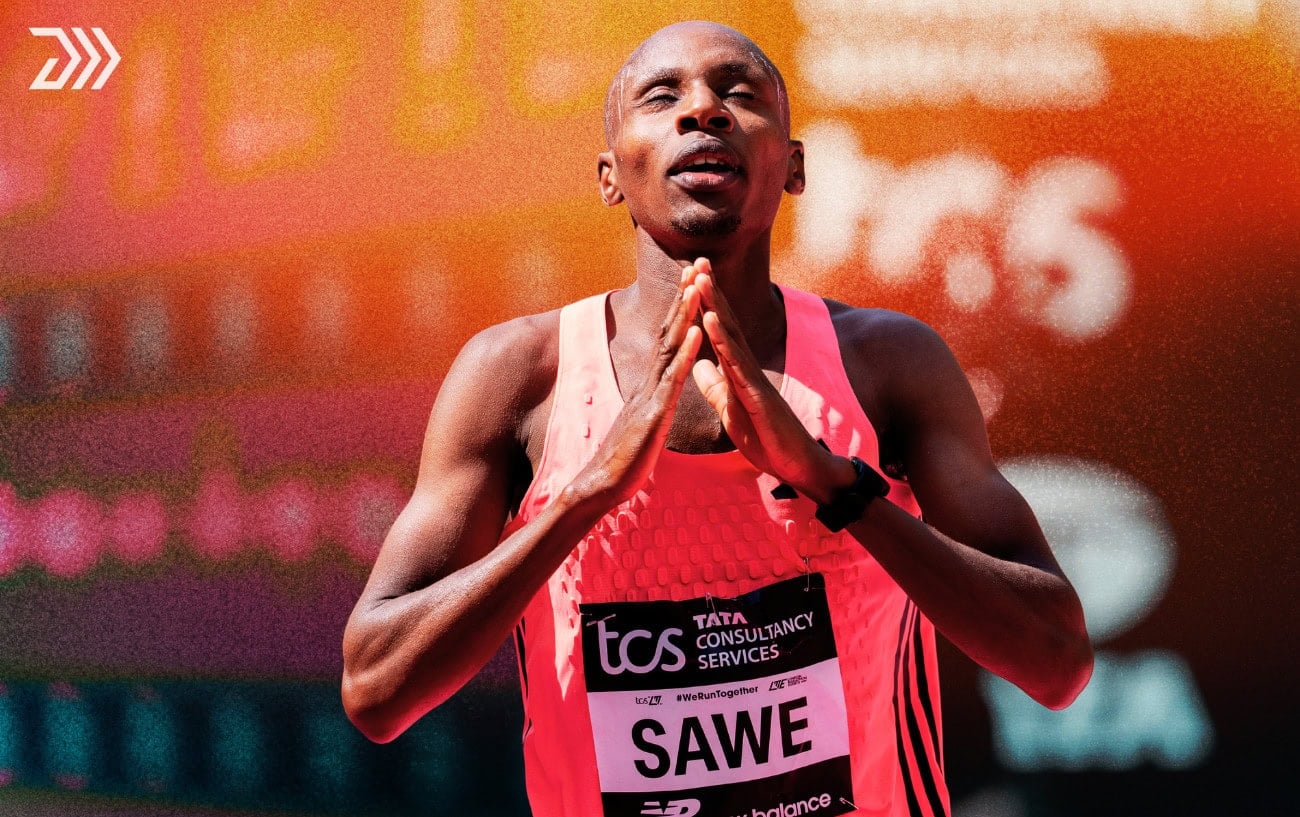
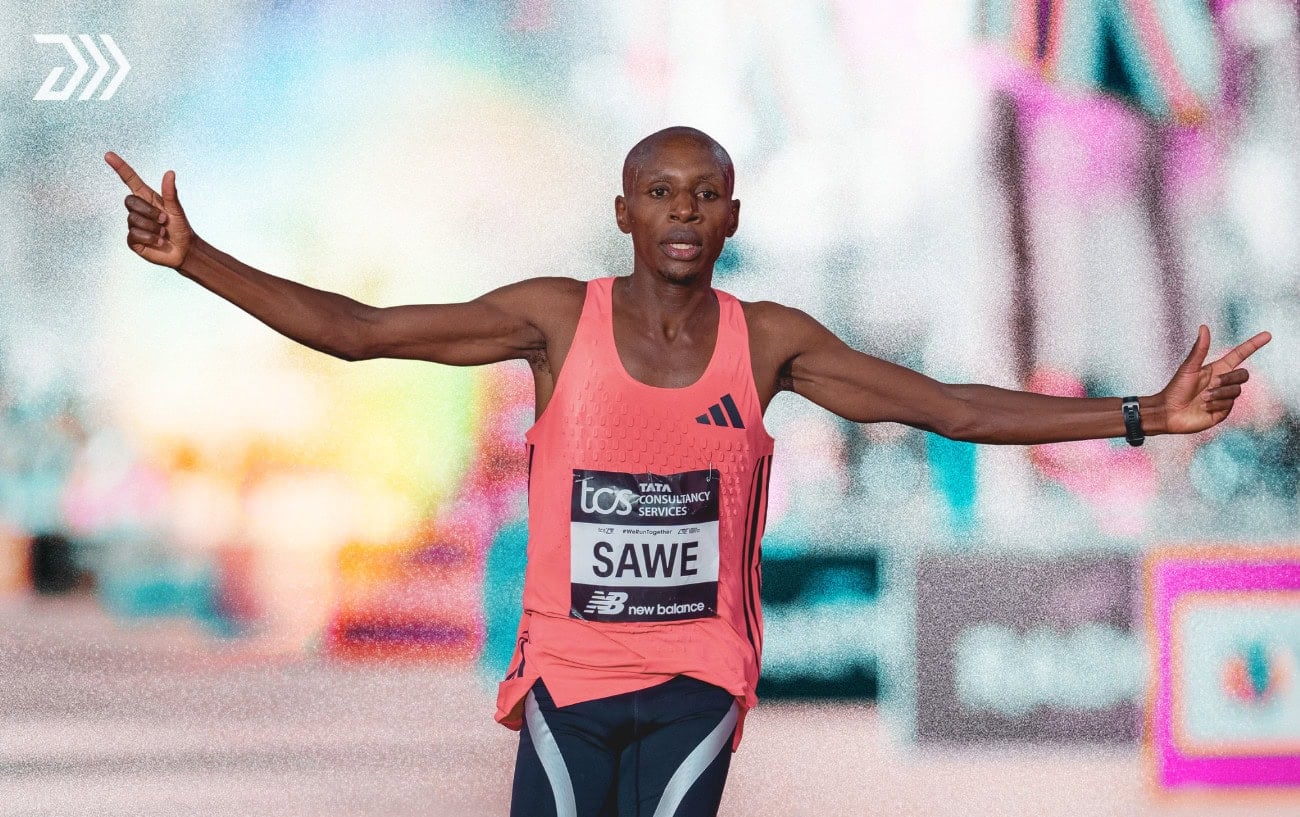
The marathon world record fell in April and the mile world record fell Saturday, and Nike made neither shoe. Sabastian Sawe ran 1:59:30 at the London Marathon in the adidas Adizero Adios Pro Evo 3, the first marathon ever run under two hours in a record-eligible race.
Josh Kerr ran 3:42.66 at the London Diamond League in spikes Brooks built for the attempt, ending Hicham El Guerrouj’s 27-year hold on the mile. Both marks await World Athletics’ standard ratification, and both arrived while Nike, the company that created the super shoe category, trades at a fraction of its former worth: roughly $65 billion last week, down from a peak near $281 billion in November 2021.
The two declines are unrelated in cause, and that is the reason to read them together. A world record is the most public evidence a shoe company can offer, and this year the sport’s two most watched marks belong to adidas and Brooks.
The Scoreboard Changed Hands
Kerr’s record was a Brooks production from the start. The brand and the athlete announced Project 222 in March, named the target, the venue, and the pacers in advance, built a custom spike and speed suit, and filmed the altitude buildup in Albuquerque for a YouTube series. Marathon Handbook examined where the engineered record attempt came from, and why this one was designed to be ratified, before the race.
According to World Athletics’ meet report, Kerr passed 1,500m in 3:27.62, faster than his own British record for the distance, and held on alone in front of 60,000 at London Stadium. “Out there, I am just the body, but there is an incredible amount of work behind the scenes,” Kerr said afterward. Within hours, Bloomberg was covering the record as business news for Brooks.
Adidas had done the same thing in April. Sawe and Yomif Kejelcha, who ran 1:59:41 in his marathon debut, both broke two hours in the Evo 3, a 97-gram, $500 racing shoe, and Tigst Assefa lowered the women-only world record to 2:15:41 in the same model. Retail pairs have since been resold for more than $5,000.

What Nike Still Holds
Nike has not vanished from the record book. Faith Kipyegon holds the women’s 1,500m world record of 3:48.68, ratified by World Athletics, and the mile record of 4:07.64. Her Breaking4 exhibition in Paris in June 2025 produced a 4:06.42 that was ineligible for ratification but faster than any woman has run the distance.
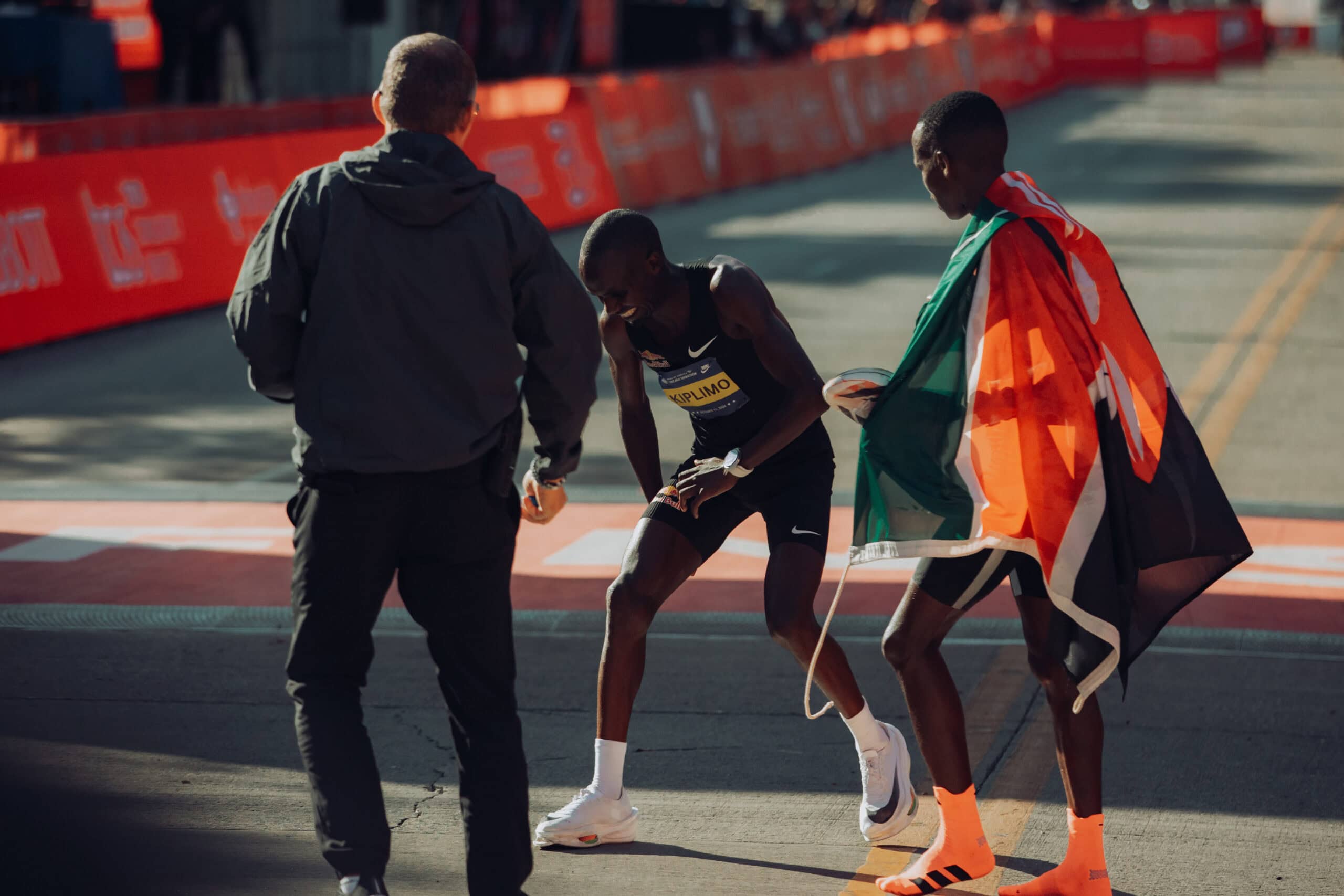
Until April, the men’s marathon record was also Nike’s: the late Kelvin Kiptum ran 2:00:35 at the 2023 Chicago Marathon in a prototype Alphafly 3, and when the shoe reached retail at $285 it sold out within minutes, according to Sourcing Journal.
Nike built the template for all of it with Breaking2 in 2017, putting Eliud Kipchoge on the Monza Formula One circuit in the prototype Vaporfly Elite for a 2:00:25 that counted for nothing officially and sold carbon-plated shoes for years. What the company lost in 2026 is the two records with the widest reach beyond the sport, taken by rivals using its own methods.

So does the record drought show up anywhere in Nike’s numbers?
Where the $216 Billion Went
Nothing in Nike’s financial disclosures blames a results sheet. The company’s fiscal fourth quarter, reported June 30, beat Wall Street’s revenue estimates at $10.97 billion, but CNBC noted the beat leaned on an expected $986 million refund of tariff duties.
Sales in Greater China fell 12 percent to $1.30 billion as Anta and Li Ning took market share, and Nike told investors to expect fiscal 2027 revenue to decline again, in the low to mid single digits. The stock has lost 42 percent in a year. Elliott Hill, chief executive since 2024, is rebuilding the wholesale relationships his predecessor abandoned and reorganizing the company around sport.
The case for taking the record drought seriously anyway is one Nike wrote itself. Breaking2 fell 26 seconds short and still carried running into mainstream news, and the Vaporfly that emerged from it defined the category every rival now builds against. A world record reaches buyers who will never read a shoe review, which is why adidas priced a 97-gram shoe at $500 and Brooks spent months engineering a single race.
Investors do not price the mile record into Nike’s stock, and they are right not to. What runners conclude from a season in which the sport’s two defining moments belonged to other brands is a question Nike’s earnings calls do not cover. Hill gave investors his own assessment of the turnaround when Nike reported earnings on June 30: “Overall, the results aren’t there yet.”
RunClub
Get more running stories — join RunClub
Daily running news, a community of 300,000+ runners, free training plans for every distance, and a daily running game. Free to join — no card.
Already a member? Log in →





Start the conversation