


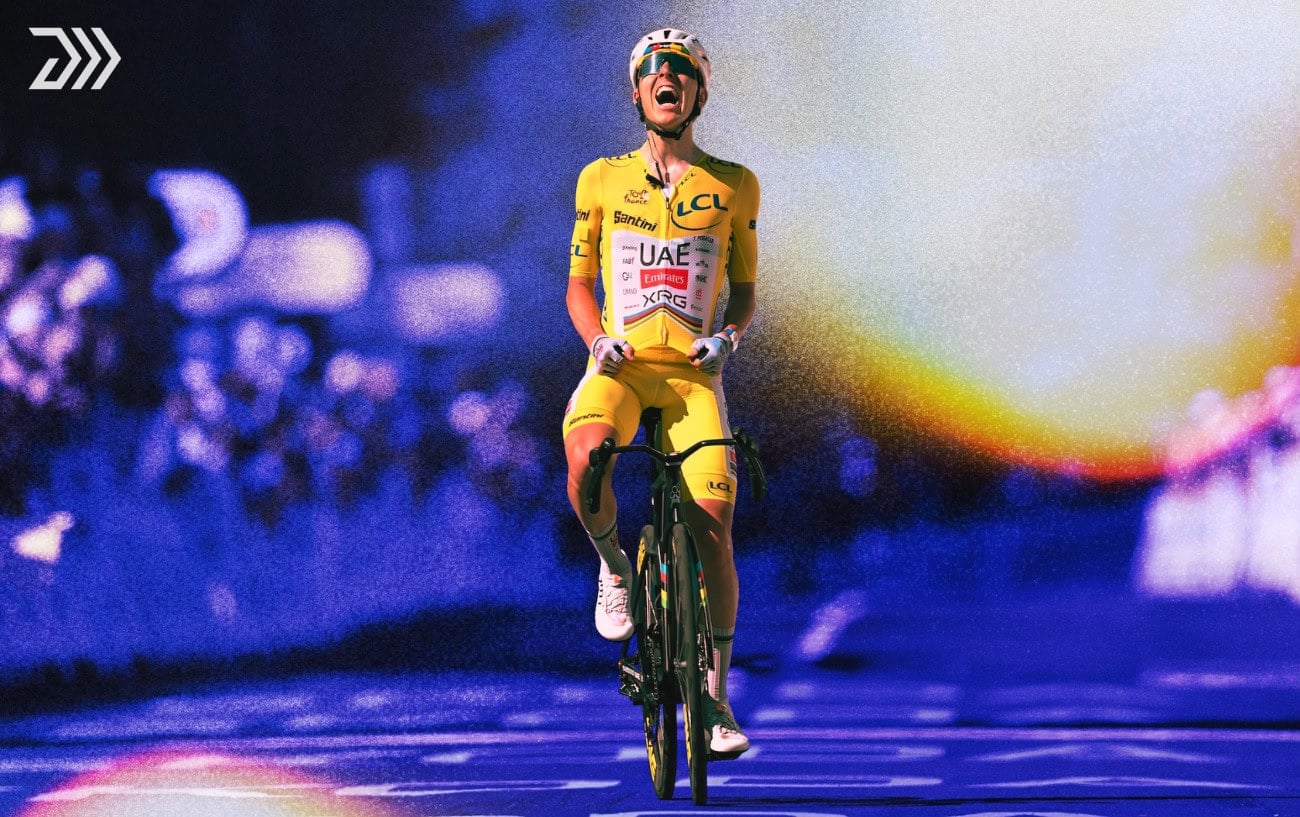
Faith Kipyegon’s five years without a defeat at 1,500m or the mile ended on July 4 at Hayward Field, where Nikki Hiltz outkicked her over the final straight of the Prefontaine Classic mile. The following week, Tadej Pogačar attacked 43 kilometers from the finish of stage 6 of the Tour de France, crossed the Col du Tourmalet alone, and put 2:38 into Jonas Vingegaard by the line at Gavarnie-Gèdre. He now leads the race by 3:36 and is riding toward a fifth title. Watching the two events land in the same fortnight raises a question that follows running around every July: who is the Tadej Pogačar of running?
The question deserves a more careful answer than it usually gets, because Pogačar’s dominance has a specific shape. In 2025 he won 20 of his 50 race days, took his fourth Tour de France, defended his world road title, and became the first rider to finish on the podium of all five Monuments in a single season. In March he won Milan-San Remo for the first time, and his Monument count now stands at 13, with Paris-Roubaix the only one missing. Reduce that record to criteria and there are five: he wins the biggest prizes repeatedly, he wins nearly everything else as well, he wins by demolition rather than by management, the gap between him and the next-best rider is comical, and he is doing all of it right now. Running has produced athletes who satisfy each of these tests. It has never produced one who satisfies all five at once, and the reason turns out to be the most interesting part of the answer.
The First Test Is Winning the Biggest Prizes, Repeatedly
Eliud Kipchoge Occupies a Different Slot
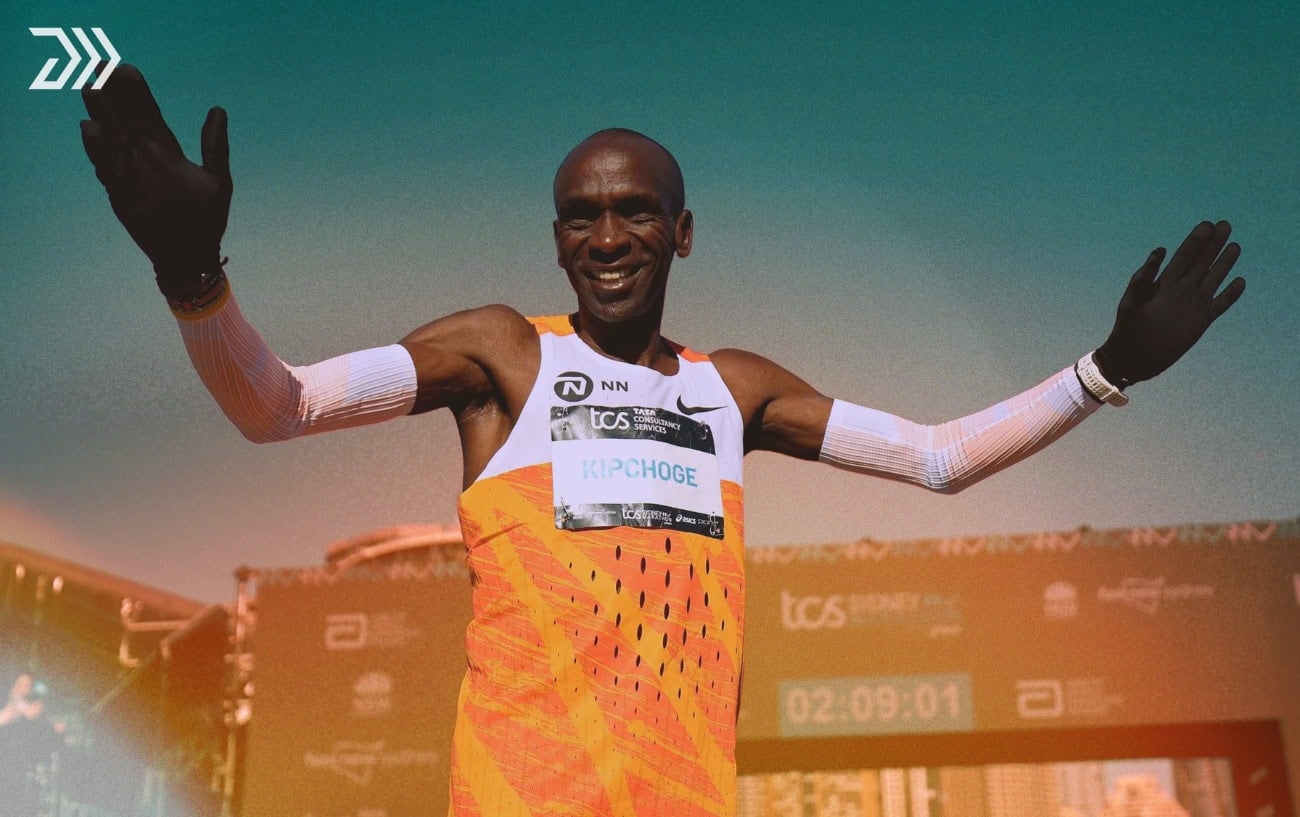
On the first test, no one in the sport’s history matches Eliud Kipchoge: 11 World Marathon Majors titles, 10 consecutive marathon wins between 2014 and 2019, Olympic gold in Rio and again in Tokyo, and the first sub-two-hour marathon, the 1:59:40 he ran in Vienna in 2019 under exhibition conditions with rotating pacers.
But Kipchoge belongs to a different slot in the analogy. When cycling writers search for Pogačar’s ceiling, they reach past him to Eddy Merckx, and Kipchoge is running’s Merckx: the finished, era-defining standard against which everyone else is measured. The Pogačar question asks who is doing this to his contemporaries today. Kipchoge is 41, his last world record came in Berlin in 2022, and his final seasons at the front included a sixth place in Boston and a 10th in Tokyo. His dominance was also serial rather than simultaneous: two marathons a year, in a single discipline, for a decade.
The Second Test Is Winning Everything Else Too
Sifan Hassan Has the Range Without the Ruthlessness
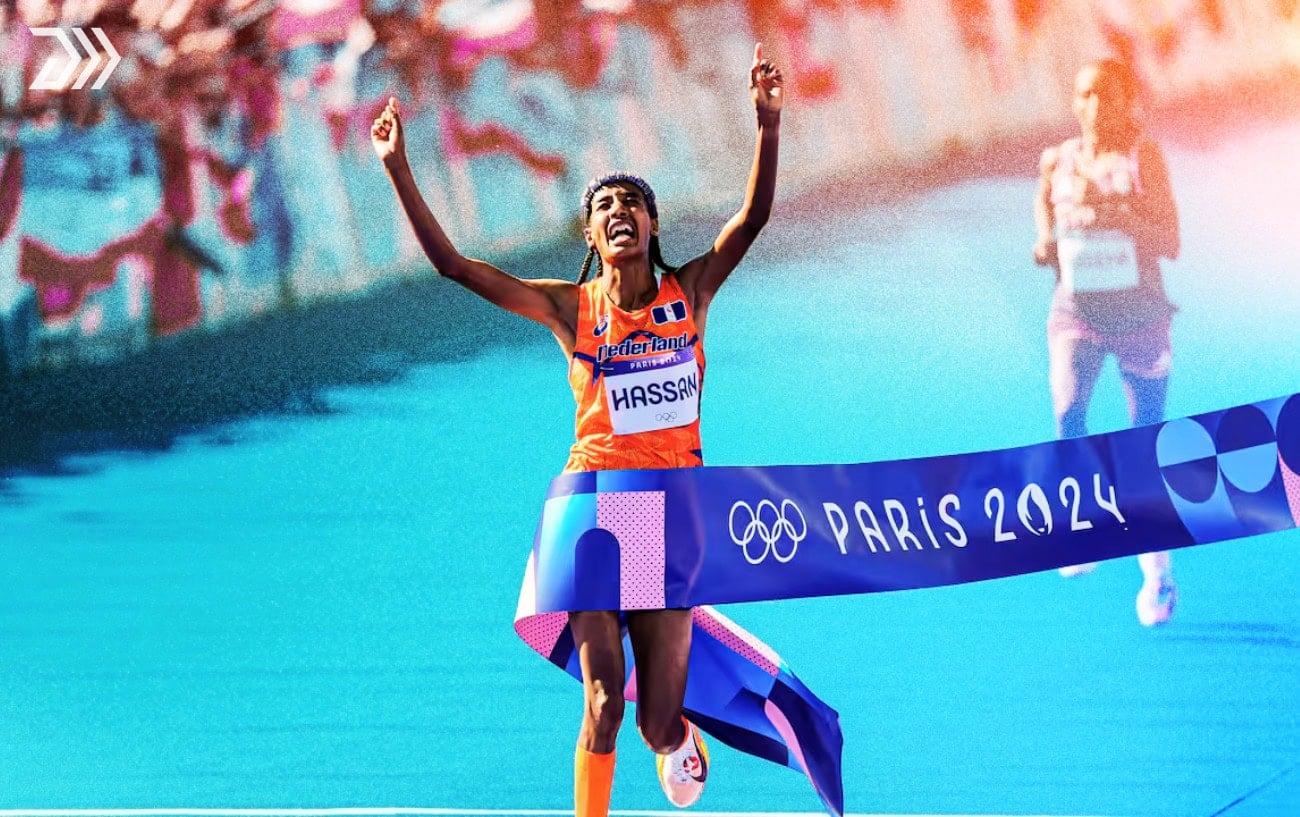
If versatility is the measure, Sifan Hassan is the answer, and it is barely close. In Tokyo she became the only athlete in Olympic history to medal in a middle-distance event and both long-distance events at a single Games, winning the 5,000m and 10,000m and taking bronze in the 1,500m, a campaign that included falling in a heat and winning it anyway. In Paris she took bronze at 5,000m and 10,000m and then won the Olympic marathon in 2:22:55, 37 hours after the 10,000m final. She has run 1:56.81 for 800m and 2:13:44 for the marathon. That is the profile of a rider who wins Flanders in the spring and the Tour in the summer.
What she lacks is the win rate. Hassan loses regularly, and her career is organized around audacity rather than control: the outrageous double attempted, the distance never raced before. She has Pogačar’s range attached to a mortal’s winning percentage.
Emil Zátopek Won a Marathon He Had Never Run
History offers a stronger candidate. At the 1952 Helsinki Olympics, Emil Zátopek won the 5,000m, the 10,000m, and the marathon, with Olympic records in all three. The marathon was his first at the distance, he won it by roughly two and a half minutes, and he reportedly spent part of the race asking the favorite, Jim Peters, whether the pace was too fast. Entering the sport’s hardest event cold and winning it is the nearest running has come to Pogačar’s habit of winning Monuments at the first attempt.
The rest of the record holds up: unbeaten in his first 38 races at 10,000m across six years, 18 ratified world records from 5,000m upward, all of it done from the front. The caveat is the era. Postwar fields were shallow, and every Zátopek comparison carries that discount.
Saïd Aouita Spent 1986 Winning at Every Distance He Tried
The deepest cut in this conversation belongs to Saïd Aouita. After losing to Steve Cram by four hundredths of a second in 1985, the Moroccan won 44 consecutive races. In 1986 he went unbeaten in 17 races across seven distances between 1,500m and 10,000m, which stands as the most Pogačar-shaped season in track history, the equivalent of winning sprints, time trials, and mountain stages in the same year. He set world records at 1,500m, 2,000m, 3,000m, and twice at 5,000m, where he became the first man under 13:00.
He retired with two global golds, in part because championship timetables never permitted the doubles he ran routinely on the circuit. His case contains the first hint of the structural answer this piece is working toward: the sport’s own calendar refused to let him prove it.
Courtney Dauwalter Fit the Tour and the Monuments Into Ten Weeks
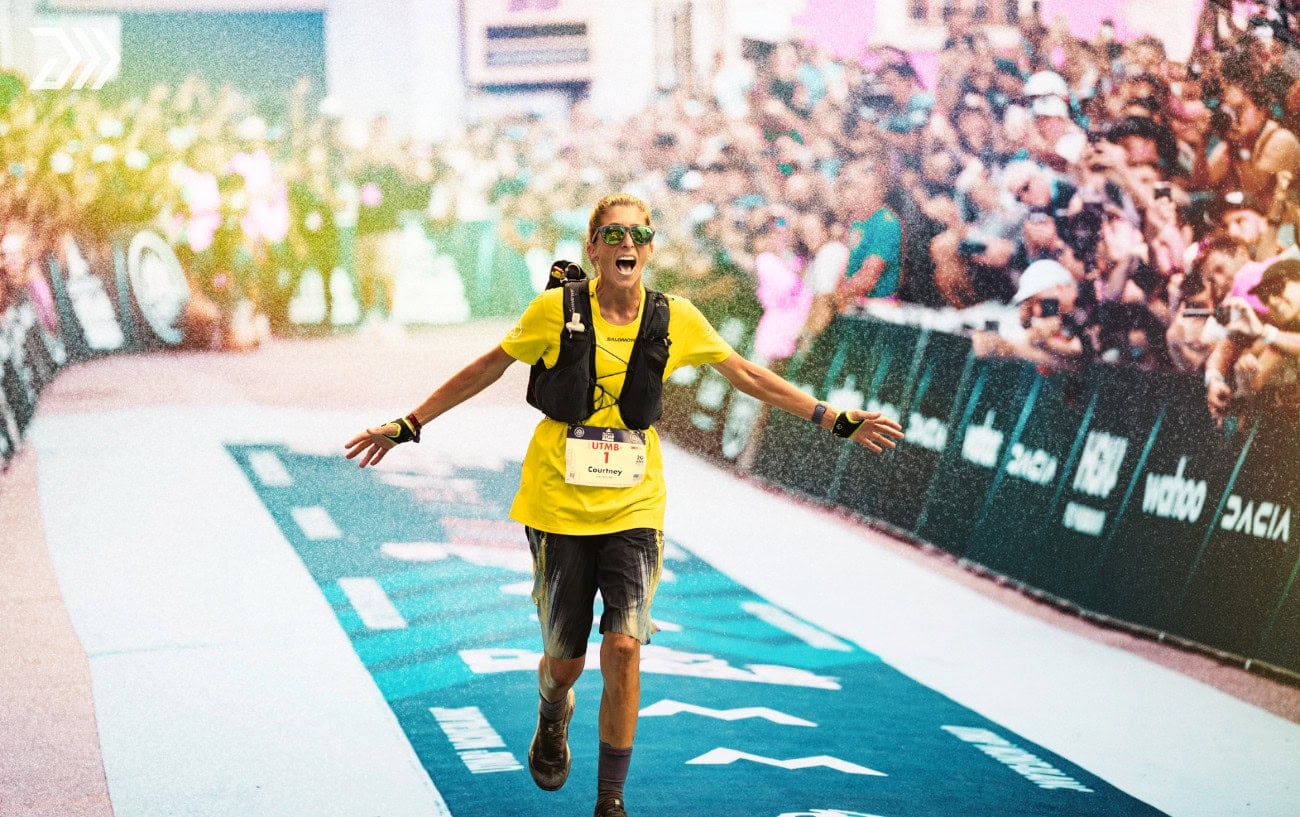
Trail running has a claim here too. In the summer of 2023, Courtney Dauwalter won Western States, Hardrock, and UTMB inside roughly 10 weeks, with course records at the first two, a treble no one had previously attempted in a single season. It remains the closest thing running has produced to a Tour and Monuments campaign.
She has not finished collecting. Last weekend, at 41, she won her fourth Hardrock 100 in 26:03:10, breaking her own clockwise course record by more than eight minutes, even as a younger generation has begun taking her other records.
The Third Test Is Winning by Demolition
Sabastian Sawe Dissolves Fields From the Front
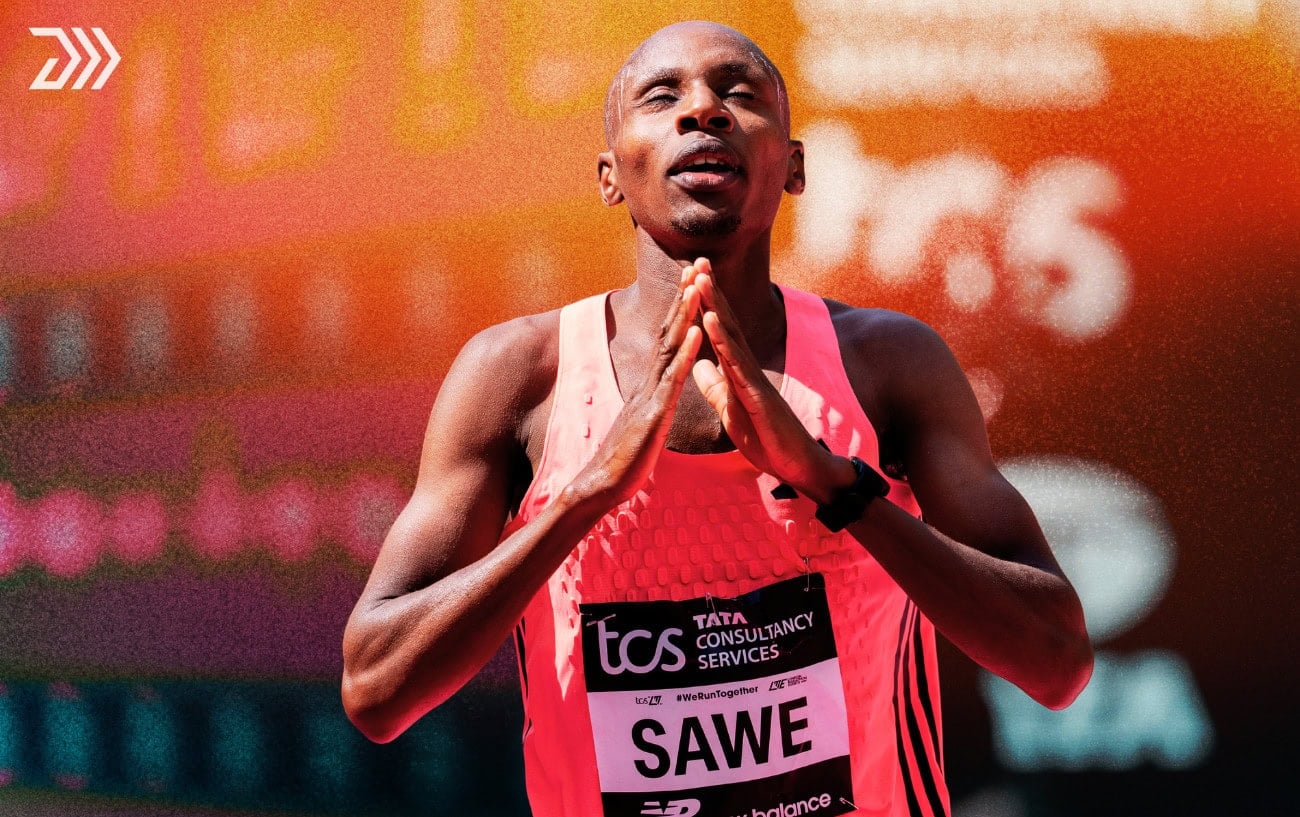
The right-now candidate is Sabastian Sawe, who has run four marathons and won all four, each in under 2:02:30. In London on April 26 he ran 1:59:30, the first sub-two-hour marathon in a legal race, 65 seconds under Kelvin Kiptum’s world record and 10 seconds faster than Kipchoge’s paced Vienna exhibition. He reached halfway in 60:29 and came home in 59:01, breaking the sport’s most famous barrier off a negative split. Yomif Kejelcha also finished under two hours, running 1:59:41 in his debut, and Jacob Kiplimo took third in 2:00:28, the third-fastest marathon ever run. Kiplimo, in this analogy, is the Vingegaard.
The objections concern sample size. Four marathons is a short career, and Sawe has never run a championship race. But the style is exact. He does not outkick fields; he pulls away from them in the second half, which is the road equivalent of going solo 43 kilometers from the line.
The Fourth Test Is the Distance Back to Second Place
Edwin Moses Did Not Lose for Nine Years, Nine Months, and Nine Days
For the pure gap between first and second, the answer has been settled for decades. Edwin Moses won 122 consecutive races in the 400m hurdles between August 1977 and June 1987. The week after the 1977 defeat that preceded the streak, he beat the man responsible, Harald Schmid, by 15 meters. His world record of 47.02 stood for nine years, and his 13-stride pattern between hurdles was a technical monopoly no rival could copy.
Moses did all of it in one event, and the ultra distances supply the same lesson at larger scale. Ann Trason won Western States 14 times in 14 finishes. Yiannis Kouros set 24-hour and 48-hour records that nobody approached for decades. These are deeper streaks than anything Pogačar owns, held in narrower lanes, and breadth is exactly what they lack.
Running Splits Its Crown by Design
By now the pattern is visible. Every test has a convincing winner, and every winner fails one of the other tests. The explanation is structural. Cycling concentrates its prestige into one Tour that outranks every other race, five Monuments, and a single world title, and it is contested by a physiology that travels: the engine that wins on the cobbles in April is the same engine that climbs the Tourmalet in July. Running disperses its prestige across eight marathon majors with no supreme one, a world championships that arrives every other year, and separate ecosystems on the track, the roads, the mud, and the mountains.
Physiology polices those borders. The 1,500m and the marathon are different sports, run at different paces by differently built athletes, and a miler cannot enter London in April the way Pogačar enters Roubaix. So dominance in running fragments by address. Sawe owns the roads at this moment. Beatrice Chebet owned the track of 2024 and 2025, sweeping the Olympic and world 5,000m and 10,000m doubles and becoming the first woman under 29:00 for 10,000m and under 14:00 for 5,000m, and she is sitting out 2026 expecting her first child. Nobody can annex the neighboring territory fast enough to hold both at once. The absence of a Pogačar of running is a fact about running, and it makes what Pogačar does in cycling look stranger, and better, than his sport sometimes admits.
The Closest the Sport Gets Is Faith Kipyegon
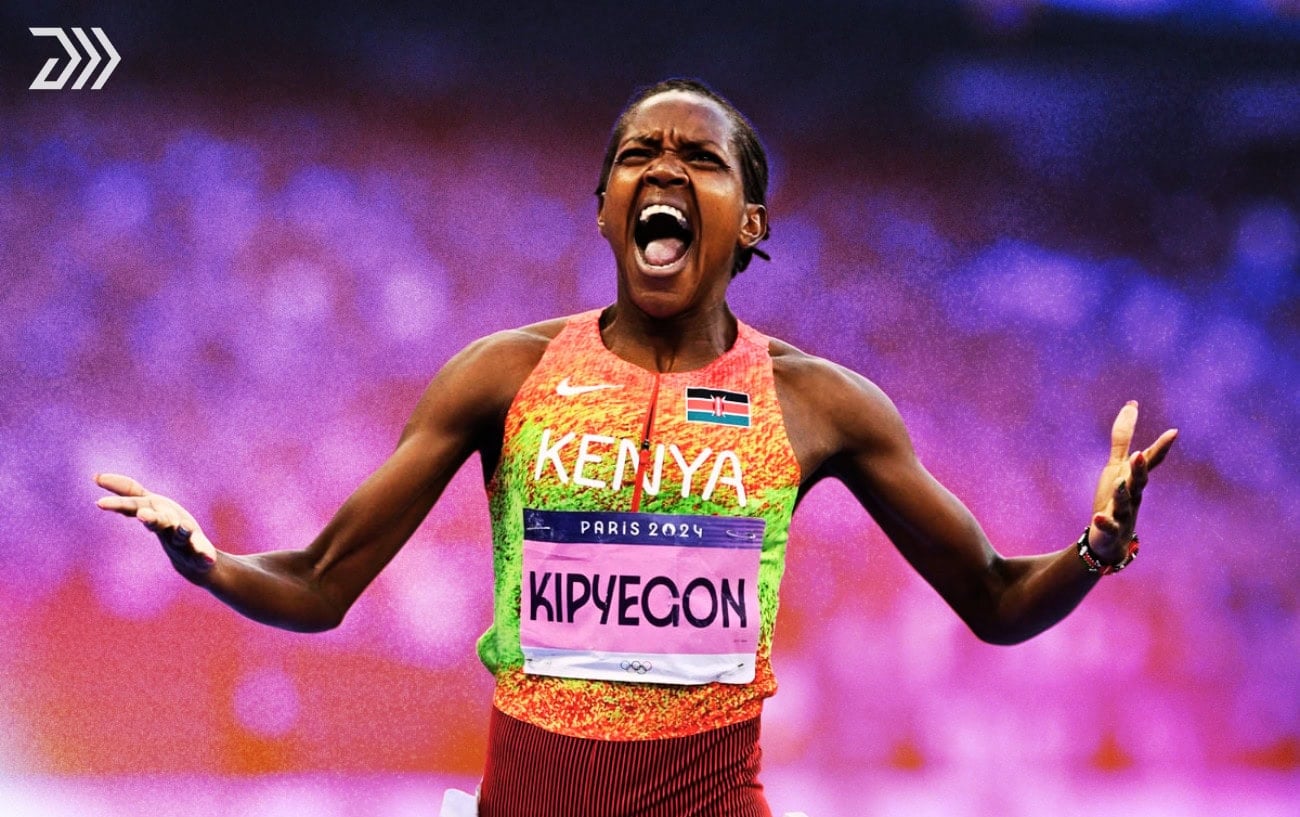
One runner still passes more of the five tests than anyone else. Faith Kipyegon has won three consecutive Olympic 1,500m titles, the only athlete ever to do so, and a fourth world title in Tokyo last September, where her 3:52.15 won by 2.77 seconds, the largest margin of her seven global golds, and made her the first woman with four world titles in any distance event. She broke her own 1,500m world record in three consecutive summers, most recently running 3:48.68 at the 2025 Prefontaine Classic, the first sub-3:49 in history. She staged her own moonshot, the Breaking4 exhibition mile in Paris. She holds a world 5,000m title for range. Until this month she had not lost a 1,500m or mile race in more than five years.
The July 4 defeat completes the case rather than damaging it, because a streak’s scale only becomes measurable once it ends. Pogačar keeps arriving at Roubaix and leaving without the cobblestone, and no one concludes from this that he is ordinary. Kipyegon losing a mile at 32, in a light season, to an American who ran the fastest mile ever recorded on U.S. soil, mostly clarifies what the previous five years were. If the question insists on a single name, it is hers.
The Answer Running Lost
The honest footnote is that running may have had its Pogačar and lost him. Kelvin Kiptum ran three marathons and won all three, each among the fastest ever run at the time, finishing with the world record of 2:00:35 in Chicago in October 2023. He died in a car crash on Feb. 11, 2024, at 24, months after the record was ratified and weeks before a planned attempt on the two-hour barrier in Rotterdam.
His three races traced the steepest trajectory the marathon has seen. The record Sawe broke in London had outlived its owner by more than two years.
The Next One May Already Be in High School
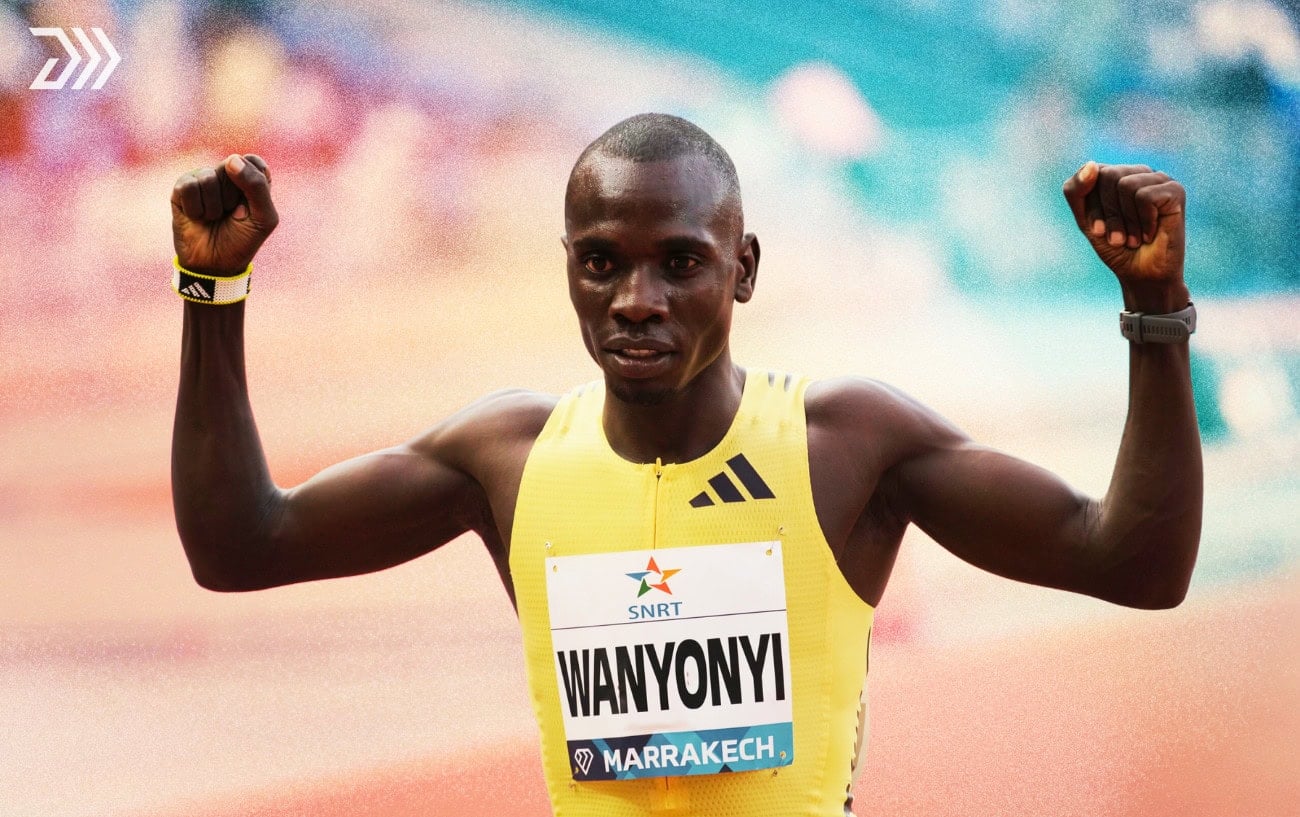
The final Pogačar trait is that he arrived early, winning his first Tour at 21, and by that standard the succession is already underway. Emmanuel Wanyonyi, the Olympic and world 800m champion, broke Noah Ngeny’s 27-year-old 1000m world record in Monaco last Friday, running 2:11.83. A month earlier in Oslo, he lost an 800m by one hundredth of a second to Cooper Lutkenhaus, a 17-year-old American high schooler, 1:42.08 to 1:42.09.
The trails are turning over just as fast. Three weeks ago Vincent Bouillard took 23 minutes off Jim Walmsley’s Western States course record, and in the same race Jenn Lichter broke Courtney Dauwalter’s women’s record in her first 100-miler, her fourth consecutive win with a course record. Sawe races next in Berlin in September, defending his title in his first start since the barrier fell.
RunClub
Get more running stories — join RunClub
Daily running news, a community of 300,000+ runners, free training plans for every distance, and a daily running game. Free to join — no card.
Already a member? Log in →





Start the conversation