


Noah Lyles is smiling, but his words carry the calm weight of someone who knows the clock is ticking. Fresh off another world title, his fourth straight 200m crown, the reigning sprint king has started speaking more openly about a subject most athletes avoid: retirement.
It’s not a crisis, and it’s not nostalgia. For Lyles, 28, this is just honesty, the rare kind that only comes when you’ve achieved nearly everything you dreamed of and can finally look beyond the lane lines.

“I know I’ve run my last lap when I leave a World Championships with zero medals,” he told Speakeasy recently. “And it wasn’t because of injury or something like that. When I fail to make a team because I’m not the top dog anymore, that’s when I know it’s time.”
The comment came with a smile, but it wasn’t a joke. Lyles has hinted before that his final season might come sometime between 2028 and 2032, effectively ruling out the 2032 Brisbane Olympics, when he’ll be 35. When pressed on whether he could keep sprinting beyond that, he laughed. “Certainly not,” he said.
For an athlete still in his prime, such talk may seem premature. But for Lyles, it’s part of a conscious effort to manage the arc of a career that has already spanned Olympic medals, world titles, mental health battles, and a comeback story that redefined his relationship with the sport.
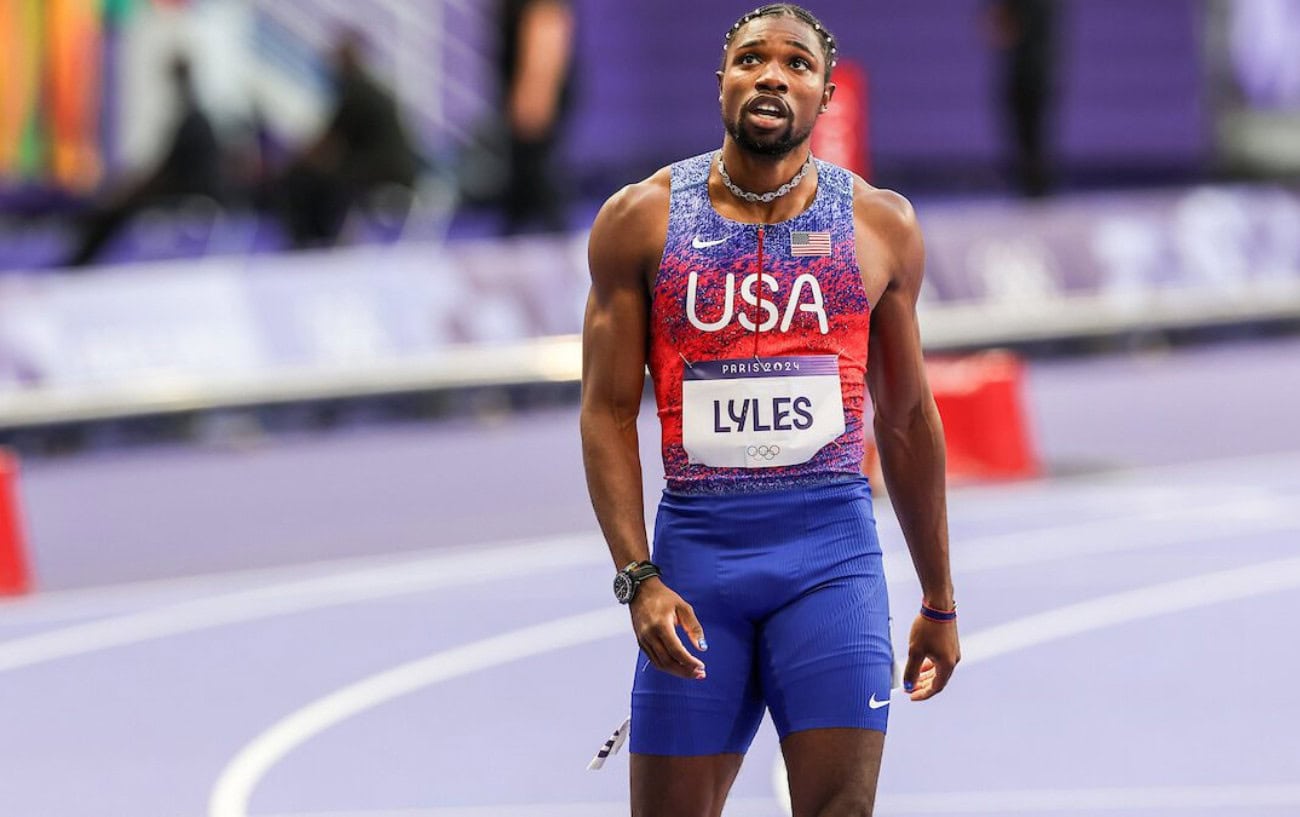
At the Tokyo Olympics in 2021, Lyles stood on the podium but not in triumph. Bronze in the 200m brought relief, not joy. He had battled depression in the months before, and though the medal was validation, it didn’t feel complete. “I knew I hadn’t reached my potential,” he admitted later.
Four years on, that potential has been realized. In Tokyo this summer, Lyles reclaimed the 200m throne with authority, beating back a new generation of challengers led by Bryan Levell, Letsile Tebogo, and Jamaica’s Oblique Seville, who all represent the youth movement reshaping sprinting.
Lyles, now one of the elder statesmen at just 28, says he’s inspired rather than threatened by the shift. “There’s so much talent coming up,” he said. “I want to see where they can take the sport next.”
Among those rising stars is Gout Gout, a 17-year-old Australian sprinter Lyles knows through their shared Adidas sponsorship. The teenager became the youngest 200m competitor in World Championship history this year. Lyles, who sees flashes of his younger self in Gout, has offered advice, not about running faster, but about growing up fast.
“It’s about the path you take and the people around you,” he said. “You’ve got to be a businessperson, too, and that’s the hardest part, learning that side of it when you’re still a kid.”
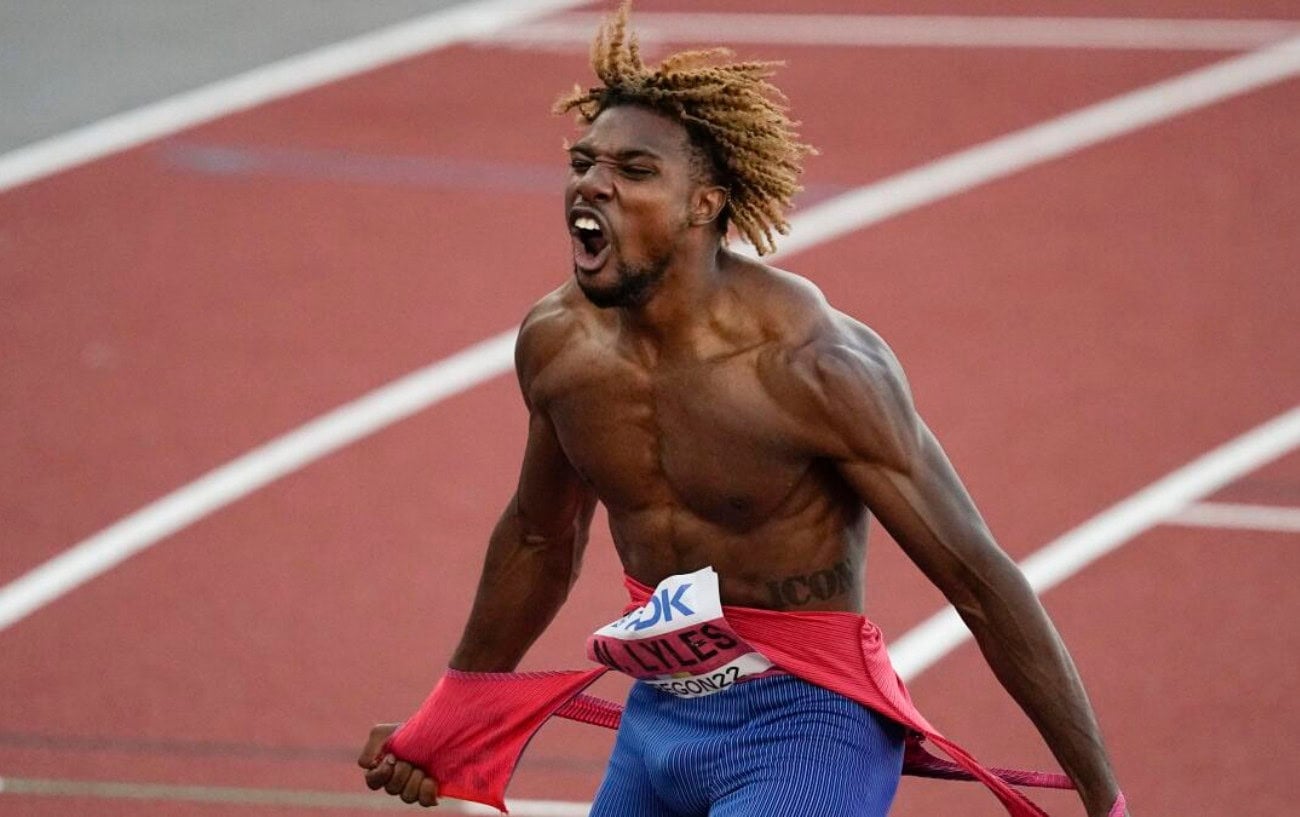
For Lyles, aging isn’t a curse, it’s a compass. After turning 27 during the Paris Olympics, he realized he was officially on “the other half of the hill.” He started viewing each season not just as a chance to win medals, but to maximize meaning.
“If I really push everything I want out of every year and every week and day, I don’t think I’ll ever regret it,” he told The Guardian earlier this year.
That perspective has made Lyles one of the sport’s most reflective voices, not just about himself, but about track and field as a whole. Over the past year, he’s been candid about what he sees as the sport’s structural flaws: inconsistent promotion, fragmented organization, and too little focus on building a lasting fan base.
In one podcast appearance, he likened track’s invisibility problem to the philosophical question of a tree falling in the woods. “If a tree falls in the forest and nobody’s there to see it,” he asked, “did it really fall?” It was a metaphor for the countless world-class performances that unfold outside primetime television or digital storytelling.
The sprint star has also raised questions about new ventures like Michael Johnson’s Grand Slam Track, a privately funded league launched to shake up the sport’s economics. While supportive of innovation, Lyles has urged caution, pointing out that without a unified calendar and consistent coverage, even the most exciting format risks fading fast.

For now, he remains committed to racing, but the idea of an intentional farewell, one done on his terms, clearly appeals to him. He’s hinted at ending his career at a home meet, surrounded by fans and family, rather than chasing one last Olympic cycle.
It would be a fitting finale for an athlete who’s built a career on rewriting expectations, from a turbulent Tokyo to world domination, from mental health struggles to outspoken advocacy, from doubter to architect of his own legacy.
Lyles isn’t walking away yet. But when he does, he wants to leave a sport better than he found it, one where young stars like Gout Gout don’t have to learn business at 17, and where every great race actually gets seen.
Because for Noah Lyles, the finish line has never just been about stopping. It’s about knowing when, and how, to pass the baton.
RunClub
Get more running stories — join RunClub
Daily running news, a community of 300,000+ runners, free training plans for every distance, and a daily running game. Free to join — no card.
Already a member? Log in →




Start the conversation