


Recovery runs are an awesome – and often-overlooked – tool in any runner’s arsenal of possible training sessions.
When focusing on performance, especially when training for events like the marathon, it’s easy to feel that each run needs to be done at a high intensity to move the needle forward continuously.
But recovery runs can be very strategic if done right. They can help you recover from hard workouts while contributing to your overall training mileage and generally upping your running game.
So while it’s easy to shy away from an easy run – hey, I sometimes even feel guilty about them, they can help you improve as a runner across the board over the long term.
So let’s jump in and look at what exactly recovery runs are, how to perform them, and what you’ll get out of them.

What Is a Recovery Run?
A recovery run is a low-intensity training run, usually performed within 24 hours of a hard run such as a threshold run or hard effort interval session. It is performed at an easy, conversation pace, specifically meant not to tax your body.
As the name suggests, the purpose is to aid recovery after a hard session.
Why Do We Need Recovery Runs?
#1: Promote Active Recovery
One of the main benefits of a recovery run is that gentle movement increases blood flow to your muscles without adding significant stress to your body.
This increased circulation may help temporarily alleviate muscle stiffness and soreness, leaving your legs feeling looser after a particularly demanding workout.
While recovery runs don’t necessarily speed up muscle repair, they allow you to stay active while keeping your training stress low. The key is to keep the intensity easy enough that you’re not adding to your existing fatigue or compromising your next quality workout.
#2: Improve Your Running Game
Slowing down and forgetting about the miles gives you a chance to dial in your running form: take it easy, keep your torso upright, swing those arms, and avoid overstriding.
Listen to your body and your breath.
Recovery runs can give your body a much-needed break and help you improve for your next hard training session. If you can train harder in your high-intensity runs, your overall running performance will improve.
This way, recovery runs can help prevent the risk of developing an overtraining injury, such as runner’s knee or plantar fasciitis.
You can also use running to tune out stress.
#3: Add To Your Overall Training
When in training for an event like a half marathon or marathon, a considerable challenge is simply getting the necessary miles in.
These runs let you add a little mileage each week while keeping intensity low, so you’re not putting undue stress on your body.
Relaxing, slow runs can be an effective part of a bigger training plan.
#4: Adapt Fat Utilization
Slowing down during exercise can also improve how your body accesses energy reserves.
During intense training runs, your body primarily relies on the easily accessible stored carbs in your muscles and liver for energy, known as glycogen. When you need a quick burst of energy, that’s where it comes from.
When you run at a more relaxed pace, your body will look to use more fat as fuel—the energy demands aren’t as intense, so those stored fat reserves are suddenly more attractive to your hungry muscles.
What does this mean?
Slower, recovery-style runs support fat adaptation—i.e., your body’s ability to fuel itself from fat —which will make you a better endurance runner.
Your body learns to access fat as an effective form of fuel.
#5: Boost Your Mental State
Recovery runs are a great opportunity to focus on running form and stay mindful as you exercise.
Often, during training—especially intense training like marathon training—it’s easy to get wrapped up in pushing hard, beating the clock, or tuning out (dissociation).
Often, this can lead to us ignoring how we’re actually running and gradually losing sight of why we run in the first place.
Recovery runs give you the opportunity to disconnect, stop pushing, and intentionally slow down and smell the roses.
When you head out, switch off any tracking apps or devices – or at least, don’t log your run unless you want to. Use them as an excuse to go intentionally slow and reconnect to why you enjoy running in the first place.

When Should You Do a Recovery Run?
Recovery runs are typically performed within 24 hours of a demanding training session, such as an interval workout or threshold run. A short, low-intensity run can loosen stiff muscles, promote circulation, and help you maintain training consistency without adding significant fatigue. However, if you’re particularly sore or fatigued, a complete rest day may be the better option.
A smart way to schedule recovery runs is to sandwich them between two harder training days. For example, if you do a tough interval workout on Tuesday and a threshold run on Thursday, a gentle recovery run on Wednesday lets you maintain consistency and mileage while still giving your body a chance to rebound.
Evenings are also an excellent time for recovery runs. A low-intensity effort can help loosen stiff legs from a hard morning workout and act as a calming transition into your nighttime routine.
If you’re a more experienced runner, you might even use recovery runs as double sessions, following up a hard morning workout with a very light jog in the evening. This not only aids recovery but also allows you to add more weekly mileage safely.
The key is to keep these runs truly easy—conversation pace or slower. If you’re huffing and puffing, it’s not a recovery run.
How Should I Perform a Recovery Run?
Recovery Run Pace / Intensity
When thinking about recovery run pace, the trick is not to overthink it: Recovery runs should be slow, easy, and at conversation pace.
If you think you’re running too fast, then you’re running too fast.
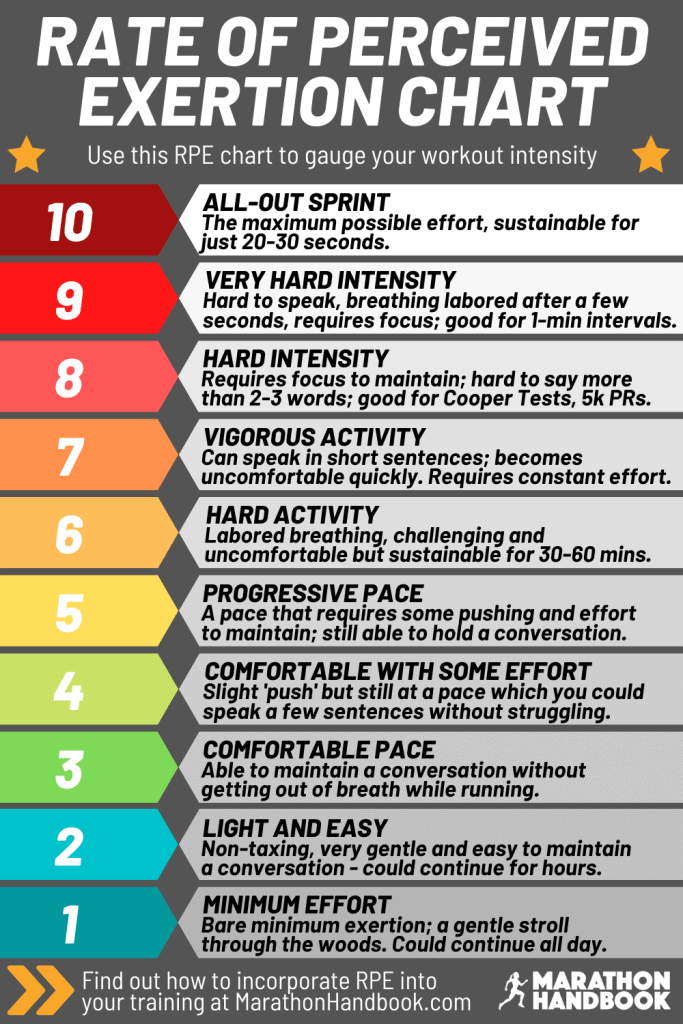
In terms of Rate of Perceived Exertion (RPE), aim for a 3 out of 10. You want it to feel easy, as if you could keep going for hours (though you won’t).
Check out the reference table below if you’re not familiar with RPE.
What Should Your Heart Rate Be For A Recovery Run?
If you train in heart rate zones, aim to stay within zone 2 – keep your heart rate comfortably below 70% of your maximum heart rate.
If you’re looking for a recommended pace in minutes per mile or minutes per kilometer, I encourage you to disregard pace altogether.
The rate of perceived exertion tells you much more than your speed can.
How long should a typical recovery run be?
When considering duration—or distance—for your recovery run, err on the side of shorter rather than longer. Aim for 30 to 40 minutes, or roughly 3 to 5 miles, depending on your running experience and how much mileage you log each week.
That said, recovery run length can vary quite a bit based on your fitness and training volume. If you’re a beginner or coming off a tough workout, keeping it short and easy is key. But for more experienced runners, recovery runs can stretch closer to an hour, especially if you’re aiming to build higher weekly mileage without adding more intensity.
The bottom line: don’t overthink recovery run performance. The goal is to get your blood flowing and give your legs some gentle movement to promote recovery, not to hit pace targets or rack up hard-earned miles. Keep it relaxed, enjoyable, and mentally refreshing.
Are Recovery Runs Worth It?
Downtime and active recovery are essential parts of any good runner’s training plan. Consciously scheduling time to relax and switch off helps us move from ‘fight or flight’ mode to ‘rest and digest’ mode.
Being able to switch off the Type-A, performance-driven voice in our head actually helps us recover. Your brain realizes there’s no threat present and sends signals to your muscles to enhance the recovery process.
Recovery runs can play an important part in this process, if performed well.
When you go for a recovery run, focus on being relaxed, run at a slower pace than your training runs, and enjoy what you’re doing.
Taking the pressure off your pace and performance can also help reduce psychological stress and make running feel more enjoyable. This mental break from the demands of structured training can be just as valuable as the opportunity to give your legs a lighter day.
The ability to relax during downtime is often overlooked, but it is actually a key tool used by elite athletes that we must use.
RunClub — Free
Join 300,000+ runners in RunClub
Free training plans for every distance, a daily running game, exclusive coaching content, and a real community of runners. Create your free account in 20 seconds — no card.
Already a member? Log in →





Join the conversation
Great insights on recovery runs! I always struggled with knowing how to incorporate them into my training, but your tips make it seem much more manageable. I loved the suggestions for keeping a relaxed pace. Can't wait to hit the trails with this new perspective!