


Ted Corbitt was the most influential runner in American road-running history. Before him, chaos reigned. Every local race set its own rules and procedures, ignoring the greater good.
Corbitt brought organization and quality to races, runners, and clubs. He was born on January 31, 1919, the same day as African American baseball legend Jackie Roosevelt Robinson. Both were named after recently deceased President Theodore Roosevelt. Corbitt died in 2007 at age 88.
Among other things, he qualified to represent the U.S. in the 1952 Olympic Marathon; introduced course certification (accurately measured race distances); wrote and edited an influential newsletter; insisted on inclusiveness for all ethnic groups, age groups, and women; pioneered the uses of physical therapy in running; and ran ultra-marathons long before they became popular.
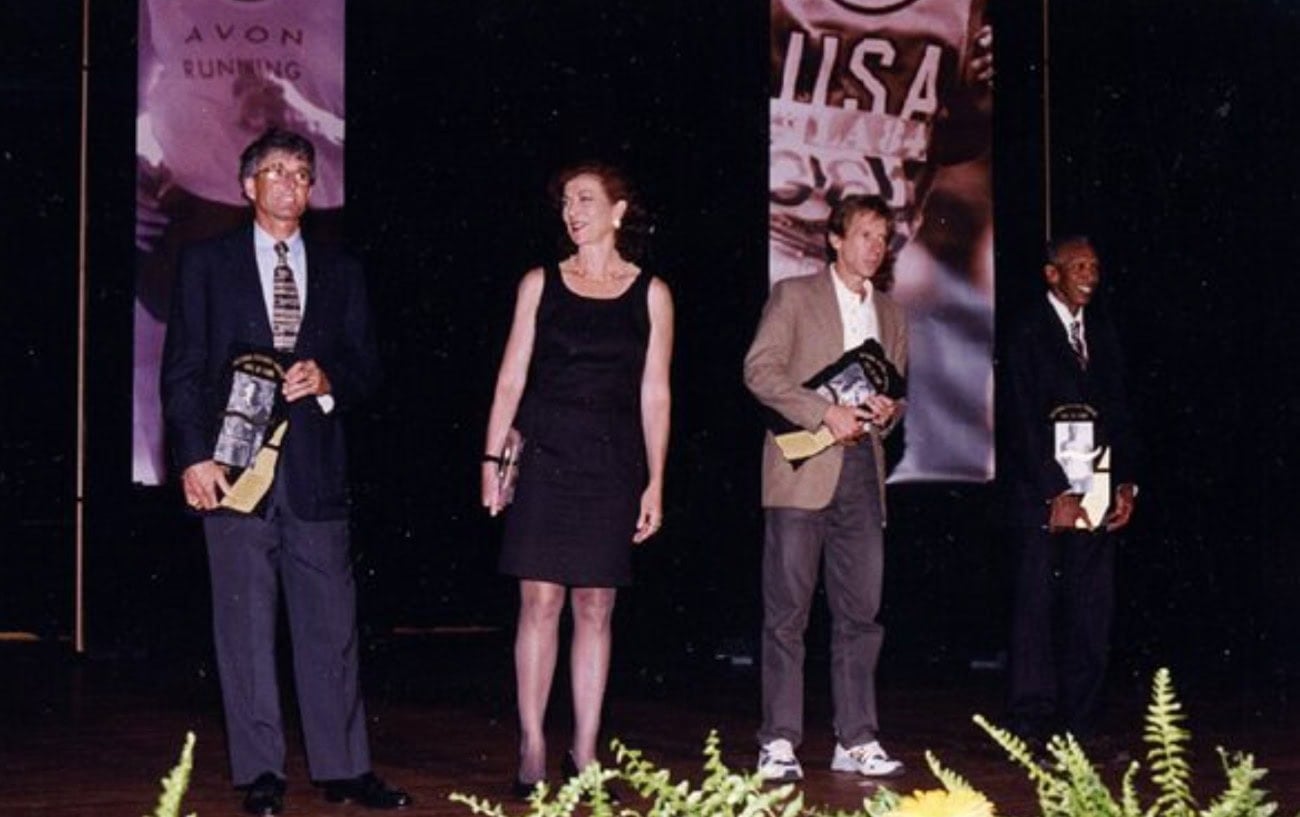
He achieved all of this despite his African American heritage, which made him a distinct, and sometimes racially targeted, minority in running. In 1998, he was inducted into the first National Distance Running Hall of Fame alongside Bill Rodgers, Joan Benoit Samuelson, Frank Shorter, and Kathrine Switzer.
Long Island’s David Katz, now a technical delegate to World Athletics and a frequent measurer of Olympic Marathon courses, learned by shadowing Corbitt in the 1970s. “I believe Ted is the man who invented the sport of road racing,” says Katz. “An activity is just play until you apply standards and rules. Ted did that by quietly creating measurement standards for an activity that was void of them.”
Quiet is the word most often applied to Corbitt, and it’s certainly apt. One magazine piece called him “The Quiet Revolutionary,” also apt. But his reticence didn’t keep him from becoming a giant in the world of road running, a gentle, quiet giant.
According to Phil Stewart, veteran runner, editor, and race organizer: “Ted was almost painfully quiet, but his contributions were foundational to the development of the sport.” Stewart has been an editor/publisher at Running Times magazine, 5-decade race director of the Cherry Blossom 10-Mile in Washington, D.C., and owner of the Road Race Management newsletter and annual conference. He finished the 1976 New York City Marathon in 2:24:30, and is running it again on November 1.
Stewart adds: “After breaking barriers as a Black American marathoner on the 1952 U.S. Olympic team, Ted went on to establish the entire course certification system, worked on the birth of the RRCA and the New York Road Runners Club, and was one of the earliest advocates of ultra-running.”
Corbitt Is Named One Of The NYC Marathon’s Founding Fathers
This week, on the 50th anniversary of the 1976 NYC Marathon, New York Road Runners is honoring Corbitt as one of five “Founding Fathers” of the 5-borough New York City Marathon.
While George Spitz conceived the notion of an expansive Bicentennial (1776-1976) marathon in the Big Apple, Corbitt suggested the 5-borough approach, and his friend Harry Murphy designed the course. Or rather two: one that ended on Manhattan’s East Side at the United Nations, and another that turned West to Columbus Circle. They adopted the latter, with a finish line inside Central Park next to the Tavern on the Green restaurant.
Naturally, Corbitt ran the 1976 marathon himself on October 24. He finished 3:33:31 on a course he helped create.
Even before the 1976 race, Corbitt was the guy who administered course certifications in New York (and around the country), adding to the accuracy and allure of the city’s road races. For example, he certified the 4-lap marathon course in hilly Central Park that was run six times from 1970 through 1975.
“The Central Park race was small but always prestigious,” notes Pam Cooper Chenkin, sports historian and author of the definitive The American Marathon. “In that era before financial awards, elite athletes knew that any record they set in the New York City Marathon would be recognized by the athletics bureaucracy. That was important to them.”
From First Marathon to Olympic Team in 12 Months
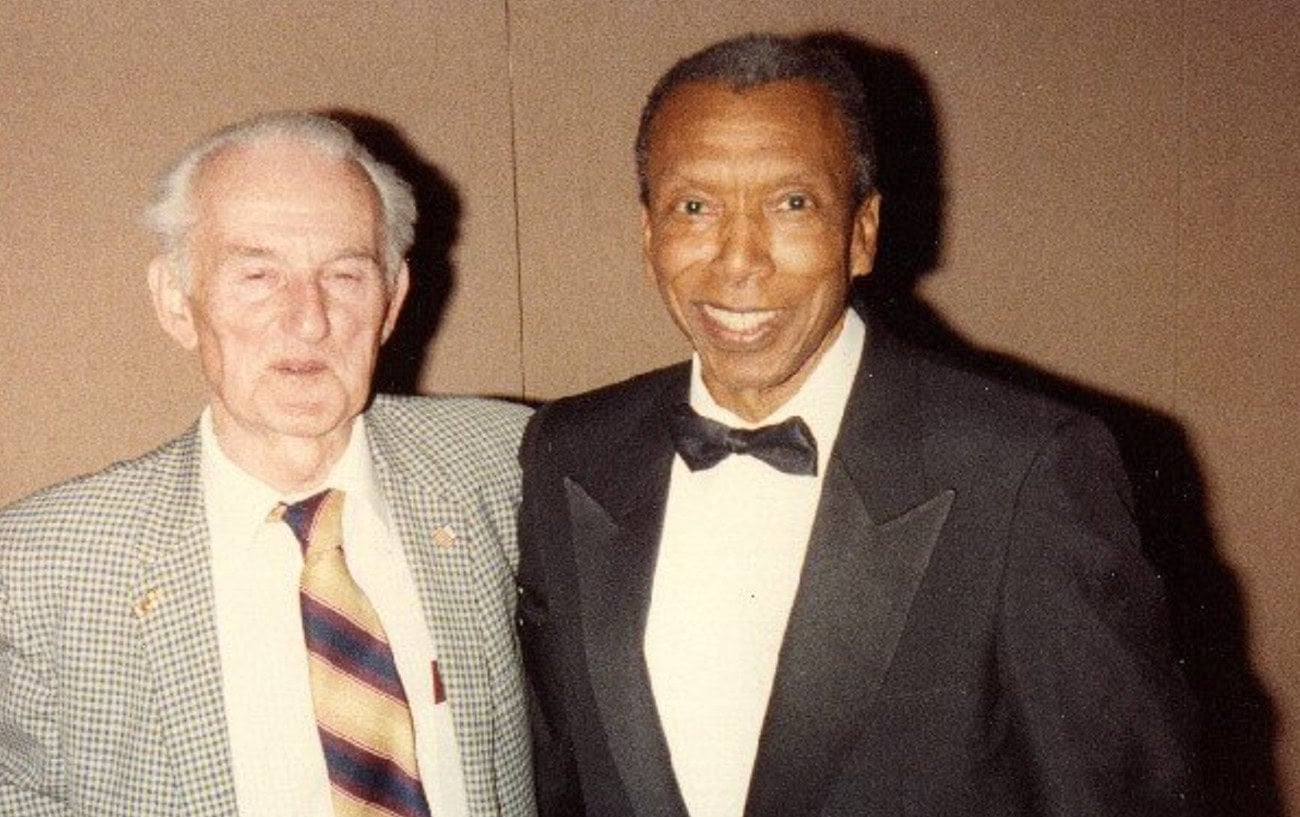
Ted Corbitt ran his first marathon at age 32 in the 1951 Boston Marathon, finishing in 2:48:42. A year later, he was selected to represent the U.S. in the 1952 Helsinki Olympic Marathon, based on three additional strong marathons in the 12 months following Boston. He was the first African American runner on the U.S. Olympic team, and placed 44th in Helsinki,
Corbitt would eventually complete 22 Boston Marathons and more than 223 marathon and ultramarathon finishes. He never dropped out of a road race until after his 75th birthday.
The 1957 Boston Marathon winner and two-time U.S. Olympic Marathon runner, John J. Kelley, revered Corbitt and considered him an important mentor. Kelley valued Corbitt’s humility and deep research methods as much as his marathon endurance. After Kelley became my coach in the mid-1960s, he introduced me to Corbitt at a Boston-area 20K race.
Having just turned 20 and as naturally shy as Corbitt himself, I was awestruck by his accomplishments and his singularity as the only top Black runner I knew. Though past his competitive prime, Corbitt was still a fixture at all the big races, and everyone recognized him.
Beyond his skin color, he stood out in races with his ungainly, galumphing stride and contorted face. You expected him to drop out at any moment, but this never happened.
Corbitt Put Road Running On A New Course
From 1958 through 1959, Corbitt served as founding president of the group that has evolved into New York Road Runners, organizers of the New York City Marathon. The next two years, he also served as the third national president of the Road Runners Club of America.
During this time and throughout his career, Corbitt led the move to establish road-race course certification. At the time, local race officials didn’t care what distance their races covered, as long as the course followed a “traditional” out-and-back route or a loop around town. In a given year, you might find yourself running courses that were 2.9 miles, 4.7 miles, 7.6 miles, 11.5 miles, and something close to 26 miles. The numbers came from car odometer readings.
Corbitt argued that standardized and well-measured courses were essential to the sport’s authenticity and growth, particularly at national-championship events and other big races. He learned how the British measured road courses with a bicycle calibrated against a 100-yard steel tape and taught others the system. In 1964, he published a landmark report, Measuring Road Racing Courses.
Soon, runners themselves demanded accurate courses, and the sport leaped forward. Corbitt noted that advancing course certification “is easily the most important thing I did in the long distance scene.”
Running Against The Grain
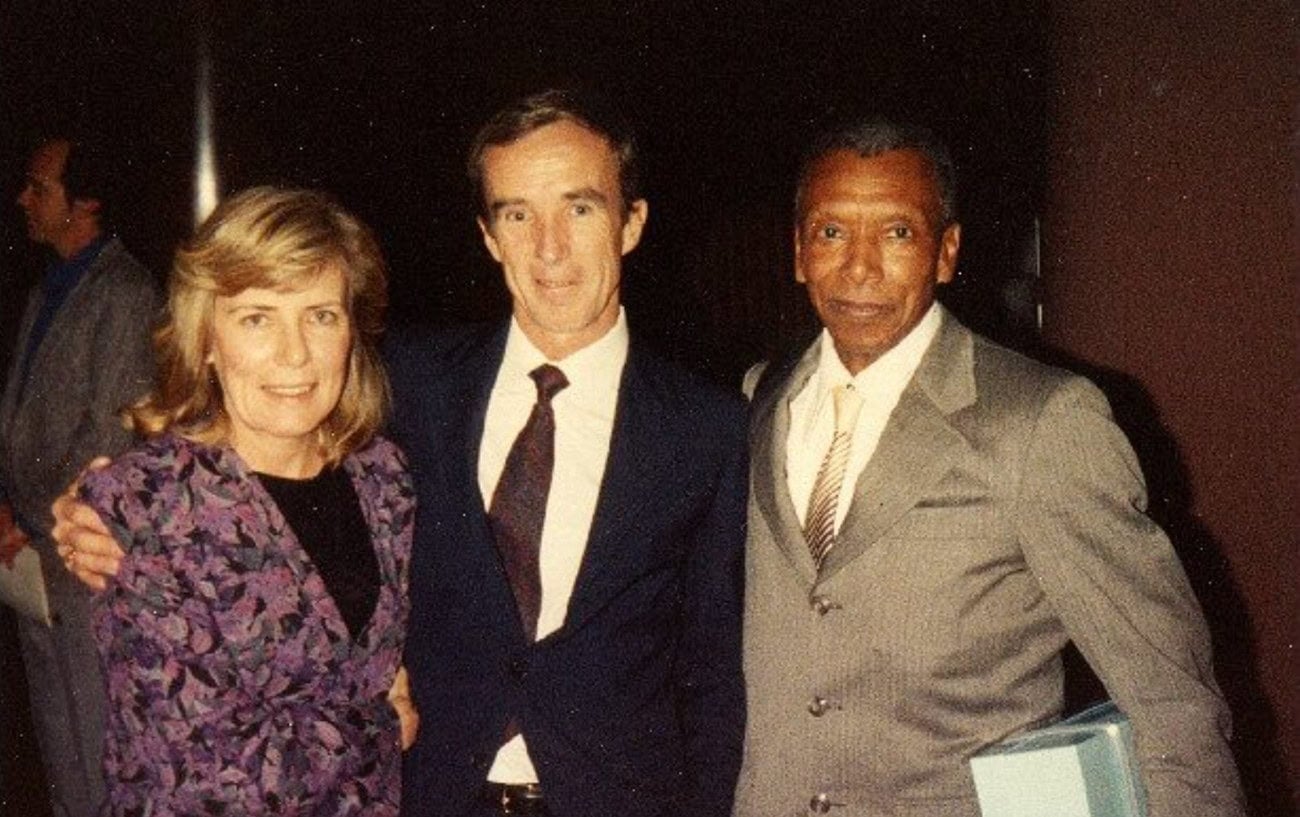
Corbitt was born in January 1919, near Dunbarton, South Carolina, the grandson of slaves. He ran mostly the sprint distances in high school and college, served in the Army in WWII, then moved to New York City. There he used the G.I. Bill to attend college and receive a master’s degree in physical therapy. In 1947, he joined the Harlem-based New York Pioneers club, the country’s first large-scale integrated running club.
While he never complained much about it (of course), Corbitt was dogged by racial discrimination all his life. In college, he wasn’t allowed to compete in certain meets, or to eat on-the-road meals with his teammates. While logging mega miles in Manhattan, often in basic shoes, pants, and a dress shirt, police stopped him about 200 times (his own estimate) and asked what he was running from.
When family friend Gail Kislevitz helped Gary Corbitt, Ted’s son, comb through and organize Ted’s voluminous archives after his death, she found a draft manuscript he had been working on. “He was writing a manual for young Black males about how not to attract attention from the police, and how to react if they did,” she says. “He advised them not to act hostile, as that would just make matters worse.”
Corbitt supported everyone who wanted to run, regardless of background. When famed New York pioneer female runner and race organizer Kathrine Switzer was training harder and improving her race performances in the mid-1970s, Corbitt noticed. “He would occasionally send me letters congratulating me on my progress,” she says.
Not all Switzer’s races produced the desired outcome. She trained harder than ever for the 1974 NYC Marathon in Central Park, hoping to achieve her first sub-3:00. However, the day turned hot and humid, and she finished soggy and discouraged in 3:07.
Her mood changed several days later when she received another envelope from Corbitt. “It was such a wonderful letter,” she recalls. “He compared my times to the top men and said that I had actually done exceptionally well. Hearing that from Ted, the all-knowing, was so encouraging then and in the years that followed.
A Pioneer In The Worlds Of Physical Therapy and Ultra-Running
Corbitt was also a pace-setter in the physical therapy world. He served as a therapist and instructor for 44 years at New York’s International Center for the Disabled and taught therapy classes at Columbia University and other New York-area colleges. In 1960, he co-authored Hydrotherapy, a textbook on uses of water as therapy.
He was among the first to introduce physical therapy to runners and also advocated strength training. When George Hirsch began running seriously in the 1970s, he often called on Corbitt for help with soreness and injuries. A few years later, Hirsch became worldwide publisher of Runner’s World magazine and later chairman of the board of New York Road Runners.
“Reaching out to Ted was a no-brainer,” says Hirsch. “We all knew that he knew more about the runner’s body than anyone else. Ted would come to my apartment and quietly set up his table. His hands could find the places where I needed help. Afterward, he’d leave as quietly as he came, and he’d never accept payment. That was just his style. He was the most humble runner I ever met.”
A few years later, Hirsch inadvertently experienced a piece of Corbitt’s ultrarunning world. He had already slipped into his shoes and running shorts when he stepped outside to buy the Sunday NY Times. That’s when he noticed Corbitt running past.
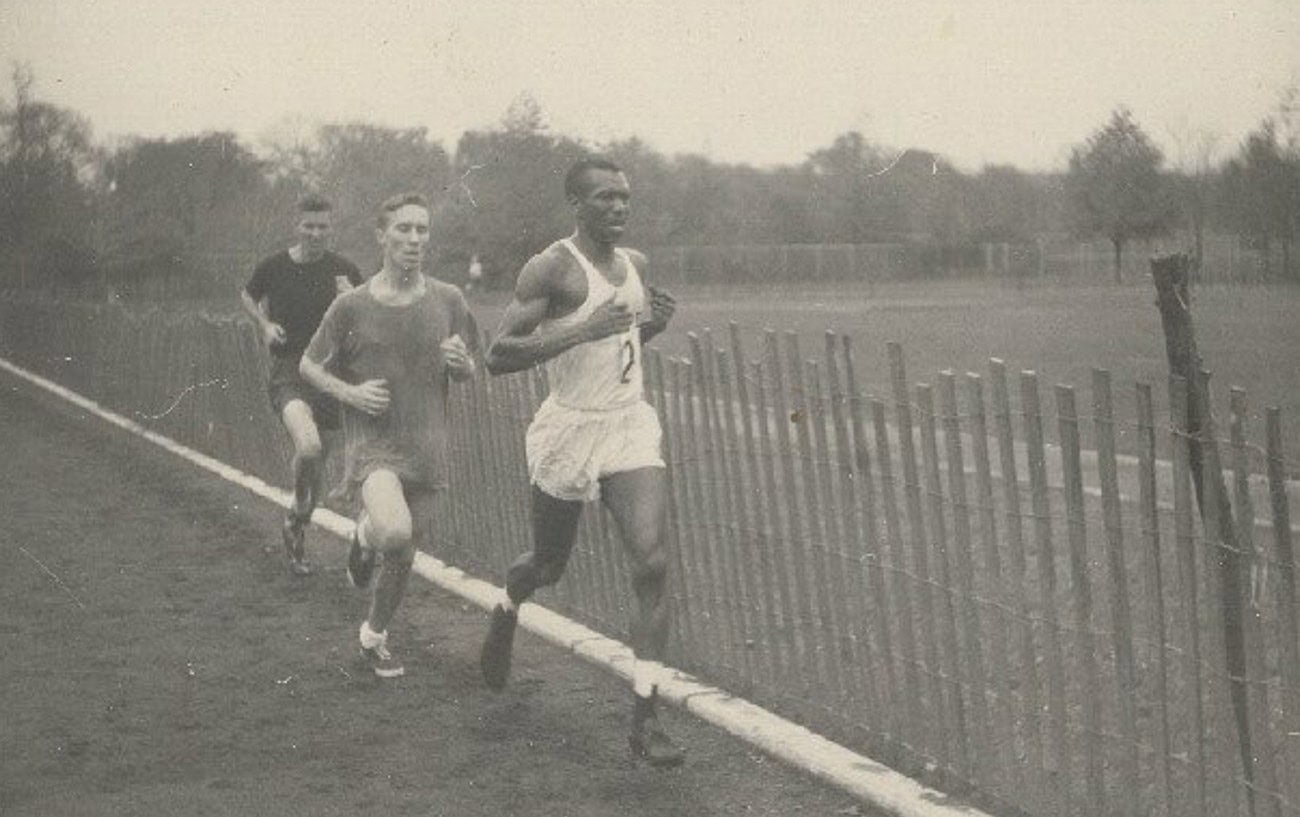
By then Corbitt was fully immersed in a world few others understood. He was racing 50-milers and 100-milers, based on a training regimen that may never have been surpassed. On four occasions, he logged more than 300 miles in a training week, peaking at 312.5 miles. In July 1969, he logged 1,002 miles that month. He set many American records at various ultra distances.
Hirsch spotted him on a 3-day Labor Day weekend as Corbitt ran the 31-mile perimeter of Manhattan twice a day. His wife left a lunch sandwich in the mailbox for him. Hirsch figured: “What the heck, I’m in my shorts, I might as well join Ted.”
Several hours later, he had to stop at a phone booth to call his wife and explain why he had disappeared while fetching the newspaper. “As we ran, I peppered Ted with questions about his training and ultramarathons,” Hirsch says. “His answers were modest and soft-spoken, but informative. Running an unexpected 30 miles with America’s top ultra runner was a rare and special privilege.”
You Can Get A Lot Done If You Only Sleep 3 Hours Per Night
Ted’s son, Gary, felt his father’s inclinations early on. He scorned comic books, preferring to study Track & Field News and Long Distance Log. At an early age, he grew accustomed to the sound of Ted’s clacking typewriter well past midnight.
Ted replied to every runner who sent him a question and kept a copy of his responses. He maintained a large volume of technical mail with others around the U.S. and the globe, particularly in Great Britain, who were trying to improve road running as an official organized sport.
The kitchen table served as editorial offices and printing plant (with a mimeograph machine) for New York Running News, which Ted wrote and edited for 20 years. Gary helped his father deliver the newsletter at races throughout the New York region.
In one letter to a friend, Ted described his days as follows: “I would arrive home from work, eat and sleep a couple of hours, and then do paperwork until about 2:45 am. I naturally woke around 5:45 am, feeling refreshed, and often started a 20-mile run to work about 6 am. That allowed me to shower and get into the work outfit by 9 am.”
Gary notes that his dad believed in the theory of progressive loading in all areas of life. If you ran a little harder every week, worked harder, or wrote more, you became more efficient at the task, and it became easier. Then you could do even more the next week or month.
Ted’s wife, Ruth, never objected to Ted’s incessant activities. “She understood that he was doing something special,” Gary says. “She let him live three compressed lives in one.”
Many New York runners share a favorite Corbitt story about his morning run to work along the East River. It seems a guy who walked some of the same streets would often see Corbitt running past. One day the guy had a friend with him. Spotting Corbitt, he turned to his friend and said: “See that crazy cat. He’s late for work every day.”
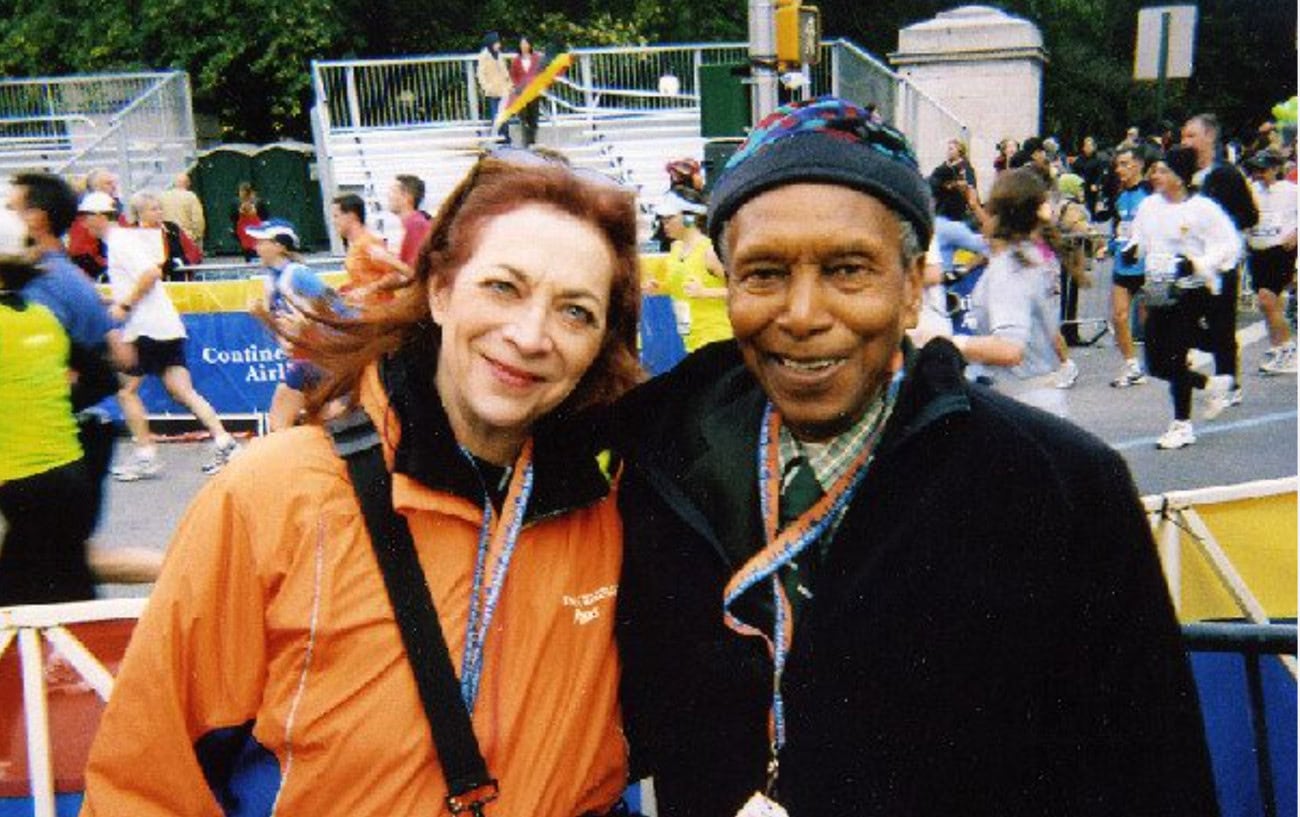
“I Would Enter Crowded Rooms With Him, And The Entire Room Broke Into Applause”
Gary Corbitt, now 75 and a retired TV research director for ABC-TV and the Washington Post, attended most New York track meets and road races with his father, and observed Ted with his peers. “Everyone always regarded my father with the greatest reverence and respect,” Gary says. “I’ve had many people tell me he was their greatest influence after their parents. I would enter crowded rooms with him, and the entire room broke into applause.”
Kathrine Switzer also occasionally saw Ted Corbitt in group settings. “He wasn’t a talkative guy until we asked him to give a speech or a club talk. Then he would speak at length, sometimes at quite great length, but it was always interesting and important.”
She particularly remembers a few evenings at a former New York Road Runners clubhouse on East 86th Street near Central Park. “Ted would sit in a chair, and we’d literally gather at his feet, and just hang on every calmly delivered word,” Switzer says. “We all felt like disciples in the presence of a very special man.”
For more on Ted Corbitt and the history of African Americans in U.S. road racing, visit TedCorbitt.com.
RunClub
Get more running stories — join RunClub
Daily running news, a community of 300,000+ runners, free training plans for every distance, and a daily running game. Free to join — no card.
Already a member? Log in →










Start the conversation