


Here’s your free but abridged version of this week’s “Run Long, Run Healthy” newsletter. Subscribe below to receive the complete, full-text edition with the newest and most authoritative scientific articles on training, nutrition, shoes, injury prevention, and motivation.
The Most Important Exercise Rule: Aim For Good, Not Perfect

Here’s one of the best and most important exercise/fitness/health maxims: “Don’t let perfect be the enemy of good.”
We all sometimes feel guilty, and we should let this heavy weight off our shoulders and out of our lives.
A new strength training study reminded me of this anti-perfection aphorism and sent me searching for similar sentiments.
It turns out that those lifestyle-loving Italians probably invented this principle. They have a proverb that goes like this: “Il meglio è l’inimico del bene,” which translates to “The best is the enemy of the good.” Voltaire popularized the saying in the English-speaking world.
But Confucius and Shakespeare both took good whacks at it. Confucius: “Better a diamond with a flaw than a pebble without.”
Shakespeare: “Striving to better, oft we mar what’s well.” The bard really had a way with words and wisdom, didn’t he?
Back to that strength-training study. Researchers followed 55 healthy, untrained adults (almost half female) for 30 weeks. They were randomized into two groups. One group did strength training for ten weeks, stopped for ten weeks, then did another ten weeks of training.
That’s what any of us might do if confronted by a big job assignment, travel, or a family emergency. We could call this the imperfect or merely good group.
The second group did nothing for ten weeks but then was perfect in their strength training for 20 consecutive weeks.
The big question: Who was stronger at the end of 30 weeks?
Answer: There was no difference. Subjects in both groups scored equally on strength, jump, and muscle fiber exams.
The researchers noted that the 10/10/10 group lost strength when they stopped training for ten weeks but then “regained rapidly during retraining.”
Conclusion: “Our results, therefore, suggest that trainees should not be too concerned about occasional short-term training breaks in their daily lives when it comes to lifelong strength training.” More at Scandinavian J of Medicine & Science in Sports with free full text.
Restated: Every time you exercise, you’re doing something good for yourself. You don’t have to follow a perfect training or nutrition plan. You just have to do whatever you can whenever you can.
This has been proven previously with studies of “weekend warriors.” The term is often used negatively. But, in fact, research has shown that weekend warriors gain substantial health and longevity benefits from their bursts of activity on Saturday and Sunday.
RELATED ARTICLE: Good News, Weekend Warriors: Studies Show No Downside To Cramming Your Workouts Into Just Two Days
How Mood Affects Food, And Vice Versa
Many of us have pretty good diets already. But I don’t know anyone who wouldn’t like to improve a bit more. Me? I’d like to do something about my “sweet tooth,” a lifelong affliction.
A popular nutrition and fitness app, My Fitness Pal, recently commissioned a “White Paper” looking into food-mood connections, and how they can be changed. It’s a great topic, even though this is clearly a commercial entity trying to boost its business.
The paper notes the generally poor U.S. diet, especially the low fruit/vegetable consumption and the high added-sugar intake (double what the American Heart Association recommends). These have obvious health impacts like weight gain and low consumption of healthier options. However, this connection isn’t universal.
Some people, aiming to do better, restrict their diet so severely that they “may experience feelings of tension, anger, and fatigue.” They swing from one extreme to the other, missing a healthy middle ground.
This “White Paper” suggests nine mood boosting foods with two from the fermented foods group: kefir and kimchi. It also advises that, when you’re feeling tense and upset, you’re more likely to reach for less healthy, less nutrient-dense foods.
Finally, it provides strategies that can help us nourish our health more holistically. I particularly like “Sit with your urges.” You can learn to acknowledge temptations without acting on them with bad food choices.
Also, “Think flexibly.” Challenge your all-or-nothing thinking to support sustainable food choices. More from My Fitness Pal.
RELATED ARTICLE: The Runner’s Diet: What You Need To Know About Nutrition For Runners
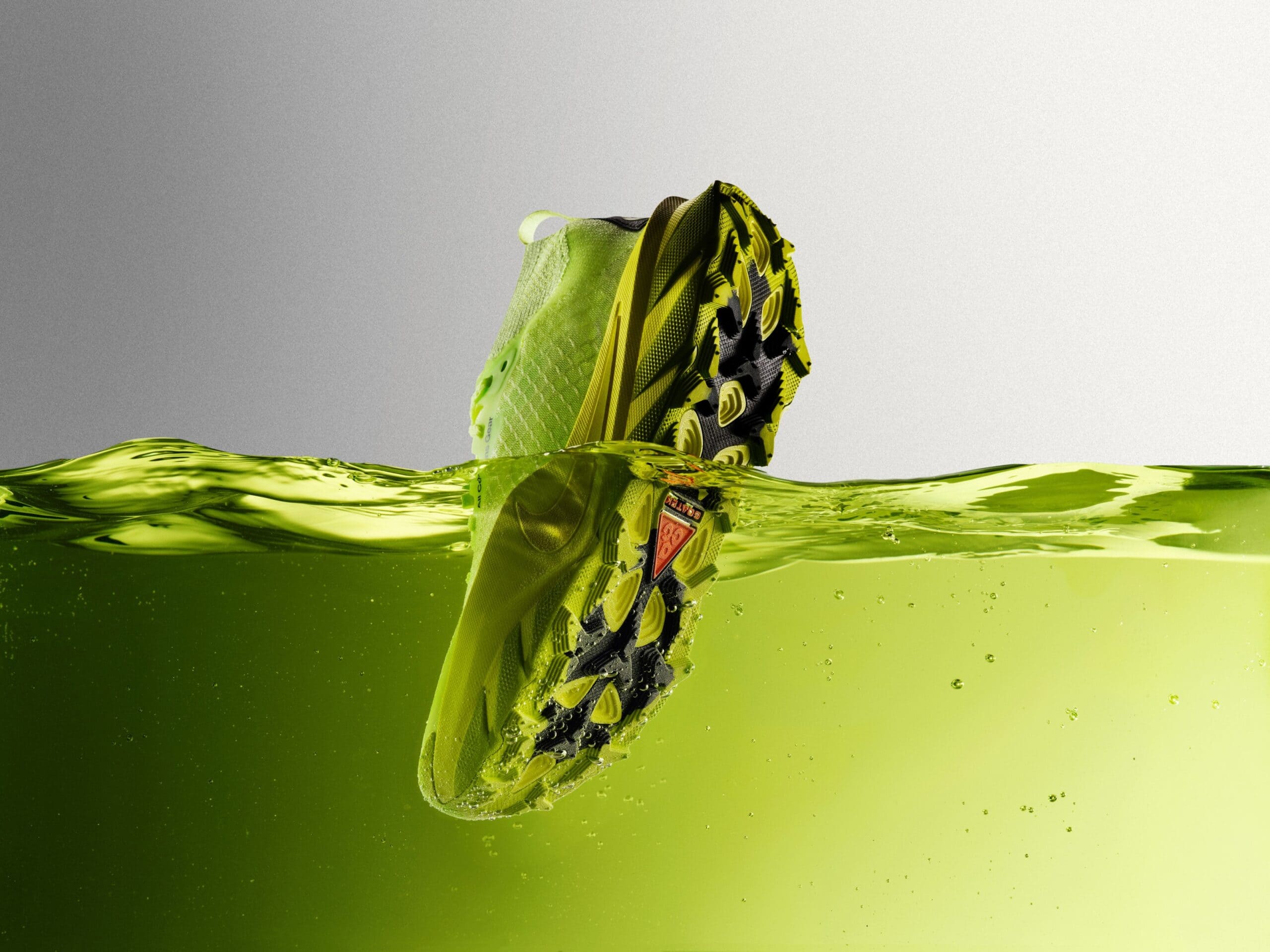
What Makes Super Shoes So Super?
A few weeks before this year’s New York City Marathon, but just in time for Ruth Chepngetich’s astonishing 2:09:56 marathon world record in Chicago last Sunday, the New York Times took a thorough look back on five years of super shoe development.
The article used the provocative term “shoe doping” in its title but disappointingly didn’t discuss the 2016 Olympic results when Nike runners quite clearly had a shoe-doping advantage over their competitors.
Otherwise, it’s a great piece based on deep interviews with a handful of top-running biomechanists. Their main points:
1) The shoes clearly work; just look at how fast everyone is running, from the Olympians to the increasing numbers of runners hitting the Boston Marathon qualifying times.
2) The plate is important, but it must be a curved plate.
3) The new super foams provide more energy return than old EVA foams.
4) The plate and the foam work in concert to improve performance.
5) The “teeter-totter” effect is unproven.
6) Individual variation in “responsiveness” to different shoes is real and can be dramatic, which explains why there’s no one best super shoe for every runner.
The article concludes by noting that it’s impossible “to predict exactly where marathon runners will be in five years.” Or where shoe innovations will be. There’s only one certainty: “The times, from new heroes, will be faster.” More at NY Times.
RELATED ARTICLE: The Shoes That Won The 2024 Chicago Marathon
SHORT STUFF You Don’t Want To MissSHORT STUFF You Don’t Want To Miss
HERE’S WHAT ELSE YOU WOULD HAVE RECEIVED this week if you were a subscriber to the complete, full-text edition of “Run Long, Run Healthy.” SUBSCRIBE HERE.
- Why Ruth Chepngetich’s 2:09:56 deserves close scrutiny
- Long intervals vs short intervals–And the winner is ???
- Why it’s time to give orthotics another look
- Here it comes again: The excruciating “Big’s Backyard Ultra.”
- Some brain supplements might actually work, and here they are
- Extraordinary results come from ordinary training days
That’s all for now. Thanks for reading. See you again next week. Amby
RunClub — Free
Join 300,000+ runners in RunClub
Free training plans for every distance, a daily running game, exclusive coaching content, and a real community of runners. Create your free account in 20 seconds — no card.
Already a member? Log in →










Start the conversation