


Follow the race with us on Sunday: our live coverage begins at 2:15 a.m. ET.
Tigst Assefa will go after the women’s marathon world record at the Berlin Marathon on Sunday, and none of the women on the start line are planning to go with her. Defending champion Rosemary Wanjiru is targeting a time under 2:15:00, the organizers said at Thursday’s press conference, and they expect the elite women to split into three groups, with Assefa out in front of all of them.
The record is Ruth Chepngetich’s 2:09:56 from Chicago in 2024, which still stands despite the Kenyan’s three-year doping ban, and breaking it would also earn Assefa a €50,000 ($56,900) bonus from the race. Her own best of 2:11:53, set in Berlin in 2023, is still the course record. The organizers say she has 2:10:00 in her sights, though she kept her own words more modest on Thursday. Her answer to the record question came in Amharic, through an interpreter, and it was about a personal best instead. “I am very well prepared and want to run a personal best,” she said.

Wanjiru, who won in Berlin last year in 2:21:05, has a personal best of 2:16:14 from Tokyo in 2024. She will run in the second group alongside three Ethiopians aiming for similar times: Bedatu Hirpa (2:18:27), Dera Dida (2:18:32) and Zeineba Yimer (2:18:47). Dida, the wife of Olympic champion Tamirat Tola, trains with Assefa but will run a very different race from her on Sunday. “We know each other very well of course and I expect us to produce strong performances,” Dida said.
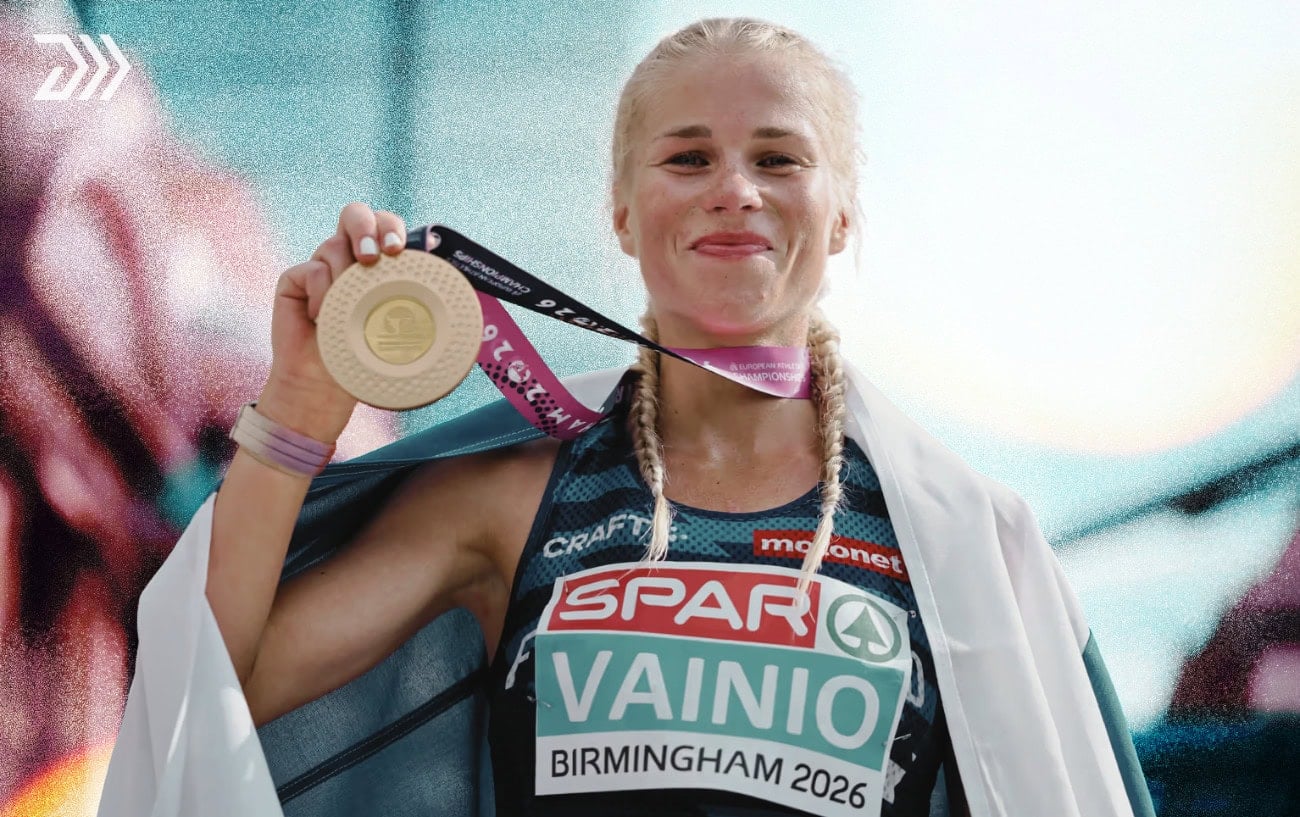
A third group will be set up for 2:20:00. Alisa Vainio, the European champion from Birmingham in August, is expected to join it with a personal best of 2:20:39, and Germany’s Esther Pfeiffer is aiming for the same time in pursuit of Irina Mikitenko’s national record of 2:19:19, which has stood since 2008.
How Far Ahead Assefa Could Be
Record pace is just under 3:05 per kilometer, which puts Assefa through halfway in about 64:58 if she runs it evenly. The 2:15:00 group needs 3:12 per kilometer and would reach halfway in 67:30, two and a half minutes back, or roughly 800 meters (half a mile) down the road.
In 2023, Assefa had dropped Workenesh Edesa, the last woman with her, by 17K and ran the rest of the race with only male pacemakers, according to World Athletics. She reached halfway in 1:06:20, came home in 65:33 and won by almost six minutes. If she repeats that second half on Sunday, she needs a first half of 64:22 or faster to get under the record.

Chepngetich did it the other way round in Chicago. She went through halfway in 64:16 and slowed to 65:40 over the second half, and two male pacemakers, Barnabus Kiptum and Evans Nyakamba Mayaka, stayed with her through nearly all of it, LetsRun reported.
In London in April, Assefa had far more company. Hellen Obiri and Joyciline Jepkosgei were still with her at halfway in 1:06:12, and she beat Obiri by just 12 seconds in 2:15:41 for a women-only world record. Berlin is a mixed race, so on Sunday her pacemakers will be men, as they were three years ago.
The Chase Behind Her
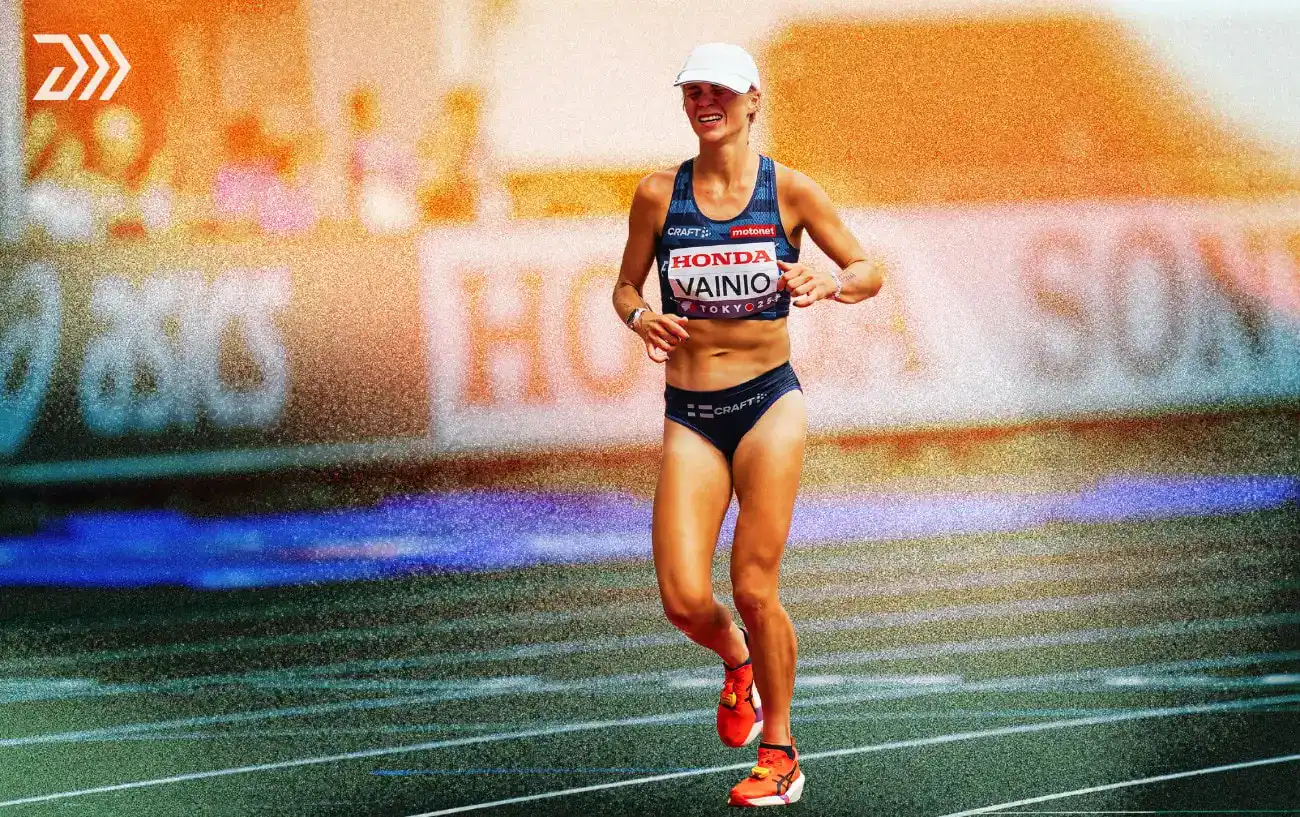
Vainio won the European title on Aug. 16 and took the Finnish title as well on Sept. 12, running 2:27:47 in Jyväskylä. “But for me this was just like a training run and it felt fine,” she said. Pfeiffer’s only marathon so far is a 2:37:00 in Cologne in 2023, which she won, but her half-marathon best is now 67:25 from Berlin in March and her 10K best is 30:45. “This is my big goal and my chase begins on Sunday,” she said of the German record.
Seven of the women racing have broken 2:20:00, a record for Berlin, and 13 have run under 2:22:00. The race starts at 8:45 a.m., half an hour earlier than last year after the heat of 2025, with organizers expecting 13 C at the start and about 17.5 C by the time the elite runners finish.
RunClub
Get more running stories — join RunClub
Daily running news, a community of 300,000+ runners, free training plans for every distance, and a daily running game. Free to join — no card.
Already a member? Log in →









Start the conversation