


For years, the marathon leg of an Ironman seemed to have a ceiling.
Mark Allen’s legendary 2:40:04 in Kona in 1989, achieved in the white-hot crucible of the “Iron War” with Dave Scott, became the gold standard for what was possible after 180 kilometers of swimming and cycling.
It held up for nearly three decades until Patrick Lange finally lowered it in 2016. Since then, Gustav Iden has pushed it further, and in 2025 the floodgates appear to be wide open.
At Ironman Brazil in June, Manoel Messias stunned the field with a 2:26:50 split, a time that would have been unthinkable just a few years ago. On the women’s side, Germany’s Laura Philipp ran 2:38:27 in Hamburg, the fastest ever in an Ironman.
And these are not isolated flashes, as Thorsten Radde’s Trirating.com data shows a steep rise in sub-three-hour runs for women and sub-2:45s for men since racing resumed after the pandemic. What once drew gasps now barely raises eyebrows, the sport has shifted that quickly.

So why now? Part of the answer is technology.
The arms race in aerodynamics and rolling resistance means athletes are getting off the bike fresher and faster. But the bigger change, many agree, has been footwear. The arrival of carbon-plated “super shoes” has transformed Ironman running just as it did the standalone marathon. “
You run faster and get beaten up less. Run a 20-miler at Ironman pace on Sunday and you can be running again on Tuesday. If Jan Frodeno did that 10 years ago, he wasn’t walking on Tuesday,” coach Lawrence Van Lingen told Triathlete.
Research backs him up, as a 2022 study in the Journal of Sport and Health Science found these shoes improved running economy by around 4 percent, a difference of several minutes over a full marathon.
Fueling has undergone its own revolution. Gone are the days of toughing it out on a single bottle of water. The current crop of elites routinely pushes 100–120 grams of carbohydrate per hour, levels once thought impossible to stomach.
A 2025 study in Frontiers in Physiology confirmed that those who can absorb and utilize that fuel simply sustain higher power and speed.
In short, better shoes, smarter bikes, and advanced fueling have combined to shift the limits of the possible.
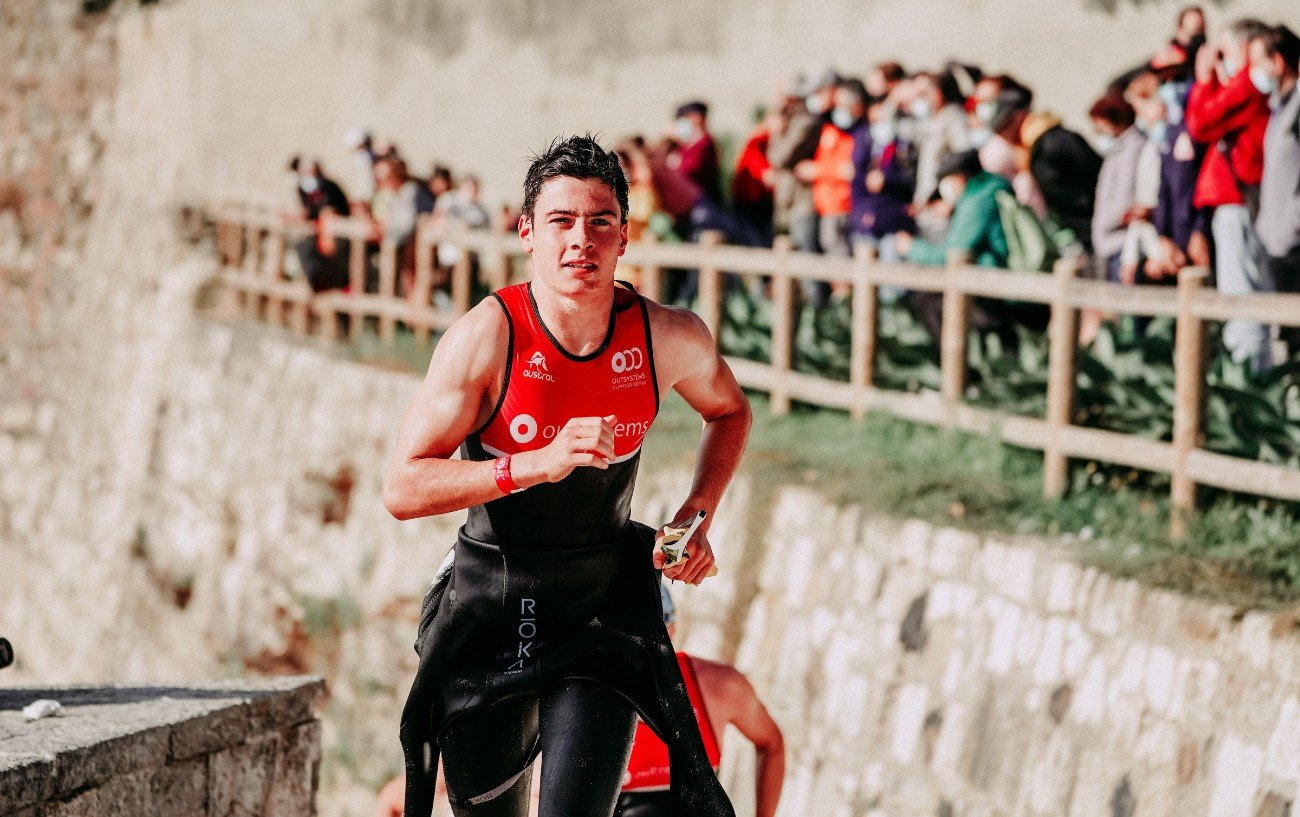
But there’s also a change in who is racing. The influx of prize money from the Professional Triathletes Organization has raised the sport’s profile, and with it, the level of talent.
Anne Haug, who debuted with a 3:04 marathon in 2018, rattled off ten straight sub-3s and hit 2:38 in Roth. Canadian Tamara Jewett, a former track specialist, has already run 2:40 in just her second Ironman.
On the men’s side, Messias may have the fastest split, but Patrick Lange remains the benchmark for consistency. “Could I run 2:26? Not with my style of racing. For me, the win always comes first,” Lange told Triathlete.
Speculation is already racing ahead of the stopwatch.
New Zealand’s Hayden Wilde, who owns a 27:39 road 10K, is blunt.
“Why not crack 2:20? 2:30 has been done, so you’ve got to crack 2:20 now,” Wilde told Triathlete. Jewett’s coach Ethan Davenport isn’t dismissing the idea either. “It’s not outrageous. You just need the right conditions, good legs, a fair course, and cool weather,” he told the magazine.
Interestingly, the women may actually be further ahead relative to the men. Using World Athletics’ scoring tables, Jewett’s 2:40:05 at Lake Placid equates to a 2:15:55 men’s marathon. Philipp and Haug’s 2:38s convert to 2:15:06, numbers that leave the men’s best Ironman runs trailing.

Of course, context matters. Courses vary, bike legs can be shortened, and favorable conditions can skew times. Triathlon is still not standardized in the way road marathons are, so every record comes with an asterisk.
And while the sport has largely avoided the kind of doping scandals that have plagued athletics, the disqualification of Tomas Rodriguez Hernandez in Texas last year is a reminder that rapid leaps in performance always deserve scrutiny.
Still, it feels clear that the marathon is the new frontier in Ironman racing. Just as Eliud Kipchoge redefined the outer limits of the 26.2, triathletes are now chasing barriers that once seemed absurd. Sub-2:20 for men and sub-2:30 for women are no longer wild dreams, they are looming possibilities.
The only question is who gets there first, and how long the record will stand once they do.
RunClub
Get more running stories — join RunClub
Daily running news, a community of 300,000+ runners, free training plans for every distance, and a daily running game. Free to join — no card.
Already a member? Log in →








Start the conversation