


There is a moment — and if you’ve been watching distance running long enough, you know the one — where something extraordinary happens on a road somewhere in the world, and instead of just feeling joy, you feel something else first. A small, unwanted flicker. A question you don’t want to have.
That moment arrived again on Sunday morning in Barcelona.
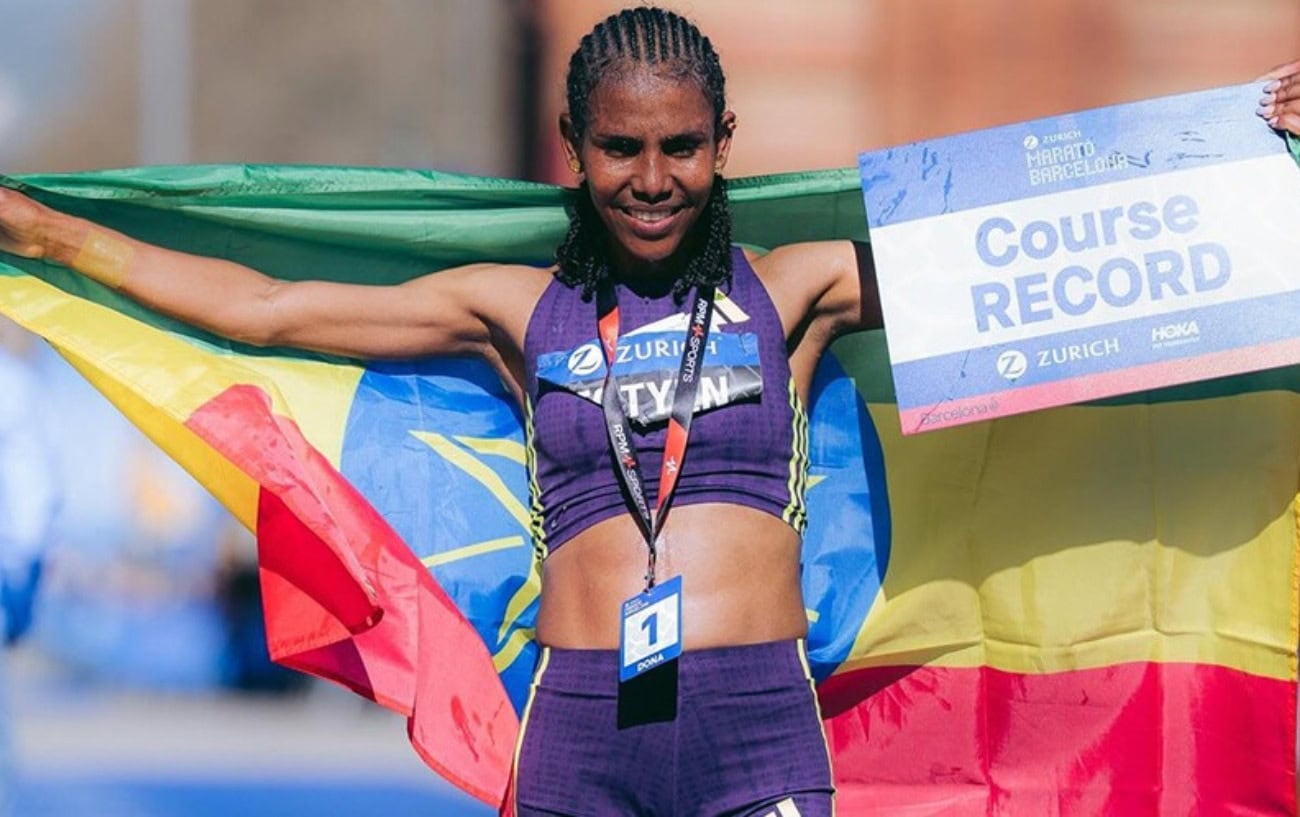
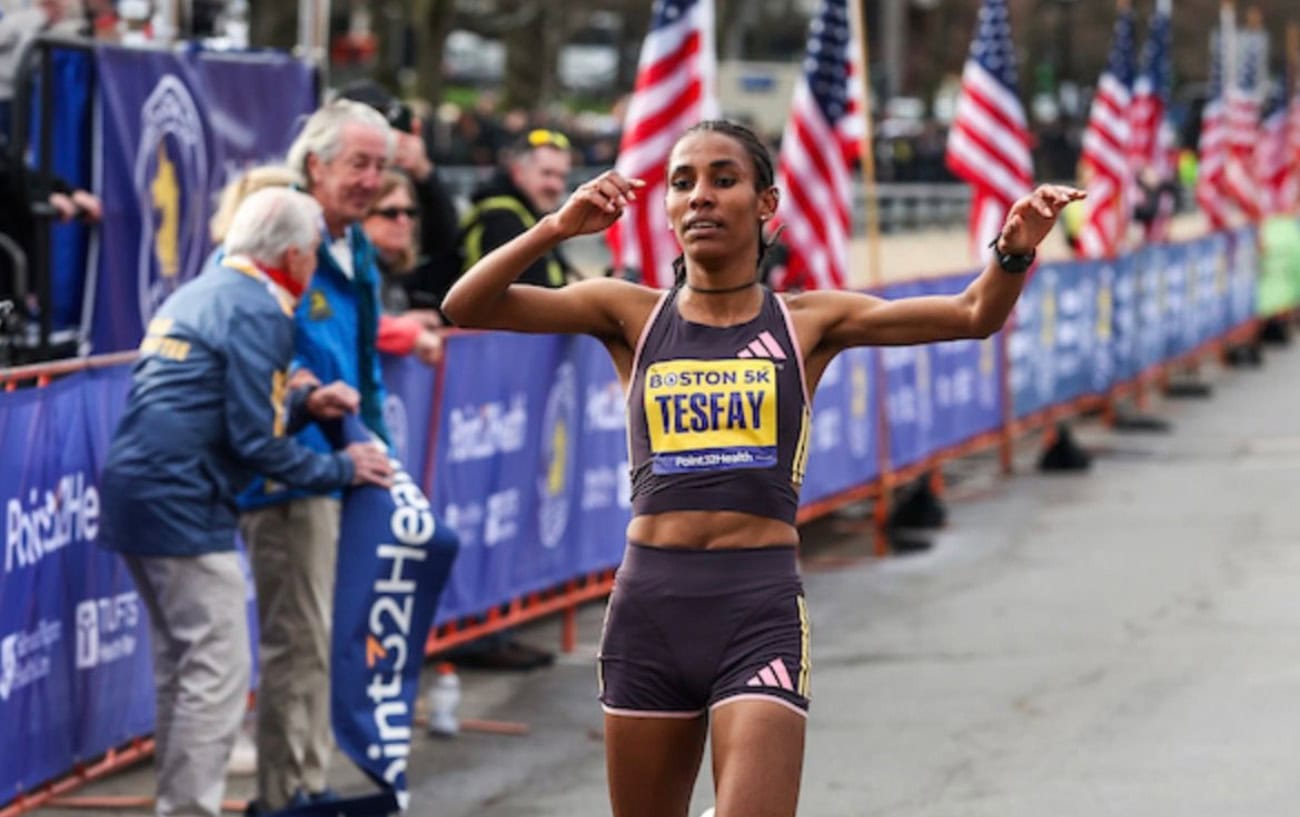
Fotyen Tesfay Haylu, a 28-year-old Ethiopian runner who had never raced beyond 21 kilometers in competition, crossed the finish line of the Zurich Barcelona Marathon in 2:10:53. The second-fastest women’s marathon in history. The fastest marathon debut ever run. A performance so far beyond what anyone expected that it left commentators searching for comparisons and coming up empty.
It deserves to be examined carefully. In 2026, that’s the least we owe the sport.
She Comes From a Place That Shapes People Differently
Fotyen Tesfay was born on 17 February 1998 in Ofla, a small town in the Tigray Region of northern Ethiopia. If you’ve heard of Tigray at all, it’s probably in the context of the civil war that tore through it from 2020 to 2022 — one of the deadliest conflicts on the planet during those years.
Tesfay trained through that. She kept running.
She runs for the Messebo Club, based in Tigray, and trains at altitude above 2,000 meters — the kind of environment that has produced generations of elite Ethiopian distance runners, building aerobic engines that athletes from sea-level countries spend careers trying to replicate. This isn’t a shortcut. It’s a lifetime of accumulated suffering in thin air.
A Decade of Work Nobody Was Watching
This is not a story about someone who appeared from nowhere. Tesfay has been building this for ten years.
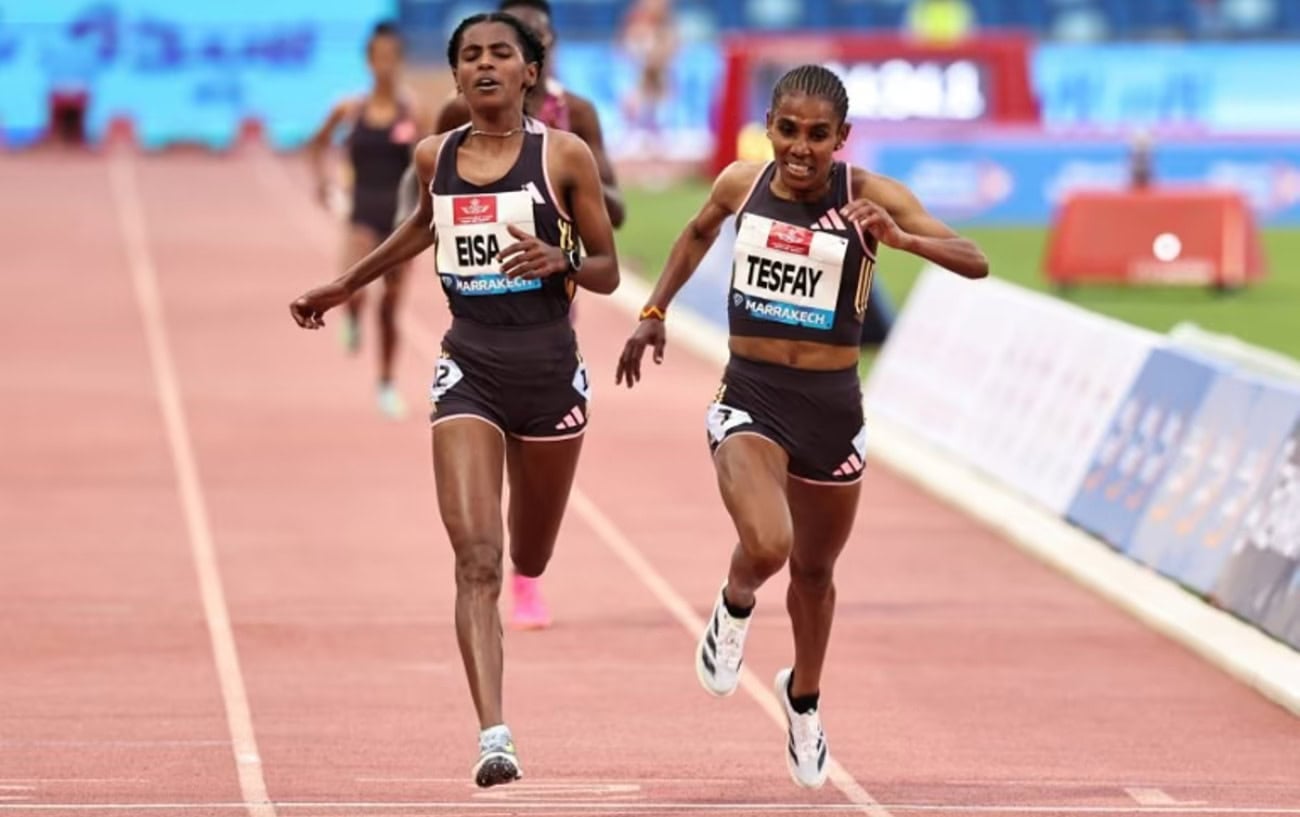
She placed 4th at the World U20 Championships in the 3000m in 2016. World Cross Country Championships — twice, junior and senior. She won the Campaccio, one of Europe’s most storied cross country races, in 2020. The AJC Peachtree Road Race in Atlanta in 2023. She competed in the 10,000m at the 2024 Paris Olympics. These are not the performances of someone who came from nowhere. These are the marks of someone who was always this good and simply hadn’t run 42 kilometers yet.
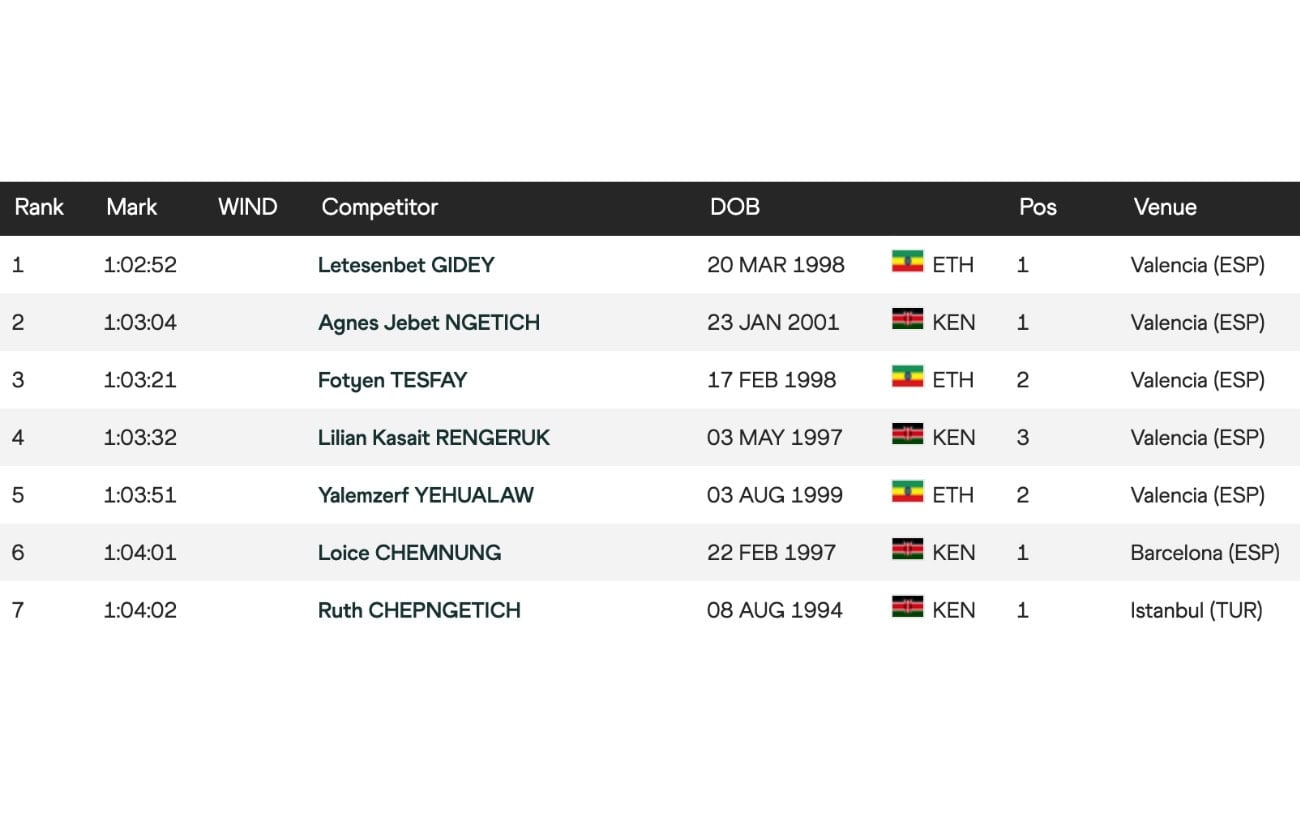
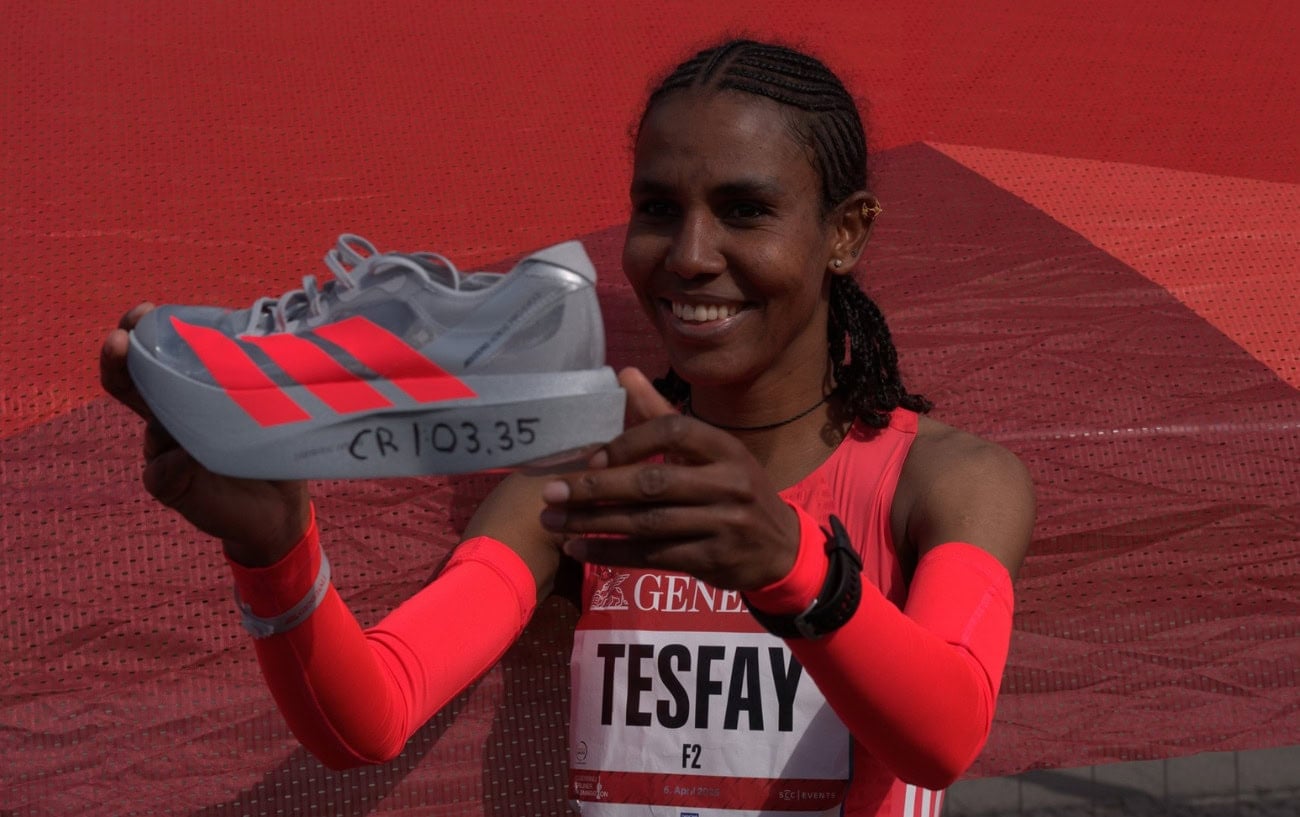
Then, in October 2024 at Valencia, she ran 1:03:21 — the third-fastest women’s half marathon in history, sitting behind only Letesenbet Gidey (1:02:52) and Agnes Jebet Ngetich (1:03:04). She went back to Berlin in April 2025 and ran 1:03:35 on a different course to break the course record. Two performances in the 1:03s, on different courses, in different seasons.
Here is a detail worth sitting with: the woman whose marathon world record Tesfay came 57 seconds from breaking on Sunday — Ruth Chepngetich — has a personal best half marathon of 1:04:02. She’s seventh on the all-time list. Tesfay’s half marathon is faster.
But here is another detail equally worth sitting with. According to World Athletics’ own equivalency tables, a 1:03:21 half marathon projects to approximately a 2:14 full marathon. Tesfay ran 2:10:53 — more than three minutes faster than her half marathon pedigree would predict. Most debut marathoners run at or above their projected time. Tesfay ran well below hers. There may be a clean explanation for that gap. But it exists, and it’s worth naming.
What Barcelona Actually Looked Like
She asked her pacemakers to carry her through halfway in 1:06:00. She hit halfway in 1:05:03, a minute ahead of plan, with her male pacers struggling to keep up. At kilometer 30, she was projecting inside the world record.
Then came kilometer 35. The wall arrived, as it always does. Her pace slipped. The final seven kilometers cost her the minute that separated her from a different kind of history.
She still crossed in 2:10:53. She still broke the Barcelona course record by nine minutes. She still ran the fastest marathon debut anyone has ever run at this level.
The talent is obvious. The questions are too.

The Record She Nearly Broke
The women’s marathon world record of 2:09:56, set by Ruth Chepngetich at the 2024 Chicago Marathon, is the mark Tesfay finished 57 seconds behind on Sunday.
In September 2025, Chepngetich accepted a three-year doping ban from the Athletics Integrity Unit — a sanction that followed a positive test for hydrochlorothiazide, a diuretic used to mask other performance-enhancing substances, at levels 190 times the legal limit. Investigators also found concerning material on her phone, including images of testosterone vials and an anabolic steroid. She initially denied wrongdoing, then changed her story. The AIU called her explanation “hardly credible.”
We covered the full case in detail here.
Her world record currently still stands, pending further review.
The record Tesfay ran 57 seconds from on Sunday was set by a woman who is now banned from the sport. That is the context in which this performance has to be understood.
| Split | Ruth Chepngetich WR | Fotyen Tesfay |
|---|---|---|
| 5K | 15:00 | 15:38 |
| 10K | 30:14 (15:14) | 31:03 (15:25) |
| 15K | 45:32 (15:18) | 46:22 (15:19) |
| 20K | 1:00:51 (15:19) | 1:01:41 (15:19) |
| Half | 1:04:16 | 1:05:03 |
| 25K | 1:16:17 (15:26) | 1:16:50 (15:09) |
| 30K | 1:31:49 (15:32) | 1:32:00 (15:10) |
| 35K | 1:47:32 (15:43) | 1:47:34 (15:34) |
| 40K | 2:03:11 (15:39) | 2:03:31 (15:57) |
| Finish | 2:09:56 | 2:10:51 |

The Questions That Won’t Go Away
The broader picture is not a comfortable one. Since 2017, more than 140 Kenyan athletes have been suspended for doping violations — more than any other nation. A Beach to Beacon 10K winner in 2024 passed her in-competition test, then failed an out-of-competition test taken before she boarded the plane to the US. Chepngetich’s agent, Federico Rosa — one of the most powerful figures in elite distance running — has also represented convicted dopers Rita Jeptoo and Jemima Sumgong, both of whom passed in-competition tests before failing out-of-competition ones. The AIU head has acknowledged that sophisticated dopers can time their use to beat the tests that matter most.
Tesfay is Ethiopian, not Kenyan. Her career record is long and consistent. Her Olympic credentials are genuine. Her half marathon times are real. None of that makes the questions disappear. It just means they sit alongside a more credible profile than many cases that have landed the same way.
What this era of athletics has done — and what the Chepngetich case crystallised — is make it genuinely hard to look at an extraordinary performance and feel uncomplicated. That’s not cynicism. That’s what happens when the institution responsible for guaranteeing trust breaks it, repeatedly, at the highest level. The testing system caught Chepngetich months after her record. It has caught others years after their wins. The honest position is that we don’t know how many performances in the current record books will eventually be revised — or how many never will be.
So here is the question that Fotyen Tesfay’s performance forces us to ask, even as we try to celebrate it:
What are we actually watching?
The Big Question Underneath All the Small Ones
Here is what keeps coming back.
Fotyen Tesfay ran 1:03:21 at Valencia. Third fastest in history. She ran 1:03:35 in Berlin. She ran 2:10:53 in Barcelona — three minutes faster than those times would predict. She came from Tigray, trained at altitude for a decade, competed at the Olympics, and turned up in Barcelona with a career’s worth of evidence behind her.
And yet — in a sport where a runner can be 190 times over the limit for a masking agent, where phone data reveals years of suspicious messages, where the world record was ratified by World Athletics in December 2024 before a doping case was even opened — the word yet has to do a lot of work right now.
The record books have a Chepngetich-shaped hole in them that the sport doesn’t know how to fill. Tesfay has now run herself into the conversation about who fills it. Whether she gets to do that in a sport her audience can fully trust is a question that isn’t hers to answer.
The Sport Has Work To Do
Tesfay is at the beginning of her marathon career, not the end. Most elite marathoners peak in their late 20s and early 30s. She now knows what the full distance costs, where the wall lives, and what a better-paced second attempt could look like.
She may well become the fastest women’s marathoner in history. The talent to do it appears to be genuine. Whether the sport will be able to say that with any certainty — about her, or about anyone — is the larger, longer question that Sunday’s performance leaves behind.
She came from Ofla, Tigray. She ran through a war. She showed up in Barcelona with a decade of work behind her and did something nobody had done before.
The sport owes her — and everyone watching — a cleaner answer than it’s currently capable of giving.
RunClub
Get more running stories — join RunClub
Daily running news, a community of 300,000+ runners, free training plans for every distance, and a daily running game. Free to join — no card.
Already a member? Log in →


Start the conversation