


The 2026 TCS London Marathon, run on Sunday 26 April 2026 in cool, dry conditions, produced one of the most extraordinary days in marathon history.
Kenya’s Sabastian Sawe became the first athlete ever to break the two-hour barrier in a record-eligible marathon, clocking 1:59:30 on a chip-timed, point-to-point course from Blackheath to The Mall. Tigst Assefa lowered her own women-only world record to 2:15:41 in the closest top-three women’s finish in London Marathon history.
2026 London Marathon Elite Results
Men’s Elite Top 3
| Pos | Athlete | Country | Time |
|---|---|---|---|
| 1 | Sabastian Sawe | Kenya | 1:59:30 WR* |
| 2 | Yomif Kejelcha | Ethiopia | 1:59:41 (debut) |
| 3 | Jacob Kiplimo | Uganda | 2:00:28 |
The men’s race rewrote every assumption about human marathon performance. Sawe, defending his 2025 London title, broke contact with the chase pack at 35 km and ran a final 7 km that averaged inside 2:48/km. Kejelcha, the former 10,000 m world record holder making his marathon debut, became the second sub-two finisher in marathon racing history. Eliud Kipchoge’s 1:59:40 INEOS run from 2019 was considered the all-time fastest 26.2-mile time, but it wasn’t record-eligible due to pacing and equipment conditions; Sawe’s 1:59:30 is the first sub-two performance recognised by World Athletics.
Women’s Elite Top 3
| Pos | Athlete | Country | Time |
|---|---|---|---|
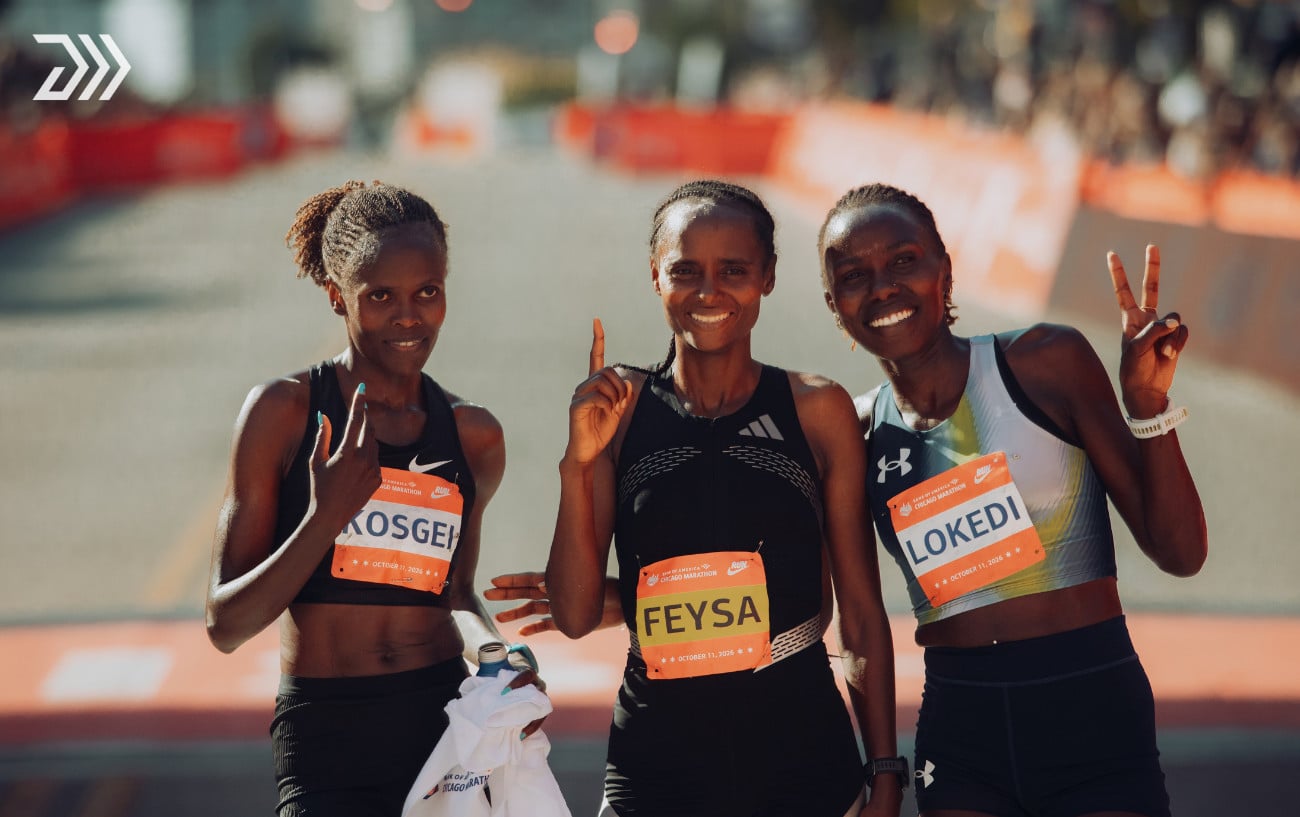
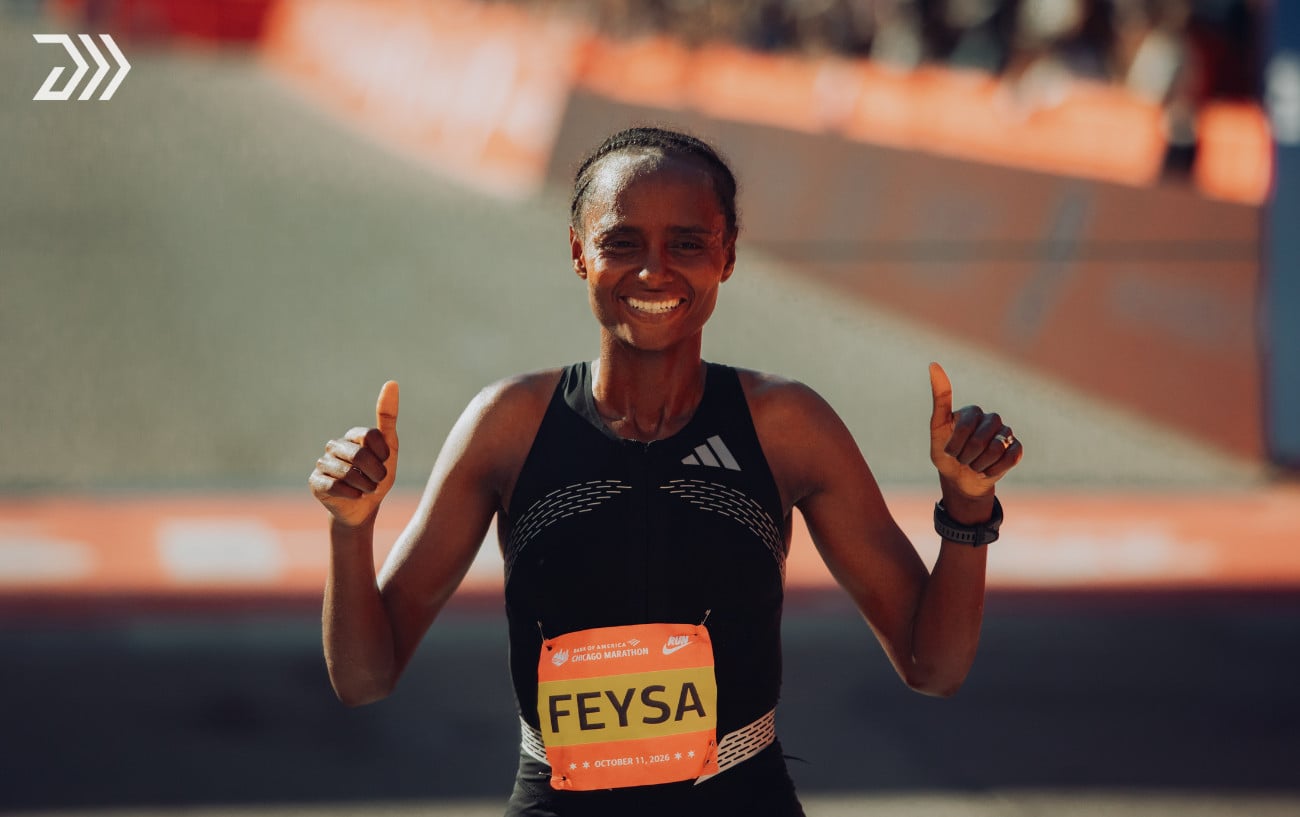
| 1 | Tigst Assefa | Ethiopia | 2:15:41 WR* |
| 2 | Hellen Obiri | Kenya | 2:15:53 |
| 3 | Joyciline Jepkosgei | Kenya | 2:15:55 |
The women’s race ran through 10 km in 31:03 and held a sub-2:15 pace projection through halfway. Assefa, Obiri and Jepkosgei separated from the rest of the field by 30 km and traded surges through Canary Wharf and along the Embankment. Assefa’s decisive move came inside the final mile; the 14-second gap from first to third is the tightest top-three women’s margin in London history.
Wheelchair Races
Switzerland’s Marcel Hug claimed his record-equalling eighth London Marathon men’s wheelchair title in 1:24:13, matching the all-time London wheelchair-victory tally. Catherine Debrunner (SUI) won the women’s wheelchair race in 1:38:29 for her third consecutive London victory, completing a Swiss double on the day.
Race-Day Conditions
The 2026 race ran in close-to-ideal conditions: 10 °C at the elite start, rising to a high of 17 °C through the morning, with light easterly winds (around 6 mph from the ESE) and minimal cloud cover. Met Office had forecast less than a 5 percent chance of precipitation; the race ran dry from gun to final finisher.
The marathon-performance literature places the optimal performance window at roughly 7–13 °C, with non-elite finish times degrading approximately 1–2 percent per 5 °C of additional ambient temperature above 18 °C 1Ely MR, Cheuvront SN, Roberts WO, Montain SJ. Impact of weather on marathon-running performance. Med Sci Sports Exerc. 2007;39(3):487-93.. The 2026 conditions sat squarely inside that window, contributing to the unusually fast top-end times.
Mass Field And Charity Results
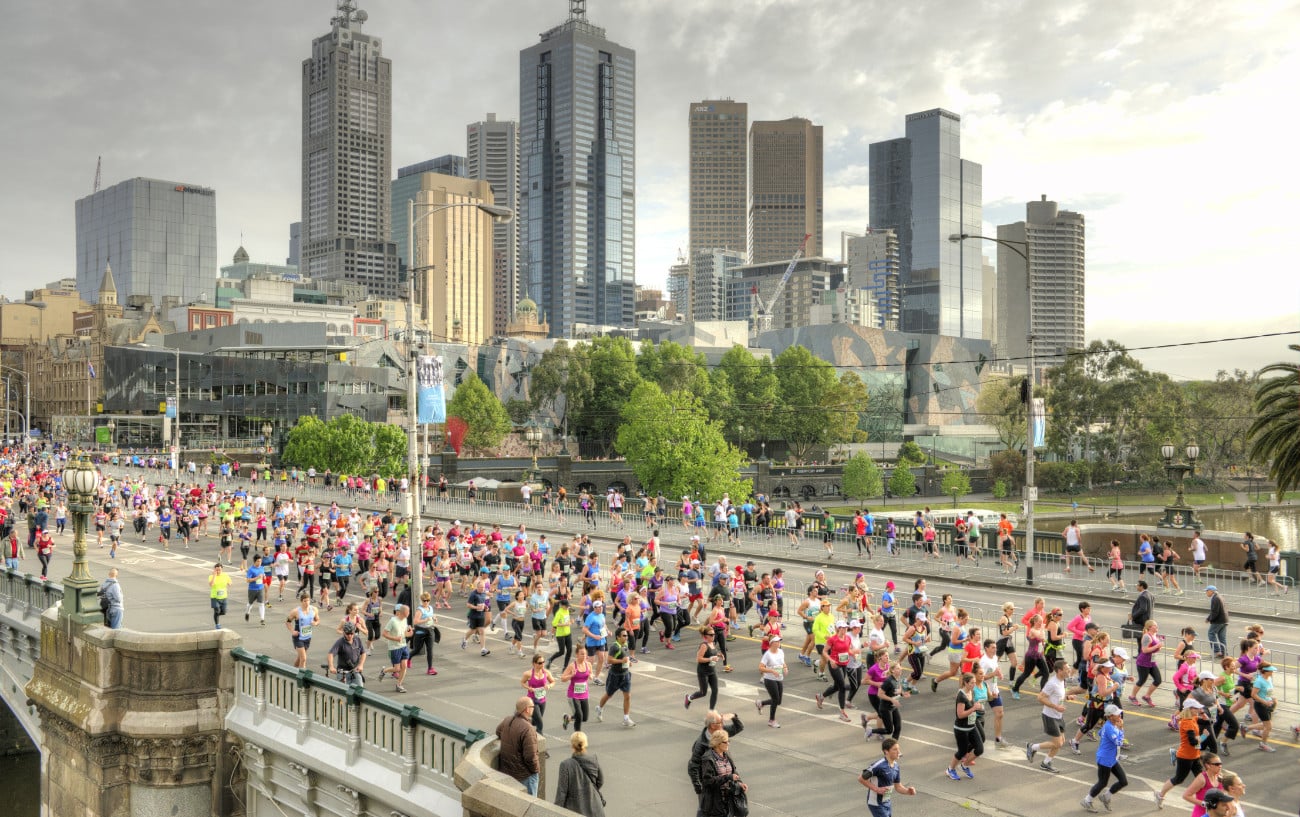
More than 59,000 runners are expected to cross the finish line on The Mall, the largest field in London Marathon history. The 8-hour cutoff allows runners to cross the finish line before 7:30 pm. Charity entries made up an estimated 12–15 percent of the field, with collective fundraising on track to surpass the 2025 record total. Full age-group and charity-tier finisher data are available via the official London Marathon results portal.
What Sub-Two Means For Marathon Racing
Sawe’s 1:59:30 is the kind of performance that resets training and racing expectations across the sport. The metabolic demand at his pace was approximately 99 percent of VO2max for the entire 1 hour 59 minutes 30 seconds — well into territory previously considered unsustainable by physiologists modelling endurance ceilings 2Joyner MJ, Coyle EF. Endurance exercise performance: the physiology of champions. J Physiol. 2008;586(1):35-44.. The combination of carbon-plated super-shoes (delivering roughly 4 percent metabolic savings 3Hoogkamer W, Kipp S, Frank JH, Farina EM, Luo G, Kram R. A comparison of the energetic cost of running in marathon racing shoes. Sports Med. 2018;48(4):1009-19.), refined in-race carbohydrate intake at 90+ g/h 4Jeukendrup AE. Training the gut for athletes. Sports Med. 2017;47(Suppl 1):101-10., and modern altitude-training infrastructure has compressed a barrier that, before super-shoes, was modelled as a once-per-generation event.
For amateur runners, the practical takeaway is more modest. The dose-response curves for VO2max, lactate threshold, and running economy that produce a sub-3:00 marathon are unchanged by the elite ceiling moving. What does shift is the cultural reference point: a 3-hour marathon is now 50 percent of the elite men’s winning time, the same gap that separated 4-hour and 2-hour finishers when the previous-era marathon record was around 2:04.
Where The 2026 Field Stacks Up Historically
London 2026 sits alongside Berlin 2018 (Kipchoge 2:01:39), Berlin 2022 (Kipchoge 2:01:09) and Chicago 2023 (Kiptum 2:00:35) as the most consequential marathon performances of the modern era. The cluster of elite marathon performances under 2:01 has tightened sharply since 2017, when carbon-plated super-shoes entered the market — finishing times for the world’s top 50 men have improved roughly 2–4 percent post-2017, consistent with the metabolic-savings literature. The 2026 women’s race continues a parallel trend: Assefa’s 2:15:41 marks the third women-only world record in three years.
Need pacing context for your own marathon? See our marathon pace calculator, our breakdown of celebrity marathon times, and our guide to the world’s biggest marathons.
References
RunClub
Get more running stories — join RunClub
Daily running news, a community of 300,000+ runners, free training plans for every distance, and a daily running game. Free to join — no card.
Already a member? Log in →






Start the conversation