


The importance of having a running shoe rotation cannot be overstated.
Although many runners assume that having multiple pairs of running shoes is really only necessary for high-mileage, elite or competitive runners, even everyday runners who log just 15-20 miles per week can benefit from rotating their running shoes.
However, another major benefit of having a running shoe rotation is adding variety to the types of running shoes you wear so that your feet and legs are subjected to different forces and applications of stress.
But what types of running shoes should you include in your running shoe rotation? Should you only try different models of traditional running shoes, or are barefoot shoes good for your feet?
This article will discuss the benefits of barefoot shoes in your running shoe rotation.
We will cover:
- What Is a Running Shoe Rotation?
- What Are Barefoot Running Shoes?
- 6 Benefits of Barefoot Shoes
Let’s jump in!

What Is a Running Shoe Rotation?
Unless you’ve been running for a while, you may be unfamiliar with the concept of a running shoe rotation.
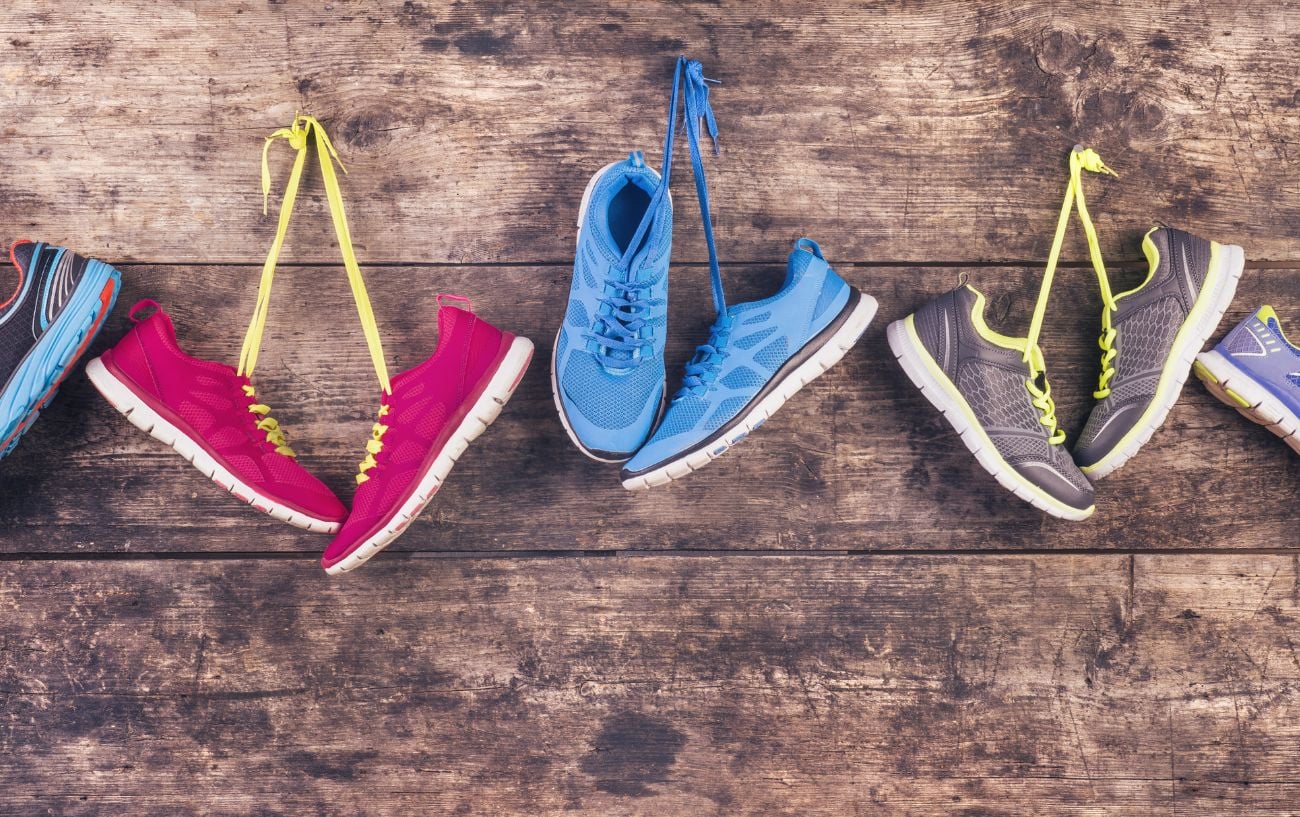
Rotating your running shoes simply involves wearing different pairs of running shoes throughout your training week.
You might alternate between two different pairs of shoes every other workout or have a more strategic approach to your running shoe rotation wherein you select a certain type of running shoe from your lineup for a specific workout.
In the latter approach, for example, you might wear a maximalist shoe for your long runs to have plenty of cushioning for a high-mileage effort.
You might wear a minimalist shoe for your speed workouts to feel fast and free from excess shoe heft.
Finally, you might have a traditional cushioned running shoe for your everyday training runs.

What Are Barefoot Running Shoes?
Barefoot running shoes are shoes that are designed to best mimic the feeling and biomechanics of running completely barefoot.
Barefoot running shoes have an extremely thin, flexible, or pliable sole with no cushioning. This material is usually only 3-10mm thick at most.
A barefoot running shoe’s purpose is to protect your foot from any sort of sharp objects, such as broken glass, rocks, or metal debris on the road. They also protect your skin from friction and abrasion.
However, barefoot running shoes are not intended to provide any sort of cushioning or support for your foot.
Barefoot running shoes are often lumped together or conflated with minimalist running shoes, but they are actually somewhat different.

Minimalist running shoes can be considered a step up from barefoot running shoes in terms of their structure, support, and cushioning.
In this way, minimalist running shoes are the intermediary between traditional running shoes and barefoot running shoes: they provide some amount of cushioning and support, but less than that of a traditional running shoe.
Minimalist running shoes also more closely resemble traditional running shoes, though the soles are thinner and flatter.
In contrast, barefoot running shoes will either look like a slipper-type shoe (kind of like water shoes), or, more often, there may be individual pockets for each toe so that the shoe resembles a glove.
Barefoot running shoes are considered zero-drop shoes, which means that the sole’s thickness or the heel’s and toe’s height are the same across the entire length of the shoe.
This can also be referred to as a 0mm heel-to-toe drop.
Most traditional running shoes have at least an 8mm heel-to-toe drop, meaning that the heel is elevated relative to the shoe’s forefoot. But are barefoot shoes good for you? Are barefoot shows good for your feet? Let’s see what our list of benefits has to say about that.

6 Benefits Barefoot Shoes In Your Running Shoe Rotation
There are several benefits of barefoot shoes that may warrant their inclusion in your running shoe rotation.
The benefits of barefoot shoes include the following:
#1: Barefoot Running Shoes Strengthen Your Feet and Legs
One of the primary benefits of barefoot shoes is that they activate the muscles in your feet and lower legs much more than cushioned running shoes because you don’t have a thick slab of foam and rubber between your foot and the road that’s holding your foot in position.
As a result, the smaller, intrinsic muscles in your feet, along with your calves, Achilles’ tendons, anterior tibialis, tibialis posterior, and fibularis longus and brevis have to work much harder to stabilize the foot from ground contact through push-off.
Therefore, studies show that wearing barefoot shoes (or minimalist running shoes) can help strengthen the muscles and connective tissues in your feet and lower legs, potentially preventing future injuries.
However, here’s the important caveat: according to that research, the gains in strength maxed out when runners wore minimalist running shoes for 35% of their training volume.
Wearing minimalist shoes for more than 35% of training volume did not further increase foot or leg strength, which is why having barefoot shoes as part of your running shoe rotation, but not your sole choice of footwear, may be beneficial.

#2: Barefoot Running Shoes Support a More Natural Gait
Barefoot running shoes are designed to mimic natural running conditions as much as possible.
When we wear cushioned running shoes, our feet do not receive as much sensory input from the ground as we run.
The cushioning masks the discomfort of impact stress.
Although it can be argued that this is desirable, one of the consequences or “side effects“ of wearing cushioned running shoes is that it’s very easy to fall into the bad habit of heel striking.
Because traditional running shoes have a highly-cushioned heel, runners can comfortably make ground contact with their heels without yelping in pain.
The cushioning attenuates the stress of impact, but the heel is not biomechanically optimized for absorbing the impact of landing.

Additionally, running in traditional running shoes encourages heel striking because these shoes have a significant heel-to toe-drop, so the thicker heel is the first portion of the shoe to contact the ground.
Although heel striking is the most common foot strike pattern in runners, it is associated with higher impact forces, a higher risk of injury, and reduced running economy.
One of the benefits of barefoot shoes is that they have a 0mm heel-to-toe drop, making it easier to land squarely on the midfoot rather than catching the low-hanging heel first.
When running in barefoot shoes, there is a natural tendency to shorten your stride so that you land on the midfoot or ball of your foot because you don’t have the extra cushioning provided by your footwear.
As a result, you’ll feel every bit of impact stress and discomfort if you land improperly (on your heel).
This is actually a good thing because it’s ideal to land on your midfoot.
Your arch acts as a natural shock absorber, helping to attenuate the discomfort and stresses of impact, and indeed, peak impact forces have been found to be decreased when running barefoot compared to running in traditional running shoes.
Another benefit of midfoot striking is that it improves your efficiency because landing more towards the front of your body keeps your forward momentum going.

#3: Barefoot Running Shoes Improve Your Biomechanics
Although the evidence isn’t conclusive, a moderate amount of evidence supports that running barefoot leads to advantageous biomechanical alterations.
These include reduced maximum vertical ground reaction forces, less extension and absorption of force at the knee, less foot and ankle dorsiflexion at ground contact, shorter ground contact time, reduced stride length, and increased cadence.
#4: Barefoot Running Shoes Improve Your Balance
Another one of the benefits of barefoot shoes is that they also improve your balance, stability, coordination, and proprioception.
The thin sole allows your foot to receive more kinesthetic feedback from the ground than when you are shod with a bunch of synthetic material between your foot and the ground.
The more sensory and proprioceptive feedback you receive, the more natural and anatomically-sound your muscles and joints will be able to function.

#5: Barefoot Running Shoes May Help Improve Your Memory
Interestingly, studies suggest that running barefoot can improve your memory more than running shoes.
While running shoes aren’t exactly the same as running completely barefoot, it might be that you can enjoy this benefit of barefoot running in barefoot shoes as well.
Running barefoot requires you to remain more mentally engaged to avoid stepping on objects. Plus, you must process more sensory and tactile feedback as you run, giving your brain a functional workout.
#6: Adding Barefoot Running Shoes to Your Shoe Rotation Strikes the Right Balance
Many runners want to enjoy the benefits of barefoot shoes, but there can also be an increased risk of injuries such as stress fractures, shin splints, and plantar fasciitis, depending on your biomechanics, overall training, and how quickly you transition to barefoot shoes.
If you add barefoot shoes to your running shoe rotation rather than running exclusively in them, you can experience some of the benefits while potentially mitigating the risks.
Check out our running shoe guide to help choose running shoes that suit you. It will include all the need-to-know information and details to choose your perfect pair of shoes or several pairs to start up your own running shoe rotation!
RunClub — Free
Join 300,000+ runners in RunClub
Free training plans for every distance, a daily running game, exclusive coaching content, and a real community of runners. Create your free account in 20 seconds — no card.
Already a member? Log in →





Start the conversation