


A pace that feels comfortable on a cool morning often demands much more in the heat. But does the heat also make your physiology deteriorate faster as the miles accumulate?

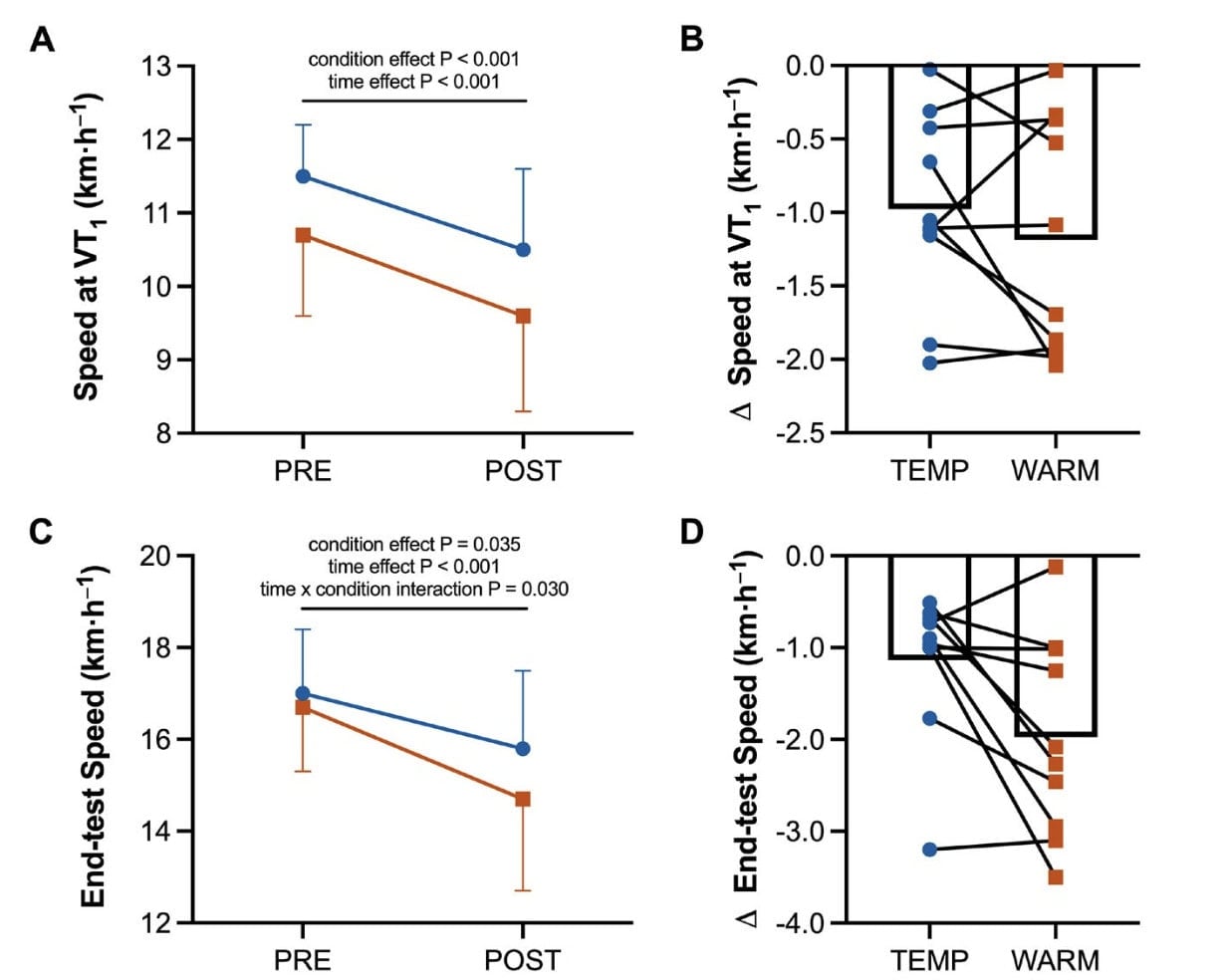
In a study of 10 trained runners, researchers measured running economy, speed at the first ventilatory threshold (a marker of sustainable intensity), peak oxygen uptake, and the highest speed reached in a progressive test. The runners took those tests fresh and after 90 minutes of running, once at 66℉/19°C and once at 86℉/30°C.1Hunter, B., Fujii, N., Maunder, E., & Muniz-Pumares, D. (2026). Durability of physiological determinants of distance-running performance in warm and temperate environments. Scandinavian Journal of Medicine & Science in Sports, 36(11), e70394. PubMed Central. https://doi.org/10.1111/sms.70394
The first hit came before the long run.
- Fresh threshold speed averaged 7.1 mph/11.5 km/h in the temperate condition and 6.6 mph/10.7 km/h in the warm one—about 7% lower in the heat.
- After 90 minutes, threshold speed fell another 8.6% in the cool condition and 11.1% in the heat.
- Peak oxygen uptake also fell by a similar amount in both conditions, about 4–5%
Two other measures did separate. Running economy was 5.4% worse in the heat from minute 15 to minute 90, versus 1.7% in the temperate condition. The runners’ speed at the end of the test fell 12.1% after the warm run, versus 6.8% after the temperate run. Heat therefore lowered the starting point for sustainable speed and worsened some later measures, without clearly accelerating every marker of fatigue.
What this means for runners
For a warm race, adjust your pace expectations from the opening miles. Your cool-weather threshold may already be too fast before fatigue sets in. Practice longer runs and workouts in likely race conditions to get an accurate picture of your pacing plan.
References
RunClub — Free
Join 300,000+ runners in RunClub
Free training plans for every distance, a daily running game, exclusive coaching content, and a real community of runners. Create your free account in 20 seconds — no card.
Already a member? Log in →










Start the conversation