


Suppose you gave a lab a vial of blood from each of two runners and told them one had a faster 3K. Could they spot a difference? If so, would that give the slower runner anything worth changing?
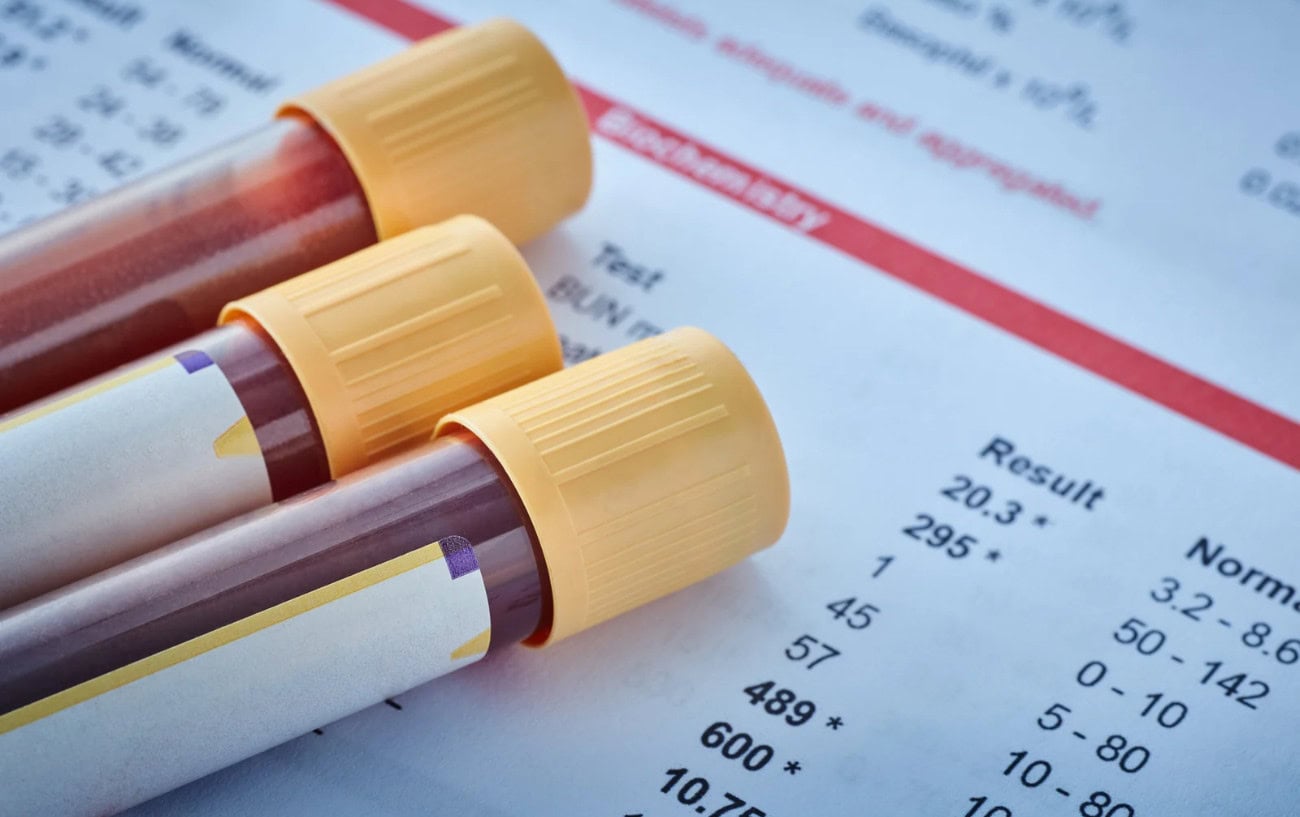
Researchers took fasting blood samples from 141 men aged 28–40 living in a cold region and measured 636 naturally occurring metabolites, the small molecules involved in the body’s everyday chemistry. They divided the men around the group’s median 3K time. Seventy-six ran 14:13 or faster, and 65 took longer.1Fang, K., Yu, L., Zhu, R., He, J., Zhang, L., Wang, R., Zheng, Y., Sun, T., Yao, Z., & Guo, J. (2026). Serum metabolic signatures associated with running performance in healthy men living in a cold environment: Insights into amino acid and energy metabolism. Frontiers in Physiology, 17, 1920016. PubMed Central. https://doi.org/10.3389/fphys.2026.1920016
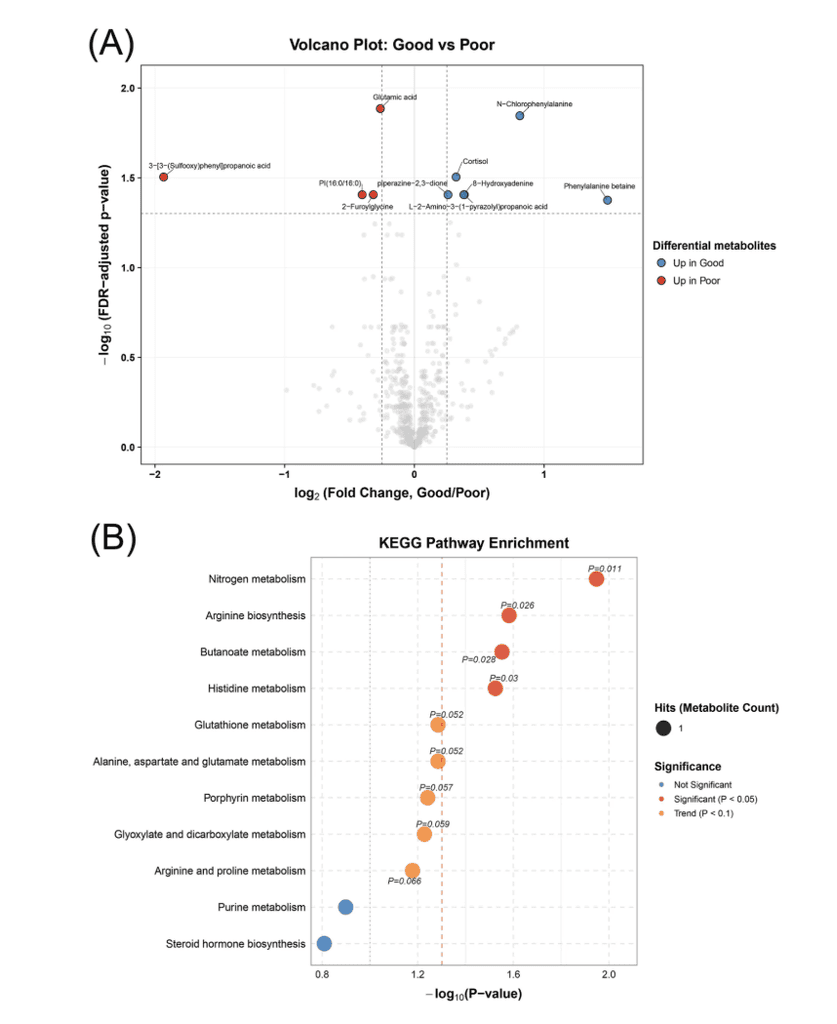
After accounting for differences in arm and leg muscle mass and correcting for the sheer number of comparisons, 10 metabolites differed between the groups. Six were higher in the faster runners, including cortisol. Four were higher in the slower runners, including glutamic acid.
It’s tempting to build a training theory around a familiar name like cortisol. But these were snapshots from different men. The researchers hadn’t measured diet or VO₂max, and when they looked for broader metabolic pathways that might explain the differences, none cleared the statistical threshold after correction for multiple comparisons.
What this means for runners
If someone offers to turn your bloodwork into a faster 3K, I’d ask one question before paying for the test. When runners change their training or diet based on the result, do their times improve? This study gives researchers a few good candidates for that experiment. It gives a runner with a cortisol result and a race in six weeks very little reason to chase a higher number.
References
RunClub — Free
Join 300,000+ runners in RunClub
Free training plans for every distance, a daily running game, exclusive coaching content, and a real community of runners. Create your free account in 20 seconds — no card.
Already a member? Log in →










Start the conversation