


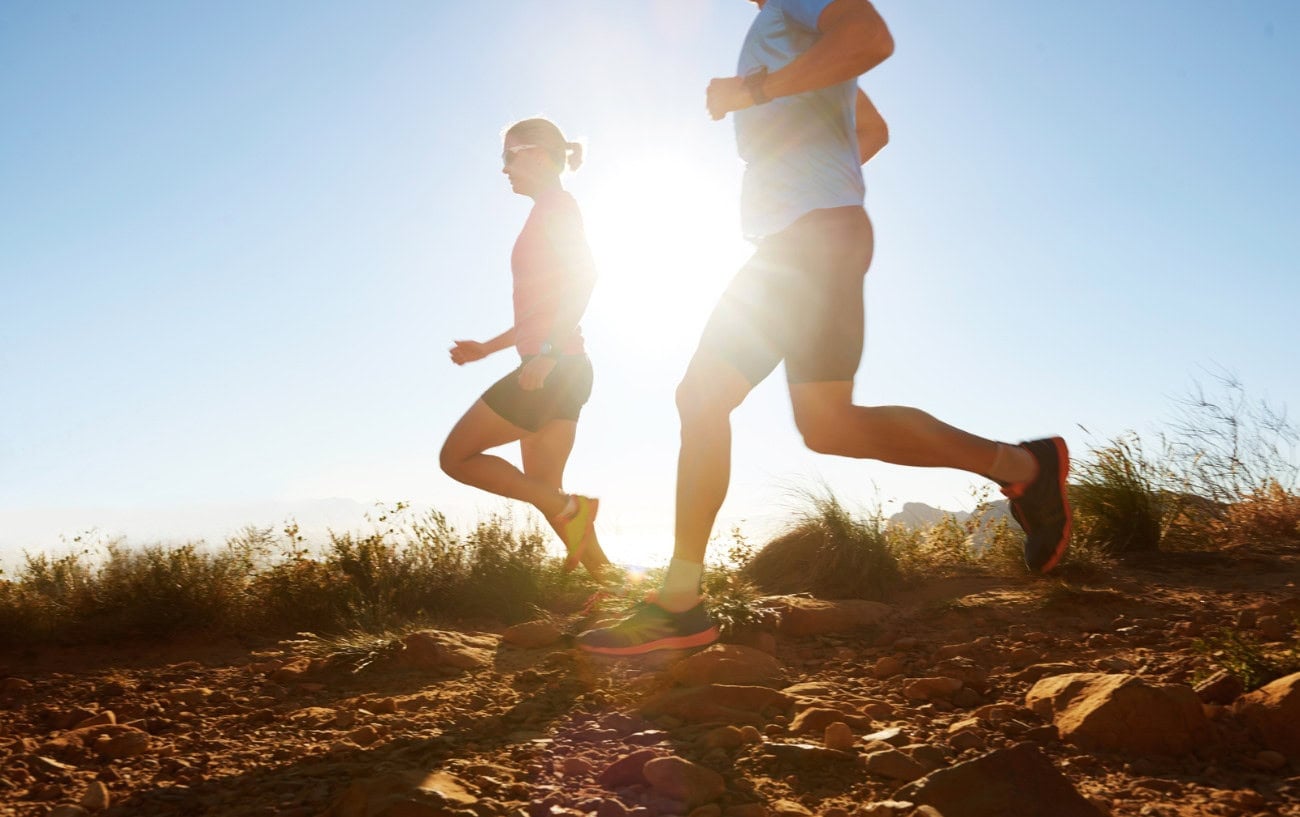
Heat-acclimation guidance has long drawn heavily from studies of men. A crossover study of 18 highly trained runners tested whether the adaptations differed between eight men and 10 women.1Keefe, M. S., Dunn, R. A., Levitt, D. E., Vellers, H. L., Benjamin, C. L., & Sekiguchi, Y. (2026). Physiological adaptations to controlled work rate heat acclimation do not differ between highly trained male and female endurance runners. Journal of Applied Physiology (Bethesda, Md. : 1985), 141(5), 1415–1426. PubMed. https://doi.org/10.1152/japplphysiol.90119.2026
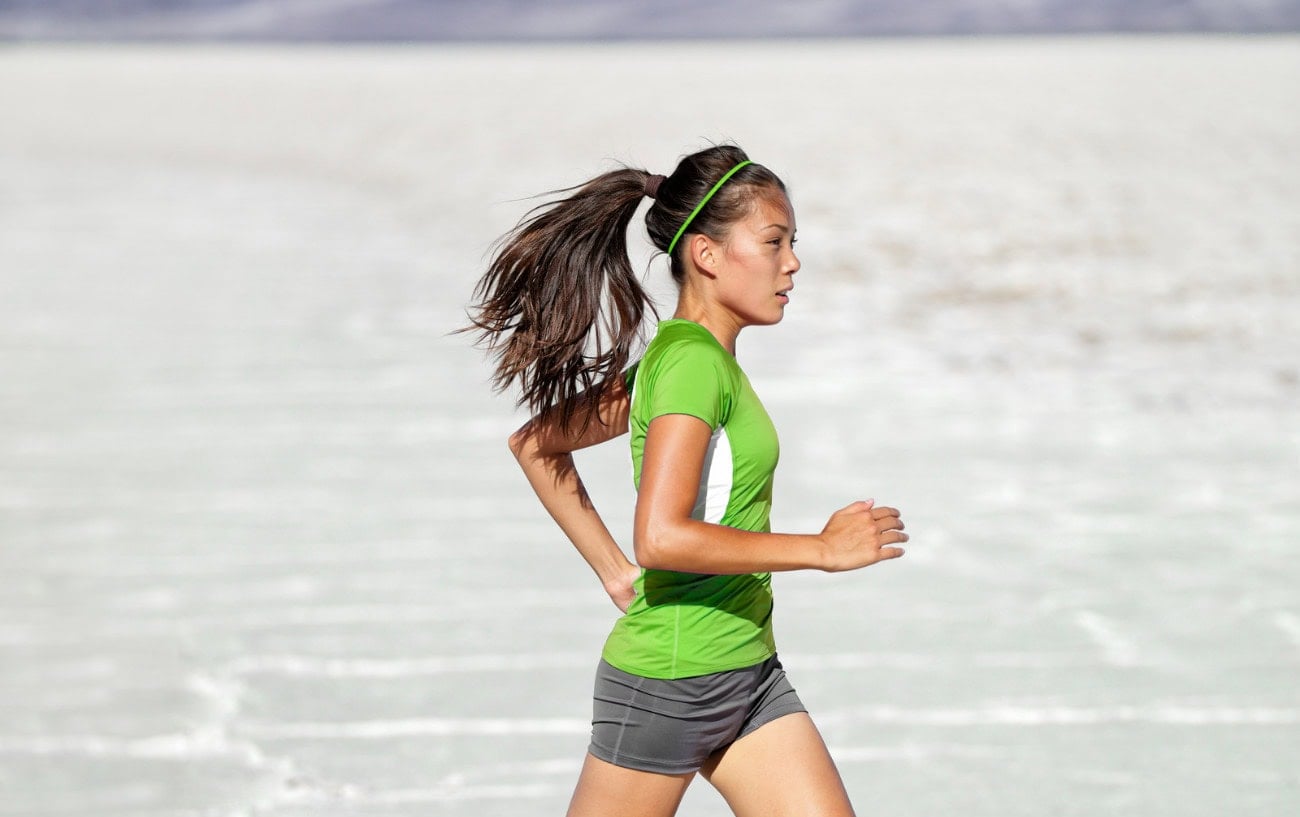
Each runner completed two seven-session blocks in randomized order, separated by about six weeks. They ran for 60 minutes at the same relative intensity each session: once in 104℉/40°C heat and, in the other block, at 72℉/22°C. Researchers followed core temperature, heart rate, sweat rate, and plasma volume.
Both groups adapted.
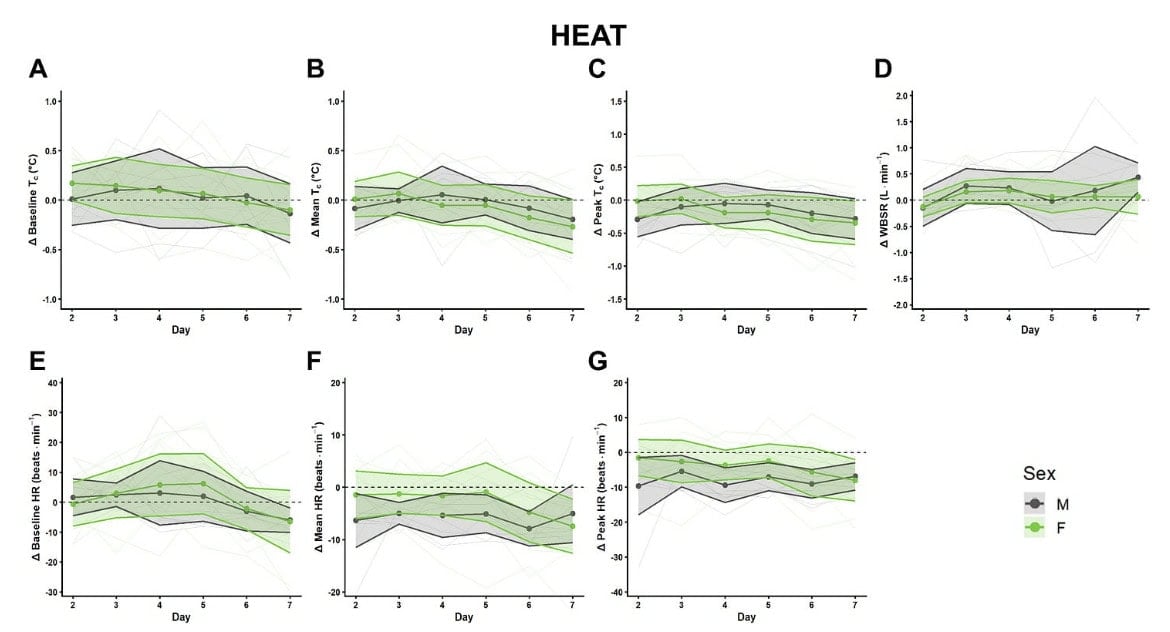
- Compared with the temperate block, the hot block produced larger reductions in exercise core temperature and heart rate and a larger increase in sweat rate.
- The researchers did not detect a difference between women and men in the size or progression of those heat-block adaptations.
What this means for runners
There is no evidence here that a highly trained woman needs a wholly different heat-acclimation plan to gain the measured benefits. Build tolerable, progressive heat exposure and adjust it to your response. The study supports heat exposure for core-temperature, heart-rate, and sweat responses, regardless of gender.
References
RunClub — Free
Join 300,000+ runners in RunClub
Free training plans for every distance, a daily running game, exclusive coaching content, and a real community of runners. Create your free account in 20 seconds — no card.
Already a member? Log in →







Start the conversation