


We often talk about aging and endurance fitness as though the same numbers apply to every athlete. Female Masters athletes have been underrepresented in those conversations.
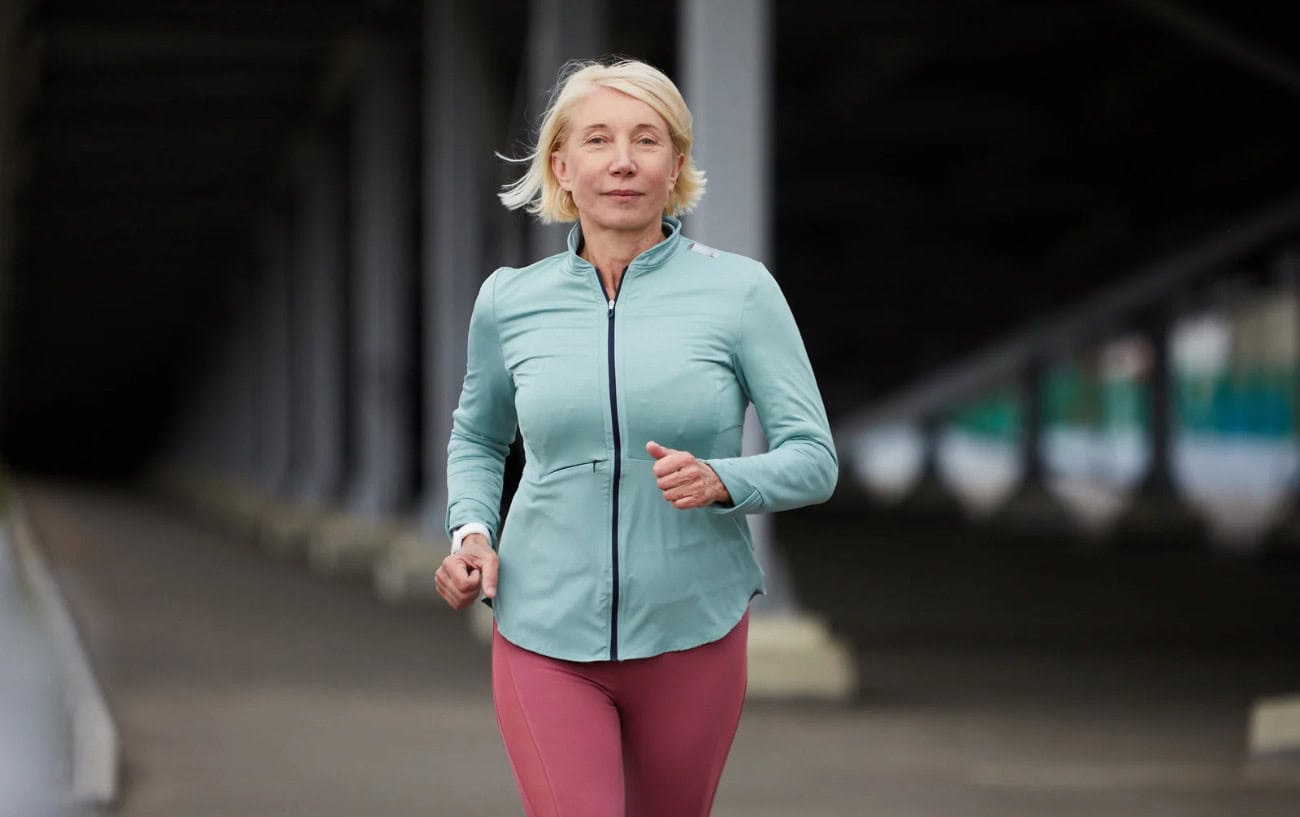
A systematic review and meta-analysis pooled 69 studies of 1,903 female endurance athletes aged 40 and older.1Kipp, S., Larson, K. F., Collantes Hoyos, D. B., Michael, A. M., Brazile, T. L., Levine, B. D, Pruter, W. W., Joyner, M. J., & Senefeld, J. W. (2026). Maximal aerobic capacity and aging in female masters athletes: A systematic review and meta-analysis. Sports Medicine (Auckland, N.Z.), 10.1007/s40279-026-02565-7. PubMed. https://doi.org/10.1007/s40279-026-02565-7
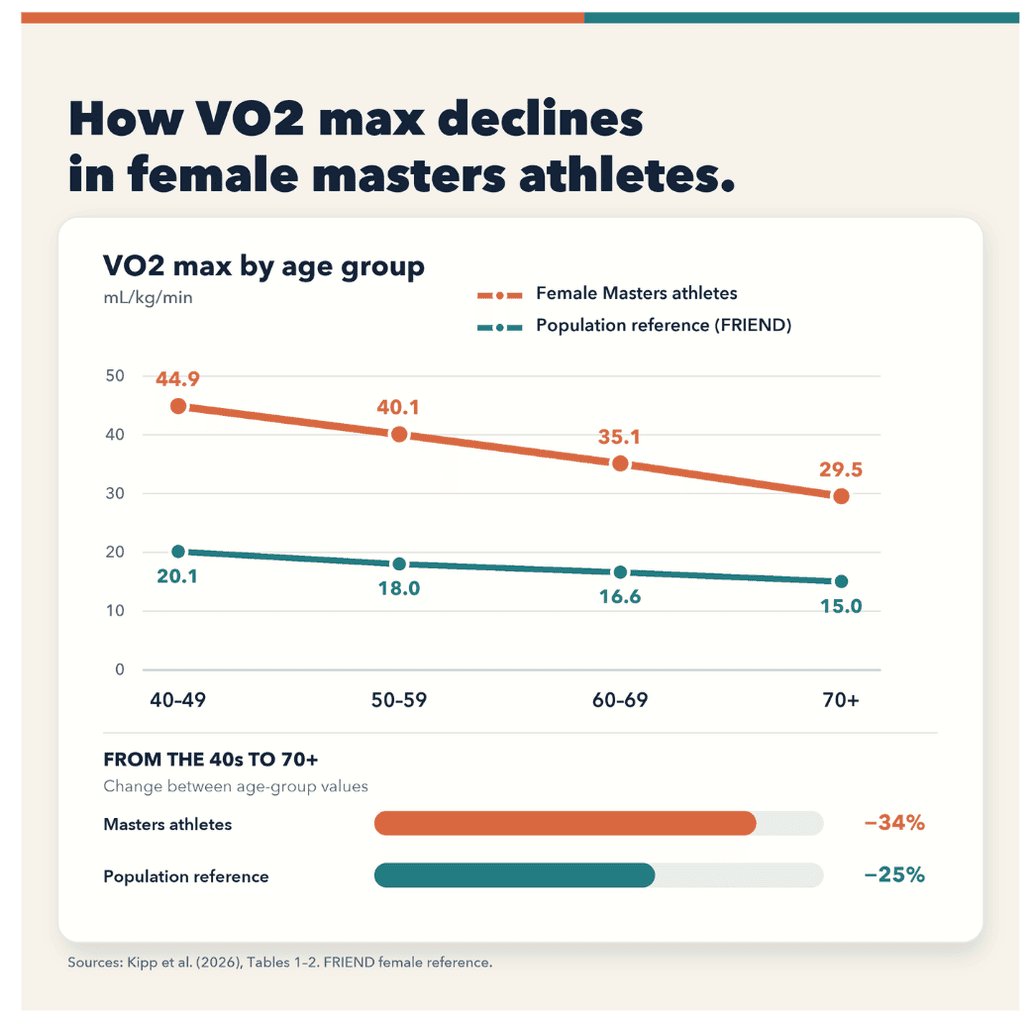
- Their average VO₂max was 44.9 mL/kg/min in the 40s,
- 40.1 in the 50s,
- 35.1 in the 60s, and
- 29.5 at 70 or older.
Across studies, each additional year of age was associated with 0.57 mL/kg/min lower VO₂ max, or roughly 11.7% per decade. Absolute oxygen uptake, measured in liters per minute, also decreased across age groups, so the pattern wasn’t just a body-weight calculation.
What this means for runners
Use these values as context, not a personal countdown. Compare repeated measurements with your own training and race results. A group average from studies like this can help frame the conversation about aging, but it doesn’t set a ceiling on what you, as a runner, can maintain or improve.
References
RunClub — Free
Join 300,000+ runners in RunClub
Free training plans for every distance, a daily running game, exclusive coaching content, and a real community of runners. Create your free account in 20 seconds — no card.
Already a member? Log in →





Start the conversation