


Eliud Kipchoge is returning to the Olympic stage once again. He just won’t be wearing a bib.
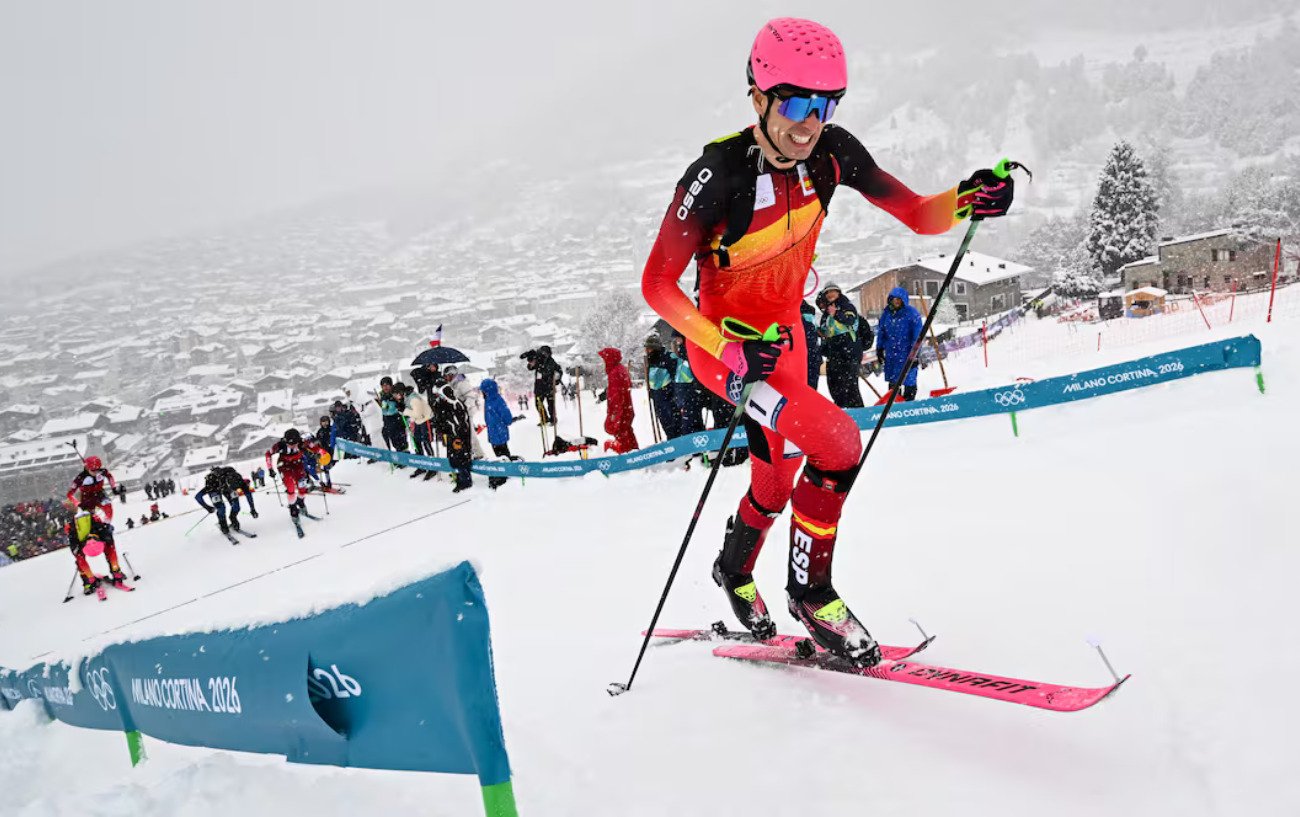
The Kenyan marathon legend has been selected as one of eight flag bearers for the opening ceremony of the Milano Cortina 2026 Olympic Winter Games, scheduled for Feb. 6 at San Siro Stadium in Milan. Kipchoge, 41, was chosen by the International Olympic Committee and Fondazione Milano Cortina 2026 as part of a group meant to represent the Olympic ideals of “peace, unity and solidarity.”
For us runners, it’s a familiar name in a very unfamiliar setting. Kipchoge built his career on the roads and the track, not ice and snow, but few athletes carry more Olympic credibility.
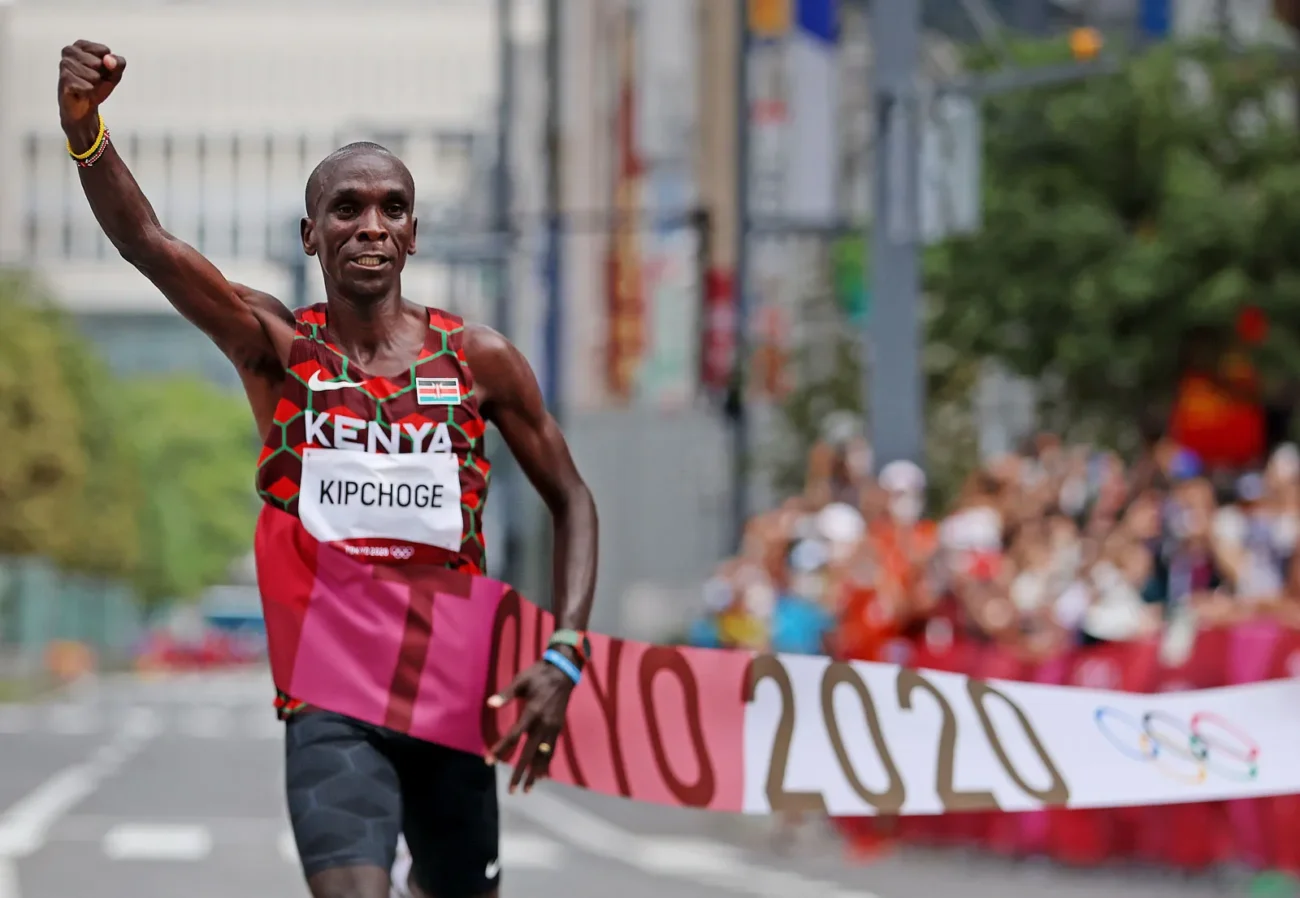
A career that keeps circling back to the Games
Kipchoge is a five-time Olympian whose history with the Games stretches back more than 20 years. He made his Olympic debut at Athens 2004, winning bronze in the 5,000m as a 19-year-old. Four years later in Beijing, he added silver in the same event.
The move to the marathon reshaped his career… and Olympic history.
Kipchoge won marathon gold at the Rio Games in 2016, then defended his title at the Tokyo Olympics in 2021, where the race was held in Sapporo due to extreme heat. No man had ever won the Olympic marathon twice.
He later returned to Olympic competition at the Paris 2024 Games, extending a run that has made him one of the longest-serving elite athletes in modern distance running.

Records, respect, and a role beyond racing
Away from the Olympics, Kipchoge helped redefine the limits of marathon performance. He set the official world record twice, first running 2:01:39 at the Berlin Marathon in 2018, then lowering it to 2:01:09 in Berlin four years later.
His influence has also grown well beyond results. Kipchoge serves as a UNESCO Goodwill Ambassador for Sport, Integrity and Values, and in 2023 became a mentor to the Under-20 World Athletics Athlete Refugee Team, a role that reflects his focus on using sport as a platform for opportunity and leadership.
At Milano Cortina, Kipchoge won’t be chasing medals or time splits (and won’t be taking up any snow sports). Instead, he’ll help carry the Olympic flag into the stadium, a symbolic moment for an athlete whose relationship with the Games has spanned eras, events, and now, even seasons.
RunClub
Get more running stories — join RunClub
Daily running news, a community of 300,000+ runners, free training plans for every distance, and a daily running game. Free to join — no card.
Already a member? Log in →




Start the conversation