


Georgia Hunter Bell has spent the past two seasons surprising people, not just with her racing but with her training. After winning Olympic bronze in the 1500m and silver in the 800 at the World Championships, the questions began circulating again: how much of her preparation actually happens on the bike?
A look at her training suggests the rumours aren’t exaggerated. Bell runs roughly 30 to 35 miles a week, but rides close to 100. Most elite runners use cycling as a backup plan when they’re injured. Bell reached the top of the sport by relying on it.
Her story makes more sense when you go back a few years.
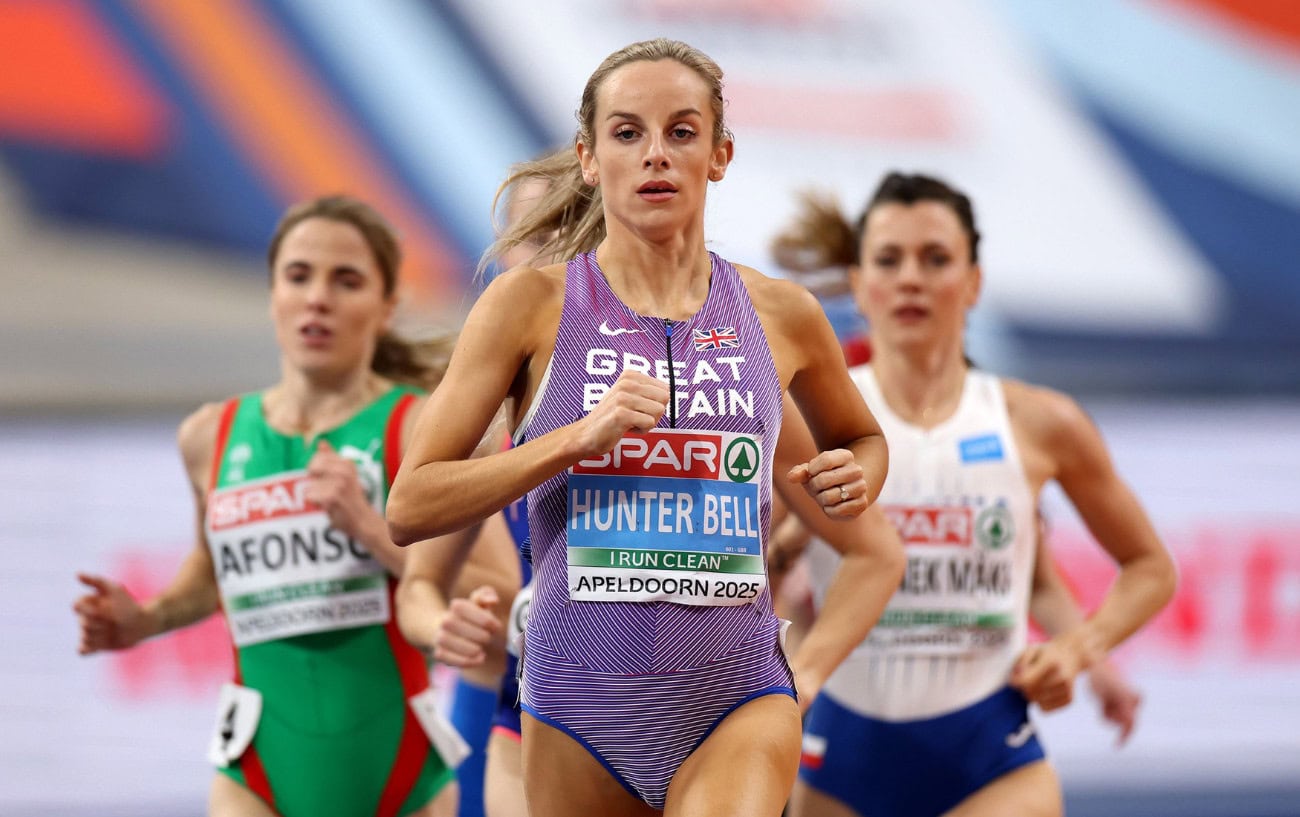
As a standout junior, she seemed set for a long career on the track, but a move to the University of California, Berkeley came with a sharp jump in mileage and a string of stress fractures. She left the sport entirely in 2017.
For a while she worked in cybersecurity and stayed away from racing.
During the lockdowns in 2020 her husband suggested she try a road bike.
What began as a low-impact fitness option quickly grew into long rides, challenging climbs, and eventually a win in her age group at the Duathlon World Championships.
She ran a sub-16 5K off the back of that training, reconnected with her old coach, and rebuilt her running career around the routine that kept her healthy.
Bell’s training now is a blend most middle-distance runners would consider unusual.
She rides five to six hours a week, mostly indoors on Zwift or on the road, and only runs enough to keep her touch on the track. Her rivals tend to avoid the bike entirely unless injury forces their hand. Bell has gone five years without a major setback, and she credits the bike for most of that consistency.
There’s also a performance case behind her approach.
Physiologist Richard Davison explains that cycling can raise an athlete’s critical power, the point below which they can operate without tapping into their limited anaerobic reserve. For a 1500m runner, that reserve is everything in the final 200 metres. Bell’s late-race strength, now one of her signatures, lines up neatly with the hard interval work she does on the bike.
When asked how much of her success belongs to the bike, she avoids putting a number on it. What she is clear about is what the routine has given her: consistency. “It has allowed me to be injury-free and stack year upon year. That’s what leads to medals,” she said to Cycling Weekly.
She no longer races duathlons, but the training that pulled her back into the sport remains at the centre of everything she does. The Instagram handle may confuse people, but the approach doesn’t. The bike is not a footnote in her program. It’s the reason she made it back.
RunClub
Get more running stories — join RunClub
Daily running news, a community of 300,000+ runners, free training plans for every distance, and a daily running game. Free to join — no card.
Already a member? Log in →


Start the conversation